


close
Choose Your Site
Global
Social Media


Views: 222 Author: Rebecca Publish Time: 2025-12-29 Origin: Site


Content Menu
● Introduction to Tritan Plastic
● Molecular Structure and Chemical Composition
● Key Properties of Tritan Plastic
● Manufacturing and Processing of Tritan
>> 2. Extrusion
● The Role of Masterbatch in Tritan Modification
>> Major Types of Masterbatch for Tritan
● Benefits of Tritan Compared With Other Plastics
● Applications of Tritan Plastic
>> 3. Electronics and Appliances
>> 5. Automotive and Industrial Fields
● Environmental Sustainability of Tritan
● Quality Control and Testing Standards
>> 1. What is a Masterbatch and why is it important for Tritan?
>> 2. Is Tritan plastic safe for food contact?
>> 4. How does Tritan compare to polycarbonate?
>> 5. What industries can benefit most from using Tritan?
Tritan plastic material has rapidly become one of the most recognized innovations in the global plastics industry. Known for its outstanding clarity, toughness, and safety, Tritan has gained popularity across multiple sectors—from consumer goods to industrial products. For manufacturers, distributors, and converters, understanding Tritan is essential to developing advanced materials that meet modern performance and sustainability standards.
This article explores the origin, properties, applications, and processing of Tritan, with special attention to the role of Masterbatch technology in customizing and enhancing Tritan's functionalities.

Tritan plastic, formally known as Tritan™ Copolyester, is a high-performance thermoplastic developed by Eastman Chemical Company. It was introduced to the market in 2007 as a BPA-free alternative to polycarbonate (PC). BPA, or bisphenol A, raised global health concerns, motivating the search for safer, more sustainable materials.
Tritan offers excellent impact resistance, superior optical clarity, and chemical stability. Compared with traditional copolyesters like PETG, Tritan withstands higher temperatures, resists cracking, and maintains transparency even after repeated washing or sterilization. This makes it ideal for medical, packaging, and consumer product applications.
In recent years, Chinese manufacturers have taken the lead in developing customized Tritan compounds and Masterbatch formulations to cater to the rapidly growing market demand.
Tritan belongs to the family of copolyesters, synthesized from multiple monomers that provide both rigidity and flexibility. Its unique composition gives it a balance between amorphous clarity and crystalline strength. Unlike standard PET and PC plastics, Tritan's backbone resists stress cracking, discoloration, and environmental damage.
A major advantage of Tritan's structure is its BPA-free composition. This allows it to comply with international food-contact safety standards such as FDA, EU Regulation 10/2011, and China GB standards. It also retains mechanical integrity under heat and stress, making it safer for long-term use in high-performance applications.
Masterbatch producers often incorporate advanced UV stabilizers, colorants, and anti-yellowing agents specifically designed for Tritan's chemistry to maintain transparency and color consistency.
Tritan's success stems from its well-balanced physical and chemical properties. Below are its most significant advantages:
- Optical clarity: Nearly as transparent as glass.
- Impact resistance: Stronger than acrylic and many other copolyesters.
- Thermal stability: Sustains temperatures up to 100°C without deformation.
- Chemical resistance: Resistant to cleaning detergents, alcohols, and oils.
- Durability: Retains performance through repeated use and dishwashing.
- Design flexibility: Can be injection molded, extruded, or blow-molded into complex shapes.
To achieve custom results, manufacturers often rely on Masterbatch solutions to introduce colors, anti-static performance, flame-retardancy, or anti-scratch protection. A Tritan-specific Masterbatch can also help stabilize aesthetic quality during repeated production cycles.
Tritan can be processed using standard thermoplastic techniques such as injection molding, extrusion, and blow molding. Its good melt flow properties allow for complex part design and consistent surface quality.
This method is ideal for producing reusable bottles, containers, and electronic components. A color Masterbatch or additive Masterbatch can be blended into Tritan pellets during feeding to enhance performance and color uniformity.
Tritan sheets and films are often extruded for industrial or decorative uses. Anti-UV Masterbatch and optical brighteners maintain transparency even after extended outdoor exposure.
Blow molding is commonly used to produce bottles or medical reservoirs. A carefully chosen Masterbatch ensures even color dispersion and prevents haziness during stretching.
Proper drying before processing is crucial, as Tritan absorbs minimal but significant moisture that can affect clarity and mechanical properties. Typically, drying conditions of 90°C for 3–4 hours are recommended.
Masterbatch technology has fundamentally expanded Tritan's design possibilities. A Masterbatch is a concentrated mixture of pigments, additives, or fillers dispersed in a carrier resin. It allows uniform distribution of desired features throughout the plastic product while minimizing additional processing steps.
1. Color Masterbatch – Enables a broad palette without sacrificing transparency or strength.
2. UV Stabilizer Masterbatch – Protects Tritan from UV degradation, extending outdoor life.
3. Antioxidant Masterbatch – Enhances thermal and oxidative stability during processing.
4. Antimicrobial Masterbatch – Prevents bacterial growth in medical or food-contact products.
5. Flame Retardant Masterbatch – Used for electrical and safety-compliant applications.
By selecting the right Masterbatch, manufacturers can transform standard transparent Tritan into functional materials suitable for different markets—ranging from luxury cosmetics packaging to engineering components.
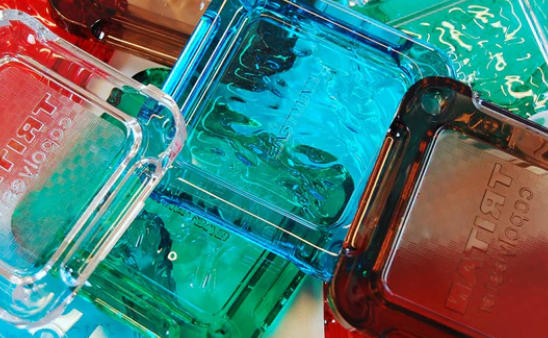
When choosing a plastic for design and manufacturing, comparing Tritan to other materials reveals clear technical and marketing advantages.
| Property | Tritan | Polycarbonate (PC) | PETG | Acrylic (PMMA) |
|---|---|---|---|---|
| BPA-free | Yes | No | Yes | Yes |
| Impact strength | Excellent | Excellent | Good | Moderate |
| Clarity | Very high | High | High | Very high |
| Heat resistance | 100°C | 120°C | 70°C | 80°C |
| Chemical resistance | High | Moderate | High | Moderate |
| Recyclability | Growing | Limited | Moderate | Moderate |
When paired with a proper Masterbatch formulation, Tritan's versatility multiplies, allowing custom hardness, gloss, and color effects that outperform traditional plastics in both appearance and performance.
Tritan's applications continue to expand across diverse industries.
Tritan is widely used in reusable water bottles, baby feeding items, food containers, coffee machines, and kitchenware. These products benefit from Tritan's BPA-free safety and superior durability. Color Masterbatch ensures bright, appealing tones that withstand washing and sterilization.
Medical device manufacturers use Tritan in diagnostic containers, filters, housings, and sterilizable instruments. Antimicrobial and hydrolysis-resistant Masterbatch modifications prevent contamination and discoloration over repeated cleanings.
In the electronics sector, Tritan's transparency and high dielectric strength make it ideal for housings, display covers, and light components. Flame-retardant Masterbatch ensures compliance with RoHS and UL94 standards.
Luxury packaging for cosmetics, perfumes, and skincare products increasingly relies on Tritan for its crystal-clear, glass-like appearance. Using advanced Masterbatch coloring systems, manufacturers achieve premium finishes while maintaining recyclability.
Tritan-based parts, when combined with reinforcing Masterbatch containing glass fibers or impact modifiers, can replace traditional engineering plastics, reducing weight while maintaining toughness.
Sustainability is now a core factor in material selection. Tritan aligns with global environmental priorities in several ways:
- BPA-free and safe: Suitable for recyclable and reusable products.
- Durability: Long product life reduces waste generation.
- Lower energy processing: Tritan's lower drying temperature saves energy.
- Compatibility with recycling: Some grades can be reprocessed multiple times with minimal performance loss.
Masterbatch developers are also innovating biobased and eco-friendly additive systems compatible with Tritan to align with circular economy goals.
Manufacturers must ensure that Tritan-based products meet strict quality benchmarks. Testing typically includes:
- Melt flow index (MFI) analysis for processability.
- Optical haze measurement for transparency validation.
- Impact and tensile strength testing for mechanical reliability.
- Chemical resistance testing against cleaning agents, oils, and alcohols.
- Color stability checks after exposure to UV light or heat.
Selecting the right Masterbatch supplier ensures consistent dispersion, minimal agglomeration, and stable color matching throughout production batches.
With the global shift toward safer, high-performance plastics, the demand for Tritan continues to rise. Innovation in Masterbatch customization further accelerates this growth, enabling tailored color effects, recyclability enhancers, and performance upgrades.
In China, many advanced material producers are integrating Tritan compounding and Masterbatch manufacturing in one facility. This integration lowers costs, shortens lead times, and ensures tighter quality control. As environmental regulations tighten, Tritan—combined with green Masterbatch options—will play an increasingly central role in sustainable material engineering.
Tritan plastic has redefined what modern copolyesters can achieve in terms of safety, performance, and aesthetic appeal. Its clarity, durability, and BPA-free chemistry make it ideal for applications spanning consumer, medical, electronic, and industrial markets.
When enhanced with the right Masterbatch solutions, Tritan offers unlimited potential for color expression, functionality, and performance optimization. For manufacturers seeking to innovate sustainably, Tritan stands as one of the most forward-looking materials available today.
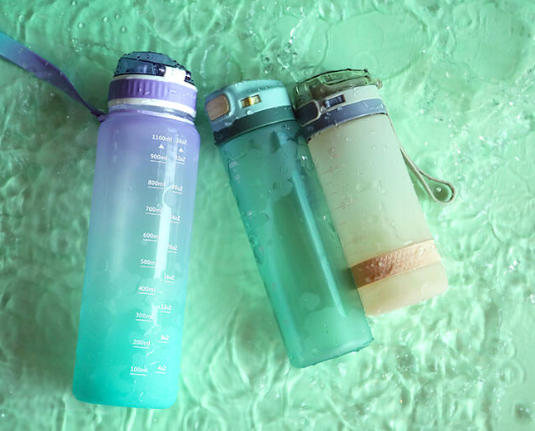
A Masterbatch is a concentrated mix of colorants or additives dispersed in a polymer carrier. It ensures even distribution and consistent quality during Tritan processing, improving appearance, UV resistance, or other properties.
Yes. Tritan is completely BPA-free and certified by FDA, EFSA, and China GB standards for food and beverage contact, making it one of the safest options for reusable containers.
While Tritan is not yet as widely recycled as PET, it can be mechanically reprocessed several times. More recycling programs and compatible Masterbatch systems are being developed to improve its circular potential.
Tritan provides the same toughness and clarity as polycarbonate but without BPA. It also has better chemical resistance and aging performance when paired with the proper additive Masterbatch.
Industries such as household goods, medical equipment, electronics, automotive, and luxury packaging find Tritan ideal due to its combination of glass-like transparency, toughness, and design flexibility.


