


close
Choose Your Site
Global
Social Media


Views: 222 Author: Rebecca Publish Time: 2025-12-18 Origin: Site


Content Menu
● Understanding Plastic Materials
● Classification of Plastic Materials
● The Role of Masterbatch in Plastic Materials
>> Benefits of Using Masterbatch
● Production Process of Plastic Materials
● Application Fields of Plastic Materials
>> Construction and Infrastructure
>> Electronics and Electrical Applications
● Environmental Considerations and Sustainability
● Choosing the Right Plastic Material and Masterbatch
● Future Trends in Plastic Materials
● FAQ: Understanding Plastic Materials and Masterbatch
>> 1. What is the difference between plastic and polymer?
>> 2. How does Masterbatch improve plastic properties?
>> 3. Can recycled plastics use Masterbatch?
>> 4. What are eco-friendly options for plastic materials?
>> 5. Why is Masterbatch preferred over direct pigment addition?
Plastic materials are among the most versatile substances ever engineered by humans. Their lightweight, adaptability, and durability have transformed industries ranging from packaging and automotive to construction and electronics. Yet, few people outside the manufacturing field understand what makes plastic materials so flexible in performance and application.
In this article, we will explore the fundamentals of plastic materials, their types, processing methods, and the critical role of Masterbatch in enhancing plastic properties. By the end, you'll gain a deeper understanding of how innovative plastic solutions are designed, customized, and produced for global industrial needs.

Plastic materials are synthetic or semi-synthetic compounds made primarily from polymers—long-chain molecules derived from petroleum, natural gas, or bio-based sources. The word "plastic" refers to the material's ability to deform under heat and pressure, making it moldable into countless shapes and forms.
From water bottles and household containers to automotive dashboards and medical devices, plastics can be engineered to meet specific performance requirements. This adaptability stems from the wide range of polymer chemistries and additive systems such as Masterbatch, which modify plastics to achieve desired color, strength, texture, or UV resistance.
To understand plastics, it's essential to categorize them by their molecular structure and behavior under heat.
Thermoplastics soften when heated and harden again when cooled. This process is reversible and repeatable, allowing recycling and reshaping. Common types include:
- Polyethylene (PE) – Widely used in films, packaging, and piping.
- Polypropylene (PP) – Known for its strength, chemical resistance, and versatility.
- Polyvinyl chloride (PVC) – Common in pipes, cables, and flooring.
- Polyethylene terephthalate (PET) – Used in beverage bottles and fibers.
Thermoplastics often require Masterbatch to control color uniformity and improve UV or thermal stability during processing.
Thermosetting plastics harden permanently when heat is applied. Once cured, they cannot be remelted. Examples include:
- Epoxy resins – High strength and excellent adhesion.
- Phenolic resins – Common in electrical insulation.
- Melamine-formaldehyde – Used for laminates and coatings.
Thermosets are ideal for structural and electrical components but typically do not use color Masterbatch since pigmentation is done during resin formulation.
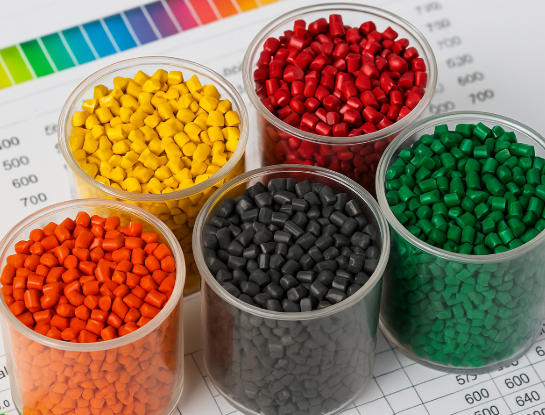
One of the most crucial innovations in the plastic industry is Masterbatch—a concentrated mixture of pigments or additives encapsulated in a polymer carrier. It is used to color raw polymers or impart specific properties to plastics.
Masterbatch is typically produced by dispersing high concentrations of pigments or functional additives into a base resin through heat and compounding. The resulting pellets are then added to virgin polymer during molding or extrusion. This process ensures even distribution and consistent performance without handling pure pigments or powders directly.
1. Color Masterbatch – Used to achieve vibrant, uniform colors in plastic products.
2. Additive Masterbatch – Adds properties such as UV resistance, flame retardancy, or anti-static capability.
3. White Masterbatch – Contains high-opacity titanium dioxide (TiO₂) for brightness.
4. Black Masterbatch – Uses carbon black for conductivity, UV protection, and aesthetic appeal.
5. Functional Masterbatch – Combines multiple additives for advanced applications such as anti-fog, anti-block, or antimicrobial effects.
- Ensures consistent coloration and property control.
- Improves process efficiency and cleanliness in production.
- Enhances the durability, appearance, and performance of final plastic products.
- Allows easy customization for client-specific requirements.
For companies specializing in customized plastic material solutions, Masterbatch technology is a core competence that enables differentiation and high-value product development.
Modern plastic manufacturing is a multistage process involving polymerization, compounding, forming, and finishing. The integration of Masterbatch typically occurs during the compounding or molding phase.
1. Polymerization – Monomers are chemically bonded to form long-chain polymers.
2. Compounding – Raw polymers are mixed with Masterbatch, fillers, and stabilizers to achieve desired performance.
3. Forming – Processes such as injection molding, extrusion, or blow molding shape the material.
4. Finishing and Testing – The final step ensures consistency in mechanical properties, color, and aesthetics.
Each stage requires precision control to ensure that the Masterbatch's functional additives distribute evenly throughout the material.
Plastic materials play a vital role in modern industries. Their adaptability, cost efficiency, and performance make them indispensable in:
Polyethylene and polypropylene dominate the packaging market due to their flexibility, clarity, and lightweight nature. Color Masterbatch provides branding consistency, while anti-fog Masterbatch enhances food safety and shelf life.
Plastics reduce vehicle weight, improving fuel efficiency. Additive Masterbatch enhances UV protection and thermal stability, making polymers suitable for dashboards, bumpers, and interior trims.
PVC and HDPE pipes, roofing membranes, and insulation boards rely on UV-resistant and flame-retardant Masterbatch for longevity and safety.
In wire coatings, switches, and housings, plastics combined with conductive or flame-retardant Masterbatch offer both protection and performance.
High-purity plastics like PP, PE, and PETG are used to manufacture syringes and containers. Antimicrobial Masterbatch improves hygiene and ensures patient safety.
While plastic materials have faced criticism for environmental impact, the industry continues to evolve toward sustainability.
Recycling technologies are improving, and bio-based plastic Masterbatch options are gaining popularity. Companies are developing biodegradable resins and eco-friendly additives to reduce plastic footprints.
Moreover, circular economy models promote reusing and recycling post-consumer materials, supported by advanced Masterbatch formulations that maintain performance even after multiple processing cycles.
Selecting a suitable plastic and compatible Masterbatch depends on key factors:
- End-use environment (temperature, UV exposure, humidity).
- Mechanical performance requirements (tensile strength, flexibility).
- Regulatory compliance (food contact, medical safety, ROHS standards).
- Appearance and branding needs (color tone, gloss level).
A professional material supplier capable of custom Masterbatch design can help clients tailor materials to perform optimally in their target applications.
The plastic industry is rapidly evolving to address global challenges. Future innovations include:
- Biodegradable polymers that reduce environmental burden.
- Smart Masterbatch that responds to temperature or light changes.
- Nanocomposite Masterbatch for superior strength and barrier performance.
- AI-driven process optimization, enhancing product consistency and resource efficiency.
Global demand for customized Masterbatch and functional plastics will continue to expand as industries seek high-performance and sustainable material solutions.
Plastic materials have revolutionized modern life through their adaptability, cost efficiency, and diverse functionality. Central to their performance is the development and use of Masterbatch, which enables precise color control, functional enhancement, and application-specific modifications.
As technology advances, and environmental awareness grows, the future of plastics will increasingly depend on sustainable innovations—high-quality masterbatches, advanced recycling systems, and eco-friendly material engineering. For global manufacturers, investing in integrated plastic material solutions is the key to meeting evolving performance, regulatory, and sustainability demands.
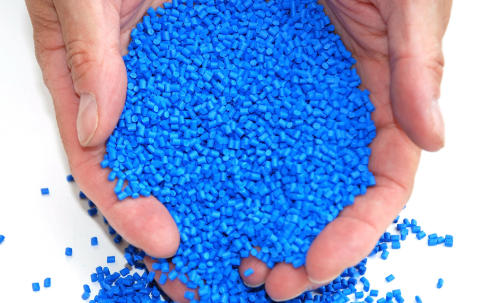
A polymer is the basic chemical structure that forms plastic. Polymers are long molecular chains, while plastic is the commercial product formed by processing and adding other materials like Masterbatch and stabilizers.
Masterbatch provides color uniformity and functional enhancements such as UV resistance, antistatic behavior, or flame retardancy, improving both aesthetics and durability.
Yes. Recycled plastics often require color or additive Masterbatch to restore performance and ensure consistent appearance after multiple cycles of reprocessing.
Sustainable options include biodegradable polymers, bio-based resins, and environmentally safe additive Masterbatch designed for easier recycling or decomposition.
Using Masterbatch ensures better pigment dispersion, cleaner processing, and easier handling, offering more accurate control over final product quality.


