


close
Choose Your Site
Global
Social Media


Views: 222 Author: Rebecca Publish Time: 2025-11-27 Origin: Site


Content Menu
● Core Elements Of The Master Batch Formula
>> Dispersing Agents And Wetting Aids
>> Processing Aids And Stabilizers
● Typical Ratios In A Master Batch Formula
● Steps To Develop A Master Batch Formula
>> 1. Define Application Requirements
>> 3. Lab-Scale Compounding And Testing
>> 4. Optimization And Scale-Up
● Masterbatch Formula Vs. Direct Compounding
● Practical Let‑Down Ratios And Use In Production
● Quality Control Of Masterbatch Formulas
● Types Of Masterbatch Formulas In The Market
>> White And Black Masterbatch
>> Functional Additive Masterbatch
● Optimizing Master Batch Formula For Different Processes
● Role Of The Master Batch Formula In Cost And Sustainability
● FAQ About Masterbatch Formula
>> 1: What is the purpose of the master batch formula?
>> 2: How do I select a suitable masterbatch for my application?
>> 3: Can one masterbatch formula provide both color and performance?
>> 4: What happens if the masterbatch carrier is not compatible with the base polymer?
>> 5: How does let‑down ratio affect masterbatch performance?
The master batch formula is the engineered “recipe” that combines carrier resin, pigments or additives, and auxiliary agents into a highly concentrated modifier for plastics. A well-designed masterbatch formula delivers consistent color or functional performance, easy processing, and cost efficiency across multiple polymer applications.

Masterbatch is a solid or liquid concentrate of pigments and/or additives that is dispersed in a compatible carrier resin and then diluted into a base polymer during processing. Instead of dosing powders directly, processors feed masterbatch pellets together with the main resin, achieving clean handling and accurate dosing.
In daily production, only a small percentage of masterbatch is required, because the master batch formula is highly concentrated. This allows plastic converters to keep their main polymer unchanged while flexibly adjusting color or performance by changing masterbatch grades and let‑down ratios.
A typical masterbatch formula contains several tightly controlled components that work together as one integrated system:
- Carrier resin
- Pigments or dyes (for color masterbatch)
- Functional additives (for performance masterbatch)
- Dispersing agents and wetting aids
- Processing aids and stabilizers
The balance between these ingredients depends on the target application, the base resin, and the processing method.
The carrier resin is the structural backbone of the master batch formula. It must be compatible with the customer's base polymer so that it melts, mixes, and solidifies without phase separation or loss of properties.
For polyolefin applications, the masterbatch often uses PE or PP as the carrier resin, while for engineering plastics like ABS, PC, PET, or PA, the masterbatch prefers the same or closely related resin. Matching carrier and base polymer ensures uniform dispersion, stable mechanical properties, and good surface finish in the final product.
In color masterbatch, pigments and dyes provide hue, opacity, and visual effects. The master batch formula defines:
- Pigment type (organic or inorganic)
- Pigment loading level
- Particle size and surface treatment
These factors determine color strength, lightfastness, thermal stability, and weatherability. For opaque products, the masterbatch may contain high levels of titanium dioxide or carbon black, while transparent or translucent parts require carefully selected pigments with appropriate particle size and refractive index.
Additive masterbatch is built around performance rather than just appearance. Typical additives in a masterbatch formula include:
- UV stabilizers and UV absorbers
- Antioxidants and thermal stabilizers
- Slip agents and anti-block agents
- Antistatic agents and conductive fillers
- Flame retardants and smoke suppressants
- Anti-microbial, anti-fog, and anti-drip agents
These additives are pre-dispersed in the carrier resin so that processors can dose them accurately by adding a fixed amount of masterbatch to the base polymer. In many cases, one masterbatch formula may combine color and additive functions, such as a black UV-stabilized masterbatch for agricultural film or outdoor pipes.
Dispersing agents help pigments and additives spread evenly within the carrier resin during compounding and later within the base polymer during molding or extrusion. Without good dispersion, the masterbatch can cause streaks, color variation, or weak spots in the final product.
Waxes, surfactants, and low-molecular-weight polymers often appear in the master batch formula as internal lubricants and wetting aids. They reduce pigment agglomeration, lower melt viscosity, and improve the distribution of solid particles at micro and nano scales.
Processing aids and stabilizers ensure that the masterbatch behaves well during extrusion and molding. They help to:
- Reduce screw torque and improve melt flow
- Minimize die build-up and plate-out
- Enhance demolding and surface gloss
- Protect pigments and polymers from thermal degradation
Antioxidants and process stabilizers are especially important in masterbatch formulas that operate at high temperatures, such as for PET, PC, or PA applications.
Although exact percentages depend on each design, many industrial masterbatch formulas fall into common ranges.
A standard color masterbatch for films, injection parts, or fibers may be structured as:
- Carrier resin: roughly 30–70%
- Pigments/dyes: roughly 20–60%
- Dispersants and processing aids: roughly 2–10%
- Optional additives: roughly 0–20%
The higher the pigment loading, the stronger the color and the lower the required masterbatch addition rate at the machine. However, very high pigment content makes dispersion more challenging and demands superior compounding and dispersant selection.
An additive master batch formula is often organized as:
- Carrier resin: roughly 40–80%
- Active additives: roughly 10–50%
- Synergists and co-stabilizers: roughly 5–20%
- Dispersants/processing aids: roughly 2–10%
Here, the goal is not color but specific performance, such as UV resistance, flame retardancy, antistatic behavior, or anti-block function in films.
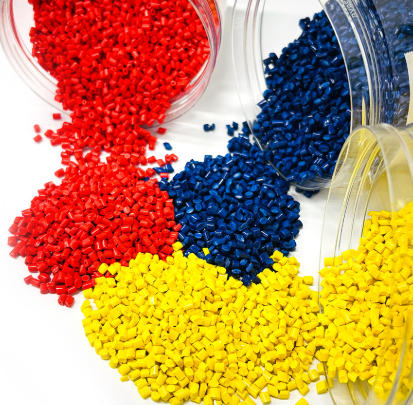
Designing a new masterbatch is a structured process that links end-use requirements with resin chemistry and processing technology.
The starting point is to clarify:
- Base polymer (PE, PP, PVC, PET, ABS, etc.)
- Processing method (injection, blow molding, film blowing, fiber spinning, extrusion coating, etc.)
- End-use environment (indoor/outdoor, temperature, UV exposure, chemicals)
- Regulatory and safety constraints (food contact, medical, REACH, RoHS, etc.)
These conditions set the boundaries for pigment and additive selection, as well as carrier resin type.
Once the application is defined, technologists choose:
- Carrier resin grade and melt index
- Pigment or dye system (including any synergists)
- Additive packages (UV, antioxidants, slip, antistatic, flame retardant, etc.)
- Dispersing agents, lubricants, and stabilizers
The master batch formula must provide good compatibility, appropriate rheology, and long-term stability.
In the laboratory, small masterbatch samples are produced using internal mixers or twin-screw extruders. These test batches are evaluated for:
- Color shade and strength versus standard chips
- Dispersion quality (microscopic inspection and filter tests)
- Melt flow and rheology behavior
- Heat and light stability
- Mechanical performance in the final plastic article
Feedback from these tests drives formula adjustments.
After initial evaluation, technologists may:
- Adjust pigment or additive levels
- Switch to a different carrier resin grade
- Modify dispersing agent or lubricant levels
- Add co-stabilizers or synergists
Only when the master batch formula performs reliably at lab and pilot scales is it transferred to full-scale production. At this stage, process windows, screw configurations, barrel temperatures, and cooling conditions are all defined to keep quality stable.
Processors can theoretically add pigments and additives directly into the base polymer, but this approach is less flexible and more difficult to control. With direct compounding:
- Precise dosing of low-percentage additives is complicated
- Dispersion may be inconsistent, causing color streaks or property variations
- More advanced compounding equipment and process know-how are required on site
Using a masterbatch solution offers:
- Simplified dosing (e.g., 2–5% masterbatch by weight)
- Cleaner, dust-free working conditions
- Better quality consistency thanks to specialized compounding
- Easier and quicker color or property changes
This is why the master batch formula has become the standard way to introduce pigments and additives in modern plastics processing.
In real production, the masterbatch is added to the base polymer at a specific let‑down ratio. The master batch formula is designed backwards from this target dosage.
- Color masterbatch is often used at 1–10% depending on pigment strength and required opacity.
- Additive masterbatch may run from 1–5% or more, depending on how concentrated the active ingredients are and what performance level is required.
For example, a highly loaded black masterbatch with strong carbon black dispersion may need only 2% in a film, while a lower-strength color masterbatch could require 5–8% to reach the same shade. The key is that the masterbatch manufacturer and end user agree on the let‑down ratio and performance targets during the development of the master batch formula.
To keep performance uniform from batch to batch, masterbatch producers implement strict quality control schemes. Typical tests include:
- Melt flow index, density, and moisture content of the masterbatch
- Color measurements (delta E) compared with approved standards
- Dispersion rating via microscopy or filter tests
- Additive content verification by analytical methods
- Accelerated aging tests for UV and thermal stability
If any of these parameters drift outside the pre-defined tolerance, the batch is adjusted or rejected. This protects processors from unexpected color shifts, poor mechanical properties, or processing problems in their own factories.
The plastics industry uses many specialized masterbatch designs, each built on a specific formula philosophy.
Color masterbatch (including black, white, and colored grades) is tuned for:
- Precise shade and opacity
- Stability during processing and end use
- Low migration or blooming
- Good flow and dispersion at normal processing conditions
White masterbatch relies heavily on titanium dioxide for opacity and brightness, often at very high loadings. The master batch formula must manage TiO₂ agglomeration, light scattering, and surface quality.
Black masterbatch usually employs carbon black at high concentration. Here the formula must balance deep jetness, UV protection, viscosity, and filtration requirements.
Filler masterbatch incorporates high levels of minerals such as calcium carbonate, talc, or barium sulfate. Its master batch formula aims to:
- Reduce overall material cost
- Adjust stiffness, dimensional stability, and opacity
- Maintain acceptable impact strength and processability
The challenge is to keep the filled polymer easy to process without excessive wear on machines or loss of product quality.
Functional masterbatch may include flame retardants, anti-fog agents, anti-microbial systems, or conductive fillers. Its formula often combines several additives that must work together without negative interactions. Careful selection of carrier resin, stabilizers, and dispersing aids is essential to avoid loss of activity or phase separation.
The same plastic grade may be processed by different technologies, so the masterbatch must be tuned accordingly.
For injection molding, the master batch formula focuses on:
- Consistent melt flow and low viscosity variation
- Good color dispersion at relatively high shear rates
- Minimal influence on cycle time and warpage
The masterbatch pellets must blend evenly with the base polymer in the hopper and along the screw, preventing segregation and ensuring uniform parts.
Film applications are highly sensitive to gel formation, haze, and thickness variations. Thus the film-grade master batch formula pays special attention to:
- Extremely fine dispersion and low filter pressure value
- Carefully chosen carrier resin with similar rheology to the base polymer
- Controlled slip and anti-block levels to avoid blocking or bag sticking
For fibers and filaments, the masterbatch must pass through very fine filters and spinnerets. The formula must ensure:
- Very small pigment particle size
- Excellent thermal and shear stability
- Zero visible agglomerates
Any imperfection in the master batch formula can cause broken filaments, dyeing problems, or specks in textiles and nonwovens.
Because masterbatch is highly concentrated, it allows processors to minimize waste and improve cost efficiency. Using precise formulations:
- Reduces over-dosing of expensive pigments and additives
- Decreases scrap rates due to color or property inconsistency
- Enables easy switching between colors or functional grades with minimal cleaning
Sustainability goals are also closely linked to masterbatch design. Recyclable carriers, halogen-free flame retardant masterbatch, and low‑VOC formulations support circular economy initiatives. In some cases, the masterbatch itself is optimized to work well with high-recycled-content polymers, helping converters maintain quality while reducing virgin resin usage.
The master batch formula is the foundation of every successful masterbatch product. By choosing the right carrier resin, pigment or additive system, dispersants, and processing aids, manufacturers create highly concentrated masterbatch solutions that are easy to dose, stable in processing, and reliable in long-term performance.
From simple color concentrates to complex functional packages, a carefully engineered masterbatch formula helps plastic processors achieve consistent quality, shorter development cycles, and better control over cost and sustainability. Whether the application is film, injection parts, fibers, or engineering components, the right masterbatch solution turns design ideas into high-performing plastic products.
The purpose of the master batch formula is to define exact ratios of carrier resin, pigments or additives, and auxiliaries so that a small amount of masterbatch can modify a large amount of base polymer. This ensures repeatable color, performance, and processing behavior from batch to batch.
Selection starts from your base resin, processing method, and target properties. You then choose a masterbatch with a compatible carrier resin and a formula designed for your temperature, shear conditions, and end-use requirements such as UV resistance, food contact, or flame retardancy.
Yes. Many modern masterbatch products combine color pigments with additives like UV stabilizers, slip agents, or antistatic compounds. The master batch formula is carefully balanced so that color and additive functions are both delivered without negative interactions or processing issues.
If the masterbatch carrier resin is incompatible, the final plastic can show phase separation, poor mechanical properties, uneven surface appearance, and difficulty in processing. This is why most masterbatch suppliers design the carrier to match or closely resemble the customer's base polymer.
The let‑down ratio defines how much masterbatch is mixed with the base resin. If the ratio is too low, the final part may not reach the required color depth or additive level; if it is too high, it can alter viscosity, mechanical properties, and cost. The master batch formula is designed for an optimal let‑down range, and staying within this range gives the best balance of performance and economics.
[1](https://alokmasterbatches.com/blogs/what-is-masterbatch-its-manufacturing/)
[2](https://www.debaomasterbatch.com/News_Events/2025-09-04/masterbatch-manufacturing-process.html)
[3](https://usmasterbatch.com/products/what-is-masterbatch-meaning-masterbatch-manufacturing-process.html)
[4](https://eupegypt.com/blog/color-masterbatch-manufacturing-process/)
[5](https://jieyatwinscrew.com/blog/masterbatch-production-line/)
[6](https://en.wikipedia.org/wiki/Masterbatch)
[7](https://www.charmingmb.com/2025/10/09/masterbatch-manufacturing-process-a-complete-guide-to-production-and-innovation/)
[8](https://www.cowinextrusion.com/understanding-color-masterbatch-manufacturing-process/)
[9](https://alokmasterbatches.home.blog/2025/03/05/understanding-the-composition-of-masterbatch-ingredients-and-additives/)


