


close
Choose Your Site
Global
Social Media


Views: 222 Author: Rebecca Publish Time: 2025-12-18 Origin: Site


Content Menu
● What Makes a Plastic “Light”?
● The Lightest Plastic Material: Polypropylene (PP)
>> Chemical Composition and Properties
>> Applications of Polypropylene
>> The Role of Masterbatch in PP Production
● Comparing the Lightest Plastics by Density
● The Rising Star: Polypropylene Foams
● The Impact of Masterbatch on Lightweight Plastics
>> 1. Color Customization Without Added Weight
>> 2. Enhanced Strength and Durability
>> 3. Improved Process Stability
>> 4. High Efficiency and Sustainability
● Applications of Lightweight Plastics Worldwide
>> Construction and Insulation
● Innovations in Ultra-Light Plastics
● The Environmental Benefits of Lightweight Plastics
● Selecting the Right Masterbatch for Lightweight Plastics
● Future Trends of Lightweight Plastic Materials
● FAQs About Lightweight Plastic Materials
>> 1. What is the lightest plastic material available today?
>> 2. How does Masterbatch reduce the weight of plastics?
>> 3. Is lightweight plastic recyclable?
>> 4. What are the key industries using lightweight plastics?
>> 5. How do Masterbatch additives affect sustainability?
Plastic materials have revolutionized modern manufacturing, offering flexibility, durability, and lightweight performance for countless industries. From automotive to packaging and electronics, innovative plastics continuously push the limits of material science. One common question both engineers and product designers often ask is: “What is the lightest plastic material?”
Understanding the lightest plastics helps manufacturers achieve better product performance, lower costs, and improved environmental efficiency. In this article, we'll explore the lightest plastic materials available today, dive into their chemical compositions, production processes, and applications, and also highlight the role of Masterbatch technology in enhancing plastic performance.

The density of a plastic determines its lightness. In scientific terms, density is measured in grams per cubic centimeter (g/cm³). The lower the density, the lighter the material. For instance, water has a density of 1.0 g/cm³, while the lightest plastics are often below 0.9 g/cm³.
Several factors influence the weight of plastic:
- Polymer structure: The arrangement of molecular chains affects how tightly packed the material is.
- Additives and fillers: The inclusion of materials like glass fiber or talc can increase density, while blowing agents or hollow microspheres reduce it.
- Manufacturing method: Foaming, extrusion, and injection molding techniques impact density and the final product's weight.
In the world of lightweight materials, polypropylene (PP) and polyethylene (PE) are often recognized as among the lightest plastics.
Polypropylene (PP) is a thermoplastic polymer made by polymerizing propylene monomers (C₃H₆). With a density of approximately 0.90 g/cm³, PP stands out as one of the lightest commercially available plastics.
Its molecular structure gives it:
- High heat resistance
- Excellent chemical stability
- Impact strength
- Resistance to fatigue (perfect for hinges and flexible components)
Thanks to its low density, PP products often weigh 15–30% less than comparable polyethylene or polystyrene parts.
PP's versatility makes it an industry favorite in:
- Automotive components: Interior panels, bumpers, and under-hood parts
- Packaging materials: Containers, bottles, and film wraps
- Textiles: Nonwoven fabrics used in disposable hygiene products
- Medical devices: Syringes, diagnostic equipment housing, and labware
Masterbatch is a concentrated mixture of pigments, additives, or fillers encapsulated into a polymer carrier. In PP production, Masterbatch plays a key role by adding:
- Color (using color Masterbatch)
- UV stability (using UV Masterbatch)
- Flame retardancy (using FR Masterbatch)
- Lightweight efficiency (by including anti-foaming or nucleating agents)
For example, a foaming Masterbatch can reduce density by introducing microcell structures within the plastic matrix, resulting in lighter yet structurally sound components. This combination provides manufacturers with both weight reduction and material consistency.
To put things into perspective, here's a comparison of several common lightweight plastics:
| Material | Density (g/cm³) | Key Features | Common Applications |
|---|---|---|---|
| Polypropylene (PP) | 0.90 | Lightweight, durable, heat resistant | Automotive, packaging |
| Low-Density Polyethylene (LDPE) | 0.92 | Flexible, chemically resistant | Films, bags |
| High-Density Polyethylene (HDPE) | 0.95 | Stiffer, stronger | Containers, piping |
| Polystyrene (PS) | 1.04 | Easy to mold, brittle | Packaging, insulation |
| ABS Plastic | 1.05 | Strong, rigid | Electronics, appliances |
Clearly, PP remains the lightest major industrial plastic, combining low density with wide availability and cost-effectiveness.
Another innovation in lightweight plastics is polypropylene foam. By introducing blowing agents or specialized Masterbatch during extrusion, manufacturers can reduce bulk density down to 0.03–0.10 g/cm³ — making foamed PP among the lightest structural plastics ever created.
- Exceptional impact resistance and thermal insulation.
- Outstanding recyclability compared to other foamed plastics like EPS.
- Resistant to chemicals, oils, and temperature variations.
Because of these benefits, PP foam is widely used in automotive bumpers, packaging cushions, and sound insulation panels. Masterbatch formulators have even developed lightweight nucleating Masterbatch to ensure uniform cell formation during foaming, enhancing both strength and appearance.
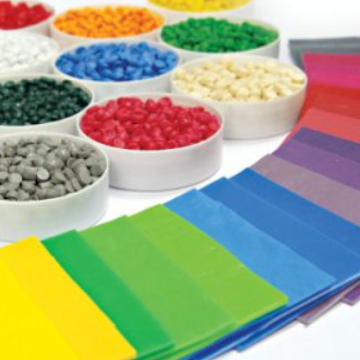
The inclusion of Masterbatch in plastic manufacturing provides an extraordinary advantage in customizing materials without compromising their weight or integrity.
Instead of directly mixing pigments, using color Masterbatch disperses colorants more efficiently, minimizing pigment waste and density variation.
Certain reinforcing Masterbatch formulations improve tensile and impact properties, compensating for any strength loss caused by reducing plastic thickness.
Anti-static and anti-oxidant Masterbatch reduce degradation during processing, helping lightweight plastics maintain consistent quality.
Because Masterbatch is concentrated, smaller quantities are needed to achieve desired effects. This reduces logistics costs and energy use, making lightweight technologies even more eco-friendly.
Every kilogram of weight reduced in a vehicle can save about 0.1 liters of fuel per 100 kilometers. As a result, automotive manufacturers aggressively use lightweight plastics like PP and HDPE, often modified by Masterbatch systems for UV resistance and stability.
Lightweight packaging not only cuts transportation costs but also lowers carbon emissions. PP films and foams masterbatched with anti-fog and anti-blocking additives are common in food and medical packaging.
In consumer electronics, plastics must be lightweight, durable, and flame-retardant. Using specialized FR Masterbatch ensures high safety without compromising low density.
PP-based foams and composites offer robust insulation properties for piping, walls, and modular panels. When combined with UV stabilizer Masterbatch, they resist weather aging and degradation.
Beyond traditional PP and PE, scientific advancements have produced ultra-light materials that push the boundaries of density and performance:
1. Aerogels – Some polymeric aerogels have densities as low as 0.03 g/cm³, almost lighter than air.
2. Microcellular Polymers – Using gas injection or foaming Masterbatch technologies, plastics gain microscopic air bubbles that drastically cut weight.
3. Bio-based Lightweight Plastics – Researchers are developing biodegradable, lightweight alternatives using plant-based polymers like PLA mixed with biodegradable Masterbatch.
Although these ultra-light plastics are still evolving, they represent the future of material science — where weight reduction and sustainability coexist.
Lightweight materials contribute to energy efficiency, lower emissions, and reduced resource consumption throughout a product's life cycle.
For instance:
- Transportation: Less fuel consumption and reduced CO₂ emissions.
- Logistics: Lower shipping costs due to reduced load weight.
- Recycling: Easier melting and processing with lower energy input.
By using recycled plastics combined with Masterbatch additives, manufacturers can maintain product performance while keeping operations sustainable.
Choosing the appropriate Masterbatch type is crucial to maintaining optimal balance between lightness, performance, and production cost. Here's how manufacturers approach selection:
| Masterbatch Type | Function | Benefit in Lightweight Applications |
|---|---|---|
| Color Masterbatch | Add uniform color | Maintains low pigment load, preserving low density |
| UV Masterbatch | Protects from degradation | Extends outdoor lifetime of thin PP films |
| Foaming Masterbatch | Reduces density via microcell formation | Significantly cuts material weight |
| Nucleating Masterbatch | Improves crystallization | Enhances strength-to-weight ratio |
| Antioxidant Masterbatch | Prevents thermal degradation | Supports thin-wall, lightweight processing |
When working with polypropylene or polyethylene, material scientists often test mixtures of several Masterbatch types to achieve the perfect blend of aesthetics, durability, and minimal weight.
The next decade promises exciting breakthroughs driven by global priorities like sustainability, circular economy, and material performance optimization.
Key trends include:
- Development of green Masterbatch made from bio-based carriers.
- Use of nanomaterials and smart Masterbatch for tunable density control.
- Enhanced recycling compatibility, enabling lighter materials without losing quality.
- Integrating AI-driven material design to predict ideal polymer–additive combinations.
As research progresses, plastics may become even lighter, stronger, and more recyclable — opening the door to new industrial applications from aerospace to consumer electronics.
The lightest plastic material widely used today is Polypropylene (PP), with a density around 0.90 g/cm³. Through innovations like foaming technology and Masterbatch applications, manufacturers can further reduce weight, enhance performance, and increase sustainability across multiple industries.
From automotive and packaging to construction and electronics, PP and its derivatives continue to symbolize efficiency and innovation. Leveraging advanced Masterbatch formulations, companies can achieve precise control over color, strength, and environmental stability — all while keeping materials lightweight.
The future of lightweight plastics lies in combining scientific innovation with eco-conscious production, ensuring that industries remain competitive and sustainable in a world that demands both performance and responsibility.
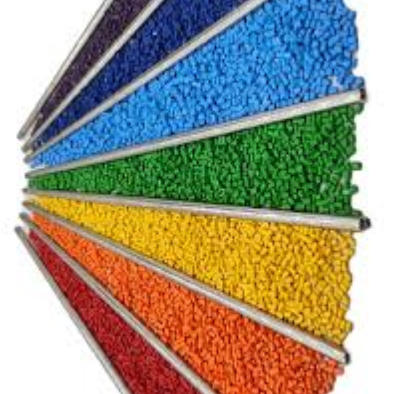
The lightest commercially used plastic is Polypropylene (PP), with a density of about 0.90 g/cm³. When processed as foam, PP can reach densities as low as 0.03 g/cm³.
Certain foaming or nucleating Masterbatch types create micro air cells within the material during molding or extrusion, which decreases density while maintaining strength.
Yes. Most lightweight plastics, especially PP and PE, are fully recyclable. When used with recycling-compatible Masterbatch, the material quality remains consistent through multiple reuse cycles.
Industries such as automotive, packaging, consumer electronics, and construction rely heavily on lightweight plastics to reduce cost, improve energy efficiency, and enhance performance.
Modern eco-friendly Masterbatch formulations reduce waste, improve recyclability, and enable lower material consumption — all supporting sustainable manufacturing practices.


