


close
Choose Your Site
Global
Social Media


Views: 222 Author: Rebecca Publish Time: 2025-12-18 Origin: Site


Content Menu
● Understanding Plastic Hardness
>> Key Factors Affecting Plastic Hardness
● The Hardest Plastic Materials in the World
>> 1. Polyether Ether Ketone (PEEK)
>> 2. Ultra-High-Molecular-Weight Polyethylene (UHMW-PE)
>> 4. Polytetrafluoroethylene (PTFE)
● How Masterbatch Enhances Plastic Hardness
>> Types of Masterbatch for Hard Plastics
● Selecting the Hardest Plastic for Your Application
● Innovations in Hard Plastic Formulations
● Practical Applications of Hard Plastics
>> Industrial Sectors Benefiting from Hard Plastics
● Advantages of Using Hard Plastics over Metals
● FAQ
>> 1. What testing methods determine plastic hardness?
>> 2. How does Masterbatch improve plastic hardness?
>> 3. Which plastic is hardest — PEEK or UHMW-PE?
>> 4. Can Masterbatch be used in recycled plastics?
>> 5. Are harder plastics recyclable?
Plastic materials have revolutionized modern industries with their versatility, durability, and design flexibility. From lightweight packaging to aerospace components, plastics have become essential materials in product engineering and manufacturing. However, when it comes to applications that demand extreme strength, impact resistance, and longevity, one question often arises — what is the hardest plastic material?
This article explores the world of high-performance plastics, focusing on the hardest and most durable varieties, their applications, and how Masterbatch technology enhances their performance.
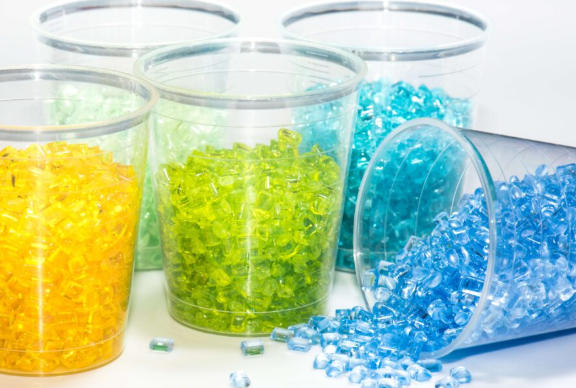
Hardness in plastics refers to a material's resistance to surface deformation, scratching, or indentation. It is usually measured using the Rockwell, Shore, or Vickers hardness scales, depending on the testing method and the plastic type.
While hardness alone doesn't define a material's overall strength, it is a critical indicator of its ability to withstand mechanical stress, abrasion, and wear — features that determine how the plastic behaves in demanding environments.
Several factors influence how hard or soft a plastic material can be:
- Polymer structure: Crystalline structures generally increase hardness compared to amorphous ones.
- Filler and reinforcement content: Additives such as glass fibers, carbon fibers, and mineral fillers can drastically improve hardness.
- Temperature and processing conditions: High temperatures can reduce hardness by softening polymer chains.
- Masterbatch composition: The inclusion of specific Masterbatches can improve physical strength, UV stability, color uniformity, and surface hardness.
There are hundreds of polymer types, but only a few are recognized as the hardest engineering-grade plastics in terms of resistance to wear, impact, and deformation. Let's explore the top candidates for the title of “the hardest plastic material.”
PEEK is widely considered the hardest and most advanced thermoplastic available today. It offers exceptional mechanical strength, high heat resistance (up to 250°C continuous use), and strong chemical stability.
Key Features:
- Rockwell M hardness of around 99.
- Excellent tensile strength and dimensional stability.
- Outstanding resistance to abrasion and fatigue.
- Compatible with high-performance Masterbatch formulations to enhance color and UV stability.
Applications: Aerospace, medical implants, automotive components, and heavy industrial gears where reliability under extreme conditions is essential.
UHMW-PE is another extremely hard and durable plastic with a unique combination of toughness, low friction, and wear resistance. Its molecular weight exceeds 3 million g/mol, providing incredible impact and abrasion resistance.
Key Features:
- Rockwell R hardness around 64 to 70.
- Nearly unbreakable under impact.
- Excellent for sliding and bearing applications.
- Processors often use Masterbatch additives to improve surface hardness, color dispersion, and anti-static properties.
Applications: Conveyor belts, wear plates, chute liners, medical prosthetics, and bulletproof vests.
While not as hard as PEEK, polycarbonate offers a unique balance between impact strength and optical clarity. It is roughly 250 times stronger than glass, making it widely used for transparent tough components.
Key Features:
- Rockwell M hardness around 70 to 80.
- Excellent dimensional stability and thermal resistance.
- Easily modified with Masterbatch pigments to maintain transparency while boosting UV stability.
Applications: Safety helmets, bullet-resistant windows, eyewear lenses, and medical equipment housings.
PTFE, commonly known by the brand name *Teflon*, is known more for its chemical inertness and ultra-low friction than for sheer hardness. However, when reinforced with fillers or glass fibers, PTFE ranks among the toughest polymers available.
Key Features:
- Rockwell R hardness around 55 (can increase with fillers).
- Exceptional resistance to chemicals and temperature fluctuations.
- Often enhanced with performance Masterbatch compounds for wear improvement.
Applications: Seals, gaskets, bearings, and high-performance electrical insulation.
Polyamide-Imide (PAI) is another thermoplastic renowned for its hardness and mechanical strength, often ranking close to PEEK in hardness tests.
Key Features:
- Rockwell E hardness up to 100.
- Maintains strength at high temperatures.
- Excellent fatigue resistance and dimensional accuracy.
- Compatible with Masterbatch enhancements for color and UV durability.
Applications: Aerospace parts, precision bearings, and mechanical components under high stress or heat.
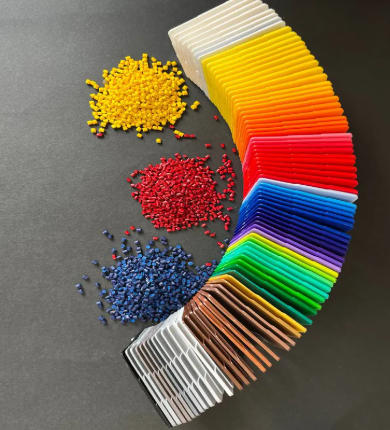
Masterbatch plays a vital role in improving the physical and chemical performance of plastics. It is a concentrated mixture of pigments, additives, and polymers that are added to the raw plastic during processing. In high-performance plastics, Masterbatch formulations can be tailored to increase the material's strength, stiffness, and durability.
1. Color Masterbatch – Used to maintain consistent color without compromising hardness or heat stability.
2. Additive Masterbatch – Contains ingredients like UV stabilizers, anti-oxidants, and anti-wear agents.
3. Filler Masterbatch – Includes mineral or glass-filled compounds that directly enhance hardness and rigidity.
4. Reinforcement Masterbatch – Incorporates carbon fibers, glass fibers, or ceramic microbeads for extreme strength.
By adjusting the type and concentration of Masterbatch, plastics can achieve targeted hardness, better dimensional stability, and improved mechanical performance for specific applications.
Choosing the right plastic material depends on multiple engineering factors. Hardness alone is rarely the only consideration—engineers must evaluate thermal endurance, load-bearing capacity, and cost implications.
- Mechanical load and stress level.
- Exposure to heat, UV light, and chemicals.
- Weight limitations and design tolerances.
- Required color or aesthetic properties (managed through Masterbatch).
- Recycling or sustainability goals.
For example:
- In automotive bearings, UHMW-PE and PAI offer excellent durability and low friction.
- In aerospace, PEEK's strength-to-weight ratio and flame resistance make it the best option.
- For consumer electronics, polycarbonate provides a mix of toughness, gloss, and optical clarity.
As global industries push for stronger, lighter, and more sustainable materials, Masterbatch technology has become a powerful tool for innovation. New trends include nano-reinforced Masterbatches, which introduce nanoparticles or carbon nanotubes into plastics, significantly increasing hardness without adding weight.
- Graphene-loaded Masterbatch for ultra-hard, conductive plastics.
- Bio-based Masterbatch improving the hardness of biodegradable polymers.
- Recycled Masterbatch formulations that maintain mechanical strength while supporting environmental goals.
These innovations are transforming how industries approach product design, extending the life cycle and performance of plastic components.
Hard plastics dominate in fields where metals were once standard, thanks to their corrosion resistance, lightweight nature, and design flexibility.
- Aerospace: Low-weight, high-hardness components like fittings, seals, and brackets.
- Automotive: Hard engineering plastics replace metal in gears, housings, and connectors.
- Electronics: Durable, high-insulation materials for connectors and circuits.
- Medical: Sterilizable, biocompatible plastics for surgical devices and implants.
- Construction: Structural reinforcements, piping, and safety equipment made with fiber-reinforced plastics and customized Masterbatches.
By customizing Masterbatch formulations, manufacturers can tailor the performance properties of each material to its target environment, whether it's extreme heat or long-term mechanical fatigue.
While metals have historically dominated manufacturing, advanced plastics now rival or surpass them in many applications. The hardest plastics provide several compelling advantages:
- Lightweight strength: Lower density reduces weight while maintaining structural integrity.
- Corrosion resistance: Plastics do not rust or corrode like metal components.
- Design flexibility: Easier molding into complex shapes.
- Lower manufacturing cost: Especially for mass production.
- Enhanced performance through Masterbatch adaptation: Targeted improvements in hardness, surface finish, and UV resistance.
These benefits make ultra-hard plastics an indispensable alternative for manufacturers looking to optimize performance and efficiency.
Determining the hardest plastic material depends on application needs, but PEEK, PAI, and UHMW-PE consistently rank at the top due to their exceptional hardness, toughness, and chemical resistance. The use of Masterbatch technology plays a pivotal role in optimizing these materials, allowing manufacturers to fine-tune properties such as hardness, UV stability, and surface durability.
With ongoing research and the evolution of performance Masterbatches, plastic materials continue to push the boundaries of strength and longevity—enabling new innovations across aerospace, automotive, medical, and industrial sectors.
Plastic hardness is typically measured using the Rockwell, Shore, or Vickers scales, each designed for specific material types and thicknesses. The Rockwell hardness test is most common for engineering plastics like PEEK and PAI.
Masterbatch improves hardness by adding filler, reinforcement, and stabilizing components that modify the polymer structure. This can increase surface density, reduce flexibility, and enhance resistance to wear and impact.
PEEK generally ranks higher in hardness and temperature resistance than UHMW-PE, though UHMW-PE has superior impact and wear performance. The ideal choice depends on specific project requirements.
Yes. Recycled polymers often lose strength after reprocessing, but the right Masterbatch formulations can restore hardness, color consistency, and overall mechanical stability.
Many hard engineering plastics like polycarbonate or PEEK are recyclable to varying degrees, though they often require specialized equipment due to high melting points and mechanical toughness.


