


close
Choose Your Site
Global
Social Media


Views: 222 Author: Rebecca Publish Time: 2025-12-18 Origin: Site


Content Menu
● Understanding Plastic Material Categories
● The Role of Cost in Plastic Selection
● Top Low-Cost Plastic Materials
>> 4. Recycled Plastics and Reprocessed Blends
● The Role of Masterbatch in Cost Optimization
● How Masterbatch Reduces Plastic Cost
● Comparing Material Prices (Approximate Range)
● Choosing the Right Plastic for Your Application
● Sustainability and Recycling Considerations
● FAQ
>> (1) What is the cheapest type of plastic available?
>> (2) How can Masterbatch help reduce production costs?
>> (3) Are recycled plastics cheaper than virgin resins?
>> (4) Which plastic offers the best balance between cost and performance?
>> (5) Can Masterbatch be used with all plastic types?
Plastic materials form the foundation of modern industrial manufacturing, from packaging and automotive parts to consumer electronics and construction components. One of the key questions manufacturers often ask is: what is the cheapest plastic material that doesn't compromise essential performance?
In global production chains, cost-effectiveness is vital — but it's equally important to maintain balance between affordability, strength, durability, and customization possibilities. This makes the study of economical plastics and their functional enhancement, such as through Masterbatch, essential for industries seeking sustainable growth.
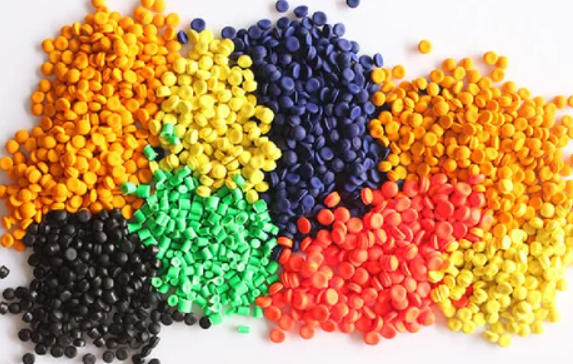
Plastics can be broadly classified into two main types — thermoplastics and thermosetting plastics.
- Thermoplastics soften when heated and can be remolded multiple times. These are widely used due to recyclability and versatility.
- Thermosets, once molded, cannot be remelted. They offer high thermal stability but are less economical for large-scale mass production.
Among thermoplastics, certain materials are recognized as particularly low-cost, including Polyethylene (PE), Polypropylene (PP), and Polystyrene (PS). Understanding their structure and cost dynamics helps determine which material suits different product applications best.
The price of plastic raw materials fluctuates depending on several factors:
- Crude oil price trends
- Production technology and scalability
- Additives and processing difficulty
- Mechanical and thermal property requirements
- Environmental regulations and recyclability
Manufacturers must weigh all of these parameters before choosing the cheapest plastic. Often, what appears inexpensive upfront may result in higher downstream costs due to processing challenges or limited durability. Here's where Masterbatch technology becomes valuable — allowing cost reduction without sacrificing performance.
Polyethylene is one of the most economical and versatile plastics. It is available in multiple forms, including Low-Density Polyethylene (LDPE) and High-Density Polyethylene (HDPE).
Advantages:
- Extremely low cost per kilogram.
- Excellent chemical resistance.
- Good flexibility and easy processability.
Applications:
Used in film packaging, bottles, pipes, household containers, and coatings. When combined with color or additive Masterbatch, PE can achieve enhanced UV resistance, antistatic properties, or custom colors for branding.
Polypropylene shares similarities with PE but offers slightly higher stiffness and better thermal resistance, all while maintaining a low cost.
Advantages:
- Lightweight and fatigue-resistant.
- Resistant to acids, bases, and chemical solvents.
- Excellent compatibility with various types of Masterbatch, increasing customization efficiency.
Applications:
Used in automotive components, medical devices, and consumer goods. PP is a go-to material for cost-conscious manufacturers aiming for performance and appearance consistency.
Polystyrene stands out for its rigidity, transparency, and ease of molding. It is less flexible than PE or PP but remains relatively cheap due to abundant availability.
Advantages:
- Clear and glossy surface.
- Easy to color with Masterbatch for visual appeal.
- Good dimensional stability.
Applications:
Packaging trays, household items, disposable cutlery, and insulation panels. While cost-effective, PS can be brittle, limiting its use in dynamic load applications.
In recent years, recycled plastics have gained popularity as both cost and sustainability drivers. For cost-sensitive projects, using reprocessed PE or PP mixed with filler Masterbatch (such as calcium carbonate or talc) can significantly lower raw material costs without compromising structural performance.
Reprocessed plastic combined with functional Masterbatch formulations allows manufacturers to achieve specific opacity, hardness, or barrier properties, making recycling an economically viable option.
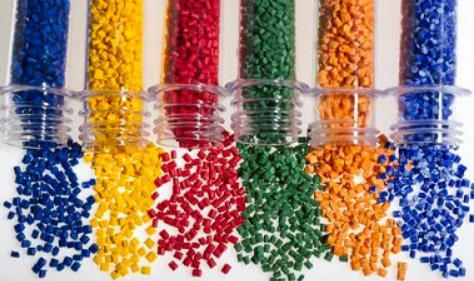
A Masterbatch is a concentrated blend of pigments, additives, or fillers encapsulated in a carrier resin. It is added to base plastic materials during processing to achieve color, performance enhancement, or material property modification.
The incorporation of Masterbatch systems enables accurate dosing, improved quality control, and reduced wastage compared with direct pigment or additive mixing.
- Color Masterbatch: Provides consistent color matching.
- Additive Masterbatch: Enhances functionalities like UV resistance, flame retardancy, or antistatic performance.
- Filler Masterbatch: Reduces costs by substituting part of virgin resin with inexpensive fillers, such as calcium carbonate.
- Black and White Masterbatch: Common in film and injection molding for shading and opacity.
Each type plays a critical role in helping manufacturers fine-tune plastic properties according to specific product needs — especially when trying to reduce the cost per unit.
In industrial production, Masterbatch provides several cost-saving advantages:
1. Reduced Material Consumption: Optimizing filler content lowers the proportion of expensive virgin polymers.
2. Enhanced Processing Efficiency: Improved dispersion and flowability reduce energy consumption and production cycle time.
3. Waste Minimization: Uniform mixing prevents product defects, minimizing scrap rate.
4. Product Consistency: Even minor variations in additive dosing can affect product quality — Masterbatch ensures stability.
5. Sustainability Impact: Improved recyclability and reduced polymer dependence meet both green compliance and cost goals.
Thus, the cheapest plastic is often not just about raw resin price; it also depends on intelligent Masterbatch integration to achieve economical and sustainable results.
| Plastic Type | Average Global Price (USD/kg) | Characteristics | Common Masterbatch Use |
|---|---|---|---|
| Polyethylene (PE) | 0.80 – 1.20 | Flexible, chemical resistant | Color, filler, UV additive |
| Polypropylene (PP) | 0.90 – 1.30 | Lightweight, durable | Filler, color, antistatic |
| Polystyrene (PS) | 1.00 – 1.40 | Clear, easy to mold | Color, antistatic, flame retardant |
| PVC | 0.70 – 1.10 | Strong, fire resistant | Stabilizer, color, calcium carbonate filler |
| PET | 1.20 – 1.80 | Strong, glossy | Color, anti-yellowing |
| Recycled Plastics | 0.40 – 0.80 | Sustainable, variable quality | Functional additive Masterbatch |
(Note: Prices vary with oil market fluctuations and region.)
When evaluating which plastic material to use based on cost:
- For flexible packaging: LDPE and HDPE with filler Masterbatch.
- For rigid consumer goods: PP with additive Masterbatch provides balance between performance and cost.
- For display or transparent components: PS or PET with custom color Masterbatch.
- For industrial or construction use: Recycled resin with high-quality filler Masterbatch brings down overall expenditure.
The global shift toward sustainability reshapes how manufacturers view “cheapness.” The real cheapest plastic is not just the lowest in initial cost but the most cost-effective through its life cycle.
By using recycled PE or PP coupled with high-performance Masterbatch, companies can reduce environmental impact while maintaining material quality — meeting both economic and ecological objectives.
The cheapest plastic material depends on balancing raw material costs, processing efficiency, and end-use performance. Generally, Polyethylene (PE), Polypropylene (PP), and Polystyrene (PS) stand out as low-cost staples. However, combining these with Masterbatch offers an advanced route to lower costs even further — by reducing resin volume, improving function, and ensuring quality consistency.
As global plastic demand grows, the smartest manufacturers focus on optimization through Masterbatch innovation, not simply raw price reduction. This combination creates products that are not only economical but also reliable and sustainable in today's competitive markets.
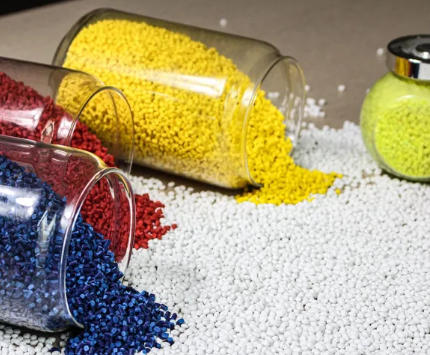
The cheapest plastic is typically Polyethylene (PE), particularly LDPE or HDPE, due to its simplicity, abundance, and easy processing. When blended with filler Masterbatch, its cost efficiency improves further.
Masterbatch allows precise control of color and additive concentration, reducing waste and improving consistency. Filler Masterbatch replaces part of expensive virgin polymer with low-cost minerals, effectively lowering production costs.
Yes, recycled plastics can be significantly cheaper depending on purity and processing quality. Using functional Masterbatch improves color and strength, making recycled materials competitive with virgin alternatives.
Polypropylene (PP) often provides the best cost-to-performance ratio. It's cost-effective, versatile, and works well with multiple types of Masterbatch for additive enhancements.
Most thermoplastics, including PE, PP, PS, PET, and PVC, can incorporate Masterbatch. The key is selecting a carrier resin compatible with the base polymer to ensure uniform dispersion.


