


close
Choose Your Site
Global
Social Media


Views: 222 Author: Rebecca Publish Time: 2025-12-15 Origin: Site


Content Menu
● Understanding SAN Plastic Material
>> What Is SAN?
>> Chemical and Physical Properties
● The Role of SAN in Masterbatch Production
>> Why SAN Is Used in Masterbatch Formulation
>> Benefits of Using SAN in Masterbatch
● Manufacturing Process of SAN Plastic
● Key Applications of SAN Plastic
>> In Automotive and Electronics
>> In Industrial and Medical Fields
● SAN Compared to Other Plastics
● Advantages and Limitations of SAN
>> Advantages
>> Limitations
● Environmental Considerations and Sustainability
● Global Market and Industrial Trends
● Processing Guidelines for SAN Plastics
● Best Practices for Using SAN-Based Masterbatch
● FAQs About SAN Plastic Material
>> 1. What does SAN stand for?
>> 2. Is SAN plastic safe for food contact?
>> 3. What is the difference between SAN and ABS?
>> 5. How does SAN contribute to Masterbatch quality?
Styrene Acrylonitrile (SAN) is a transparent, rigid plastic material known for its excellent strength, clarity, and heat resistance. As an engineering thermoplastic, SAN plays a crucial role in various manufacturing industries, offering a cost-effective alternative to more expensive materials like polycarbonate or acrylic. Its consistent performance under mechanical and thermal stress makes it an ideal choice for parts that require stiffness, high gloss, and chemical resistance.
Beyond its physical characteristics, SAN is also a vital base resin used in the Masterbatch industry — enabling color dispersion, UV stability, and property enhancement for many plastic products. In this article, we delve deeply into the properties, production methods, applications, and the role of SAN in Masterbatch formulation to help manufacturers and product designers better understand its potential.

SAN (Styrene Acrylonitrile) is a copolymer derived from styrene and acrylonitrile. Typically, the composition includes 70–80% styrene and 20–30% acrylonitrile. This combination results in a polymer that exhibits both clarity and toughness — making SAN a suitable replacement for materials like glass and acrylic in many applications.
Styrene contributes to the high transparency and rigidity, while acrylonitrile enhances chemical resistance and thermal stability. These combined characteristics make SAN highly versatile across a wide range of consumer and industrial products.
SAN is known for several key physical and mechanical properties:
- Transparency: Offers near-glass clarity, suitable for displaying contents clearly.
- Rigidity: High stiffness and strength provide excellent dimensional stability.
- Thermal Resistance: Withstands temperatures up to 100–110°C, depending on grade.
- Chemical Resistance: Superior resistance to oils, fats, and detergents.
- Gloss: Naturally glossy, making it ideal for aesthetic applications.
- Low Density: Lightweight, offering cost savings in production and transport.
In addition, SAN's high surface hardness makes it resistant to scratches — an important advantage in consumer products requiring durability and long-term clarity.
Masterbatch refers to a concentrated mixture of pigments or additives encapsulated during a heat process into a carrier resin, which is later cooled and cut into granular form. When used in plastic manufacturing, Masterbatches enable uniform dispersion of colorants or functional additives within the polymer base.
SAN serves as an excellent carrier for Masterbatch due to its thermoplastic compatibility, optical clarity, and high thermal resistance. It blends efficiently with transparent polymers like ABS, PS, and PMMA, ensuring consistent color and performance.
- Enhanced Dispersion: The molecular compatibility of SAN ensures even distribution of pigments or additives.
- Preservation of Optical Clarity: Especially important in transparent Masterbatch formulations for optical or display applications.
- Thermal and Chemical Stability: Protects sensitive pigments and additives during high-temperature processing.
- Processing Flexibility: Suitable for injection molding, extrusion, and blow molding processes.
- Compatibility: Works well with various engineering plastics in automotive and electronic applications.
For manufacturers producing color or additive Masterbatches for transparent or semi-transparent plastics, SAN-based Masterbatch ensures improved product consistency and visual appeal.
The production of SAN involves bulk, solution, or suspension polymerization. The process begins with monomers — styrene and acrylonitrile — which undergo copolymerization through a free-radical mechanism.
1. Polymerization: Monomers are mixed and polymerized under controlled conditions, using initiators to start the reaction.
2. Cooling and Pelletizing: After polymerization, the molten SAN is cooled, solidified, and cut into uniform pellets.
3. Masterbatch Integration: In some cases, coloring or performance additives are compounded into the SAN during extrusion to produce Masterbatch pellets customized for specific end-use industries.
The production process can be fine-tuned to modify the molecular weight and acrylonitrile ratio, tailoring SAN properties to match performance needs.
SAN's transparency and rigidity make it a popular choice for a variety of household and consumer items, such as:
- Kitchen appliances and food containers
- Transparent cosmetic packaging
- Water filter housings
- Bathroom accessories
- Display cases and bottles
Manufacturers often rely on SAN Masterbatch to achieve decorative color effects while maintaining transparency. For example, a light blue SAN Masterbatch may be used in toothbrush handles or storage jars to combine aesthetics with clarity.
SAN components are also used in automotive dashboard panels, interior trims, switches, and indicator covers — products requiring both toughness and clarity. In electronics, SAN is valued for its insulation properties, surface gloss, and dimensional accuracy.
Masterbatch formulations based on SAN are tailored for UV protection and heat stability, enhancing product lifespan in demanding environments.
Industrial users apply SAN for tubing, laboratory equipment, and fluid-handling parts where clarity and chemical resistance are essential. Medical device manufacturers often use SAN for drug delivery components and diagnostic tools due to its inert and stable nature.
Here too, SAN-based Masterbatch may include antibacterial agents or clarity enhancers designed to meet hygienic and optical standards required in medical environments.
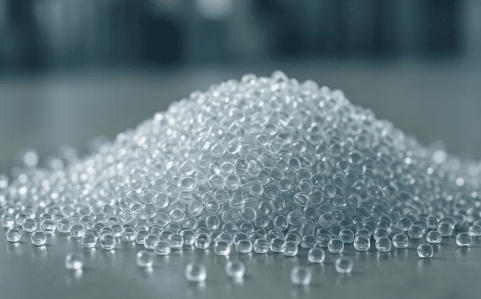
When selecting materials, industries often weigh SAN against alternatives like ABS, PS, and PMMA.
| Property | SAN | ABS | PS | PMMA |
|---|---|---|---|---|
| Transparency | Excellent | Opaque | Limited | Excellent |
| Impact Resistance | Moderate | High | Low | Moderate |
| Chemical Resistance | High | Moderate | Low | High |
| Heat Distortion Temp (°C) | 100–110 | 95–105 | 80–90 | 95–105 |
| Surface Hardness | High | Medium | Low | High |
| Masterbatch Compatibility | Excellent | Good | Fair | Excellent |
The table shows that SAN balances clarity, rigidity, and chemical resistance more effectively than most plastics except PMMA. However, SAN's lower cost and easier processing make it more practical for mid-range industrial applications.
- Transparent and glossy appearance.
- Excellent chemical and heat resistance.
- Suitable for food-contact applications.
- Superior dimensional stability.
- Easy to color through Masterbatch integration.
- Limited impact resistance compared to ABS.
- Can suffer yellowing under long-term UV exposure without stabilizers.
- May be brittle in low-temperature conditions.
To overcome these drawbacks, manufacturers frequently incorporate impact modifiers or UV stabilizers through Masterbatch formulations.
SAN is a recyclable material under recycling code **#7 (Other plastics Recycled SAN can be blended with virgin resin in many applications without significant loss of properties. However, recycling requires careful sorting and cleaning due to its chemical makeup.
Emerging sustainability trends include bio-based SAN resins and eco-friendly Masterbatch additives that minimize volatile organic compound (VOC) emissions during processing. Manufacturers striving for circular economy goals increasingly adopt SAN blends optimized for recycling efficiency.
The global SAN market continues to grow, driven by increasing demand for transparent, durable plastics across the automotive, consumer, and electronics sectors. The Asia-Pacific region, led by China, dominates production capacity due to strong supply chain integration and advanced Masterbatch technology development.
Technological innovations focus on:
- Enhanced SAN Masterbatch designs with multifunctional characteristics such as anti-fog, flame retardant, or anti-scratch properties.
- Hybrid polymers combining SAN with other resins like ABS or ASA to improve impact resistance.
- Sustainable compounds that meet consumer and regulatory expectations for green manufacturing.
Proper processing ensures optimal product quality and performance.
Molding Temperature Range: 190–250°C
Drying Conditions: 80–90°C for 2–3 hours (to remove moisture)
Melt Flow Index (MFI): 2–8 g/10 min
During compounding or Masterbatch production, maintaining uniform temperature distribution minimizes degradation and ensures color uniformity. The resin's high clarity requires precision in temperature and shear rate control to prevent flow marks and discoloration.
1. Pre-drying SAN resins and Masterbatch to eliminate moisture.
2. Matching base resin and carrier resin compatibility to ensure optimal dispersion.
3. Proper dosing ratio (typically 1–5%) depending on pigment loading and color intensity.
4. Regular quality checks — verifying color consistency, melt flow, and gloss level.
5. Stabilizer inclusion in Masterbatch for outdoor or heat-exposed applications.
Following these practices ensures that SAN-based products maintain their clarity, durability, and processing efficiency.
Styrene Acrylonitrile (SAN) plastic is a high-performance, transparent, and chemically resistant thermoplastic that serves thousands of industrial applications. From consumer goods to automotive components, SAN's balanced properties make it indispensable to modern manufacturing. Its strong synergy with Masterbatch technology allows for precise coloring, UV protection, and additive distribution that elevate material functionality and aesthetics.
While SAN's brittleness and UV sensitivity limit some uses, innovation in customized SAN-based Masterbatches continues to expand its reach across industries — driving smarter, more sustainable design in global plastics manufacturing.
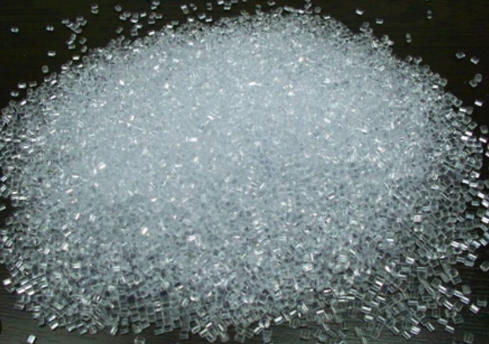
SAN stands for Styrene Acrylonitrile, a copolymer made from styrene and acrylonitrile. It combines the clarity of styrene with the chemical resistance of acrylonitrile.
Yes. Certain SAN grades are approved for food contact applications, making them safe for kitchenware, beverage containers, and storage products. Always verify compliance with relevant FDA or EU standards.
While both are styrene-based copolymers, ABS includes butadiene for higher impact resistance, making it opaque. SAN lacks butadiene, resulting in superior transparency but lower impact strength.
Yes, SAN can be recycled and reused, especially in non-critical applications. Blending recycled SAN with virgin resin maintains material performance with minimal degradation.
SAN is an excellent Masterbatch carrier for transparent polymers. It ensures uniform dispersion of pigments, retains optical clarity, and protects additives from thermal degradation during processing.


