


close
Choose Your Site
Global
Social Media


Views: 222 Author: Rebecca Publish Time: 2025-12-15 Origin: Site


Content Menu
● Understanding the Basics of PPS Plastic Material
● The Chemical and Physical Properties of PPS
>> 3. Electrical and Flame Retardant Properties
● Manufacturing and Processing of PPS
>> 1. Raw Material Preparation
>> 2. Compounding and Masterbatch Integration
>> 3. Molding and Processing Techniques
● Key Advantages of PPS Plastic
● Common Applications of PPS Plastic Material
>> 2. Electrical and Electronic Industries
>> 3. Industrial Equipment and Mechanical Components
>> 4. Aerospace and Defense Applications
● PPS vs Other Engineering Plastics
● Environmental and Sustainability Considerations
● The Future of PPS Plastic and Masterbatch Innovation
● FAQs About PPS Plastic Material
>> 2. Can PPS be colored using Masterbatch?
>> 3. Is PPS suitable for high-temperature applications?
>> 4. How does PPS compare to PEEK?
>> 5. Can PPS plastics be recycled?
Polyphenylene Sulfide (PPS) plastic material is one of the most advanced engineering thermoplastics available today. Known for its superior heat resistance, excellent mechanical strength, and outstanding chemical stability, PPS has become a go-to material for engineers and manufacturers in demanding industries such as automotive, electronics, aerospace, and industrial equipment.
As a high-performance polymer, PPS often works alongside other additives such as Masterbatch formulations, which help enhance its properties for specific applications like coloring, UV protection, or flame retardancy. This makes PPS not only versatile but also customizable for specialized industrial needs.

Polyphenylene Sulfide (PPS) is a crystalline polymer with a highly stable molecular structure. It is a thermoplastic that can tolerate extremely high temperatures, typically maintaining mechanical integrity up to 260°C under continuous use conditions.
PPS plastic material is often compounded with fillers, fibers, and Masterbatch additives to improve its functionality. Manufacturers frequently choose PPS because of its excellent combination of attributes, such as:
- Extraordinary dimensional stability.
- Superior chemical and solvent resistance.
- Low moisture absorption rate.
- High rigidity and flame retardancy.
- Excellent insulating properties.
These features make PPS a preferred alternative to metals and other thermosetting materials in many performance-critical applications.
PPS consists of a backbone of benzene rings linked by sulfide bridges. This structure gives it high crystallinity, stiff chains, and inherent resistance to oxidation and chemical degradation.
When Masterbatch materials are incorporated into PPS, they interact at the molecular level — modifying surface energy, color consistency, or mechanical behavior without compromising the polymer's original stability.
PPS can operate continuously at high temperatures without significant loss of strength. Its melting point of approximately 280°C makes it one of the most heat-tolerant engineering plastics available.
When combined with heat-stabilizing Masterbatch additives, PPS can maintain structural integrity even in thermal cycling environments such as engine compartments or industrial furnaces.
PPS has a very low dielectric constant, making it ideal for electrical insulation components. Additionally, it is naturally flame retardant due to its high sulfur content. Many manufacturers still add flame-retardant Masterbatch formulas to meet stricter UL ratings for electronic or automotive regulators.
PPS is produced through a polycondensation reaction between para-dichlorobenzene and sodium sulfide. After polymerization, the raw material is transformed into pellets that can be blended with reinforcing fillers, stabilizers, and Masterbatch materials to meet specific processing requirements.
During compounding, PPS pellets are mixed with pigments and performance additives to create uniform product characteristics. The addition of a color Masterbatch ensures consistent pigmentation across large production runs, while functional Masterbatches may improve UV resistance, antistatic performance, or toughness.
The compounding process is crucial for optimizing PPS's mechanical, chemical, and visual characteristics. It determines how well PPS will perform during molding, extrusion, or 3D printing.
PPS plastic can be processed using several industrial methods:
- Injection molding for high-precision components.
- Extrusion for films, sheets, or pipes.
- Compression molding for large industrial parts.
Because of its high crystallinity, PPS requires specific temperature control during molding. A custom additive Masterbatch is often used to fine-tune melt flow and crystallization behavior.
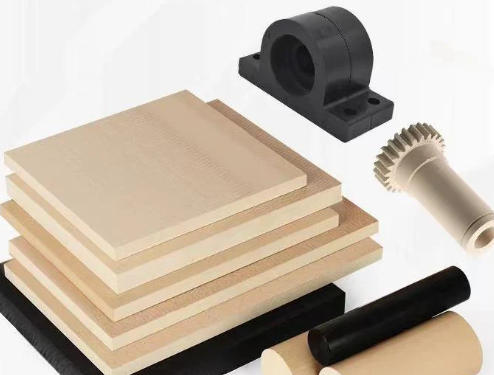
PPS exhibits outstanding dimensional accuracy and minimal creep over long-term loading, even at high temperatures. This stability is invaluable in automotive and aerospace parts subject to extreme mechanical stress.
Adding Masterbatch formulations such as glass fiber or mineral fillers can enhance rigidity, impact resistance, and thermal tolerance.
PPS resists a wide variety of chemicals including fuels, acids, alkalis, and organic solvents. Its inherent resistance eliminates the need for protective coatings, simplifying production and reducing costs.
However, Masterbatch additives can improve PPS performance against specific chemical exposures or surface aging conditions.
PPS produces smooth, glossy surfaces after molding. This feature is particularly important for aesthetic components like automotive housings or electronic parts. Using color Masterbatch provides stable color dispersion and UV protection to maintain long-term appearance.
PPS is widely used in automotive engineering for components exposed to heat, wear, and chemical agents. Typical applications include:
- Fuel system parts.
- Turbocharger housings.
- Electric motor housings.
- Brake system components.
With the help of Masterbatch technology, PPS parts can be customized with colors, reinforced fibers, or lightweight additives to meet manufacturer-specific performance targets.
Owing to its excellent insulating and flame retardant properties, PPS is an ideal material for:
- Connectors and switches.
- Circuit board components.
- Coil bobbins and relay parts.
Electrical Masterbatch formulations help improve arc resistance and surface resistivity, ensuring reliability across various voltage environments.
PPS is used for pump parts, valves, bearings, and seals operating in chemical and high-temperature environments. Lubrication-modified Masterbatch types can reduce friction coefficients and improve wear life.
Due to its lightweight and heat-resistant nature, PPS is used for aircraft structural components, sensor housings, and radar parts. Antistatic or conductive Masterbatch additives make PPS suitable for sensitive electronics and EMI shielding.
| Property | PPS | PEEK | POM | Nylon (PA) |
|---|---|---|---|---|
| Max continuous temperature | 260°C | 250°C | 110°C | 120°C |
| Chemical resistance | Excellent | Excellent | Moderate | Moderate |
| Moisture absorption | Very low | Low | High | High |
| Cost | Moderate | High | Low | Low |
| Compatible with Masterbatch | Yes | Yes | Yes | Yes |
PPS stands out for delivering high performance at a relatively moderate cost compared with other high-end polymers such as PEEK. Its compatibility with Masterbatch systems enhances its competitive edge in industries that require both strength and design flexibility.
Modern PPS production incorporates eco-friendly Masterbatch strategies, such as:
- Utilizing recyclable pigments and fillers.
- Reducing emission rates during compounding.
- Enhancing reprocessability of waste PPS materials.
Because PPS maintains its performance through multiple processing cycles, it fits into circular manufacturing systems focused on resource efficiency and sustainability.
As materials science evolves, PPS continues to benefit from advanced Masterbatch innovations. These include nanocomposite formulations, bio-based coloring agents, and smart additives that improve self-cleaning or antimicrobial behavior.
Manufacturers are now developing PPS grades with improved transparency, impact resistance, and environmental friendliness—further expanding its range of industrial uses. With growing demands for lightweight, high-performance, and recyclable materials, PPS is positioned to play a significant role in future manufacturing trends.
PPS plastic material is a high-performance thermoplastic with exceptional thermal stability, chemical resistance, and mechanical strength. Its ability to integrate seamlessly with specialized Masterbatch systems gives manufacturers tremendous versatility in achieving desired colors, surface properties, and functional enhancements. As sustainability and product performance demands increase, PPS remains one of the most promising materials for the next generation of engineering and industrial applications.
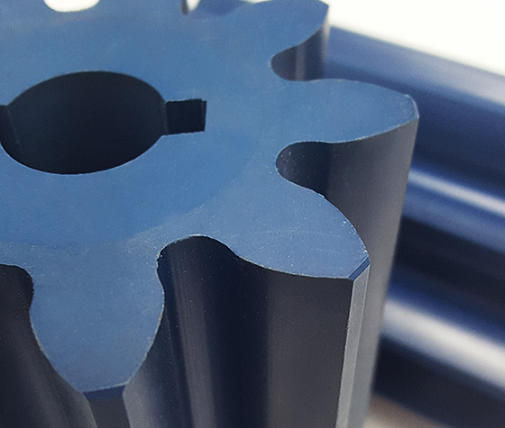
PPS is primarily composed of benzene rings connected by sulfide bonds, resulting in a highly stable polymer chain. It is synthesized through a polycondensation reaction involving para-dichlorobenzene and sodium sulfide.
Yes, PPS can be efficiently colored using Masterbatch to ensure consistent color distribution, heat stability, and UV resistance throughout the product.
Absolutely. PPS maintains its mechanical integrity up to around 260°C, making it ideal for automotive under-hood and industrial machinery parts.
While both PPS and PEEK offer superior temperature and chemical resistance, PPS provides a cost-effective alternative with slightly lower mechanical properties but similar processing advantages.
Yes, PPS can be reprocessed and reused several times without significant degradation, especially when paired with eco-friendly Masterbatch additives that stabilize its structure during re-melting.


