


close
Choose Your Site
Global
Social Media


Views: 222 Author: Rebecca Publish Time: 2025-11-28 Origin: Site


Content Menu
● Dimensional Stability and Moisture Behavior
● Chemical and Thermal Resistance
● POM Compared with Other Engineering Plastics
● Processing and Manufacturing of POM
● Masterbatch Solutions for POM
● Typical Applications of POM Plastic
● Design Considerations and Limitations
● Sustainability and Recycling of POM
● FAQ About POM Plastic Material
>> 1. What is POM plastic made from?
>> 2. Where is POM plastic commonly used?
>> 3. How does POM compare with nylon (PA)?
>> 5. Why is Masterbatch important for POM applications?
POM (polyoxymethylene), often called acetal or polyacetal, is a high‑performance engineering thermoplastic known for its metal‑like stiffness, excellent wear resistance, and very low friction. It is widely used in precision parts such as gears, bearings, and automotive components, and is frequently customized using Masterbatch solutions to fine‑tune color and functional properties.
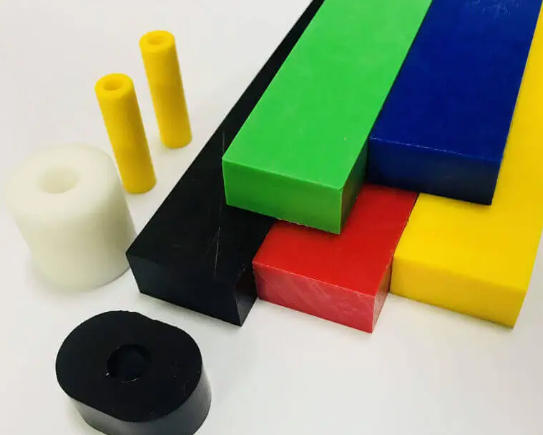
POM is a semi‑crystalline engineering plastic produced by polymerizing formaldehyde or related monomers into long chains with a high degree of crystallinity. This structure gives POM its characteristic high strength, rigidity, and fatigue resistance, allowing it to maintain mechanical performance under continuous loads and repetitive motion. Because of these features, POM is often chosen as a replacement for metal in many small mechanical components.
In industrial and OEM production, POM is not used only as a natural resin; it is often combined with different kinds of Masterbatch to achieve specific performance targets. Color Masterbatch provides consistent color and appearance, while additive Masterbatch can improve UV resistance, lubrication, flame performance, antistatic behavior, and processing stability. This flexible approach lets manufacturers adapt one base POM resin to multiple applications without changing the core polymer each time.
From a chemical standpoint, POM is usually divided into two main types: homopolymer POM (POM‑H) and copolymer POM (POM‑C). Homopolymer grades generally offer slightly higher strength, stiffness, and fatigue resistance, making them suitable for precision gears, springs, and small load‑bearing parts. Copolymer grades are designed for improved thermal stability, better hot‑water and alkaline resistance, and lower risk of degradation in demanding environments.
Industrially, POM is supplied in many special grades that are engineered for specific performance profiles. For example, reinforced POM grades incorporate glass fibers, carbon fibers, or mineral fillers to increase stiffness, heat resistance, and dimensional stability in structural applications. These reinforced materials are often produced via reinforced POM Masterbatch, which concentrates the fiber or mineral content and is then let down into base POM resin during compounding.
There are also impact‑modified POM grades containing elastomeric impact modifiers to improve toughness and resistance to shock and vibration. In addition, wear‑resistant grades use Masterbatch with PTFE, graphite, or similar lubricating additives to further lower friction and extend service life in sliding parts. Flame‑retardant POM grades can be formulated using flame‑retardant Masterbatch to help meet electrical, appliance, or automotive fire safety standards.
POM is well known for its high mechanical strength and rigidity relative to its density. Parts made from POM can handle substantial loads without excessive deformation, which is why the material is used for gears, cams, and brackets that must maintain precise geometry. It also has high fatigue resistance and creep resistance, meaning it can withstand repeated stress cycles and long‑term static loads with minimal loss of performance.
A defining characteristic of POM is its very low coefficient of friction and its self‑lubricating behavior. Sliding surfaces made from POM can run smoothly with reduced need for external lubrication, which is particularly valuable in applications such as small gear trains, sliding rails, and hinge components. When additional performance is required, wear‑resistant POM Masterbatch can be added to further reduce friction, minimize noise, and increase durability under high load or high speed.
Dimensional stability is a major advantage of POM compared with many other engineering plastics. Because of its semi‑crystalline structure and low moisture absorption, POM parts experience limited dimensional change in humid or wet environments. This makes POM an excellent choice for precision components where tight tolerances are critical, such as gears, bearings, and valve components.
Unlike nylon (PA), which can absorb significant moisture and swell, POM typically absorbs only a small amount of water and shows minimal swelling. As a result, POM parts maintain their designed clearances and engagement, even when exposed to moisture, water spray, or variable humidity. Using the correct Masterbatch stabilizers can further enhance long‑term dimensional stability by protecting the polymer chains from oxidation or hydrolysis during service.
POM exhibits good resistance to many chemicals including fuels, oils, lubricants, and a wide range of organic solvents, which supports its use in automotive fuel systems and fluid‑handling equipment. Copolymer POM generally performs better than homopolymer grades in hot water, alkaline environments, and conditions where long‑term thermal stability is required. This chemical robustness allows POM components to operate reliably in contact with various fluids.
Thermally, POM has a relatively high melting point compared with many commodity plastics and can operate for long periods at moderately elevated temperatures without significant loss of mechanical performance. However, it is not a high‑temperature super polymer, so for continuous temperatures far above its recommended range, other materials may be preferred. To improve heat resistance and stability during processing, manufacturers can use antioxidant or heat‑stabilizer Masterbatch designed specifically for POM.
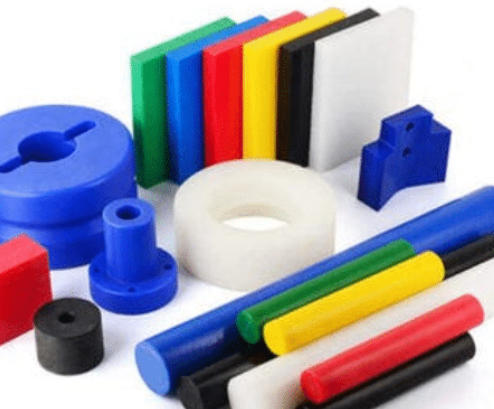
When compared to ABS, PP, and similar general‑purpose plastics, POM offers a more “metal‑like” combination of stiffness, hardness, and low friction. This makes POM particularly attractive for mechanical parts that must handle load and motion, where ABS or PP might wear quickly or deform. POM provides longer service life, quieter operation, and more reliable performance under dynamic conditions.
In comparison with nylon, POM generally has lower moisture absorption and better dimensional stability, while nylon can sometimes offer superior impact strength and temperature resistance in specific grades. Designers often choose POM when precise tolerances and low friction are more important than maximum impact toughness. Where even higher thermal resistance is needed, polymers such as PEEK or PPS may be selected, but these are usually much more expensive than POM, so POM remains a cost‑effective solution for many mid‑temperature applications.
POM is typically supplied as pellets and processed using common thermoplastic methods such as injection molding and extrusion. It flows well into complex molds and can reproduce fine details with high accuracy, which is important for gears, intricate mechanisms, and detailed surface features. POM is also relatively easy to machine, allowing secondary operations such as drilling, turning, milling, and tapping to be performed when extra precision is required.
In industrial practice, POM is frequently compounded with Masterbatch on twin‑screw extrusion lines to tailor its final properties. Color Masterbatch enables precise color matching and branding without needing painting or coating after molding. Additive Masterbatch introduces lubricants, UV stabilizers, flame retardants, antistatic agents, or reinforcing fibers in a controlled, homogeneous way. Using Masterbatch simplifies production, reduces formulation complexity, and helps maintain stable processing windows in high‑volume manufacturing.
Masterbatch plays a central role in the customization of POM for specific industries and performance requirements. Instead of stocking many different pre‑compounded grades, processors can keep a base POM resin and combine it with targeted Masterbatch to achieve the right balance of properties. This strategy offers both cost savings and greater flexibility in meeting changing customer demands.
Different Masterbatch systems are used for different functions:
- Reinforced POM Masterbatch introduces glass fibers, carbon fibers, or mineral fillers to increase stiffness, strength, and heat resistance for structural parts.
- Wear‑resistant POM Masterbatch uses solid lubricants such as PTFE or graphite to lower friction, reduce wear, and minimize squeaking or stick‑slip behavior in sliding components.
- Silicone or siloxane Masterbatch improves melt flow, reduces die build‑up, enhances surface slip, and can significantly lower friction and noise in moving mechanisms.
- Flame‑retardant Masterbatch helps POM components comply with fire safety standards in electrical devices and automotive interiors.
- Formaldehyde‑scavenger Masterbatch is tailored for POM to bind free formaldehyde, supporting lower emissions and safer processing.
By combining these different Masterbatch solutions, manufacturers can produce POM compounds that meet complex performance, safety, and regulatory requirements while using the same core polymer platform.
POM is widely used in the automotive industry for interior and under‑hood components that must withstand mechanical loads and frequent motion. Examples include gears, bushings, clips, latches, window regulator parts, fuel system valves, and sensor housings. In many cases, POM replaces metal to reduce weight, minimize noise, and lower overall system cost while maintaining sufficient strength and durability.
In mechanical and industrial equipment, POM is used for bearings, gears, cams, sprockets, chain guides, and sliders. The low friction and self‑lubricating nature of POM allow these parts to operate smoothly with reduced maintenance. Wear‑resistant POM Masterbatch can be used here to further extend lifetime under demanding conditions.
POM is also common in electrical and electronic applications where insulation and dimensional stability are important. Switch components, connector housings, cable management parts, and appliance mechanisms often rely on POM for reliable performance. In fluid‑handling systems, POM is used for pump housings, impellers, flow‑control elements, and fittings, taking advantage of its chemical resistance and low moisture uptake.
In consumer and industrial goods, POM appears in zippers, buckles, furniture hardware, tool components, and various fastening and locking mechanisms. Color Masterbatch allows these parts to match brand colors or safety codes. Because POM can be easily molded and machined, it is well suited to high‑volume production of precise, repeatable components.
When designing with POM, engineers should follow standard guidelines for thermoplastic parts, such as incorporating adequate draft angles, avoiding sharp internal corners, and maintaining uniform wall thickness where possible. These measures help reduce internal stresses and ensure consistent mold filling, cooling, and shrinkage. Proper gate design and runner systems are also important to achieve balanced flow and minimize warpage.
Despite its many advantages, POM has some limitations. It is sensitive to strong mineral acids and strong oxidizing agents, and care must be taken when selecting POM grades for continuous exposure to high temperatures or aggressive chemicals. Homopolymer grades may be less stable than copolymers in hot water or alkaline environments, so grade selection is critical. Using the appropriate Masterbatch for stabilization, wear improvement, or emission control is essential to ensure long‑term reliability.
Sustainability is becoming more important in the plastics industry, and POM is no exception. While POM is not yet as widely recycled as some commodity plastics, there is increasing use of recycled POM in non‑critical applications. Production scrap and post‑industrial waste can be re‑ground and blended with virgin POM, often together with stabilizer Masterbatch, to maintain acceptable mechanical properties.
During recycling and reprocessing, proper stabilizers and formaldehyde‑scavenger Masterbatch play a key role in limiting degradation and controlling emissions. Designers can support more sustainable use of POM by minimizing part weight, designing components for easier disassembly, and standardizing material selections to make recycling streams more efficient. As demand grows for more sustainable engineering solutions, recycled POM compounded with appropriate Masterbatch systems will likely become a more common option.
POM plastic is a versatile engineering material combining high stiffness, strength, low friction, and excellent dimensional stability, which makes it ideal for precision gears, bearings, automotive components, and mechanical parts in many industries. By integrating customized Masterbatch systems—such as reinforced POM Masterbatch, wear‑resistant Masterbatch, silicone Masterbatch, flame‑retardant Masterbatch, and formaldehyde‑scavenger Masterbatch—manufacturers can adapt POM to meet demanding requirements for performance, safety, and aesthetics while maintaining efficient, cost‑effective production.
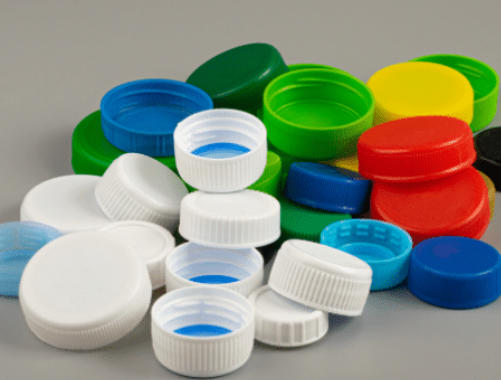
POM plastic is made by polymerizing formaldehyde or related monomers into long, crystalline polymer chains, resulting in a thermoplastic with high stiffness, strength, and low friction. The polymer is then stabilized and can be further modified with Masterbatch to achieve specific colors and functional properties.
POM is widely used in automotive gears, bushings, clips, latches, and fuel system parts, as well as in mechanical bearings, cams, chain guides, and sliders. It also appears in electrical connectors, appliance mechanisms, zippers, buckles, and many precision consumer components that require low friction and stable dimensions.
Compared with nylon, POM absorbs less moisture and provides better dimensional stability in humid or wet environments, which is critical for precise gear meshes and bearing fits. Nylon can offer higher impact resistance in some formulations, but POM generally provides lower friction and more consistent dimensions, especially when combined with wear‑resistant POM Masterbatch.
Yes, POM can be recycled, particularly post‑industrial scrap and production waste that is re‑ground and reprocessed on compounding or molding lines. To preserve properties and control emissions during recycling, stabilizer and formaldehyde‑scavenger Masterbatch are often added, making recycled POM more suitable for non‑critical or semi‑structural applications.
Masterbatch is important because it allows processors to customize POM's color, wear behavior, processing stability, and regulatory performance without reformulating the base polymer for every application. With targeted POM Masterbatch solutions, manufacturers can quickly adjust properties to meet automotive, electrical, industrial, or consumer requirements while keeping production efficient and flexible.
[1](https://salesplastics.com/pom-material/)
[2](https://pom-material.com/blog/what-is-the-pom-plastic-material/)
[3](https://www.beeplastic.com/blogs/plastic-insights/the-essential-guide-to-pom-plastic-products-applications-and-mechanical-properties-1)
[4](https://www.specialchem.com/plastics/guide/polyacetal-polyoxymethylene-pom-plastic)
[5](https://firstmold.com/guides/pom-plastic/)
[6](https://www.canyoncomponents.com/post/polyoxymethylene-acetal-pom-high-speed-low-drag)
[7](https://www.linkedin.com/pulse/comprehensive-guide-polyoxymethylene-pom-process-grades-ahmed-ragab-t3tef)
[8](https://ud-machine.com/blog/polyoxymethylene-material/)
[9](https://rexplastics.com/plastic-injection-molds/polyoxymethylene/)
[10](https://www.ptsmake.com/pom-machining-guide-tolerances-finishes-cost-faqs/)


