


close
Choose Your Site
Global
Social Media


Content Menu
● Key Properties of Plastic Materials
● Main Types of Plastic Materials
>> Thermosets
>> Elastomers
● Common Plastic Resins and Their Uses
● How Plastic Materials Are Made
>> From Raw Materials to Polymers
>> Compounding and Masterbatch Integration
>> Converting Compounds into Products
● The Role and Types of Masterbatch
● Benefits of Using Masterbatch in Plastic Materials
● Applications of Plastic Materials Across Industries
● Sustainability and Future Trends in Plastic Materials
● FAQ About Plastic Materials and Masterbatch
>> 1. What is the basic definition of plastic material?
>> 2. How does Masterbatch differ from raw additives?
>> 3. Which plastic types most commonly use Masterbatch?
>> 4. Is Masterbatch compatible with recycled or bio‑based plastics?
>> 5. How should manufacturers choose the right Masterbatch?
Plastic material is a family of engineered polymers that can be shaped under heat or pressure and then retain their form, making it one of the most versatile materials in modern industry and daily life. In almost every plastic product, Masterbatch technologies now play a key role in coloring, stabilizing, and modifying performance to meet specific application requirements.[2][4][5][6]

Plastics are synthetic or semi‑synthetic materials made from polymers—large chains of repeating molecular units—designed to be moldable into solid shapes. Their “plasticity” allows them to be extruded, pressed, or injection‑molded into products ranging from thin films to complex technical components.[1][5][7][8]
Most commercial plastics originate from petrochemical feedstocks such as natural gas and crude oil, although bio‑based plastics derived from corn, sugarcane, or other biomass are growing in use. During compounding and processing, additives and Masterbatch are blended with base resins to deliver color, UV resistance, flame retardancy, antistatic behavior, improved processing, and many other functions.[4][5][2]
Plastics combine low density with a wide range of mechanical, thermal, and chemical properties, which can be tuned through polymer chemistry, additives, and Masterbatch selection. Compared with metals or glass, plastics typically offer lower weight, excellent corrosion resistance, good insulation, and easier processing into complex shapes.[3][6][7][8]
Important properties include:
- Low density and high strength‑to‑weight ratio, helping reduce energy consumption in transport and handling.[6][4]
- Tailorable stiffness, toughness, and impact resistance, achieved by choosing specific resins and Masterbatch packages such as impact modifiers or fillers.[9][4]
- Good electrical and thermal insulation, which can be modified by conductive or flame‑retardant Masterbatch where needed.[5][1]
- Tunable optical behavior—transparent, translucent, or opaque—through pigment and additive Masterbatch systems.[4][5]
Engineers usually classify plastic materials into three main groups—thermoplastics, thermosets, and elastomers—based on their behavior under heat and stress. In all three groups, Masterbatch can be used to color or modify properties, but the carrier resin and processing window must be matched to each polymer family.[7][8][5][4]
Thermoplastics soften when heated and solidify when cooled, and this cycle can typically be repeated many times, making them suitable for remolding and, in many cases, recycling. Common thermoplastics include polyethylene (PE), polypropylene (PP), polystyrene (PS), polyvinyl chloride (PVC), polycarbonate (PC), and polyethylene terephthalate (PET).[8][1][7][4]
Because thermoplastics are processed in molten form, Masterbatch disperses efficiently and delivers very uniform color and functional performance. Typical examples are color Masterbatch for PE films, UV‑stabilizing Masterbatch for outdoor PP parts, and slip or antiblock Masterbatch for packaging films and bags.[5][9][4]
Thermoset plastics cure into a rigid, three‑dimensional network that cannot be remelted, giving them high dimensional stability, chemical resistance, and heat resistance. Representative thermosets include epoxy resins, phenolics, melamine, and many polyurethane systems used in coatings, electrical parts, and structural composites.[1][7][4][5]
In thermosets, Masterbatch‑like pigment and additive concentrates are formulated to be compatible with the curing chemistry and to withstand processing temperatures without degrading. These systems often provide flame retardancy, electrical tracking resistance, and color stability for demanding electrical and structural applications.[9][1][4][5]
Elastomers are polymers that can stretch significantly and return to their original shape, making them ideal for seals, gaskets, flexible connectors, and soft components. Many rubbers and thermoplastic elastomers (TPEs) fall into this category and are widely used in automotive parts, footwear, medical components, and consumer goods.[7][4][9]
Color and additive Masterbatch for elastomers must accommodate high elasticity and dynamic loading, so pigments and fillers are carefully selected to avoid embrittlement or fatigue. UV‑stabilized black Masterbatch and anti‑ozonant additive Masterbatch are often used in outdoor elastomer applications such as tires, hoses, and weather seals.[4][5][9]
Different plastic resins offer distinct balances of cost, performance, and processability, and Masterbatch is used to unlock or enhance these capabilities for specific applications.[1][4]
- Polyethylene (PE): Low density, good flexibility, and strong chemical resistance make PE a workhorse for films, bags, pipes, and containers. Slip, antiblock, and UV‑stabilizer Masterbatch are widely used in PE films and agricultural sheets.[8][4]
- Polypropylene (PP): Higher stiffness than PE, good fatigue resistance, and heat tolerance make PP ideal for caps, automotive parts, fibers, and appliances. Talc‑filled and nucleating Masterbatch improve stiffness and clarity, while UV Masterbatch protects outdoor components.[9][4]
- Polyvinyl chloride (PVC): Available in rigid and flexible grades, with strong chemical and weathering resistance for profiles, flooring, cables, and medical tubing. Stabilizer and color Masterbatch help PVC meet durability and regulatory requirements.[8][4]
- PET (Polyethylene terephthalate): Transparent, strong, and with good gas‑barrier properties, PET is leading in beverage bottles and fibers. Color Masterbatch, UV packages, and acetaldehyde‑scavenger Masterbatch are essential to maintain bottle quality.[5][1]
- Polycarbonate (PC): High impact strength, transparency, and heat resistance suit PC to lenses, safety shields, and electronic housings. Flame‑retardant and optical‑grade color Masterbatch are commonly used in PC applications.[1][5]
- ABS (Acrylonitrile‑butadiene‑styrene): Tough, rigid, and with a good surface finish, ABS is widely used for housings, toys, and interior automotive trim. Gloss‑controlled color Masterbatch and impact‑modifying additive Masterbatch help tune surface appearance and performance.[4][5]
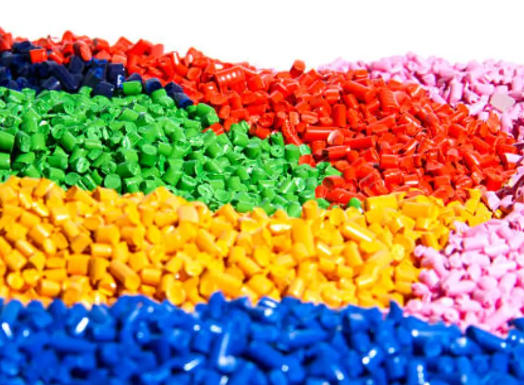
Plastic production begins with raw materials such as crude oil, natural gas, or biomass that are converted into basic chemicals and then into monomers. Through polymerization or polycondensation, these monomers link to form long polymer chains with specific molecular weights and architectures.[2][6][7]
At the polymerization stage, the output is typically an unmodified resin in solid, powder, or pellet form, lacking final color or application‑specific performance. To create usable plastic materials, this base resin is later combined with fillers, stabilizers, and Masterbatch in compounding lines.[5][1][4]
Compounding is the process where base polymers are melted and intimately mixed with additives, reinforcements, and Masterbatch using equipment such as twin‑screw extruders. The result is a homogeneous compound that delivers consistent mechanical, thermal, and optical properties in downstream processing.[3][4][5]
Color Masterbatch contains high concentrations of pigments in a carrier resin compatible with the target polymer, ensuring excellent dispersion and color strength at low dosage. Additive Masterbatch contains functional components—UV absorbers, antioxidants, antistatics, slip agents, nucleating agents, flame retardants, and more—allowing processors to fine‑tune performance simply by adjusting Masterbatch let‑down ratios.[9][4][5]
Once compounded, plastic pellets are transformed into finished products using multiple processing technologies.[3][1]
- Injection molding: Pellets are melted, injected into a cooled mold, and solidified to form complex parts such as housings, connectors, and precision components. Masterbatch must be thermally stable and compatible with the melt flow conditions of injection molding.[1][4]
- Extrusion: The melt is forced through a die to create continuous profiles, films, pipes, or sheets, which are then cooled and sized. Process‑aid and slip Masterbatch are often used to improve line speed and surface quality.[4][5]
- Blow molding: A molten parison or preform is inflated in a mold to produce hollow items like bottles and tanks. Color and barrier Masterbatch are crucial for packaging performance and brand appearance.[5][4]
- Thermoforming: Heated sheets are shaped over molds to create trays, clamshells, and other thin‑wall parts. The Masterbatch used must support repeated heating and forming steps without color shift.[3][4]
- Additive manufacturing (3D printing): Specialized thermoplastic filaments and powders incorporate Masterbatch‑style pigment or additive packages to ensure consistent print quality.[9][5]
Masterbatch is a concentrated mixture of pigments and/or additives, dispersed in a carrier resin, supplied in pellet or granular form to modify plastic materials efficiently and cleanly. It simplifies handling, improves dispersion, and allows manufacturers to change color or functions without reformulating the base polymer.[4][5][9]
Main Masterbatch categories include:
- Color Masterbatch: Tailored to match specific shades, opacity levels, and effects (such as metallic or pearlescent), while maintaining mechanical properties.[5][4]
- Additive Masterbatch: Provides UV stability, antioxidants, antistatic effects, slip and antiblock performance, nucleation, antimicrobial features, flame retardancy, and more.[9][4]
- Filler Masterbatch: Combines minerals like calcium carbonate or talc with a carrier resin to reduce cost, increase stiffness, adjust shrinkage, or tune opacity.[4][9]
By selecting appropriate Masterbatch systems, processors can use the same base polymer to satisfy very different regulatory and performance requirements across packaging, automotive, construction, medical, and electrical markets.[1][4]
Using Masterbatch brings economic, technical, and operational benefits to plastic material producers and converters.[9][4]
- Improved dispersion and quality: Pre‑dispersed pigments and additives in Masterbatch ensure more uniform coloring and performance than direct addition of powders.[5][4]
- Simplified logistics: Fewer individual additives in inventory, easier dosing, and faster color changes by swapping Masterbatch codes instead of changing base resins.[4][9]
- Cost optimization: Concentrated Masterbatch allows precise adjustment of let‑down ratios, reducing over‑use of expensive additives while maintaining target properties.[5][4]
- Cleaner and safer production: Pelletized Masterbatch reduces dust, contamination, and operator exposure to fine powders or aggressive liquids.[9][4]
Plastic materials enhanced with Masterbatch solutions are fundamental in many industries worldwide.[1][4]
- Packaging: Flexible films, bottles, caps, and rigid containers rely on color and functional Masterbatch for shelf appeal, UV protection, slip performance, and barrier properties.[4][5]
- Automotive: Interior trims, bumpers, dashboards, lighting components, and under‑hood parts use UV‑stabilized, impact‑modified, and flame‑retardant Masterbatch compounds.[1][9]
- Construction: Pipes, window profiles, roofing membranes, insulation, and geosynthetics require weatherable Masterbatch systems to ensure long‑term color and mechanical stability outdoors.[2][4]
- Electrical and electronics: Housings, connectors, and enclosures depend on flame‑retardant and tracking‑resistant Masterbatch to meet strict safety standards.[1][5]
- Medical and consumer goods: Devices, disposables, toys, and household items are manufactured with carefully selected Masterbatch to achieve clean colors, regulatory compliance, and surface performance.[9][4]
Growing environmental expectations are reshaping plastic materials, Masterbatch formulation, and processing technologies. Bio‑based polymers, mechanically recycled resins, and chemical recycling streams are expanding, and specialized Masterbatch solutions help stabilize color and performance despite variability in recycled feedstocks.[2][5][4]
Sustainability‑oriented Masterbatch developments include:
- Grades tailored for recycled or bio‑based polymers that maintain mechanical properties and color stability.[2][4]
- Halogen‑free flame retardant Masterbatch and heavy‑metal‑free pigments that improve environmental and health profiles.[5][4]
- Additive Masterbatch that extends product lifetime or enables downgauging, thereby reducing overall material use and waste.[2][9]
Through responsible design, improved recycling infrastructure, and advanced Masterbatch technology, plastic materials are progressively aligned with circular‑economy principles while still delivering high performance and cost efficiency.[2][4]
Plastic material is a broad class of polymer‑based materials whose properties, processing behavior, and sustainability profile can be precisely engineered for almost any market. From base resins to finished parts, Masterbatch serves as a powerful lever for color, performance, processing efficiency, and regulatory compliance, enabling manufacturers to adapt the same polymers to very different end‑use environments. As circular‑economy models evolve, advanced plastic materials combined with next‑generation Masterbatch solutions will remain central to balancing performance, cost, and environmental responsibility in global value chains.[2][4][5]
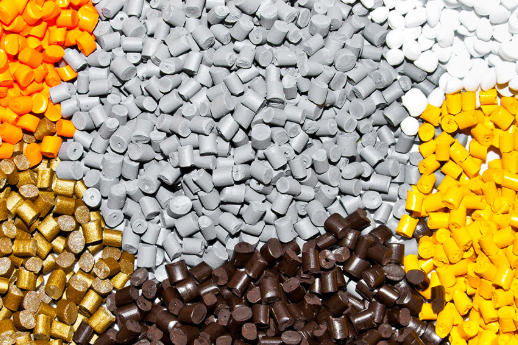
Plastic material is an engineered polymer that can be shaped under heat or pressure and then cooled to retain its shape, usually with added stabilizers, fillers, and Masterbatch to reach the desired performance. It belongs to the broader polymer family but is characterized by its ability to be processed into durable, lightweight products using industrial forming technologies.[6][7][1][4]
Masterbatch is a concentrated mixture of pigments or functional additives pre‑dispersed in a compatible carrier resin and supplied as pellets for easy dosing and uniform dispersion. Raw additives are powders or liquids that are harder to handle, can cause dust or contamination, and often disperse less evenly than Masterbatch in plastic materials.[4][5][9]
Thermoplastics—such as PE, PP, PS, PVC, PET, PC, and ABS—are the largest consumers of color and additive Masterbatch because they are processed in molten form and can incorporate concentrates efficiently. Elastomers and some thermosets also use Masterbatch‑style concentrates, although their formulations must be carefully tailored to curing and elasticity requirements.[7][1][4]
Many Masterbatch grades are specifically engineered for recycled and bio‑based plastics to help stabilize color, viscosity, and mechanical properties. When selected correctly, such Masterbatch supports circular‑economy goals by improving the consistency and usability of recycled and renewable plastic materials across multiple application cycles.[2][5][4]
Manufacturers should consider base polymer type, processing temperature, part geometry, end‑use conditions, regulatory constraints, and target optical or functional performance when selecting Masterbatch. Close collaboration with Masterbatch suppliers allows optimization of carrier resin, pigment selection, and additive packages so that plastic materials achieve reliable, cost‑effective, and compliant performance in real applications.[5][9][4]
[1](https://formlabs.com/blog/guide-to-manufacturing-processes-for-plastics/)
[2](https://plasticseurope.org/plastics-explained/how-plastics-are-made/)
[3](https://jamestownplastics.com/understanding-the-plastic-manufacturing-process/)
[4](https://www.deskera.com/blog/plastics-manufacturing/)
[5](https://www.protolabs.com/resources/guides-and-trend-reports/plastic-manufacturing/)
[6](https://www.xometry.com/resources/materials/what-is-plastic/)
[7](https://uark.pressbooks.pub/mechanicaldesign/chapter/plastic-materials/)
[8](https://www.infinitiaresearch.com/en/news/plastic-materials-types-composition-and-uses/)
[9](https://www.fictiv.com/articles/guide-to-plastic-materials-for-prototyping-and-production)


