


close
Choose Your Site
Global
Social Media


Views: 222 Author: Rebecca Publish Time: 2025-12-12 Origin: Site


Content Menu
● How Is PBT Plastic Produced?
● Key Properties of PBT Plastic
>> 5. Weather and UV Resistance
● The Role of Masterbatch in PBT Processing
>> Types of Masterbatch Used in PBT
>> 2. Electronics and Electrical Appliances
● Advantages of Using PBT Plastic in Manufacturing
>> Extrusion
>> Blow Molding
● Challenges and Limitations of PBT Plastic
● Sustainability and Environmental Considerations
>> 1. What is the difference between PBT and PET plastics?
>> 2. Can PBT be combined with Masterbatch for coloring?
>> 3. Is PBT environmentally friendly?
>> 4. What temperature range can PBT withstand?
>> 5. How does Masterbatch improve PBT performance?
Polybutylene Terephthalate (PBT) is one of the most commonly used thermoplastic engineering polymers in the modern manufacturing world. Known for its excellent balance of mechanical strength, heat resistance, and electrical insulation, PBT plastic has become a crucial material across numerous industries — from automotive and electronics to household appliances and packaging.
In this article, we'll explore the fundamental properties of PBT plastic, how it's produced, its applications, processing techniques, and the vital role Masterbatch plays in enhancing its performance and aesthetics.

PBT, or Polybutylene Terephthalate, is a semi-crystalline polymer belonging to the polyester family. Structurally, it is closely related to polyethylene terephthalate (PET), which is widely used in plastic bottles and textiles. However, PBT offers superior toughness, chemical resistance, and quicker crystallization speed, making it ideal for injection-molded parts.
PBT's molecular composition gives it the ability to maintain stiffness and dimensional stability under high temperatures. It also features excellent dielectric properties, which make it an outstanding choice for electrical connectors, insulation components, and other precision parts.
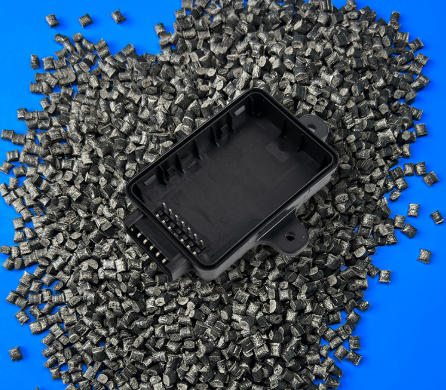
The production of PBT typically involves a condensation polymerization reaction between 1,4-butanediol (BDO) and terephthalic acid (TPA) or dimethyl terephthalate (DMT). This reaction produces long-chain polyester molecules that are then cooled and pelletized into uniform resin granules, ready for processing.
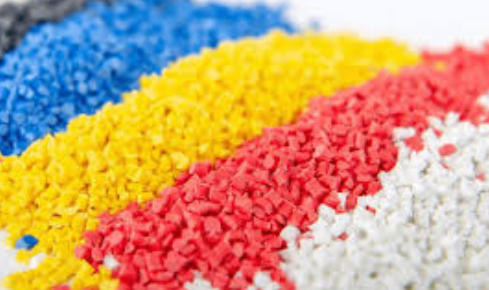
During the manufacturing stage, Masterbatch additives are often introduced to modify the color, strength, flame retardancy, or UV resistance of the resin. For instance, a color Masterbatch can create specific shades, while a glass-fiber Masterbatch improves mechanical reinforcement properties, making the final PBT product stronger and more durable.
PBT has a wide range of advantageous properties that account for its extensive use across industries.
- High stiffness and tensile strength.
- Excellent impact resistance, even at low temperatures.
- Dimensional stability—maintains shape under heavy loads or heat.
- High melting point around 225°C.
- Can operate continuously at temperatures up to 150°C without deformation.
- Low coefficient of thermal expansion ensures excellent thermal stability.
- Extremely good dielectric strength and surface resistivity.
- Reliable insulation performance even in humid environments.
- Suitable for connectors, switches, and cable housings.
- Resistant to oils, greases, solvents, and many cleaning agents.
- Low water absorption prevents mechanical degradation.
- With a UV stabilizer Masterbatch, PBT becomes more resistant to light exposure and outdoor conditions.
- Maintains gloss and color stability in tough environments.
The Masterbatch plays a pivotal role in the enhancement of PBT's properties. A Masterbatch is a concentrated mixture of pigments, fillers, or additives encapsulated within a carrier resin. During compounding or molding, these Masterbatches are blended with PBT resin to impart specific characteristics.
1. Color Masterbatch:
Adds vibrant or customized colors to PBT products used in automotive interiors, consumer electronics, and appliance parts.
2. Functional Additive Masterbatch:
Improves mechanical, UV, or flame-retardant properties. Flame-retardant Masterbatch, for example, ensures compliance with UL94 V-0 standards.
3. Reinforcement Masterbatch:
Glass fiber or mineral-filled Masterbatch enhances the stiffness, dimensional stability, and wear resistance of PBT components.
4. Antistatic or Conductive Masterbatch:
Used when electrical conductivity or static dissipation is needed, such as in ESD-safe electronic housings.
In short, Masterbatch technology transforms base PBT resin into high-performance customized materials suited for specific industrial needs.
The robust nature of PBT resin has made it a material of choice for manufacturers worldwide. Below are the key sectors that heavily rely on PBT plastics.
PBT plastic is extensively used in automotive parts requiring durability and heat resistance. Examples include connectors, sensor housings, lighting components, and mirror brackets. Flame-retardant Masterbatch formulations also render these parts safer and more reliable.
Because of its outstanding insulation and thermal stability, PBT is a preferred choice for plugs, sockets, switches, circuit breakers, and motor housings. The integration of conductive or UV-stable Masterbatch extends the life of these components even in harsh operating conditions.
Many modern home appliances rely on PBT components for safety and reliability. From hairdryers and coffee machines to irons and water pumps, PBT ensures strength, lightweight design, and resistance to electrical heat.
PBT's chemical and mechanical stability make it ideal for gear housings, bearings, and other industrial-grade applications. Modified PBT blended with reinforcement Masterbatch can easily outperform many standard plastics under stress.
While PET dominates clear packaging, PBT, combined with Masterbatch colorants, is used for high-performance rigid container parts, protective caps, and closures that must endure exposure to heat or solvents.
The key reasons PBT continues to replace metals and other polymers are its adaptability, cost-effectiveness, and performance consistency.
- Dimensional accuracy: Its low shrinkage rate ensures tight tolerances in precision parts.
- Cost efficiency: Easy to process through injection molding with short cycle times.
- Performance customization: Various Masterbatches offer endless modification possibilities.
- Recyclability: PBT can be recycled, reducing waste and environmental impact.
- Compatibility: PBT blends easily with other thermoplastics, such as ABS or PET, for hybrid materials.
PBT is generally processed through injection molding, extrusion, or blow molding depending on the application.
This is the most common technique, producing complex parts efficiently. Using properly dried pellets (≤0.04% moisture content) prevents hydrolysis during melting.
Extrusion is used to make PBT sheets, films, and profiles. Adding a Masterbatch directly during extrusion allows for uniform dispersion of additives or pigments.
While less common, PBT can also form hollow containers and technical parts when higher structural stability is required.
Temperature control, drying quality, and Masterbatch dispersion are critical factors during all PBT processing stages.
Although PBT is a versatile and efficient engineering plastic, it has some limitations:
- Limited resistance to strong acids.
- High melting temperature, requiring precise processing control.
- UV sensitivity unless stabilized by an additive Masterbatch.
- Hydrolysis risk at high temperatures if not thoroughly dried.
However, most of these issues can be mitigated by appropriate material formulation using tailor-made Masterbatches and advanced compounding techniques.
Manufacturers are increasingly focusing on making PBT more sustainable. Enhancements include developing bio-based PBT and utilizing recycled content combined with eco-friendly Masterbatches. Modern Masterbatch technology also enables lightweighting by enhancing the strength-to-weight ratio, effectively reducing material consumption.
PBT's long lifespan further contributes to sustainability as it reduces replacement frequency and overall waste generation.
PBT plastic stands as one of the most balanced engineering materials available today—combining durability, thermal resistance, and electrical insulation into one versatile polymer. By integrating Masterbatch technology, manufacturers can customize PBT to meet the exact needs of automotive, electrical, packaging, and industrial applications.
As innovation continues, PBT will maintain its strong presence in high-demand industries, evolving into more sustainable, functional, and design-flexible forms.
While both belong to the polyester family, PBT has faster crystallization, better impact strength, and is more suitable for thick-walled injection molding parts. PET, on the other hand, is often used in films and bottles due to its transparency.
Yes. PBT blends uniformly with most color Masterbatches, allowing precise shade customization. The right carrier resin ensures excellent color dispersion and consistency across molded products.
PBT is recyclable and compatible with sustainable production methods. Using eco-friendly or bio-based Masterbatch systems can further reduce its environmental footprint.
PBT maintains its mechanical strength and dimensional stability from -40°C to about 150°C. It is also capable of short-term exposure to higher temperatures without significant deformation.
Masterbatches can introduce flame resistance, UV protection, improved mechanical strength, or antistatic behavior. This customization makes PBT adaptable to various advanced applications.


