


close
Choose Your Site
Global
Social Media


Views: 222 Author: Rebecca Publish Time: 2025-12-12 Origin: Site


Content Menu
● Understanding PA Plastic Material
● Key Properties of PA Plastic
● The Role of Masterbatch in PA Plastic Modification
>> Types of Masterbatch Used in Polyamide
● Major Types of PA Plastic Materials
● Applications of PA Plastic Materials
● Processing and Manufacturing of PA Plastics
● Advantages of Using PA Plastic with Masterbatch
● Sustainability and Future Development in PA Materials
● FAQ About PA Plastic Material
>> (1) What is the difference between PA6 and PA66?
>> (2) Can Masterbatch be used in recycled PA materials?
>> (3) How does moisture affect PA plastic?
>> (4) Is PA plastic environmentally friendly?
>> (5) What industries benefit most from PA materials?
Polyamide (PA), more commonly known as nylon, is one of the most widely used engineering thermoplastics in modern manufacturing. It combines exceptional mechanical strength, wear resistance, and chemical stability, making it a preferred choice across industries ranging from automotive and electronics to consumer goods and industrial parts. For custom plastic solutions, understanding the role and potential of PA plastic material—along with the integration of Masterbatch technology—is essential to achieving top-level product performance.

PA plastic, primarily referred to as nylon, was first commercialized by DuPont in the late 1930s and has since evolved into a diverse family of polymers. The most common types of polyamides include PA6, PA66, PA11, and PA12, each possessing distinct molecular structures and end-use properties.
In essence, polyamide is formed through a condensation polymerization process between diamines and dicarboxylic acids (for PA66) or through ring-opening polymerization (for PA6). The result is a synthetic polymer with repeating amide groups along its backbone, leading to remarkable strength and elasticity.
Polyamide displays several characteristics that make it ideal for high-performance applications:
- High mechanical strength: Suitable for load-bearing parts.
- Excellent abrasion and impact resistance: Ensures durability in industrial use.
- Low friction coefficient: Reduces wear in moving assemblies.
- Good thermal stability: Retains structural integrity in elevated temperatures.
- Chemical resistance: Performs well against oils, fuels, and various solvents.
- Lightweight and versatile: Can be molded and modified for different environments.
These properties can be further customized using Masterbatch additives, allowing manufacturers to fine-tune color, UV resistance, flame retardancy, and other functional features.
A Masterbatch is a concentrated mixture of pigments, additives, or both, encapsulated within a carrier resin that is compatible with the base polymer—here, PA plastic. When the Masterbatch is introduced during processing, it disperses evenly throughout the material, imparting specific properties or colors to the final product.
- Color Masterbatch: Adds vivid and consistent color shades to PA components.
- Functional Masterbatch: Enhances technical properties such as UV protection, flame retardancy, or anti-static performance.
- Filler Masterbatch: Reduces cost and modifies density or stiffness by incorporating materials like calcium carbonate or glass fibers.
- Lubricant Masterbatch: Improves processability and surface gloss.
- Reinforcement Masterbatch: Increases tensile strength using aramid or glass fibers.
These forms of Masterbatch enable companies to tailor PA plastic to precise customer specifications without compromising material quality or productivity.
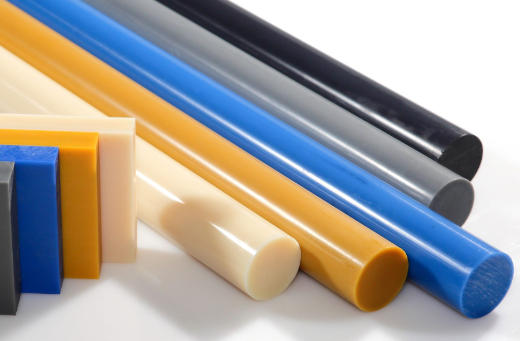
Known for excellent toughness, good gloss, and easy processability. Commonly used in automotive parts, gears, and electrical connectors.
Exhibits higher temperature resistance and rigidity than PA6, often used in under-the-hood automotive components and structural parts that demand stronger mechanical performance.
A biobased option derived from castor oil, PA11 maintains chemical resistance and flexibility, ideal for tubing and 3D printing applications.
Noted for its low moisture absorption and excellent flexibility. Preferred for fuel lines, pneumatic hoses, and cable sheaths.
By combining these PA materials with Masterbatch technology, manufacturers can enhance performance while meeting exact color or mechanical requirements for their specific industries.
Polyamide plastics are integral to nearly every industrial sector:
- Automotive industry: Used in radiator grilles, air-intake manifolds, and gear housings. The addition of Flame Retardant Masterbatch extends performance under high thermal stress.
- Electronics and electrical: Connectors, switches, and housings benefit from PA's insulation properties, which can be improved by Anti-Static Masterbatch.
- Consumer goods: Commonly found in toothbrush bristles, zippers, and power tool casings where toughness and appearance are key.
- Packaging and films: Used in flexible multilayer films when combined with Barrier Masterbatch for improved oxygen protection.
- Industrial components: Gears, bearings, and bushings owe their long service life to the wear resistance of PA plastic enhanced by Lubricant Masterbatch.
By integrating Masterbatch systems, manufacturers gain flexibility to engineer materials that meet both performance standards and aesthetic preferences.
PA plastic can be processed by various methods depending on the final application:
1. Injection Molding: Ideal for producing intricate parts with precision tolerances. Masterbatch additives mix directly with resin pellets prior to molding.
2. Extrusion: Common for tubing, rods, and profiles where consistent flow and color are required.
3. Blow Molding: Produces bottles and hollow components.
4. 3D Printing: Specialized PA powders enhanced with Color Masterbatch improve surface accuracy and uniformity.
5. Compounding: Allows PA to be blended with glass fibers, flame retardants, or lubricants via Masterbatch pellets to achieve specific mechanical or aesthetic results.
Controlling factors such as temperature, moisture level, and cooling rate during processing ensures that the physical properties of PA remain stable and predictable.
Combining PA plastic with Masterbatch provides enhanced design flexibility and productivity:
- Customization: Formulations tailored to client needs.
- Cost-efficiency: Eliminates the need for full compounding at manufacturing sites.
- Quality consistency: Ensures uniform color and additive dispersion.
- Environmental benefits: Optimized use of additives reduces waste during production.
- Aesthetic enhancement: Delivers vivid color and superior surface finish.
- Performance tuning: Adjusts flame retardancy, UV resistance, or anti-static properties precisely.
Such integration leads to a superior balance between performance, appearance, and production economy.
Modern innovation focuses on improving sustainability through bio-based PA materials and eco-friendly Masterbatch technologies. For example, bio Masterbatch solutions utilize organic pigments and biodegradable carriers, enabling green production for eco-conscious clients.
Moreover, recycling-oriented Masterbatch helps preserve polymer integrity during repeated processing cycles, enhancing the circular economy of thermoplastic materials. As global demand for lightweight, strong, and recyclable materials grows, PA combined with advanced Masterbatch systems stands at the forefront of material innovation.
PA plastic materials, with their remarkable mechanical and chemical properties, continue to be a backbone of engineering plastics worldwide. When paired with Masterbatch technology, their capabilities expand dramatically—offering manufacturers flexibility in color, function, and performance optimization. From automotive parts and electric components to industrial machinery and consumer goods, PA remains an indispensable material for modern innovation. Sustainable Masterbatch modifications promise an even more versatile and eco-friendly future for polyamide plastics.
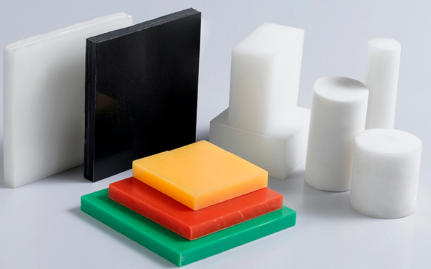
PA6 has better fluidity and surface finish, while PA66 provides higher heat resistance and rigidity due to its different molecular structure. Both can incorporate customized Masterbatch for better performance.
Yes. Masterbatch can help enhance the color uniformity and mechanical properties of recycled PA, improving product quality and minimizing degradation during reprocessing.
PA absorbs water from the air, which can alter its mechanical and dimensional stability. Using Desiccant Masterbatch reduces moisture sensitivity and improves processing consistency.
Although petroleum-based, PA's recyclability makes it relatively eco-friendly. Bio-based PA types like PA11 combined with Green Masterbatch options further enhance sustainability.
Automotive, electronics, and industrial manufacturing are the dominant users of PA because of its strength, stability, and adaptability with various Masterbatch systems.


