


close
Choose Your Site
Global
Social Media


Views: 222 Author: Rebecca Publish Time: 2025-12-24 Origin: Site


Content Menu
● Understanding MFI (Melt Flow Index)
● Why MFI Matters in Plastic Engineering
>> 4. Recycling and Sustainability
● Relationship Between MFI and Molecular Weight
● MFI in Masterbatch Formulation
● Types of Masterbatch and Their MFI Influence
● Role of MFI in Plastic Processing Techniques
● Controlling MFI During Compounding
● Interpreting MFI Data for Application
● MFI Testing in Masterbatch Quality Assurance
● FAQ
>> 1. What is the ideal MFI range for Masterbatch?
>> 2. How can MFI be increased or decreased in plastic materials?
>> 3. Does filler Masterbatch always lower MFI?
>> 4. How does MFI influence product strength?
>> 5. Why is MFI consistency important in Masterbatch production?
The plastics industry continually evolves with advanced materials, innovative processing techniques, and precise performance measurements. Among the most essential parameters for understanding and controlling plastic properties is the Melt Flow Index (MFI). Whether you're mixing polymers, designing packaging plastics, or developing Masterbatch formulations, understanding MFI is critical. It defines how a polymer melts, flows, and ultimately behaves during production and end use.
This article explores what MFI means, how it's measured, how it impacts polymer performance, and why it's so important in the context of Masterbatch manufacturing and plastic processing.
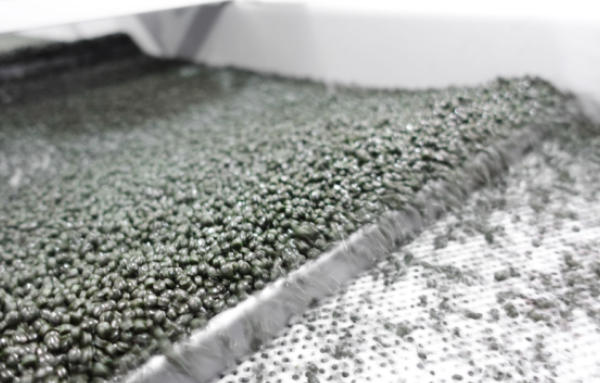
The Melt Flow Index (MFI), also known as the Melt Flow Rate (MFR), measures how easily a thermoplastic polymer melts and flows when heated under specific conditions. It represents the mass of polymer (in grams) that passes through a standard capillary die in ten minutes at a defined temperature and load.
In simpler terms, MFI tells us how "fluid" a melted plastic becomes when heated. It helps manufacturers predict how a plastic will behave during molding or extrusion. For instance, a high MFI means the polymer flows easily and is suitable for injection molding, while a low MFI indicates resistance to flow, making it better for extrusion processes like film blowing or pipe manufacturing.
The MFI value is much more than a laboratory figure—it is a production and quality control parameter that shapes product design, mechanical strength, and process stability. Engineers and compounders rely on it to ensure consistent performance across batches of plastic material.
MFI directly affects processing ease and energy requirements. Materials with high MFI can be molded quicker but may produce weaker parts. Lower MFI plastics need more heat and pressure but provide superior mechanical integrity.
Designers use MFI data to balance form and strength. For precision products like automotive interiors or thin films, an accurate MFI ensures dimensional stability and uniform thickness.
In polymer compounding, maintaining a consistent MFI across Masterbatch lots ensures reproducible performance. A sudden deviation can lead to inconsistent color dispersion, surface defects, or brittleness.
During recycling, polymers often undergo degradation that increases their MFI. Monitoring MFI allows recyclers to compensate for this change and produce consistent-quality recycled plastics or recycled Masterbatch.
The MFI test follows international standards such as ASTM D1238 or ISO 1133. It involves the following steps:
1. A dried polymer sample is placed inside a heated barrel at a controlled temperature.
2. A piston loaded with a specific weight exerts pressure on the molten polymer.
3. The molten plastic extrudes through a die, and the amount collected over 10 minutes is weighed.
4. The MFI is reported as grams per 10 minutes (g/10 min).
This seemingly simple test provides deep insight into polymer viscosity, molecular weight distribution, and the influence of additives such as fillers, stabilizers, or Masterbatch components.
MFI has an inverse relationship with molecular weight. In most thermoplastics:
- Higher MFI → Lower molecular weight → Easier flow
- Lower MFI → Higher molecular weight → More viscous melt
This correlation helps compounders fine-tune the blend ratio of virgin resins with recycled materials or Masterbatch. In particular, controlling molecular weight through MFI adjustments ensures optimal processing performance.
The term Masterbatch refers to a concentrated mixture of pigments, additives, or fillers encapsulated into a carrier resin. It is later diluted into a base polymer to achieve the required color or performance characteristics. MFI plays a central role in the development and compatibility of Masterbatch with the host polymer.
When combining Masterbatch with a base polymer, the MFI of both components should be similar. A large difference in MFI can cause:
- Uneven dispersion of pigments or additives.
- Processing instability and screw slippage.
- Inconsistent mechanical strength or surface finish.
For example, if the Masterbatch has a significantly lower MFI than the base polymer, it may not melt uniformly during extrusion, resulting in streaks or poor color uniformity.
To align the MFI between materials, formulators can:
- Modify the carrier resin (such as using PE, PP, or ABS of matching MFI).
- Introduce processing aids that adjust flow behavior.
- Control processing temperature and shear during compounding.
Accurately tuned MFI ensures the Masterbatch disperses efficiently and maintains batch-to-batch uniformity.
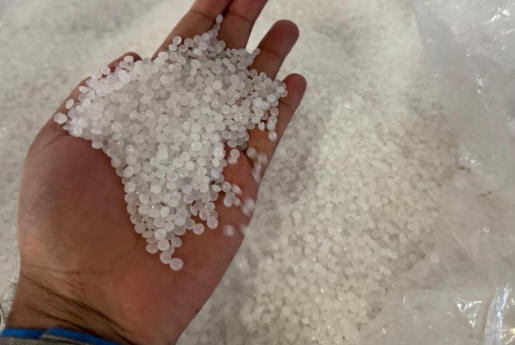
Different types of Masterbatch affect the flow behavior of plastics differently:
Coloring agents can either increase or decrease MFI depending on the pigment particle size and carrier matrix. A high-quality color Masterbatch must balance flowability with optimal pigment dispersion.
Additives such as UV stabilizers, lubricants, or antistatic agents might modify the MFI slightly by changing melt viscosity. The carrier resin's MFI selection is critical to maintain process consistency.
Filler Masterbatch, such as calcium carbonate or talc-based concentrates, significantly reduces the overall MFI of the blend because inorganic fillers restrict polymer chain mobility. Adjusting the base resin or using coupling agents can help rebalance flow.
These include flame-retardant, antibacterial, or biodegradable Masterbatch types. Their effect on MFI varies depending on chemistry. For example, some flame-retardant additives increase viscosity dramatically.
Different manufacturing processes demand specific MFI ranges to optimize performance and efficiency.
| Process Type | Typical MFI Range (g/10 min) | Example Polymers | Notes |
|---------------|------------------------------|------------------|-------|
| Injection Molding | 8–50 | PP, ABS, PS | High MFI promotes ease of flow into complex molds. |
| Extrusion | 0.5–10 | PE, PP | Lower MFI ensures better melt strength and dimensional stability. |
| Film Blowing | 0.3–6 | LDPE, LLDPE | Moderate MFI provides balance between bubble stability and throughput. |
| Fiber Spinning | 10–40 | PET, Nylon | Requires high MFI for fine filament formation. |
In all cases, Masterbatch must be formulated to match the MFI characteristics of the chosen process to avoid melt inconsistency or color variation.
Maintaining stable MFI during Masterbatch or polymer compounding involves controlling various parameters:
1. Temperature Management: Proper temperature profiles prevent polymer degradation, which can increase MFI.
2. Screw Speed and Shear: Excessive shear may break polymer chains, altering MFI negatively.
3. Additive Stability: Stabilizers and antioxidants protect against molecular breakdown.
4. Mixing Uniformity: Homogeneous dispersion ensures even melt characteristics across the product.
Production lines often integrate on-line rheometers to monitor MFI in real-time, ensuring product uniformity before pelletizing.
Several material and processing factors influence MFI values:
- Polymer chemistry: Each polymer type (PP, PE, PET, ABS, etc.) has unique flow behavior.
- Temperature: Higher temperatures reduce viscosity, increasing MFI.
- Moisture content: Trapped moisture can hydrolyze polymers, increasing MFI unpredictably.
- Additives and fillers: Certain Masterbatch additives alter flow, depending on compatibility and dispersion.
Regular testing allows process engineers to make precise corrections and maintain specification integrity.
Choosing the right MFI depends on your specific application:
- Thin-walled packaging or injection parts: High MFI materials improve cavity filling.
- Pipes, sheets, or profiles: Low MFI ensures stability and strength.
- Fibers or filaments: Very high MFI supports fine spinning.
- Film extrusion: Medium MFI ensures tear resistance and good processing speed.
A Masterbatch designed for each use case must have a compatible MFI to guarantee optimal blending behavior.
Leading Masterbatch manufacturers use MFI analysis throughout production to monitor:
- Consistency between production lots.
- Carrier resin integrity after compounding.
- Absence of degradation due to pigment or additive reactions.
Routine MFI testing ensures premium-quality Masterbatch that disperses uniformly, eliminates agglomeration, and supports efficient processing in downstream applications.
The Melt Flow Index (MFI) stands as a cornerstone property in polymer science and plastic manufacturing. It helps evaluate a plastic's processability, molecular characteristics, and compatibility with additives like Masterbatch. Understanding and controlling MFI can mean the difference between stable, high-quality output and costly production issues.
In Masterbatch formulation, matching MFI between the carrier and base polymer ensures smooth dispersion, uniform coloration, and consistent product quality. Across industries—from packaging films to fibers—MFI remains an indispensable guide for polymer engineers and quality-control specialists striving for excellence in plastic innovation.
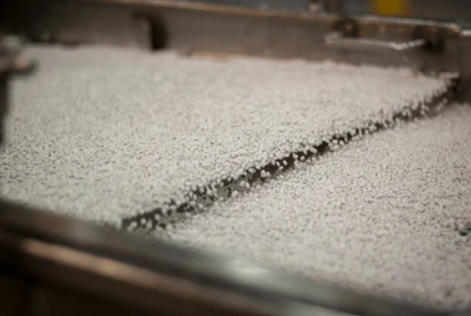
The ideal MFI depends on the base polymer and processing method. Generally, the Masterbatch MFI should be close to that of the host polymer—within ±20%—to maintain uniform dispersion and avoid processing issues.
You can increase MFI by raising processing temperature or adding flow enhancers, but excessive heat may degrade the polymer. To decrease MFI, blend high molecular weight polymers or add viscosity modifiers for stability.
Most filler Masterbatch lowers MFI because inorganic fillers restrict the movement of molten polymer chains. However, optimized formulations with coupling agents can minimize this effect and maintain good processability.
Generally, lower MFI (higher molecular weight) enhances tensile strength and impact resistance, while very high MFI polymers trade off some mechanical properties for molding ease.
Consistent MFI ensures uniform processing, color distribution, and predictable performance in the end product. Deviations can cause color streaking, brittleness, or deformation during molding.


