


close
Choose Your Site
Global
Social Media


Views: 222 Author: Rebecca Publish Time: 2025-12-09 Origin: Site


Content Menu
● Understanding elasto plastic behavior
● Elastic vs plastic deformation
● Examples of elasto plastic materials
● Role of Masterbatch in elasto plastic materials
● TPE and TPU Masterbatch systems
● How Masterbatch tunes mechanical properties
● Masterbatch and processing of elasto plastic materials
● Applications of elasto plastic materials with Masterbatch
● Sustainability and recyclability
● How to select Masterbatch for elasto plastic polymers
● Design considerations for elastoplastic components
● Quality control and testing of elasto plastic materials
● FAQ
>> 1: What does “elasto plastic” mean in plastics?
>> 2: How does Masterbatch affect elasto plastic properties?
>> 3: Which materials are common elasto plastic polymers?
>> 4: Are elasto plastic materials recyclable when using Masterbatch?
>> 5: How to choose a Masterbatch supplier for elasto plastic applications?
Elasto plastic material is a material that behaves elastically at low stress and plastically once the load exceeds a certain yield point, creating a combination of reversible and permanent deformation in one system. In plastics and elastomers, this elasto plastic behavior is essential for designing parts that can flex, absorb energy, and still keep shape, especially when engineered with customized Masterbatch solutions.[1][2][3][4]

Elasto plastic behavior describes how a material first follows an elastic law (recoverable deformation) and then gradually or suddenly transitions into plastic flow (permanent deformation) once the yield stress is reached. In design and simulation, engineers model this transition to predict how parts made from polymers, metals, or composites will behave under real loading conditions in applications such as automotive, packaging, sports, and electronics.[2][3][5][6]
Typical elastic plastic (elasto plastic) models use parameters such as elastic modulus, Poisson's ratio, and yield stress to represent the material's stress–strain curve. This curve often shows a linear elastic part followed by a nonlinear plastic region, allowing Masterbatch‑modified polymers to be tuned for stiffness, toughness, and controlled yielding.[5][6][7][1]
Elastic deformation is fully reversible: when the load is removed, the material returns to its original shape because the molecular chains only stretch within their recoverable range. In plastics, this region is influenced by base polymer chemistry and can be adjusted by Masterbatch systems containing impact modifiers, elastomers, and nano‑additives that change stiffness and resilience.[3][4][8][2]
Plastic deformation is permanent: once the yield point is exceeded, molecular chains slide, disentangle, or reorganize, and the material does not fully recover its original shape even after unloading. For elasto plastic materials, Masterbatch can be used to control where and how plastic deformation occurs, improving impact resistance, stress‑whitening behavior, and long‑term durability in demanding applications.[4][8][1][3]
Many engineering materials exhibit elasto plastic behavior, including metals, structural polymers, and fiber‑reinforced composites used in automotive, construction, and consumer products. In plastics, common elasto plastic materials include thermoplastic elastomers (TPEs), thermoplastic polyurethane (TPU), and toughened polyolefins that are often customized using Masterbatch.[9][1][3][4]
Thermoplastic elastomers are polymer blends or block copolymers that combine rubber‑like elasticity with thermoplastic processability, giving them soft‑touch surfaces and good fatigue resistance. TPU is a specific thermoplastic elastomer that offers excellent abrasion resistance, high tensile strength, and elastic recovery, making TPU plus functional Masterbatch a powerful platform for footwear, films, cables, and medical devices.[10][11][12][9]
Masterbatch is a concentrated mixture of pigments and/or additives dispersed in a carrier resin, which is later diluted into the base polymer during processing to control color and performance properties. For elasto plastic materials such as TPE, TPU, and tough polyolefins, Masterbatch plays a critical role in adjusting mechanical behavior, processing stability, and visual appearance without changing the core polymer grade.[8][11][4]
By choosing the right Masterbatch type and loading level, manufacturers can tune properties like hardness, elasticity, impact strength, UV stability, flame retardancy, slip, and anti‑scratch performance in elasto plastic parts. Color Masterbatch ensures accurate and repeatable color shades, while functional Masterbatch introduces features such as improved dispersion, reduced stress cracking, and enhanced weatherability.[11][4][8]
TPE Masterbatch typically uses thermoplastic elastomer carriers like SEBS, SBS, or polyolefin‑based TPEs, combined with pigments, processing aids, stabilizers, and functional additives to deliver a balanced elasto plastic response. These TPE Masterbatch solutions allow designers to achieve soft‑touch surfaces, flexible hinges, and ergonomic grips with precise color control across batches.[4][11]
TPU Masterbatch is based on TPU carriers that maintain compatibility with TPU resins used in films, injection parts, and extrusion profiles. TPU Masterbatch can incorporate colorants, matting agents, anti‑blocking agents, slip modifiers, and silicone‑based dispersants to deliver controlled friction, gloss, and long‑term mechanical stability in elasto plastic TPU applications.[8][9][4]
Mechanical behavior of elasto plastic polymers is highly sensitive to microstructure, filler distribution, and additive chemistry, all of which can be engineered through Masterbatch design. For example, elastomeric modifiers, nano‑fillers, and coupling agents inside Masterbatch can raise yield stress, enhance strain hardening, or improve toughness in glassy polymers while preserving elastic recovery.[6][13][4]
In TPE and TPU, Masterbatch can adjust hardness (Shore A/D), compression set, and elongation at break, directly influencing how the elasto plastic material responds to bending, stretching, and repeated loading. Functional Masterbatch can also reduce hysteresis (energy loss), stabilize properties over a wide temperature range, and improve fatigue life in applications like shoe soles, gaskets, and vibration‑damping components.[9][4]
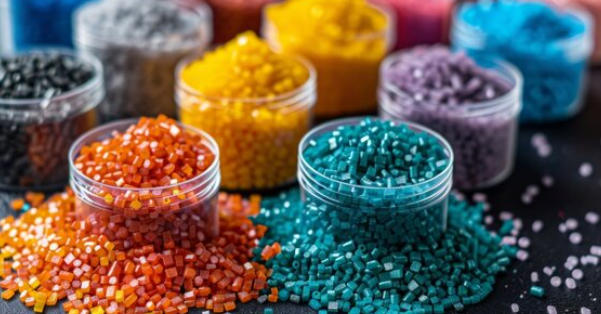
Processing elasto plastic materials such as TPE and TPU requires careful control of temperature, shear, and residence time to avoid degradation and to maintain consistent mechanical behavior. Masterbatch helps processing by improving pigment dispersion, reducing melt viscosity, and providing lubricity, which reduces torque and energy consumption in extrusion and injection molding.[4][8][9]
When using high‑performance Masterbatch in elasto plastic materials, processors must optimize screw configuration, dosing accuracy, and drying conditions to ensure stable output and consistent color. Correct Masterbatch selection also minimizes issues like die‑build‑up, flow marks, and micro‑voids that could weaken the elasto plastic structure.[7][8][4]
Elasto plastic materials modified with Masterbatch are widely used in consumer products such as soft‑touch grips, phone cases, flexible connectors, and wearable bands where comfort and durability are important. In these products, Masterbatch delivers brand‑specific colors, anti‑slip textures, and UV stability, while the elasto plastic matrix provides cushioning and impact protection.[11][9][4]
In automotive, TPE and TPU Masterbatch systems enable flexible seals, grommets, cables, and interior trim components that combine elastic sealing with plastic processability. In packaging and films, TPU Masterbatch can add matte effects, anti‑scratch properties, and controlled friction to elastoplastic films and laminates used for high‑end packaging.[8][9][11][4]
Thermoplastic elastomers and TPUs are generally recyclable because they can be remelted and reprocessed, unlike cross‑linked rubbers that cannot be reshaped after curing. Masterbatch helps support sustainability by enabling lower pigment dosages, easier color changes, and optimized process conditions that reduce scrap and energy usage.[9][11][4]
New formulations increasingly use bio‑based polymers, recycled resins, or low‑VOC additives within Masterbatch to meet stricter environmental regulations and customer expectations. For elasto plastic materials, carefully designed Masterbatch can preserve mechanical properties during multiple recycling cycles, helping build more circular plastic value chains.[11][4][8]
When selecting Masterbatch for an elasto plastic material, engineers must consider base polymer type (TPE, TPU, PP/POE blends, etc.), required mechanical properties, color targets, and processing conditions. Compatibility is critical: for example, TPU Masterbatch should use TPU or compatible carriers, while TPE Masterbatch should match the chemistry of the elastomeric phase to avoid phase separation and property loss.[4][8][11]
End‑use requirements such as temperature range, chemical exposure, UV resistance, and regulatory compliance (food contact, medical, etc.) also guide Masterbatch selection. Close cooperation with a Masterbatch supplier allows custom formulations that balance elasticity, plastic yield behavior, and long‑term stability in complex elasto plastic applications.[8][9][11][4]
Designing elasto plastic components requires understanding how geometry and wall thickness interact with material behavior and Masterbatch formulation. Sharp corners, sudden thickness changes, and weld lines can become stress concentrators that accelerate the transition from elastic to plastic deformation and may cause premature failure.[2][3][5][7]
By combining optimized geometry with a suitable Masterbatch system, engineers can spread stress more evenly, delay yielding, and improve impact and fatigue performance. Finite element analysis using elasto plastic material models helps predict where plastic zones will form, allowing designers to adjust both shape and Masterbatch grade before committing to tooling.[13][14][6][2]
Quality control for elasto plastic materials typically includes tensile tests, hardness measurements, compression set tests, and dynamic mechanical analysis to characterize elastic and plastic behavior. These tests indicate how Masterbatch and processing conditions influence modulus, yield stress, elongation at break, and energy absorption capacity.[15][3][13]
Colorimetric measurements, gloss tests, and weathering tests are also important when Masterbatch is used for color and UV stability in elastoplastic applications. Consistent results across different production batches show that Masterbatch dispersion, dosing, and process parameters are under control.[11][4][8]
Elasto plastic material is any material system that exhibits both elastic, reversible deformation and plastic, permanent deformation once the yield stress is reached, providing a realistic description of how polymers, metals, and composites behave under load. In the plastics industry, thermoplastic elastomers and TPU are key elasto plastic materials, and their performance is heavily influenced by the choice of Masterbatch for color, mechanical tuning, and processing stability.[1][6][9][4]
Masterbatch enables precise control of hardness, toughness, elasticity, and functional behaviors such as UV stability, slip, and matt effect in elasto plastic products from consumer goods to automotive and packaging. With growing focus on sustainability and recyclability, Masterbatch‑optimized elasto plastic materials provide a flexible platform for designing high‑value, customized solutions for global customers.[4][8][11]
Elasto plastic in plastics means that a material behaves elastically at low stress and plastically after a certain yield point, combining reversible and permanent deformation in one material. Many thermoplastic elastomers and TPUs show this elasto plastic behavior and can be further tuned with Masterbatch to achieve specific performance targets.[6][1][9][4]
Masterbatch affects elasto plastic properties by modifying stiffness, impact strength, elasticity, hardness, and fatigue behavior through pigments, elastomeric modifiers, and functional additives. In TPE and TPU systems, the right Masterbatch can increase toughness, improve elastic recovery, and stabilize performance over a wider temperature range.[13][9][4]
Common elasto plastic polymers include TPEs based on SEBS, SBS, and polyolefin blends, as well as TPU and toughened polyolefins. These polymers are often combined with color and functional Masterbatch to create flexible seals, grips, films, and molded parts with defined mechanical and aesthetic properties.[10][11][4]
Thermoplastic elasto plastic materials like TPE and TPU are typically recyclable because they can be remelted and reprocessed, unlike cross‑linked rubber. Properly designed Masterbatch formulations maintain compatibility and mechanical performance during recycling, helping support more circular use of elastoplastic products.[9][11][4]
A suitable Masterbatch supplier for elasto plastic applications should offer compatible carriers (TPE, TPU, or matching polyolefins), strong dispersion technology, and the ability to develop custom formulations. Technical support on processing, testing, and regulatory compliance is also important to ensure stable elasto plastic performance and consistent quality in mass production.[8][11][4]
[1](https://www.sciencedirect.com/topics/materials-science/elastic-plastic-material)
[2](https://blog.cadfem.ai/understanding-elasto-plastic-material-models-in-ansys-mechanical/)
[3](https://www.sciencedirect.com/topics/materials-science/elastic-plastic-behavior)
[4](https://www.kerkeextruder.com/masterbatch-production/tpe-masterbatch/)
[5](https://www.esrd.com/support/stresscheck-documentation/elastic-plastic-materials/)
[6](https://www.sciencedirect.com/topics/materials-science/elastoplasticity)
[7](https://2021.help.altair.com/2021/hwsolvers/rad/topics/solvers/rad/explicit_structural_fea_elasto_plastic_c.htm)
[8](https://www.siliketech.com/thermoplastic-polyurethane-elastomer-resin-tpu/)
[9](https://usppolymers.in/thermoplastic-polyurethane/)
[10](https://europlas.com.vn/en-US/blog-1/tpe-vs-tpu-a-comprehensive-comparison)
[11](https://www.americhem.com/materials/thermoplastic-elastomers/)
[12](https://en.wikipedia.org/wiki/Thermoplastic_polyurethane)
[13](https://pubs.acs.org/doi/10.1021/acsapm.3c02654)
[14](https://www.nature.com/articles/s44172-025-00410-9)
[15](https://pubmed.ncbi.nlm.nih.gov/40251392/)


