


close
Choose Your Site
Global
Social Media


Views: 222 Author: Rebecca Publish Time: 2025-12-24 Origin: Site


Content Menu
● Understanding ASA Plastic Material
>> What Is ASA?
● How ASA Plastic Is Manufactured
>> Role of Masterbatch in ASA Production
● Key Properties of ASA Plastic Material
>> 1. Exceptional Weather Resistance
>> 2. Mechanical Strength and Impact Resistance
>> 3. Thermal and Chemical Resistance
>> 4. Surface Gloss and Color Stability
>> 5. Easy Processing and Recyclability
● ASA vs. ABS: Key Differences
● Applications of ASA Plastic Material
>> 2. Construction and Building Materials
>> 3. Electrical and Electronic Components
>> 4. Consumer Products and Appliances
>> 5. 3D Printing and Custom Fabrication
● Advantages of Using ASA Material with Masterbatch
>> 3. Sustainability and Recyclability
>> 4. Durability in Harsh Environments
● The Role of ASA Masterbatch in Color Stability
● Processing Techniques for ASA Plastics
>> Extrusion
>> Blow Molding
● Environmental Considerations
● Future Trends in ASA Material Development
● FAQs About ASA Plastic Material
>> 1. What makes ASA better than ABS for outdoor use?
>> 2. How does masterbatch improve ASA's performance?
>> 3. Can ASA plastic be recycled?
>> 4. What industries commonly use ASA materials?
>> 5. Is ASA suitable for 3D printing?
ASA plastic material, short for Acrylonitrile Styrene Acrylate, is a high-performance thermoplastic that combines excellent weather resistance with mechanical strength, color stability, and ease of processing. This unique polymer has become one of the most versatile materials for outdoor and durable product applications. From automotive parts and construction materials to appliance housings and consumer goods, ASA's performance continues to attract global manufacturers seeking sustainable alternatives to traditional plastics.
As a company specializing in innovative plastic material research, production, and sales, we provide complete customized ASA masterbatch and compound plastic material solutions to clients across the world. This article explores what ASA plastic is, how it's made, its properties, advantages, key applications, and how masterbatch technology improves its performance.

ASA, or Acrylonitrile Styrene Acrylate, is a copolymer developed as an enhanced version of ABS (Acrylonitrile Butadiene Styrene). Instead of butadiene rubber, ASA uses acrylate rubber as the elastomeric component. This substitution provides outstanding weatherability and UV resistance, making ASA suitable for prolonged outdoor exposure.
Chemically, ASA is composed of three key components:
- Acrylonitrile: Improves chemical and heat resistance.
- Styrene: Adds rigidity and surface gloss.
- Acrylate rubber: Provides impact toughness and excellent resistance to sunlight and oxygen aging.
The balanced ratio of these monomers results in a polymer that maintains its color, mechanical strength, and gloss even after years of outdoor application.
The production of ASA plastic involves graft copolymerization, usually through an emulsion or mass polymerization process. The acrylate elastomer phase is first prepared, and then styrene and acrylonitrile are grafted onto it. The resulting material is pelletized and used in various plastic processing methods such as injection molding, extrusion, or thermoforming.
In modern production, the use of masterbatch plays a critical role in enhancing ASA's practicality. Masterbatch refers to a concentrated mixture of pigments or additives dispersed in a carrier resin. It allows uniform coloration, ultraviolet stabilization, and improved processing characteristics.
Common types of ASA-related masterbatches include:
- Color masterbatch: Offers vibrant, consistent colors suitable for exterior applications without fading under sunlight.
- UV masterbatch: Incorporates UV stabilizers to further enhance ASA's weather resistance.
- Anti-static masterbatch: Helps prevent dust accumulation and surface static charges.
- Flame retardant masterbatch: Provides additional safety for automotive and electrical components.
The careful selection of masterbatch type and concentration ensures that the ASA product meets specific requirements of outdoor durability, surface appearance, and long-term performance.
ASA's comprehensive performance profile makes it one of the most reliable plastics for outdoor and industrial use.
ASA retains its appearance and mechanical integrity even under direct sunlight, rain, or humidity. Unlike ABS, which yellows and loses strength over time, ASA's acrylate chemistry resists photodegradation. Combined with a UV protection masterbatch, it can maintain gloss and color for over ten years.
ASA provides excellent balance between rigidity and impact resistance. It remains tough at low temperatures and resists cracking under mechanical stress. Its long-term dimensional stability also supports complex part geometries.
Thanks to the acrylonitrile and styrene content, ASA withstands heat up to approximately 100 °C and resists chemicals such as acids, bases, and oils. When enhanced with thermal stabilizer masterbatch, its performance further extends to challenging industrial conditions.
ASA provides high surface gloss and smoothness similar to ABS, making it aesthetically appealing. It can be easily colored with masterbatch during processing without compromising gloss retention. This property makes ASA ideal for consumer products and decorative panels.
ASA granules can be processed on standard equipment for ABS, including injection molding and extrusion lines. It exhibits good flow characteristics, rapid cycle times, and minimal warpage. Moreover, ASA is 100% recyclable, reducing material waste in large-volume production.
Many engineers compare ASA with ABS, since both share chemical similarities. However, ASA provides superior outdoor performance.
| Property | ASA | ABS |
|---|---|---|
| UV resistance | Excellent | Poor |
| Weatherability | Outstanding | Limited |
| Gloss and color stability | Long-lasting | Fades easily |
| Impact resistance | Comparable | Good |
| Cost | Slightly higher | Lower |
| Outdoor suitability | Yes | No |
Through the use of masterbatch-enhanced ASA, manufacturers can bridge the small cost difference by achieving longer product life and reduced maintenance, leading to overall lower lifecycle costs.
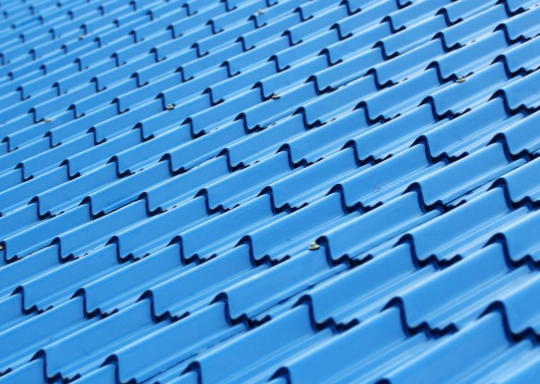
ASA is used across a wide range of industries that require durable, weatherproof, and attractive thermoplastics.
In cars, trucks, and electric vehicles, ASA is used to produce:
- Mirror housings
- Grilles and exterior trims
- Roof rails and pillars
- Wheel covers and air vents
With customized color masterbatch, ASA parts maintain uniform appearance across different models and resist fading under sun exposure.
ASA is a preferred choice for outdoor architecture due to its UV stability and mechanical durability. It is found in:
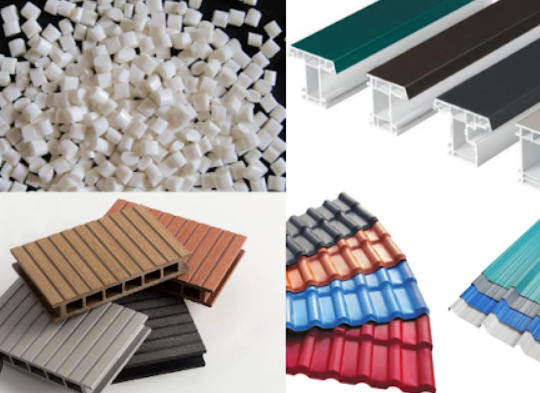
- Roofing tiles and cladding panels
- Window profiles and door frames
- Outdoor furniture and decking tiles
The material's ability to withstand continuous sunlight and temperature changes makes it perfect for long-lasting exterior construction components. ASA roof tiles with specialized UV masterbatch maintain their original color even after years of exposure.
ASA's insulating properties and flame-retardant potential make it ideal for producing electrical covers, switch housings, and outdoor enclosures. When combined with flame-retardant and anti-static masterbatches, ASA provides safety and longevity in demanding environments.
For household and sports goods exposed to outdoor environments, ASA provides both performance and aesthetics. Examples include:
- Garden tools
- Bicycle components
- Air conditioner housings
- Outdoor lighting fixtures
Using additive or color masterbatch, manufacturers can deliver products with consistent color, matte or glossy finish, and resistance to daily wear.
In recent years, ASA has become a popular filament for 3D printing. It prints similarly to ABS but offers greater UV resistance, allowing outdoor prototypes and functional parts to maintain stability.
Masterbatch formulations for ASA filaments enhance color consistency, layer bonding, and printing reliability.
Through color masterbatch, ASA can achieve a wide spectrum of hues with excellent uniformity and weather resistance. The combination of pigments and UV stabilizers ensures long-term vibrancy.
Masterbatch formulations enhance flow behavior and thermal stability during molding or extrusion. Process additives reduce manufacturing defects such as streaks or bubbles.
Both ASA and its compatible masterbatches are recyclable, supporting eco-friendly production cycles and circular economy initiatives.
By combining ASA resin with weather-resistant masterbatch, products maintain high gloss, toughness, and integrity under heat, cold, and UV light for extended periods.
Color stability is critical for outdoor consumer aesthetics and industrial branding. Without proper UV stabilization, ultraviolet radiation degrades polymer chains, leading to fading, chalking, or cracking.
Using color and UV masterbatch in ASA creates a synergistic effect:
1. Pigment dispersion: Uniform pigment distribution throughout the resin prevents color variation.
2. UV absorption: Stabilizer additives in the masterbatch absorb harmful wavelengths before polymer breakdown.
3. Surface gloss retention: Modified carrier resins maintain smoothness and prevent micro-surface cracks.
4. Long-term consistency: Colors remain vibrant for years, crucial for external items like automotive trims and roofing panels.
This makes ASA with professional-grade masterbatch composition the top choice for color-critical outdoor applications.
ASA processes similarly to ABS. The recommended melt temperature ranges between 230°C and 270°C. Molds should be kept around 60°C–80°C for best surface gloss. When using color masterbatch, good pre-drying (at 80°C for 2 hours) ensures moisture-free coloring and improved appearance.
For sheets, profiles, and co-extrusion with other polymers like PVC, ASA shows excellent extrudability. ASA/PVC co-extrusion sheets with color masterbatch deliver superior UV protection and mechanical performance for outdoor walls and roofing panels.
ASA can be used in blow-molding fuel lids, outdoor containers, and equipment housings. Adding masterbatch improves processing flow and surface quality.
Compared to many thermoplastic alternatives, ASA provides an environmentally responsible balance between performance and durability. Since ASA is recyclable and non-toxic, waste materials can be re-ground and reused in masterbatch production or injection molding applications.
Additionally, using masterbatch instead of direct pigment addition reduces dust emissions in manufacturing and ensures cleaner production lines.
With rising demand for sustainable materials, ASA is evolving in several ways:
- Bio-based ASA: Research focuses on using renewable acrylate monomers to produce lower-carbon versions.
- Recycled ASA compounds: Integration of post-industrial ASA waste into masterbatch production.
- ASA–Engineering Plastic Blends: Combining ASA with PC (polycarbonate) creates materials with higher toughness and heat resistance.
- Functional masterbatch innovation: New types of antibacterial, heat-reflective, and conductive masterbatches are expanding ASA's potential applications.
These trends ensure that ASA remains central to the next generation of outdoor and durable polymer products.
ASA plastic material represents a significant advancement in polymer technology, offering unique weather resistance, mechanical stability, and design versatility. Its ability to retain color and gloss under harsh environmental conditions sets it apart from many other thermoplastics like ABS.
When combined with innovative masterbatch formulations, ASA becomes an even more reliable material for industries such as automotive, building, and consumer products. As global manufacturers move toward eco-friendly and high-performance solutions, ASA's adaptability and recyclability make it a key component in sustainable materials engineering.
ASA contains acrylate rubber instead of butadiene, which gives it superior UV stability and weather resistance. Unlike ABS, ASA does not yellow, fade, or become brittle under sunlight.
Masterbatch enhances color consistency, UV protection, and thermal stability. When used with ASA resin, it provides improved surface gloss, weatherability, and processing efficiency.
Yes. ASA is fully recyclable, and waste materials can be reused in production or as part of masterbatch formulations, reducing overall environmental impact.
ASA is widely applied in automotive parts, construction materials, electronics housings, and outdoor consumer products — wherever long-term color stability and durability are required.
Yes. ASA filament offers high UV resistance, good strength, and smooth surface finish, making it an excellent choice for outdoor 3D-printed parts.


