


close
Choose Your Site
Global
Social Media


Views: 222 Author: Rebecca Publish Time: 2025-12-09 Origin: Site


Content Menu
● Pictures and videos: how plastic material looks in real life
● Basic categories of plastic material
● Common types of plastic material
● What is Masterbatch in plastic material?
● How Masterbatch is produced and used
● Advantages of using Masterbatch in plastic material
● Masterbatch and different plastic families
● Typical applications of plastic material with Masterbatch
● Sustainability, recyclability, and advanced Masterbatch
● Role of an innovative plastic material company
● FAQ About Plastic Material and Masterbatch
>> 1. What is the difference between plastic and polymer?
>> 2. Why is Masterbatch preferred over direct pigment addition?
>> 3. Can Masterbatch be used with recycled plastic material?
>> 4. How is the dosage of Masterbatch in plastic material decided?
>> 5. What should I consider when choosing a Masterbatch supplier?
Plastic material is a family of synthetic or semi‑synthetic substances built from polymers that can be softened and shaped into durable, lightweight products under heat and pressure. In modern industry, plastic material almost always includes a base polymer plus additives such as Masterbatch to deliver color, UV resistance, flame retardancy, and many other functional properties.[1][2][3][4]

Plastic material can be defined as a compound made of one or more polymers combined with additives, which can be molded into useful shapes under relatively moderate temperature and pressure. These materials exhibit “plasticity”, meaning they deform when heated or stressed and then retain the new shape once cooled, enabling processes such as injection molding, extrusion, blow molding, and thermoforming.[2][3][5][1]
From a chemical point of view, plastics are usually organic materials with long molecular chains (polymers) derived from petroleum, natural gas, or renewable feedstocks such as starch and cellulose. When converted into plastic material, these polymers are formulated with stabilizers, colorants, fillers, and Masterbatch systems that fine‑tune properties for specific applications in packaging, automotive, electronics, construction, and medical industries.[6][7][8][2]
To help customers and engineers visualize plastic material and Masterbatch applications, it is useful to include images such as:
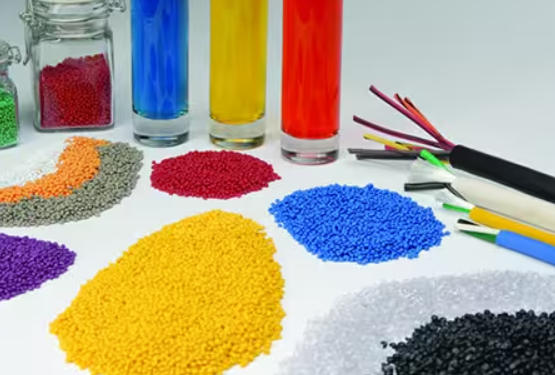
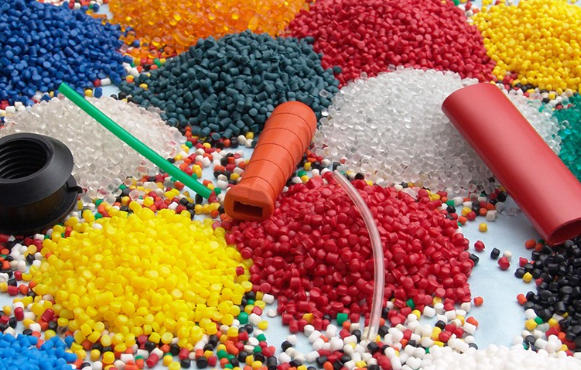
- Close‑up photos of polymer pellets in different colors produced with color Masterbatch for packaging and consumer goods.[9][10]
- Production line photos or short videos showing extrusion of films, injection molding of automotive parts, and blow molding of bottles, highlighting how Masterbatch is dosed into the polymer stream.[3][5]
More technical visuals can include:
- Infographics comparing thermoplastic and thermoset behavior under heat and load, clearly marking the role of Masterbatch additives in each system.[11][12]
- Microscopic images or schematic diagrams of pigment dispersion inside a polymer matrix, explaining how a high‑quality Masterbatch ensures uniform color and mechanical performance in plastic material.[4][8]
Engineers often classify plastic material into thermoplastics and thermosetting plastics, based on how they behave when heated.[12][11]
- Thermoplastics soften repeatedly when heated and harden again when cooled, enabling recycling and re‑processing; examples include polyethylene (PE), polypropylene (PP), polyethylene terephthalate (PET), polyvinyl chloride (PVC), and polystyrene (PS).[5][1]
- Thermosetting plastics cure into a cross‑linked network that cannot be remelted, delivering excellent heat and chemical resistance for demanding applications such as electrical components and high‑temperature parts.[11][12]
Within thermoplastics, common commodity plastics are used in high volumes because they balance cost and performance. Engineering plastics, such as polycarbonate or high‑performance polyamides, provide higher strength, toughness, and thermal stability, and they often rely on specialized Masterbatch formulations to achieve demanding flame‑retardant, UV‑stable, or antistatic properties.[13][10][14]
Below is a simple overview of several widely used plastic materials and their typical uses.
| Plastic type | Key features | Typical applications |
|---|---|---|
| Polyethylene (PE) | Lightweight, tough, flexible; available as LDPE, LLDPE, HDPE. | Films, bags, bottles, pipes, containers. |
| Polypropylene (PP) | Higher melting point than PE, good chemical resistance, stiffness. | Automotive parts, caps and closures, textiles, medical devices. |
| Polyethylene terephthalate (PET) | High strength‑to‑weight ratio, clarity, good barrier, easily recyclable. | Beverage bottles, food jars, fibers for clothing, engineering resins. |
| Polyvinyl chloride (PVC) | Versatile, adjustable rigidity, good chemical and weather resistance. | Pipes, profiles, cables, window frames, medical tubing. |
| Polystyrene (PS) | Rigid or foamed, good transparency in GPPS, insulation in EPS. | Disposable packaging, foamed insulation, appliance housings. |
| Engineering plastics (e.g., PC, PA) | High strength, toughness, thermal resistance. | Automotive interiors, electronics, machine components, optics. |
In almost all of these materials, Masterbatch plays a central role in delivering color, UV stability, flame retardancy, slip, antiblock, antistatic, or other tailored functions while keeping the base polymer and processing route unchanged.[10][4]
Masterbatch is a concentrated mixture of pigments and/or additives dispersed in a carrier resin or wax, designed to be blended into a base polymer to give specific color or performance properties. Instead of adding pigments or additives as pure powders, processors use Masterbatch pellets or granules that are easy to handle, meter, and disperse during extrusion, injection molding, or blow molding.[8][9][4][10]
A color Masterbatch focuses on providing consistent, vibrant, or customized colors, while additive Masterbatch delivers functions such as UV resistance, flame retardancy, antistatic behavior, slip, antiblock, antioxidants, and processing aids. In practice, plastic material is rarely just “neat resin”; it is resin plus one or several Masterbatch systems, optimized to meet mechanical, optical, and regulatory requirements in customer applications.[2][9][8][10]
To create Masterbatch, pigments and functional additives are mixed with a compatible carrier polymer and then compounded at high shear and temperature through an extruder, ensuring excellent dispersion of the particles in the carrier. The extruded strand is cooled and cut into uniform pellets or micropellets that can be dosed accurately into base resin at the processor's factory.[4][8][10]
In production, a processor blends a defined percentage of Masterbatch with natural polymer granules—often between 1% and 5% for color Masterbatch, and in some cases higher levels for flame‑retardant or filler Masterbatch, depending on the target performance. These Masterbatch‑loaded blends are then processed via extrusion, injection molding, blow molding, or film blowing, resulting in finished plastic material with consistent color and property profiles from batch to batch.[17][9][8][10]
Using Masterbatch instead of raw powders or liquid additives brings several key benefits for converters and brand owners.[18][9]
- Improved dispersion and color strength, providing uniform appearance and mechanical properties throughout the plastic material, even in thin films or complex shapes.[10][4]
- Cleaner, safer, and more efficient dosing compared with powders, reducing dust, contamination, and waste in the factory while enabling fast color or grade changes.[18][9]
Masterbatch also enables flexible, just‑in‑time formulation because one base polymer can be combined with many different Masterbatch recipes to deliver multiple colors or functionalities without changing core processing equipment. From a sustainability perspective, recycled polymers can be upgraded with high‑performance Masterbatch systems that restore color, filter out odors, and add UV‑ or impact‑resistance, helping close the loop in plastic material use.[8][17][10]
The compatibility between Masterbatch carrier resin and the base plastic material is critical for performance. For example, PE‑based Masterbatch is commonly used for PE and some PP applications, while specialized carriers are developed for engineering plastics such as polycarbonate, polyamides, and PET to preserve transparency or mechanical properties.[5][4][8][10]
In PVC cable compounds, dedicated Masterbatch formulations focus on weatherability, flame retardancy, and color‑fastness, supporting long‑term outdoor and electrical safety requirements. In packaging films made from PE or PP, slip/antiblock Masterbatch systems optimize winding behavior, film clarity, and packaging line efficiency, demonstrating how Masterbatch design must follow the behavior of each polymer family.[15][8][10]
Plastic material combined with Masterbatch is present in almost every sector of modern life.[1][3]
- Packaging: Films, bags, bottles, and caps rely on color Masterbatch, UV Masterbatch, and slip/antiblock Masterbatch to meet branding, shelf‑life, and processing needs.[6][15]
- Automotive and transportation: Interior and exterior components use Masterbatch to deliver scratch resistance, low VOC, UV stability, and flame‑retardant performance, all while matching strict color tolerances.[3][5]
Further examples include:
- Electrical and electronics: Flame‑retardant and antistatic Masterbatch in housings, connectors, and cable insulation improve safety and reliability.[8][10]
- Medical and consumer goods: High‑purity and regulatory‑compliant Masterbatch systems guarantee color stability, sterilization resistance, and biocompatibility in devices and packaging.[17][3]
Sustainability is reshaping how plastic material and Masterbatch are designed. Recycled resins, bio‑based polymers, and lightweighting strategies all benefit from tailored Masterbatch solutions that maintain or enhance appearance and performance while incorporating secondary raw materials.[7][17][8]
Advanced Masterbatch technologies now include odor‑removal systems for recyclates, compatibilizer Masterbatch that improves blending of different polymers, and barrier Masterbatch for extending shelf life in food packaging. Together, these developments show that Masterbatch is not just a coloring tool but a key enabler for more sustainable, high‑value plastic material in a circular economy.[10][17][8]
An innovative plastic material company that focuses on R&D, production, and sales typically offers customized Masterbatch and compound solutions for global customers. Such a company works closely with OEMs, converters, and brand owners to understand performance, regulatory, and visual requirements, then designs the correct combination of base polymer, Masterbatch carrier, and additive package to match those needs.[12][2]
By integrating laboratory testing, pilot‑scale extrusion or injection molding trials, and end‑use validation, the company can optimize Masterbatch loading levels, processing parameters, and recycling strategies for each project. This approach turns generic plastic material into high‑performance, application‑specific materials that help customers reduce cost, improve quality, and accelerate time‑to‑market across packaging, automotive, electrical, construction, and healthcare sectors.[14][3][8][10]
Plastic material is more than just “plastic”; it is a carefully engineered combination of polymers and additives that can be shaped into an enormous variety of functional products across every major industry. At the heart of this engineering lies Masterbatch, the concentrated additive system that gives plastic materials their precise color, stability, and performance, and that enables customized, sustainable solutions for global customers.[1][3][4][8]
A polymer is a large molecule composed of repeating units (monomers), while plastic is a material made from one or more polymers plus additives and Masterbatch that can be processed into shapes under heat and pressure. In other words, all plastic materials are based on polymers, but not all polymers are processed as plastics in commercial products.[6][2][5][1]
Masterbatch provides excellent dispersion of pigments and additives in a compatible carrier, giving more consistent color and properties than direct addition of powders. It also offers cleaner handling, easier dosing, less dust, and faster color changes, which improves production efficiency and working conditions in plastic processing plants.[9][18][4][10]
Yes, Masterbatch is widely used with recycled resins to restore color, compensate for property loss, and introduce stabilizers or odor‑removal additives. Properly selected Masterbatch can help recyclate‑based plastic material meet similar performance and aesthetic expectations as virgin resin, supporting circular‑economy goals.[17][8][10]
The dosage of Masterbatch depends on pigment strength, additive concentration, target color or property level, and processing method, and is usually expressed as a percentage of the base resin. Typical levels for color Masterbatch range from about 1% to 5%, while functional Masterbatch such as flame‑retardant or filler grades may require higher loadings to achieve the desired performance.[18][9][8][10]
Key factors include technical expertise in your specific polymer and process, ability to deliver customized Masterbatch formulations, and strong quality and color‑matching capabilities. It is also important to evaluate the supplier's support for regulatory compliance, sustainability initiatives, and global logistics, especially when you serve international markets with demanding specifications.[3][8][10][17]
[1](https://en.wikipedia.org/wiki/Plastic)
[2](https://www.azom.com/article.aspx?ArticleID=17477)
[3](https://www.britannica.com/science/plastic)
[4](https://en.wikipedia.org/wiki/Masterbatch)
[5](https://uark.pressbooks.pub/mechanicaldesign/chapter/plastic-materials/)
[6](https://www.xometry.com/resources/materials/what-is-plastic/)
[7](https://plasticseurope.org/plastics-explained/)
[8](https://deltatecnic.com/complete-guide-to-masterbatch/)
[9](https://www.ampacet.com/faqs/masterbatch/)
[10](https://www.tosaf.com/article/plastic-masterbatch-article/)
[11](https://www.azom.com/article.aspx?ArticleID=23894)
[12](https://www.sciencedirect.com/topics/materials-science/plastic-material)
[13](https://www.acplasticsinc.com/informationcenter/r/7-different-types-of-plastic-and-how-they-are-used)
[14](https://www.tricorbraun.com/blog/understanding-types-of-plastic.html)
[15](https://www.plasticoceans.org/blog/7-types-of-plastic)
[16](https://www.plasticsforchange.org/blog/different-types-of-plastic)
[17](https://www.americanchemistry.com/chemistry-in-america/chemistry-in-everyday-products/plastics)
[18](https://phoenixplastics.com/cost-benefits-using-masterbatch-vs-compounding/)
[19](https://www.sciencehistory.org/education/classroom-activities/role-playing-games/case-of-plastics/science-of-plastics/)
[20](https://www.ecoenclose.com/blog/what-is-plastic-anyway-our-guide-to-plastic-plastic-packaging-and-ecofriendly-materials/)


