


close
Choose Your Site
Global
Social Media


Views: 222 Author: Rebecca Publish Time: 2025-11-28 Origin: Site


Content Menu
● Chemical Structure and Composition
● Physical, Mechanical, and Thermal Properties
● Manufacturing Processes for ABS Plastic
● The Role of Masterbatch in ABS Customization
● Limitations and Disadvantages
● Industrial and Consumer Applications
>> Automotive
>> Appliances and Household Goods
>> Construction and Industrial Uses
>> Medical Devices and Packaging
● Innovations and Sustainability Trends
● FAQ
>> 1. What is the chemical structure of ABS plastic?
>> 2. How does masterbatch benefit ABS plastic products?
>> 3. Is ABS environmental-friendly and recyclable?
>> 4. What are the most common uses of ABS plastic?
>> 5. Can ABS plastic be used outdoors?
Acrylonitrile Butadiene Styrene (ABS) plastic is one of the world's most widely used thermoplastic polymers. Known for its outstanding impact resistance, excellent toughness, and robust structural integrity, ABS plastic forms the backbone of countless products across a diverse range of industries. From automotive interiors to consumer electronics, and from household appliances to toys, ABS plastic continues to play a crucial role in modern manufacturing. The ability to modify its properties and appearance using masterbatch technology makes it a prime choice for both standard and custom plastic solutions. As a Chinese company specializing in innovative plastic material R&D, manufacturing, and global OEM supply, understanding the versatility and applications of ABS—especially where masterbatch is leveraged—is essential to delivering effective, tailored solutions.[8][11][12][13]

ABS plastic is a terpolymer, created by blending three types of monomers: acrylonitrile, butadiene, and styrene. Each component contributes distinct characteristics:
- Acrylonitrile: Offers chemical resistance and hardness.
- Butadiene: Provides toughness and impact resilience.
- Styrene: Delivers rigidity and eases processing.
Depending on application requirements, the content of acrylonitrile, butadiene, and styrene can be varied. The most common ratios typically fall between 15–35% acrylonitrile, 5–30% butadiene, and 40–60% styrene. The resulting polymer is amorphous, non-crystalline, and features a unique blend of mechanical strength and flexibility.
Masterbatch is often introduced during the production stage, either as colorants or functional additives, ensuring that the ABS resin meets custom performance or appearance standards required by different clients and markets.[9][13]
ABS plastic stands out due to several important properties:
- High impact strength: Surpasses many other common plastics in drop, bend, and impact tests.
- Good dimensional stability: Maintains shape and strength under varying temperatures and stresses.
- Moderate tensile and flexural strength: Typically 40–50 MPa; adequate for most structural applications.
- Low water absorption: Ensures the material remains stable in humid environments.
- Dielectric stability: Serves well as an electrical insulator.
- Thermal tolerance: Offers a heat deflection temperature of approximately 80–100°C.
Masterbatch allows further refinement of properties—adding UV inhibitors for outdoor use, flame retardants for electronics, or fillers for improved rigidity and cost reduction.[13][14][15]
The journey from raw monomer to finished ABS product involves several stages:
ABS can be manufactured through mass (bulk) or emulsion polymerization.
- Mass polymerization: Styrene and acrylonitrile are polymerized in the presence of polybutadiene, often yielding optically clearer grades and purer resin. This process also accommodates direct masterbatch addition for color and additives.
- Emulsion polymerization: Butadiene is first polymerized in water with radical initiators and emulsifiers. Styrene and acrylonitrile are then grafted onto the resulting rubbery latex in a water-based emulsion. This method is typically used to produce standard, cost-effective grades of ABS.[3][4][9]
Injection molding is the primary method for converting ABS pellets into usable products. The process involves:
1. Drying: ABS pellets are thoroughly dried (usually at 80–95°C) to remove moisture that could cause defects.
2. Melting and Injection: The pellets are fed into a heated barrel, melted at 221°F (about 105°C or higher), and injected under high pressure into precise molds.
3. Packing and Holding: Additional pressure is applied to compensate for material shrinkage as it cools, filling out every cavity detail.
4. Cooling and Ejection: Once the molten ABS cools and solidifies, the mold opens and the finished part is ejected.[1][5][6]
5. Trimming and Finishing: Excess material (flash) is trimmed, and further finishing such as painting or plating can be performed.
Masterbatch is blended with ABS pellets prior to the injection process, guaranteeing uniform color dispersion and the delivery of targeted performance attributes to every molded part.
- Extrusion: Used for making pipes, sheets, and profiles—masterbatch ensures color and additive consistency throughout long runs of extruded product.
- Thermoforming: ABS sheets are heated and formed over molds; useful for packaging and automotive interiors.
- 3D Printing: ABS is a leading material for 3D printing, particularly with FFF/FDM technologies, enabling fast prototyping and custom manufacture.[5][8]
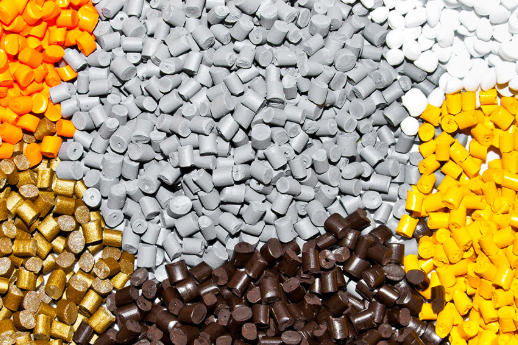
Masterbatch plays a critical role in modern ABS manufacturing:
- Coloration: Ensures vivid, uniform coloration, meeting brands' exact design requirements.
- Functional Enhancement: Delivers additives such as UV stabilizers, flame retardants, impact modifiers, or antistatic agents.
- Process Efficiency: Since masterbatch comes pre-mixed at calibrated concentrations, it allows accurate dosing and minimizes waste compared to raw pigments or direct additives.
- Versatility: Enables rapid adjustments for bespoke client needs—whether adjusting color for cosmetic appeal, or functional attributes for technical performance.[15][13]
- Sustainability: Masterbatch technology can also incorporate recycled content, supporting eco-friendly initiatives in production.
Filling masterbatch can further enhance ABS's rigidity, reduce cost, and improve the surface properties of the final product, making it a preferred solution for structural and industrial applications.
- Superior Impact Strength: ABS tolerates rough handling, making it ideal for protective casings, sports equipment, and toys.
- Design Flexibility: Compatible with various molding and forming methods; readily accepts surface textures and finishes.
- Customizable Aesthetics: Masterbatch enables virtually any color and diverse surface effects, from metallic to matte.
- Dimensional Stability: Minimizes distortion during precision machining and under cyclic loads.
- Chemical Resistance: Withstands most household and industrial chemicals—important for automotive and appliance components.
- Lightweight and Durable: Reduces shipping costs and is easy to manage, install, or assemble.
- Recyclable: Supports circular manufacturing and sustainability goals through multiple reuse cycles.
Despite its remarkable benefits, ABS plastic also has some limitations:
- UV Sensitivity: Unmodified ABS degrades with prolonged sunlight exposure—UV-resistant masterbatch is needed for outdoor use.
- Flammability: Burns readily unless formulated with flame-retardant masterbatch.
- Chemical Compatibility: Vulnerable to strong acids, bases, and certain organic solvents, which can cause stress cracking.
- Limited Heat Resistance: Not suitable for applications requiring exposure to temperatures over 100°C for extended periods.
- Environmental Impact: While recyclable, improper disposal can contribute to plastic waste concerns.
Interior and exterior components including dashboards, panels, trim parts, and bumpers benefit from ABS's impact strength, thermal stability, and easy color matching with masterbatch.
Computer housings, TV frames, keyboard keys, and remote controls all use ABS for rigid structure, excellent finish, and safe electrical insulation. Masterbatch enables brand-specific colors and compliance with fire safety standards.
Vacuum cleaner housings, kitchen utensils, tool handles, and sanitation ware (pipes and fittings) exploit ABS's chemical resistance, customized look, and low moisture absorption.
ABS's safety, ease of tooling, and vibrant, lasting colors—thanks to masterbatch—make it the standard material for blocks, board game pieces, and educational toys.
Employed for pipes, valves, fittings, protective gear, and even machine housings, ABS is valued for its mechanical strength and process adaptability.
ABS is used for non-implantable medical housings and device casings—particularly when colored masterbatch or speciality additives are required for identification and hygiene.
Manufacturers are responding to market and environmental pressures by introducing recycled ABS grades, bio-based masterbatch solutions, and innovations in process energy efficiency. Sustainable masterbatch supports the production of eco-labeled goods and helps manufacturers reduce their reliance on virgin materials.[16][17]
Hybrid ABS composites integrate nanomaterials, blend recycled content, and utilize advanced masterbatch systems to improve performance for demanding industries like automotive, electrical, and 3D printing.
ABS plastic material exemplifies engineered versatility and resilience, supported by the strategic use of masterbatch for color and performance enhancement. Its unique blend of mechanical strength, chemical resistance, and adaptability ensures that ABS remains an industry leader for high-value, durable plastic product design and manufacturing. Innovations in masterbatch and an increased focus on sustainability are expanding its applications and ensuring ABS plastics continue to meet the evolving needs of manufacturers and global markets.
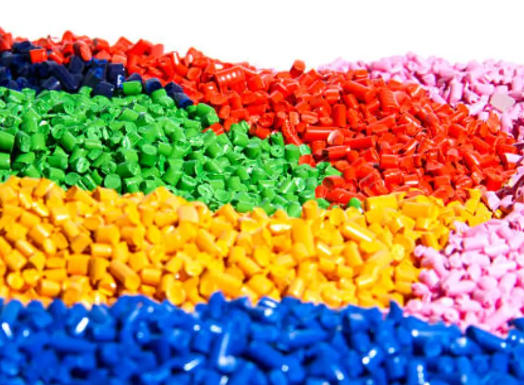
ABS plastic is an amorphous terpolymer derived from the polymerization of acrylonitrile, butadiene, and styrene—each contributing specific strengths. The blend ratio is optimized based on desired end-use properties.[11][3]
Masterbatch provides precise, efficient color uniformity and allows easy addition of special functional additives, such as UV stabilizers, flame retardants, and fillers, to meet varied customer specifications.[13][15]
ABS's recyclability is high; it can be reprocessed for new products, and eco-friendly masterbatch solutions can further improve its sustainability profile. However, longevity in landfills is a concern if not properly collected.[17][18]
ABS is widely used in automotive assemblies, electronics housings, appliances, toys, construction fittings, and various industrial components due to its toughness, ease of formation, and customizability.[19][20]
ABS plastic requires UV-stabilized masterbatch for effective outdoor applications; otherwise, prolonged sunlight can lead to yellowing and embrittlement. Proper formulation extends product lifespan in exterior settings.[21][22]
[1](https://www.xometry.com/resources/injection-molding/abs-injection-molding/)
[2](https://www.rapiddirect.com/blog/abs-injection-molding/)
[3](https://sybridge.com/know-your-materials-acrylonitrile-butadiene-styrene-abs/)
[4](https://www.linkedin.com/pulse/acrylonitrile-butadiene-styrene-manufacturing-processes-ahmed-ragab-rj7ic)
[5](https://www.madearia.com/blog/the-manufacturing-guide-of-plastic-abs-materials/)
[6](https://www.makerverse.com/resources/injection-molding/guide-to-abs-injection-molding/)
[7](https://www.crescentind.com/blog/abs-injection-molding-benefits-and-process)
[8](https://www.protolabs.com/materials/abs/)
[9](https://www.ineos.com/industry/products/polymers/abs/)
[10](https://advancedplastiform.com/materials/abs/)
[11](https://www.specialchem.com/plastics/guide/acrylonitrile-butadiene-styrene-abs-plastic)
[12](https://www.curbellplastics.com/materials/plastics/abs/)
[13](https://www.cowellextrusion.com/what-are-the-types-of-masterbatch/)
[14](https://www.3devo.com/blog/complete-guide-plastic-pigments-how-colorants-work)
[15](https://www.cowinextrusion.com/difference-between-filling-masterbatch-and-color-masterbatch/)
[16](https://www.beeplastic.com/blogs/plastic-insights/innovative-packaging-solutions-using-abs-plastic-sheets)
[17](https://www.midcontinentplastics.com/blog/sustainable-innovations-exploring-the-versatile-uses-of-recycled-abs-resins/)
[18](https://www.piedmontplastics.com/blog/abs-plastic-properties-and-uses)
[19](https://www.xometry.com/resources/materials/abs-plastic-uses/)
[20](https://prototek.com/article/abs-benefits-challenges-and-applicable-manufacturing-services/)
[21](https://adrecoplastics.co.uk/abs-plastic-properties/)
[22](https://uvteco.com/blogs-about-plastic/abs-plastic-advantages-and-disadvantages)


