


close
Choose Your Site
Global
Social Media


Views: 222 Author: Rebecca Publish Time: 2026-02-19 Origin: Site


Content Menu
● Understanding Flexible Plastic Materials
● The Composition and Manufacture of Flexible Plastics
>> Role of Masterbatch in Formulation
● Key Properties of Flexible Plastic Materials
>> 2. Chemical and UV Resistance
● Applications of Flexible Plastic Materials
>> Construction and Agriculture
● Environmental Impacts and Sustainability of Flexible Plastics
>> Recyclable and Bio-Based Alternatives
>> Carbon Footprint Minimization
● The Future of Flexible Plastics with Masterbatch Innovations
● FAQs About Flexible Plastic Materials
>> 1. What makes plastic flexible?
>> 2. What is Masterbatch and why is it important?
>> 3. Are flexible plastics recyclable?
>> 4. How do Masterbatches improve plastic sustainability?
>> 5. Where are flexible plastics most commonly used?
Flexible plastic materials have become essential components in modern industries, from packaging to automotive and construction. Their unique combination of elasticity, strength, and cost-efficiency enables designs and products that are lighter, safer, and more durable. In this article, we'll explore what flexible plastics are, how they are made, their characteristics, applications, and the critical role of Masterbatch in enhancing their performance.
Flexible plastics are polymers that can bend, stretch, and compress without breaking. Unlike rigid plastics, which maintain their shape under stress, flexible plastics have molecular structures that allow them to deform and return to their original form.
Common flexible plastics include:
- Polyethylene (PE): Widely used in flexible packaging films and bags.
- Polypropylene (PP): Valued for its toughness and fatigue resistance.
- Polyvinyl Chloride (PVC): Often plasticized to increase flexibility, popular in cables and hoses.
- Thermoplastic Elastomers (TPE): A hybrid of plastic and rubber with excellent softness and elasticity.
The flexibility of these materials originates from their molecular arrangement. The polymer chains in flexible plastics are longer and less tightly packed, allowing greater mobility when stress is applied. Masterbatch additives can further refine these properties—modifying color, UV resistance, or softness levels according to application needs.
Flexible plastics are generally produced through polymerization, compounding, and extrusion processes. The selection of additives plays a vital role in achieving the desired mechanical and functional properties.
The base polymer determines the fundamental behavior of the plastic. For instance, low-density polyethylene (LDPE) offers higher flexibility compared to high-density polyethylene (HDPE) due to its more branched structure.
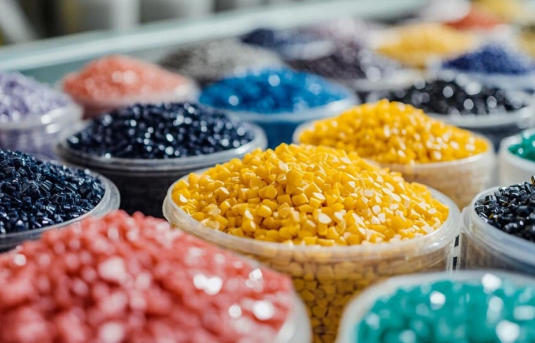
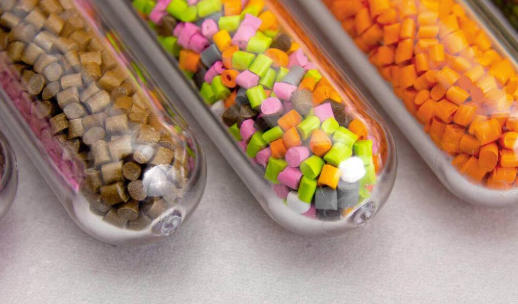
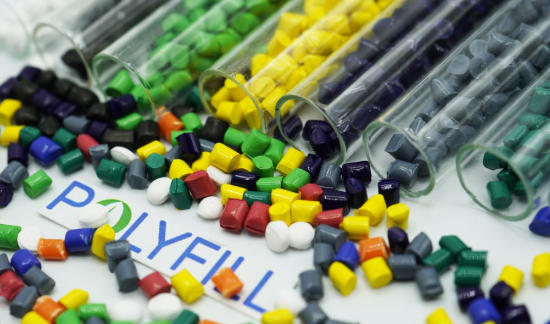
A Masterbatch is a concentrated mixture of pigments or additives encapsulated during a heat process into a carrier resin. It is later cooled and cut into granules that are mixed with base polymers during processing. Masterbatch offers a cleaner, more controlled, and more consistent way to incorporate additives than direct powder addition.
Different types of masterbatch include:
- Color Masterbatch: Provides uniform coloration for the end product.
- White or Black Masterbatch: Used for opacity and UV stabilization.
- Additive Masterbatch: Enhances specific functional properties like anti-static, flame retardancy, or slip.
- Filler Masterbatch: Improves cost-efficiency and mechanical control using fillers such as calcium carbonate.
The right Masterbatch ensures that flexible plastics meet exact performance standards for durability, softness, clarity, and environmental resistance.
One common manufacturing method for flexible plastics is film blowing, where molten polymer (enhanced with the required masterbatch) is extruded in a tube form and inflated like a balloon to form a thin film. Adjusting cooling rates, resin grades, and masterbatch levels controls clarity, thickness, and stretchability of the final film.
The performance of flexible plastics is influenced by both polymer structure and additive content. The inclusion of Masterbatch can alter these properties significantly.
Flexible plastics have excellent elastic properties that allow them to absorb stress and impact. Softening agents or plasticizers are often used to improve elasticity, while softening masterbatches help maintain flexibility under temperature variations.
Additives in Masterbatch form protect plastics from oxidation, UV radiation, and chemical degradation. This is especially important for outdoor applications like greenhouse films, tarpaulins, and cable coatings.
Films made with high-quality transparent masterbatch can achieve both flexibility and excellent optical properties, useful in food packaging and display materials.
Masterbatch improves melt flow stability, reduces defects during extrusion, and enhances color dispersion, leading to consistent and efficient production of flexible products.
Modern masterbatch technologies support circular economy goals by enhancing the mechanical performance of recycled plastics, allowing multiple reprocessing cycles without significant loss in flexibility.
The uses of flexible plastics span countless industries. Versatility, durability, and adaptability make them irreplaceable in many applications.
Packaging represents the largest market share for flexible plastics. Films, pouches, and shrink wraps depend on masterbatch-modified resins for better sealability, transparency, and anti-blocking effects. High-slip Masterbatch ensures smooth film processing and efficient packaging operations.
Flexible PVC or TPE, enhanced with Masterbatch that improves flame retardancy and color identification, is widely used for cables, wire coatings, and insulation materials. These materials combine safety, flexibility, and long lifespan.
In the automotive industry, flexible plastics serve in seat covers, interior panels, tubing, and sealing strips. Anti-scratch and UV-resistant Masterbatch formulations extend product life while maintaining aesthetic appeal.
Flexible plastics such as TPEs and soft PVC grades are preferred in medical tubing, gloves, and fluid bags due to their adaptability, sterility, and biocompatibility. Masterbatch plays an essential role by adding anti-bacterial or clarity-enhancing effects.
Waterproof membranes, roofing sheets, and irrigation films all rely on flexible polymers. Additive Masterbatches with anti-static, anti-fog, or UV-protection features ensure long-term weather resistance and structural efficiency.
While flexible plastics provide significant functional benefits, sustainability remains a global concern. Efforts to reduce their environmental footprint focus on design innovation, advanced recycling, and green additive technologies.
The integration of biodegradable masterbatch or bio-based Masterbatch enables manufacturers to produce flexible plastics that break down more easily in natural conditions or rely on renewable feedstocks.
Masterbatch can rejuvenate recycled polymers by restoring mechanical strength and color properties. For example, adding compatibilizer masterbatch helps blend recycled materials from different polymers into usable high-quality resins.
Modern manufacturing facilities utilize low-energy extrusion systems and eco-efficient Masterbatch formulations to minimize waste and emissions throughout the production chain.
Flexible plastics, therefore, are evolving from conventional synthetic materials into sustainable, high-performance materials suitable for a circular economy.
The future of flexible plastics lies in smart material design, where each product is engineered to deliver multifunctional capabilities. Next-generation Masterbatch technologies are key drivers of this transformation.
Emerging trends include:
- Nano masterbatch: Incorporating nanocomposites for superior mechanical and barrier performance.
- Biodegradable masterbatch: Supporting sustainable and compostable packaging.
- Conductive and anti-static formulations: Essential for electronic devices and automotive parts.
- Custom texture or sensory masterbatch: Used in consumer goods to enhance grip, feel, or transparency.
These advancements enable flexible plastics to meet increasing regulatory, performance, and environmental standards while remaining cost-effective for global manufacturers.
Flexible plastic materials combine adaptability, performance, and economic efficiency, making them indispensable in today's industrial and consumer sectors. Through careful formulation and processing—particularly with the precise use of Masterbatch—their properties can be optimized for exceptional quality, performance, and recyclability. As sustainability and innovation advance, flexible plastics will continue to evolve, offering smarter, greener, and more versatile solutions for industries worldwide.
Plastic flexibility depends on its polymer structure and additives. Long, loosely packed molecular chains allow greater motion under stress. The addition of plasticizers and Masterbatch further refines softness and bending capacity.
A Masterbatch is a concentrated blend of pigment or additives used to modify plastics. It ensures uniform dispersion, enhances color consistency, and delivers functional properties like UV resistance, flame retardancy, or flexibility improvement.
Yes. Most flexible plastics, especially PE and PP, can be recycled. Using proper sorting and adding recycling-compatible masterbatches improves the quality and appearance of the recycled materials.
Masterbatches with reactive additives can extend polymer life cycles, facilitate reprocessing, and reduce waste generation. Biodegradable or bio-based masterbatches also help create environmentally friendly flexible plastic products.
Flexible plastics are widely used in packaging, automotive, medical, electronics, and agriculture sectors. Their ability to mold into films, sheets, or coatings—with the right Masterbatch—makes them ideal for these varied industries.


