


close
Choose Your Site
Global
Social Media


Views: 222 Author: Rebecca Publish Time: 2025-12-01 Origin: Site


Content Menu
● Introduction to TPU Masterbatch
● Key Characteristics of TPU for Masterbatch Processing
● Drying and Pre-Processing Requirements
● Core Production Methods: Prepolymer and One-Step Techniques
>> One-Step Reactive Extrusion
● Essential Processing Equipment
● Process Parameters and Control
● Automation and Smart Production
● Using TPU Masterbatch in Downstream Processing
>> Extrusion
● Common Quality Issues and Troubleshooting
● Sustainability and Recycling
● Advancements in TPU Masterbatch Technology
● FAQ: TPU Masterbatch Processing
>> 1. How should TPU Masterbatch be dried for optimal results?
>> 2. What mixing equipment is best for TPU Masterbatch?
>> 3. Do process settings change dramatically when adding TPU Masterbatch?
>> 4. Can recycled TPU be used with Masterbatch?
>> 5. What causes streaks or specs in Masterbatch TPUs?
Thermoplastic polyurethane (TPU) Masterbatch represents a cornerstone in modern plastic compounding, offering unmatched versatility for color, mechanical modifications, and functional property enhancements across diverse industrial sectors. Mastering the processing techniques of TPU Masterbatch allows manufacturers to deliver consistent quality, optimize costs, and tailor performances for specialized applications ranging from footwear to automotive, electronics, and medical devices.[2][3][7]

TPU Masterbatch is a concentrated blend of pigments or functional additives dispersed in a TPU carrier resin. This mixture is pelletized and then dosed into base TPU resin during final product manufacturing. Using a compatible TPU carrier prevents compatibility problems and ensures uniform distribution of additives, thus maintaining the mechanical integrity and appearance of the finished products.[3][7][10]
TPU is valued for its elasticity, abrasion resistance, and chemical stability. These properties make it an ideal base for Masterbatch compounding, but also impose strict requirements on processing methods and equipment selection.[11][2]
- Hygroscopic Nature: TPU absorbs moisture rapidly, and insufficient drying can lead to hydrolysis, bubbles, and compromised physical properties.
- High Melt Viscosity: This necessitates precise control over temperature, shear, and residence time during processing.
- Thermoplastic Behavior: TPU's ability to be melt-processed repeatedly enables recycling and modification through Masterbatch addition.[1][12][2]
Both base TPU and TPU Masterbatch pellets must be thoroughly dried before processing, generally at 80–110°C for several hours until moisture content is below 0.02%. This step is critical for avoiding hydrolytic degradation, surface blemishes, and any defects associated with residual moisture. Optimal results are achieved by drying the pellets together, ensuring uniformity in moisture content and temperature before compounding and molding.[5][12][13][14][15][1]
In the prepolymer process, TPU is synthesized and then compounded with additives and colorants in a controlled kneading or twin-screw extrusion stage.
- Key Steps:
- Prepolymer synthesis and chain extension reaction are conducted in reactors.
- Resulting TPU is extruded and pelletized, with additives such as antioxidants or light stabilizers incorporated during granulation.
- Yields stable, high-performance Masterbatch but requires longer processing and higher investment.[10][3]
Here, all raw materials (isocyanates, polyols, chain extenders, additives) are mixed and fed to a twin-screw extruder.
- Key Steps:
- Chemical reactions and physical mixing happen simultaneously during extrusion.
- Temperature increases gradually from the feeding section to the die (typically 150–220°C).
- The melt is cooled, cut, and pelletized, resulting in a Masterbatch with stable and consistent properties.
- This process is efficient and scalable, suitable for standard-grade TPU Masterbatch, but places higher demands on raw material precision and process control.[16][3]
- Twin-Screw Extruder: Offers intensive mixing, dispersion, and shear for uniform additive distribution. Screw design (gradient, shallow groove depth, large helix angle) further improves plasticization and mixing efficiency.[17][18][3][11]
- Lab Twin Screw Extruder: Used for rapid formulation development and quality evaluation in small batches.
- Granulator: Cuts extruded strands into specified pellet sizes; both hot and cold cutting methods are employed depending on viscosity.
- Cooling Systems: Water or air cooling minimizes deformation and adhesion in freshly extruded Masterbatch.
- Automated Feeding: Precision feeders ensure accurate dosing of all ingredients, vital for formulation reproducibility and process efficiency.[3]
- Temperature Management: Crucial for maintaining melt quality and avoiding thermal degradation. High-precision control systems (± 1°C accuracy) with real-time monitoring maximize product stability.[3]
- Shear and Mixing: Efficient mixing elements (kneading blocks, pins, barrier screws) and correct screw speed ensure thorough dispersion of pigments and additives.
- Material Conveying Stability: Weight loss feeders and sealing systems stabilize raw material addition, crucial for batch-to-batch consistency.
Modern TPU Masterbatch lines use PLC or DCS platforms for automated parameter control, dosing, and monitoring of temperature, pressure, screw speed, and material flow. These systems maximize process stability, reduce downtime, and ensure high-quality production. Data-driven process adjustments and predictive maintenance strategies further enable smart manufacturing environments for global supply chains.[11][16][3]
TPU Masterbatch and natural TPU pellets are co-fed into single or twin-screw extruders. Pellet dosing ratios, screw speed, and barrel temperatures (usually between 150–220°C) must be fine-tuned for uniform melt quality.
- Proper temperature management minimizes decomposition and color changes, while optimized die and cooling systems prevent flow lines and streaks.[4][8][15][2]
Dried TPU and Masterbatch are processed in injection molding machines with cylinder temperatures ranging from 180–220°C, and molds often heated up to 80°C for optimal finish.
- Key factors include: Short melt residence time, balanced back pressure, and appropriate injection speed to avoid pigment separation or floating.
- Mold gating, filling, and venting must be carefully designed to accommodate TPU's flow behavior and high Masterbatch loads.[8][1][5]
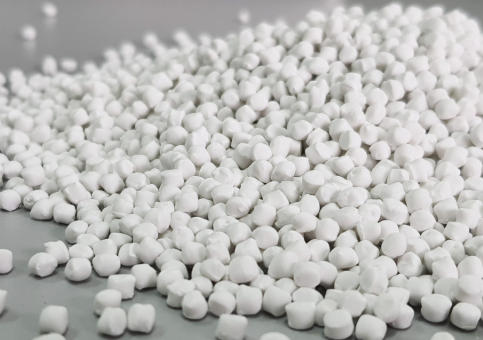
Frequent defects attributable to TPU Masterbatch include color streaks, specks, blistering, loss of gloss, and compromised mechanical performance.
- Solutions typically involve improved drying, enhanced mixing, temperature profile adjustment, or reformulation with new dispersants and pigment choices.[7][10][17][11]
- Quality control tests—melt index, color strength, dispersion levels, and mechanical properties—help maintain process consistency and product integrity.[8][10]
TPU Masterbatch can be used with recycled TPU resin provided the material is properly sorted and dried. Here, Masterbatch restores color, UV stability, and targeted mechanical functionality to recycled blends.
- Recycling with Masterbatch demands more careful let-down ratios and some process adjustments due to variability in base resin composition.[2][7][11]
Recent innovations include development of masterbatches for antimicrobial, flame-retardant, anti-static, and optical performance enhancements.
- High-concentration additive masterbatches enable highly functional TPU products with lower cost and improved process efficiency.
The advancement of TPU Masterbatch processing techniques has transformed the customization and performance optimization of TPU-based products. Successful Masterbatch production and downstream use depend on rigorous control of raw material quality, drying procedures, precision equipment configuration, robust temperature management, and advanced automation. By leveraging twin-screw extrusion, smart control systems, and ongoing formulation improvements, manufacturers worldwide meet the evolving needs of critical industries—delivering improved quality, stability, and value in every TPU-based solution.[7][10][2][3]
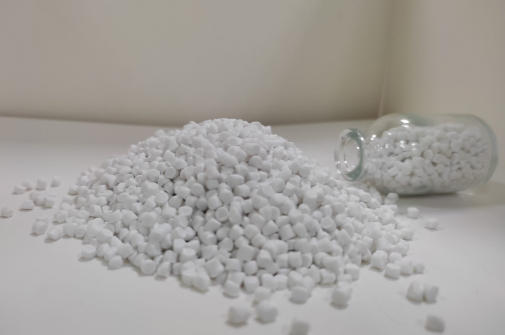
TPU and Masterbatch pellets should be dried in dehumidified air at 80–110°C until moisture content is below 0.02%, ensuring high-quality processing and avoidance of defects.[12][13][14][1]
Twin-screw extruders with optimized screw geometry and advanced mixing elements provide the best dispersion and mixing for TPU Masterbatch compounding.[18][17][11][3]
Mild temperature, screw speed, and back pressure adjustments are often needed to maintain homogeneity. Poorly dispersed Masterbatch can cause visual and performance defects.[15][4][2][7][8]
Yes, provided the recycled resin is clean, compatible, and well-dried. Masterbatch can restore essential color and properties to recycled blends, though processing parameters may require refinement.[2][7][11]
Typical defects result from inadequate drying, poor mixing, or incompatible carrier resins. Optimizing screw design, temperature control, and additive selection can greatly minimize processing flaws.[10][17][7][11]
[1](https://www.fostercomp.com/wp-content/uploads/2018/11/Foster-TPU-Processing-Guidelines.pdf)
[2](https://www.cowellextrusion.com/comprehensive-guide-to-tpu-extrusion-and-manufacturing/)
[3](https://www.kerkeextruder.com/masterbatch-production/tpu-masterbatch/)
[4](https://media.lubrizol.com/-/media/Project/Lubrizol-Corporation/Lubrizol/Master-Site/Engineered-Polymers/Documents/Literature/Lubrizol-Engineered-Polymers-Extrusion-Processing-Guide.pdf)
[5](https://solutions.covestro.com/-/media/covestro/solution-center/brands/downloads/imported/1557310236.pdf)
[6](https://www.mitopolimeri.it/products/Covestro%20TPU%20Processing%20by%20extrusion%20and%20special%20processes.pdf)
[7](https://masterbatchglobal.com/articles/thermoplastic-tpu-masterbatch/)
[8](https://www.distrupol.com/Elastollan_Processing_Recommendations.pdf)
[9](https://download.basf.com/p1/8a8081c57fd4b609017fd648bf3150e4/en/Elastollan%253Csup%253E%25C2%25AE%253Csup%253E_-_Thermoplastic_Polyurethane_Elastomers_%2528TPU%2529_-_Processing_Recommendations)
[10](https://patents.google.com/patent/CN108410159A/en)
[11](https://coperion.com/en/industries/chemicals/tpu)
[12](https://compoundingsolutions.net/WP_Live/wp-content/uploads/2018/01/Proper-Processing-of-Polymers-Starts-with-Drying.pdf)
[13](https://www.dehumidifyingdryer.com/news/how-to-dry-tpu-before-processing-139600.html)
[14](https://media.lubrizol.com/-/media/Project/Lubrizol-Corporation/Lubrizol/Master-Site/Health/Documents/Literature/TPU-Drying-Guide.pdf)
[15](https://solutions.covestro.com/-/media/covestro/solution-center/brands/downloads/imported/1557310146.pdf)
[16](https://www.kerkeextruder.com/production-system/tpu-twin-screw-reactive-extrusion/)
[17](https://ilucku.com/machines/twin-screw-compounding-extruder/)
[18](https://www.cowinextrusion.com/tpu-twin-screw-extruder/)


