


close
Choose Your Site
Global
Social Media


Views: 222 Author: Rebecca Publish Time: 2025-12-01 Origin: Site


Content Menu
● Why TPU Is A Sustainable Carrier
● Types Of TPU Masterbatch For Sustainable Plastics
● TPU Masterbatch And Circular Design
● TPU Masterbatch In Recycled Plastics
● Application Areas For TPU Masterbatch
● Production Process Of TPU Masterbatch
● Formulation Principles For Sustainable TPU Masterbatch
● Performance Advantages Of TPU Masterbatch
● How Brand Owners Can Implement TPU Masterbatch
● How TPU Masterbatch Supports Your Custom Solutions
● Future Trends In TPU Masterbatch And Sustainability
>> 1. What makes TPU Masterbatch “sustainable”?
>> 2. Can TPU Masterbatch be used with recycled plastics?
>> 3. Which industries benefit most from TPU Masterbatch?
>> 4. How is TPU Masterbatch dosed in processing?
>> 5. Are there regulatory considerations for TPU Masterbatch?
TPU Masterbatch is becoming a core enabler for low‑carbon, recyclable and high‑performance plastics, because it combines the mechanical strength of thermoplastic polyurethane with highly efficient colorants and functional additives. By optimizing recyclability, durability and processing efficiency, TPU Masterbatch helps brand owners and converters move from traditional plastics toward truly sustainable plastic solutions.

TPU Masterbatch is a pelletized concentrate in which pigments or performance additives are highly dispersed in a thermoplastic polyurethane (TPU) carrier resin. The TPU carrier offers excellent tension, tensile strength, toughness and aging resistance, so the Masterbatch can be blended into TPU or other compatible polymers to achieve precise color and performance with a low addition rate.
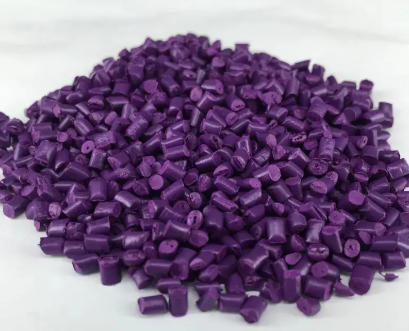
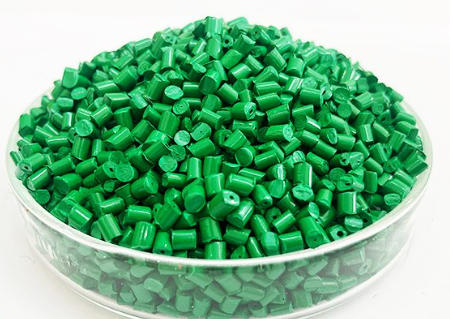
Visually, TPU Masterbatch looks like uniform granules that can be dosed by standard feeders into extrusion, injection molding or film‑blowing lines. Compared with liquid additives or direct pigment powders, TPU Masterbatch technology improves dosing accuracy, cleanliness, dispersion and operator safety, which is essential in high‑volume industrial production.
Thermoplastic polyurethane is an elastomer that combines high elasticity, transparency and resistance to oil, grease, abrasion and many chemicals. Unlike crosslinked rubbers, TPUs are melt‑processable and can be recycled and reprocessed multiple times, which directly supports waste reduction and circularity in plastic applications.
Modern TPU systems can use partially bio‑based or recycled feedstocks to reduce fossil resource use and carbon footprint. These low‑carbon TPUs keep the typical durability and resilience of conventional TPU while delivering better sustainability metrics for brand owners and OEMs.
There are many functional families of TPU Masterbatch, each designed to solve a different technical and environmental challenge while keeping processing simple. The most common categories include color Masterbatch, matt and surface‑effect Masterbatch, antistatic grades, flame‑retardant grades, conductive grades and bio‑oriented grades.
Color TPU Masterbatch delivers precise, reproducible coloring of TPU and compatible polymers with minimum addition level. Matt and surface‑effect TPU Masterbatch can give soft‑touch, anti‑fingerprint or low‑gloss appearance without secondary coating processes, which supports lower VOC emissions and easier recycling.
Antistatic TPU Masterbatch introduces permanent or long‑lasting antistatic performance for films, sheets and molded articles. Flame‑retardant TPU Masterbatch allows cable jackets, electronic housings and transport parts to meet fire standards while staying halogen‑free and low‑smoke.
Conductive TPU Masterbatch uses special fillers such as carbon black or carbon nanotubes to provide electrical conductivity for ESD and EMI‑shielding components. Bio‑based or biodegradable TPU Masterbatch incorporates renewable or degradable components, helping products meet stricter environmental expectations in packaging, agriculture and consumer goods.
Circular plastics require materials that can be easily collected, sorted, recycled and re‑used without losing performance, and TPU Masterbatch fits this requirement well. Because the Masterbatch is based on a compatible TPU carrier, it maintains homogeneity in the matrix, which prevents phase separation and allows re‑melting and reprocessing with limited property loss.
Using a single TPU Masterbatch to introduce multiple functions—such as color, UV resistance and anti‑scratch—reduces the need for coatings, primers and multi‑layer structures that are difficult to recycle. By designing mono‑material TPU products with integrated Masterbatch functions, manufacturers can simplify disassembly, mechanical recycling and even future chemical recycling routes.
TPU Masterbatch is not limited to virgin TPU; certain grades can be used as universal or highly compatible concentrates for polyolefins, styrenics and other polymers. Antistatic TPU Masterbatch, for example, can be mixed into polyolefin packaging to provide strong antistatic performance while preserving the mechanical properties of the base resin.
In recycled resins, TPU Masterbatch can help restore or upgrade performance by adding impact modification, flexibility, color correction or surface aesthetics to recycled blends. When used in recycled TPU itself, Masterbatch can compensate for slight property losses after multiple reprocessing cycles, enabling higher recycled content without sacrificing durability.
Because TPU offers a balance of flexibility, clarity and strength, TPU Masterbatch finds use in many sectors that demand both performance and sustainability. Typical markets include footwear, sportswear, films and membranes, wires and cables, consumer electronics, automotive interiors and industrial packaging.
In footwear and sportswear, TPU Masterbatch colors soles, logos and transparent windows while delivering abrasion resistance and comfortable elasticity. In films and membranes, UV‑stabilizing or matt TPU Masterbatch helps outdoor and medical films maintain appearance and toughness during long service life.
Wire, cable and electronics applications rely on flame‑retardant, antistatic and conductive TPU Masterbatch to meet strict safety and ESD protection requirements. Automotive and mobility sectors use soft‑touch TPU combined with matt and scratch‑resistant Masterbatch systems for instrument panels, trims and functional seals.
Industrial packaging uses antistatic TPU Masterbatch to prevent electrostatic discharge when handling powders, solvents or flammable goods. In all these cases, the same TPU Masterbatch solution can be combined with recycled polymers and lighter designs to support sustainability targets.
Manufacturing TPU Masterbatch typically uses a twin‑screw extrusion process in which pigments or additives are melt‑mixed with TPU resin, then cooled and pelletized. The resin must have excellent wetting and dispersing characteristics to break down pigment agglomerates and achieve uniform distribution at high loadings.
Critical process factors include temperature profile, screw speed and precise feeding to maintain consistent Masterbatch quality. High‑precision temperature control ensures that TPU stays within the optimal processing window, protecting elasticity and hardness while preventing thermal degradation of sensitive additives.
Feeding systems must be able to handle TPU granules, powders and liquid additives with high accuracy, since even small dosing deviations can affect color strength or functional performance. Automated control of process parameters and traceability of raw materials also support stable quality for demanding industries such as medical, automotive and electronics.
From a formulation viewpoint, sustainable TPU Masterbatch design focuses on low‑impact raw materials, long product life and viable end‑of‑life options. Bio‑based polyols, recycled TPU carriers and heavy‑metal‑free pigments are widely used to align the Masterbatch with global chemical regulations and brand sustainability commitments.
At the same time, the Masterbatch must maintain high performance under real‑world conditions, including UV exposure, humidity, mechanical deformation and contact with oils or cleaning agents. Formulators therefore balance pigment and additive selection to avoid substances that disturb mechanical recycling or generate problematic residues in chemical recycling processes.
Using TPU Masterbatch gives processors a combination of mechanical, visual and processing advantages that traditional additive systems struggle to match. Strong dispersion in the TPU carrier translates into high color strength, consistent gloss and minimal defects such as flow marks, specks or plate‑out.
Mechanically, TPU Masterbatch can maintain or even improve the toughness and abrasion resistance of the final part, because the carrier resin is fully compatible with the matrix. This is especially important in demanding applications like sports footwear, industrial hoses, flexible connectors and protective covers.
From a processing standpoint, TPU Masterbatch allows cleaner production, shorter changeover times and lower scrap rates. Dosing pellets instead of powders improves workplace hygiene and reduces contamination risk in food‑contact or cleanroom environments.
For converters and brand owners, integrating TPU Masterbatch into sustainable plastic strategies involves both technical trials and clear communication with the market. On the technical side, processors should run lab and pilot‑scale tests to determine optimal let‑down ratios, verify mechanical performance and ensure color and surface quality are stable across different production lots.
Process engineers can adjust screw configuration, back‑pressure, melt temperature and cooling conditions to match the rheology of the Masterbatch and base polymer. With well‑tuned conditions, the same TPU Masterbatch can often be used across multiple product lines, which simplifies inventory and reduces qualification costs.
On the commercial and sustainability side, TPU Masterbatch enables stronger narratives around carbon footprint reduction, recyclability and resource efficiency. Brand owners can highlight the use of bio‑based or recycled content in TPU Masterbatch, the elimination of solvent‑based coatings, or the transition to mono‑material designs as concrete steps toward circular plastics.
For companies providing customized plastic materials, TPU Masterbatch is a flexible tool to create differentiated solutions for global customers. By tailoring the TPU Masterbatch formula—color shade, gloss level, hardness range, antistatic level, flame rating or bio‑content—it becomes possible to match exact specifications in various regions and regulatory environments.
Custom TPU Masterbatch solutions are especially valuable when customers need to balance conflicting requirements such as softness versus chemical resistance, or transparency versus UV stability. Through iterative testing and close collaboration with converters, a single TPU Masterbatch grade can often be optimized to deliver multiple benefits in the final product.
This approach shortens development cycles for new sustainable products and gives OEMs a faster route from prototype to mass production. At the same time, using a standardized family of TPU Masterbatch grades simplifies global supply and ensures stable performance across different factories and countries.
The next wave of TPU Masterbatch innovation will be strongly linked to circular economy strategies and digitalization. One important direction is the development of Masterbatch systems compatible with advanced recycling technologies, so that pigments and additives do not limit depolymerization or solvent‑based recycling processes.
Another trend is higher use of certified bio‑based and recycled TPU carriers in Masterbatch, combined with transparent carbon‑footprint data for each grade. Digital product passports and traceability platforms will make it easier to communicate this information to brand owners, regulators and end consumers.
Functionally, more multi‑purpose TPU Masterbatch grades are expected, combining color, UV stability, anti‑scratch and antistatic behavior in a single concentrate. These “all‑in‑one” solutions can simplify formulations, reduce logistics complexity and further support eco‑design initiatives.
TPU Masterbatch is emerging as a powerful toolkit for creating sustainable plastic solutions because it unites TPU's inherent recyclability and toughness with highly engineered color and functional packages. By selecting the right TPU Masterbatch—whether matt, antistatic, flame‑retardant, conductive, bio‑based or all‑in‑one—manufacturers can cut additives, simplify structures, raise recycled content and still meet demanding performance and safety standards.
For global brands and converters looking to shift from conventional plastics to circular, high‑value materials, TPU Masterbatch offers a practical pathway toward lower carbon footprint and better resource efficiency. Combined with responsible design, accurate processing and transparent communication, TPU Masterbatch is truly the key to sustainable plastic solutions.
TPU Masterbatch supports sustainability by enabling recyclable mono‑material designs, reducing over‑pigmentation and replacing multi‑layer structures that are difficult to recycle. When bio‑based or recycled TPU carriers and eco‑designed additives are used, TPU Masterbatch also helps cut fossil resource consumption and total carbon emissions.
Yes, many TPU Masterbatch grades work well in both virgin and recycled TPU, and some are compatible with recycled polyolefins and other polymers. In recycled streams, TPU Masterbatch can restore color, toughness and surface quality, allowing higher recycled content without major loss of performance.
Industries that require flexible yet durable materials—such as footwear, sports equipment, electronics, automotive interiors, wires and cables, and technical films—gain particular advantages from TPU Masterbatch. These sectors can combine long‑lasting performance with reduced environmental impact by using targeted TPU Masterbatch solutions.
TPU Masterbatch is usually added via gravimetric or volumetric feeders into twin‑screw extruders, injection molding machines or film lines at relatively low let‑down ratios. Because pigments and additives are pre‑dispersed in a compatible TPU carrier, processors achieve consistent color and properties with cleaner handling and reduced dosing errors.
Yes, TPU Masterbatch used in sustainable applications must comply with regulations on restricted substances, heavy metals, food contact, electronics and building safety. Leading suppliers design TPU Masterbatch portfolios that are halogen‑free where necessary and aligned with global eco‑labels and circular‑economy guidelines.
[1](https://www.kerkeextruder.com/masterbatch-production/tpu-masterbatch/)
[2](https://www.fostercomp.com/wp-content/uploads/2018/11/Foster-TPU-Processing-Guidelines.pdf)
[3](https://masterbatchglobal.com/articles/thermoplastic-tpu-masterbatch/)
[4](https://cdn.agilischemicals.com/wanhua-tpu/Wanhua%20Wanthane%C2%AE%20TPU%20Brochure.pdf)
[5](https://www.si-tpv.com/tpu-matt-masterbatch/)
[6](http://www.nantico.com/batchesen.html)
[7](https://patents.google.com/patent/CN103804891A/en)
[8](https://www.anmeiplastics.com/products/slip-frosted-matte-tpu-masterbatch/)
[9](https://www.ulprospector.com/plastics/en/datasheet/235628/estane-mb-abhu1)


