


close
Choose Your Site
Global
Social Media


Views: 222 Author: Rebecca Publish Time: 2025-12-11 Origin: Site


Content Menu
● The Role Of TPU Masterbatch In Modern Manufacturing
>> 1. Enhancing Aesthetic Appeal
>> 2. Improving Functional Properties
● The Composition And Preparation Process Of TPU Masterbatch
>> Step 1: Raw Material Selection
>> Step 2: Pigment And Additive Blending
>> Step 4: Cooling And Pelletizing
● Advantages Of TPU Masterbatch
● Applications Of TPU Masterbatch
>> Footwear And Sports Equipment
>> Electronics And Consumer Goods
>> Medical And Healthcare Products
● TPU Masterbatch And Sustainability
● Innovation Trends In TPU Masterbatch Development
>> (1) What is the difference between TPU masterbatch and colorant?
>> (2) Can TPU masterbatch be used with other thermoplastics?
>> (3) Does TPU masterbatch affect mechanical properties?
>> (4) Is TPU masterbatch recyclable?
>> (5) How much masterbatch should be added to TPU?
In today's fast-evolving manufacturing world, material innovation has become the driving force behind product performance and aesthetics. Thermoplastic polyurethane (TPU) stands out for its superb combination of elasticity, durability, and chemical resistance. However, it is the TPU Masterbatch that truly extends this material's versatility — enabling manufacturers to fine-tune color, enhance performance, and optimize cost-efficiency across countless applications.
As industries continue to demand lightweight, sustainable, and high-performance materials, TPU Masterbatch technology has transformed from a simple additive process into a strategic enabler of product differentiation. This article explores its formulation, features, advantages, and applications that help bridge the gap between functionality and design.

TPU Masterbatch is a concentrated mixture of pigments, additives, or functional agents encapsulated in a TPU carrier resin. This formulation allows for easy and uniform dispersion within the final TPU product during extrusion, injection molding, or film blowing.
By integrating masterbatch technology, manufacturers can precisely control multiple functional properties such as:
- Color enhancement
- UV stabilization
- Anti-static performance
- Flame retardancy
- Abrasion resistance
The TPU masterbatch not only simplifies the blending process but also ensures consistent dispersion and stable performance throughout production, significantly improving material uniformity and manufacturing efficiency.
TPU masterbatches play a pivotal role in enhancing the properties of thermoplastic polyurethane materials used across various sectors including electronics, automotive, medical devices, footwear, and sports equipment.
Product design and branding often rely on precise color expression. With color TPU masterbatch, manufacturers can achieve consistent shades even under complex molding conditions. The controlled pigment dispersion prevents color streaking and uneven tones, thus ensuring aesthetic precision.
Modern TPU masterbatch formulations go beyond color modification. Functional masterbatches—for instance, anti-UV, flame-retardant, or anti-microbial—enhance product performance without compromising mechanical properties. These masterbatches are essential for outdoor and high-stress applications.
Using masterbatch systems reduces dosing errors, minimizes material waste, and ensures faster production changeovers. Additionally, TPU-based masterbatches improve processing stability during extrusion or molding, lowering defect rates and improving yield.
Creating a high-quality TPU masterbatch involves precise engineering and chemistry. The process combines base TPU resin, pigments or additives, and dispersing agents using advanced compounding technologies.
The base resin must match the performance requirements of the target product — flexibility, chemical compatibility, or processing temperature. TPU offers excellent versatility across hardness ranges (70A–98A), making it an ideal carrier.
Colorants, stabilizers, or performance enhancers are carefully weighed and mixed. Advanced pigment dispersion ensures fine particle distribution, which translates into uniform coloration and stable performance.
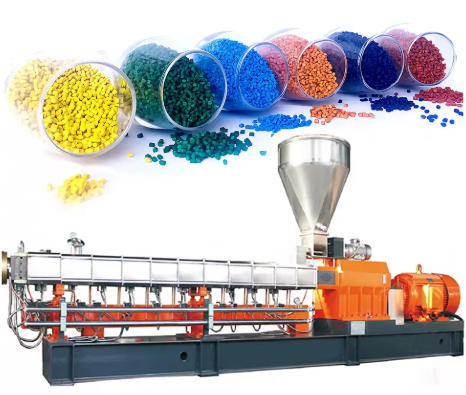
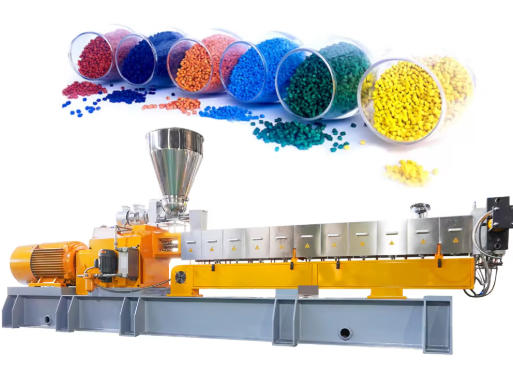
Through twin-screw extrusion, the components are melt-compounded, ensuring the additives are evenly distributed within the TPU carrier matrix. This step defines the quality consistency of the final masterbatch pellets.
The extruded material is cooled, cut into uniform pellets, and ready for direct use in subsequent plastic processing methods. Each pellet is a compact performance unit — easy to handle, transport, and measure during production.
TPU Masterbatch offers numerous technical and economic advantages that make it indispensable for modern material engineering projects.
- Consistent performance: Guarantees uniform color and property distribution across large production batches.
- Cost-effectiveness: Optimized additive usage reduces waste and lowers overall production costs.
- Environmental benefits: Minimized pigment dust and simplified dosing improve workplace safety and environmental compliance.
- Design flexibility: Enables a vast palette of colors and functionality combinations to suit customized design needs.
- Improved processability: Stabilizes thermal behavior and reduces degradation risk in manufacturing.
The unique combination of versatility and performance makes TPU masterbatch applicable across diverse industries.
Used in interior trims, wire coatings, and sealing systems, TPU masterbatch adds UV resistance and color consistency to durable automotive components that must perform under challenging environmental conditions.
Color TPU masterbatch is widely used in shoe soles and sports gear to achieve vibrant color designs while maintaining mechanical strength and flexibility.
Anti-static and flame-retardant TPU masterbatch formulations prevent dust accumulation and enhance safety in electronic devices and wearable gadgets.
Medical-grade TPU masterbatches with anti-microbial additives maintain hygiene standards in tubing, catheters, and flexible connectors.
For packaging and protective films, translucent TPU masterbatch provides optical clarity, abrasion resistance, and customizable surface effects.
Sustainability has become a crucial factor in material development. TPU masterbatches contribute to greener manufacturing in several ways:
- Reduced additive consumption due to high concentration efficiency.
- Lower energy consumption through enhanced process stability.
- Easier recycling by using TPU-based carriers, ensuring compatibility in reprocessing cycles.
- Less environmental contamination as pigments and additives are encapsulated within the polymer, minimizing particle release.
These features align TPU masterbatch technology with global trends in environmental responsibility and circular manufacturing.
The evolution of masterbatch technology mirrors the broader push towards smarter and more sustainable materials.
1. Smart functional masterbatch: Integrating sensing or conductive features for wearable devices and smart textiles.
2. Bio-based TPU masterbatch: Derived from renewable resources to reduce carbon footprint.
3. Recycled TPU compatibility: Masterbatches designed to blend seamlessly with post-consumer recycled TPU.
4. Nano-enhanced formulations: Using nanomaterials for improved dispersion and mechanical performance.
5. Digital color management systems: Allowing precise color calibration for global production consistency.
These innovations reinforce the TPU masterbatch's position at the intersection of performance, creativity, and environmental awareness.
TPU Masterbatch serves as the bridge that connects engineering performance with creative expression. It empowers designers, manufacturers, and product developers to go beyond traditional material boundaries — achieving customized functionality, vibrant aesthetics, and sustainable production at scale. As industries embrace next-generation materials, TPU masterbatch will remain an integral element driving innovation in plastic and polymer design for a more adaptive and eco-efficient future.
A colorant is a pure pigment or dye, whereas a TPU masterbatch is a concentrated mixture of pigment in a TPU carrier resin. The latter offers better dispersion, easier handling, and more consistent results.
Yes, but compatibility depends on the carrier resin. TPU masterbatch works best with TPU or compatible elastomer blends to ensure optimal dispersion and bonding.
High-quality TPU masterbatches are engineered to maintain or even enhance mechanical performance by ensuring uniform additive distribution without introducing processing stress.
Most TPU masterbatches are recyclable, especially when the carrier resin matches the base TPU material. This compatibility supports sustainable production and closed-loop recycling systems.
The dosage typically ranges between 1% and 5%, depending on the desired color intensity or functional effect. Manufacturers can adjust ratios for cost and performance optimization.


