


close
Choose Your Site
Global
Social Media


Views: 222 Author: Rebecca Publish Time: 2025-12-17 Origin: Site


Content Menu
● Understanding ABS and Its Material Properties
● The Color Science Behind ABS Masterbatch
>> Key Factors in ABS Color Control
● Production Process of ABS Masterbatch
● Advantages of Using ABS Masterbatch
● Applications of ABS Masterbatch
>> 5. Industrial and Construction Uses
● Innovation in ABS Masterbatch Technology
● Quality Assurance and Global Standards
● The Business Value of Customized ABS Masterbatch
● Challenges and Future Outlook
>> 1. What is ABS Masterbatch used for?
>> 2. How is ABS Masterbatch different from pigment powder?
>> 3. Can ABS Masterbatch affect mechanical strength?
>> 4. Is ABS Masterbatch sustainable?
>> 5. How do manufacturers ensure batch-to-batch color consistency?
Color is not just a matter of appearance—it is a science that deeply influences design, manufacturing, and product functionality. In the plastics industry, Masterbatch plays a critical role in delivering color precision, consistency, and performance to various polymer materials. Among them, ABS (Acrylonitrile Butadiene Styrene) is one of the most versatile plastics, widely used across automotive, electronics, and consumer goods sectors. This article explores the scientific foundation, technological innovations, and practical applications of ABS Masterbatch, providing insights that matter for global manufacturers and product designers.

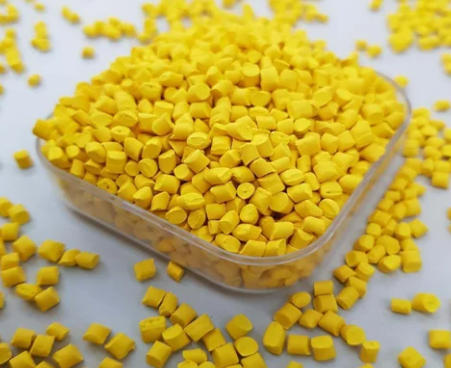
A Masterbatch is a concentrated mixture of pigments, additives, and carrier resins that are encapsulated during a heat process and then cooled and cut into granules. These granules are later mixed with natural polymer resins during molding or extrusion to impart specific colors or properties.
There are three major types of Masterbatch commonly used in the plastic manufacturing industry:
- Color Masterbatch (CMB): Provides consistent and vibrant coloration across batches.
- Additive Masterbatch (AMB): Enhances properties such as UV resistance, flame retardancy, or anti-static behavior.
- Filler Masterbatch (FMB): Reduces production costs and improves physical properties through minerals like calcium carbonate or talc.
In the context of ABS plastics, the use of Masterbatch helps manufacturers achieve accurate color tones while maintaining the polymer's impact strength, glossy finish, and heat resistance.
Acrylonitrile Butadiene Styrene (ABS) is a thermoplastic polymer known for its excellent mechanical toughness, dimensional stability, and ease of processing. Its unique composition combines three monomers:
- Acrylonitrile: Adds chemical resistance and rigidity.
- Butadiene: Contributes elasticity and impact strength.
- Styrene: Enhances glossiness and processability.
Because ABS combines durability with attractive surface qualities, it is widely adopted in industries where appearance and performance coexist. The ABS Masterbatch must therefore provide color without compromising these core properties.
Color development in plastics is not just a matter of pigment mixing. It depends on optical physics and chemical compatibility between the colorants, carrier resin, and base polymer.
1. Pigment Dispersion: Uniform distribution ensures consistent color saturation across large production runs.
2. Heat Stability: The pigment and carrier must remain stable under ABS processing temperatures, typically around 220–260°C.
3. Lightfastness: Long-term color stability under UV exposure is crucial for products like car interiors or electronic housings.
4. Reproducibility: Each batch must yield identical visual outcomes to ensure brand consistency.
The Masterbatch manufacturer fine-tunes these variables through precise formulation and advanced compounding techniques, ensuring the pigment interacts optimally with the ABS matrix.
The manufacturing of ABS Masterbatch is a sophisticated process involving several controlled stages:
1. Pigment Selection and Testing: High-performance pigments are chosen based on desired color tone, opacity, thermal stability, and end-use environment.
2. Mixing with Carrier Resin: The pigments and additives are blended with an ABS-compatible carrier to ensure even dispersion and minimal migration.
3. Extrusion: The mixture is melted and extruded into strands through a twin-screw extruder, ensuring full pigment distribution.
4. Cooling and Pelletizing: The extruded strands are cooled and cut into uniform granules or pellets.
5. Quality Control: Each batch is tested for color accuracy (∆E), melt flow index, and compatibility performance before shipment.
Advanced Masterbatch producers employ spectrophotometer-based color matching systems to guarantee batch-to-batch consistency, even across different factories or production lines.
Choosing the right Masterbatch for ABS offers manufacturers several advantages:
- Color precision: High pigment concentration allows for vibrant colors without oversaturation.
- Improved processing stability: Masterbatch pellets disperse more uniformly than liquid or powder pigments.
- Reduced waste: Pre-dispersed pigmentation minimizes color streaking and part rejection.
- Customization flexibility: Color and additives can be engineered to specific functional requirements.
- Enhanced profitability: Simplified color management shortens production lead time and reduces material loss.
These advantages make ABS Masterbatch an indispensable component in industrial plastic manufacturing.
ABS Masterbatch finds applications in a wide range of industries. Its versatility allows designers and engineers to craft products that are both durable and aesthetically pleasing.
ABS is widely used for interior and exterior components such as dashboards, trims, mirror housings, and wheel covers. Color stability and surface gloss are especially important. ABS Masterbatch ensures that each vehicle model maintains uniform color quality, even under UV and heat exposure.
The sleek look of electronic products—smartphones, laptops, and remote controls—often relies on precisely colored ABS resins. Masterbatch formulations designed for non-yellowing and high-gloss finishes ensure the product retains a premium appearance.
Household items like vacuum cleaners, hairdryers, and coffee machines use ABS plastics due to their impact resistance and visual appeal. Color Masterbatch adds brand identity while resisting fading caused by frequent cleaning or heat.
ABS Masterbatch provides vivid colors and safety compliance (non-toxic, RoHS-compliant) essential for children's toys and sports equipment. It ensures products are both visually engaging and safe for everyday handling.
In construction and industrial applications, ABS Masterbatch delivers durable and UV-stable materials for electrical enclosures, fittings, or decorative parts that require both mechanical reliability and color endurance.
The future of Masterbatch technology lies in intelligent material engineering. Modern ABS Masterbatch formulations are advancing through:
- Nano-pigment technology for ultra-fine color dispersion.
- Bio-based carrier systems for sustainable plastics development.
- Smart color masterbatch capable of thermal or UV color-changing effects.
- Functional hybrid masterbatch combining color with advanced additives such as anti-scratch or antimicrobial properties.
These innovations empower manufacturers to reduce environmental impact while elevating product aesthetics and performance. The push toward sustainable Masterbatch solutions aligns with global demands for eco-friendly plastic materials.
High-quality ABS Masterbatch production follows stringent international standards such as:
- ISO 9001: Quality management system certification.
- RoHS & REACH Compliance: Restriction on hazardous substances in colorants and additives.
- ASTM D792, D1238: Standards for density and melt flow index testing.
- Spectrophotometric Color Measurement: Ensures minimal variance with target color (∆E < 1.0).
Through continuous testing and international standardization, Masterbatch suppliers ensure consistent quality that meets the requirements of global OEMs and consumer brands.
In modern manufacturing, color differentiation is a vital part of brand strategy. Customized Masterbatch solutions allow companies to match specific Pantone or RAL shades across multiple products, maintaining brand identity while meeting technical specifications.
Moreover, customized formulations can integrate functional performance—heat deflection improvement, scratch resistance, or antistatic properties—all while achieving precise aesthetic outcomes. This combination of form and function enhances the competitive advantage of finished products.
Despite its advantages, ABS Masterbatch production faces challenges such as recycling limitations and pigment volatility under extreme conditions. As sustainability pressures grow, manufacturers are exploring recyclable Masterbatch systems and low-VOC formulations to meet environmental regulations without compromising color brilliance.
The evolution of biopolymer-compatible Masterbatch and pigment systems designed for circular economy models indicates a promising future where color science coexists with sustainability.
The science of color in plastics is a fascinating interplay of chemistry, physics, and design. ABS Masterbatch embodies this fusion, delivering precision color, functional enhancement, and aesthetic value to a wide array of applications—from automotive interiors to everyday devices. As new pigment technologies, sustainable carriers, and intelligent additives emerge, ABS Masterbatch will continue to define the visual and functional quality of tomorrow's plastic products.
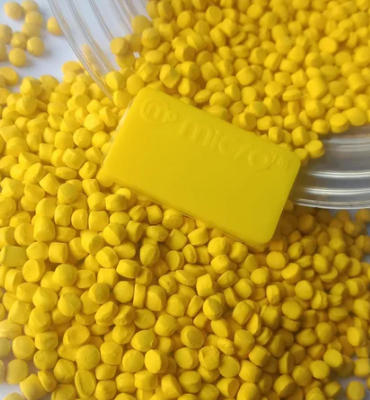
ABS Masterbatch is primarily used to color ABS polymers while enhancing their mechanical and surface properties. It ensures color consistency, UV stability, and improved processing performance.
Unlike raw pigment powder, ABS Masterbatch contains pre-dispersed pigments in a compatible carrier resin. This ensures clean handling, better dispersion, and more stable color quality during molding or extrusion.
When properly formulated, ABS Masterbatch does not compromise strength or impact resistance. Instead, it can improve flow properties and surface finish by promoting uniform pigment distribution.
Yes, many modern Masterbatch formulations use bio-based or recyclable carriers that support environmental sustainability while offering the same quality and performance standards.
Manufacturers use advanced color-matching systems and spectrophotometric equipment to ensure each batch's deviation (∆E value) remains below the acceptable threshold, maintaining uniform appearance across production lines.


