


close
Choose Your Site
Global
Social Media


Views: 222 Author: Rebecca Publish Time: 2025-12-08 Origin: Site


Content Menu
● What Is TPU And Why Use Masterbatch?
● Core Composition Of TPU Masterbatch
● Polyester TPU vs Polyether TPU In Masterbatch
● Typical Additive Systems In TPU Masterbatch
● Dispersion Science And Rheology In TPU Masterbatch
● Drying, Handling, And Moisture Sensitivity
● How TPU Masterbatch Is Used In Processing
● Key Benefits For Manufacturers
● Benefits For Product Performance And End Users
● Masterbatch vs Full Compounding In TPU
● Sustainability And Circular Design
● Choosing The Right TPU Masterbatch
● Working With A Custom TPU Masterbatch Partner
● FAQ
>> 1: What is the main purpose of using TPU Masterbatch instead of pure pigments and additives?
>> 2: Can TPU Masterbatch change the hardness or flexibility of the final product?
>> 3: Is TPU Masterbatch suitable for transparent or translucent applications?
>> 4: How does TPU Masterbatch affect processing settings on existing machines?
>> 5: What information should be shared with a supplier when developing a custom TPU Masterbatch?
Thermoplastic polyurethane (TPU) Masterbatch is a highly concentrated blend of TPU resin, pigments, and functional additives that allows manufacturers to engineer color and performance into plastic parts with very precise control. By understanding the science behind TPU Masterbatch composition and the benefits it brings to processing and end‑use properties, global buyers can design better products while keeping costs and sustainability under control.
This article focuses on the internal structure, material science, and processing behavior of TPU Masterbatch, explaining why this approach is more flexible and efficient than using fully compounded TPU or loose additives. For a Chinese enterprise dedicated to innovative plastic materials and custom Masterbatch formulations, these scientific principles are the foundation for delivering high‑value solutions to customers worldwide.

TPU is a thermoplastic elastomer built from soft segments (polyols) and hard segments (diisocyanates and chain extenders), which gives it a two‑phase morphology combining elasticity with thermoplastic processability. This micro‑phase separation explains why TPU can be repeatedly melted and shaped while still providing rubber‑like flexibility, abrasion resistance, and good low‑temperature properties.
A Masterbatch is a concentrated mixture of pigments or additives encapsulated in a polymer carrier that will later be diluted into the base polymer during processing. When the carrier is TPU, the resulting TPU Masterbatch becomes a compatible, easy‑to‑handle “tool” that allows processors to adjust color strength, gloss, and functional performance simply by changing the Masterbatch dosage rather than modifying the base polymer itself.
The heart of TPU Masterbatch is the TPU carrier resin, which is selected to match the base TPU in terms of chemistry (polyester or polyether), hardness, and melt index. Using a compatible TPU carrier ensures good interfacial adhesion, avoids phase separation, and helps maintain transparency or surface quality in the final product.On top of the TPU carrier, the Masterbatch incorporates high levels of pigments or functional additives. Color TPU Masterbatch may contain organic pigments, inorganic pigments, or dyes, while functional TPU Masterbatch can include UV stabilizers, flame retardants, antistatic agents, lubricants, or conductive fillers. Because these ingredients are present at much higher concentrations than in the finished part, a relatively small addition of Masterbatch—often only a few percent—is sufficient to achieve the desired final properties.
Polyester‑based TPU Masterbatch carriers are commonly used when high mechanical strength, abrasion resistance, and oil resistance are required, such as in industrial belts, outsoles, and technical components. The strong hydrogen bonding within polyester TPU crystals contributes to high stiffness and wear resistance, which are attractive in demanding mechanical environments.Polyether‑based TPU Masterbatch carriers are preferred for applications that need superior hydrolysis resistance, microbial resistance, and low‑temperature flexibility, such as outdoor cables, soft tubing, or components exposed to moisture. In these applications, using a polyether TPU carrier in the Masterbatch helps prevent property loss over time and maintains flexibility and clarity under humid or cold conditions. In practice, most converters try to match the carrier type in the TPU Masterbatch with the chemistry of the base TPU to preserve the overall performance balance.
Color TPU Masterbatch relies on precise pigment selection and dispersion to achieve strong, uniform color without visible streaks or specks. Organic pigments are often chosen for bright, saturated shades and good transparency, while inorganic pigments provide opacity, heat resistance, and high weatherability. The pigment system must tolerate TPU processing temperatures and not interfere with mechanical performance.Functional TPU Masterbatch can contain a wide variety of additives. UV stabilizer Masterbatch protects TPU parts from sunlight‑induced degradation, flame retardant Masterbatch helps products meet fire safety standards, antistatic or conductive Masterbatch controls electrostatic discharge, and slip or processing aid Masterbatch improves surface feel and mold release. By embedding these additives in a TPU carrier, the Masterbatch ensures that they are delivered uniformly and consistently across each molded or extruded part.
The performance of TPU Masterbatch depends strongly on how well pigments and additives are dispersed within the TPU carrier. During twin‑screw extrusion, a combination of distributive mixing (spreading particles throughout the melt) and dispersive mixing (breaking down agglomerates) is used to achieve fine, stable dispersion. The design of the screw profile and the balance between shear and temperature are critical to this process.TPU's rheological behavior also plays a key role. As a shear‑thinning material, TPU becomes less viscous at high shear rates, which improves dispersion of pigments and additives during extrusion. However, excessive shear and temperature can cause thermal degradation or chain scission, reducing molecular weight and affecting properties. A well‑designed TPU Masterbatch formulation and optimized process window protect the resin and additives while still achieving the necessary dispersion quality.
TPU and TPU Masterbatch are hygroscopic, which means they absorb moisture from the surrounding environment. If this moisture is not removed before processing, it can generate bubbles, voids, and surface defects, and may lower molecular weight through hydrolysis at processing temperatures. To avoid these issues, both the base TPU and TPU Masterbatch are usually dried under controlled conditions before processing.In everyday operations, TPU Masterbatch is significantly easier to handle than powders because it is supplied as pellets that flow consistently through hoppers and dosing equipment. Pelleted Masterbatch minimizes dust, contamination, and operator exposure while improving dosing accuracy. For factories running multiple colors or functional grades, this ease of handling is a major practical advantage and supports cleaner, more stable production.
In injection molding, extrusion, or blow molding, TPU Masterbatch pellets are typically dry‑blended with natural TPU pellets just before they are fed into the machine. Processors set the Masterbatch dosage based on the target color strength or functional effect, often starting with an estimated let‑down ratio and then fine‑tuning based on sample evaluation.Because the TPU Masterbatch is already fully compounded and well dispersed, the machine only needs to perform the final shaping step. This reduces the risk of inconsistent color, avoids the need for separate compounding equipment, and allows quick changeovers between different TPU Masterbatch grades. For OEMs and converters serving many customers with different color and performance requirements, this flexibility is a key reason to adopt a Masterbatch strategy.
From the manufacturer's perspective, one of the most important benefits of TPU Masterbatch is cost optimization. High concentration means that less additive carrier material is needed per kilogram of finished product, and the ability to adjust dosage in real time reduces over‑formulation and scrap. Instead of stocking many different fully compounded TPU grades, factories can hold a small set of base TPUs plus several TPU Masterbatch products to cover a wide range of orders.Another major benefit is process robustness. Because Masterbatch improves dispersion and dosing control, it helps stabilize quality across different shifts, lines, and production sites. This is particularly valuable for global brands that demand consistent performance and appearance across factories in different countries. In addition, Masterbatch‑based processes often require less cleaning time between colors, which frees up machine capacity and increases overall efficiency.
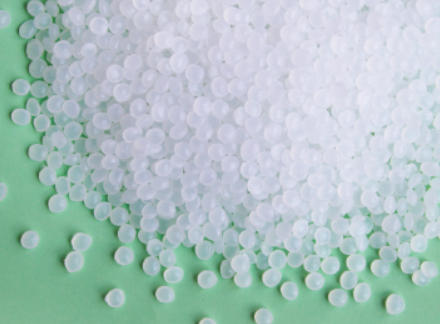
TPU Masterbatch can directly influence product performance by enabling targeted improvements without changing the core resin. For example, impact modifiers or flexible segments can be introduced through Masterbatch to enhance toughness, while lubricating or slip additives can tune the coefficient of friction on contact surfaces for better feel and wear behavior.From the end user's perspective, products made with well‑designed TPU Masterbatch often show better aesthetics and longer service life. Colors are more vivid and consistent, surfaces are smoother and less prone to defects, and functional properties such as UV resistance, flame retardancy, or static control remain stable over time. In applications like footwear, sports gear, electronics protection, and flexible tubing, these qualitative differences can be clearly felt and seen.
When comparing TPU Masterbatch with fully compounded TPU, the most obvious difference is flexibility. Full compounding locks color and additives into a single material that must be ordered, stored, and processed as a unique grade. TPU Masterbatch, in contrast, allows the same base TPU to be used with many different colors and functional packages simply by changing the Masterbatch.Full compounding can be advantageous for extremely high‑volume, long‑running products, where standardization and economies of scale justify dedicated grades. However, as product portfolios become more varied and lifecycles shorter, Masterbatch offers a more agile approach. Many factories adopt a hybrid strategy, using a few core compounded TPU grades for large, stable programs and TPU Masterbatch for custom or rapidly changing projects.
Sustainability has become a central concern in the plastics industry, and TPU Masterbatch plays a useful role in circular design strategies. Because the carrier is typically the same TPU as the base resin, the finished part remains close to a mono‑material structure, which simplifies mechanical recycling and reduces contamination issues in regrind.Furthermore, the use of TPU Masterbatch can help optimize additive consumption. By delivering high concentrations of pigments and functional components exactly where they are needed, Masterbatch reduces overall usage compared with less efficient dosing methods. Combined with recycled TPU, bio‑based TPU, or low‑impact additive choices, TPU Masterbatch becomes a powerful tool for designing high‑performance yet more sustainable plastic solutions.
Selecting an appropriate TPU Masterbatch starts with matching the carrier resin to the base TPU, including chemistry, hardness, and melt index. Compatibility is fundamental: a mismatched carrier can lead to haze, poor adhesion, or changes in mechanical properties. Technical data such as melt flow index, recommended processing temperatures, and drying conditions should be reviewed carefully.The second step is evaluating the performance of the pigments or additives in the intended application. For color TPU Masterbatch, this means checking color strength, shade accuracy, lightfastness, and resistance to heat, chemicals, or sterilization, depending on the end use. For functional TPU Masterbatch, it involves testing properties such as UV stability, flammability, conductivity, or mechanical behavior against relevant standards or customer specifications.
When off‑the‑shelf TPU Masterbatch products do not fully meet application needs, cooperation with a custom Masterbatch partner becomes essential. A technical partner can help select pigments that match brand color systems, design additive packages that satisfy regulatory requirements, and optimize rheology to fit the customer's processing equipment.For a Chinese company focusing on innovative plastic material solutions, this collaboration typically includes laboratory compounding, color matching, mechanical and weathering tests, and on‑site technical support at customer factories. Through this process, TPU Masterbatch formulations are refined step by step until they achieve the right balance of cost, processability, performance, and sustainability. This kind of partnership transforms TPU Masterbatch from a simple colorant into a strategic material platform for global OEMs and converters.
TPU Masterbatch is more than just a color concentrate; it is a carefully engineered combination of TPU carrier, pigments, and functional additives designed to deliver predictable performance in demanding applications. The science behind TPU Masterbatch covers morphology, rheology, dispersion, and stability, all of which must be coordinated to achieve consistent quality in injection molding, extrusion, and other processes.By using TPU Masterbatch instead of relying solely on fully compounded TPU or loose additives, manufacturers gain flexibility, cost control, and process robustness, while end users benefit from durable, attractive, and functionally enhanced products. For an innovative Chinese producer of plastic materials, mastering TPU Masterbatch technology is a key advantage in serving global markets with customized, high‑value solutions.
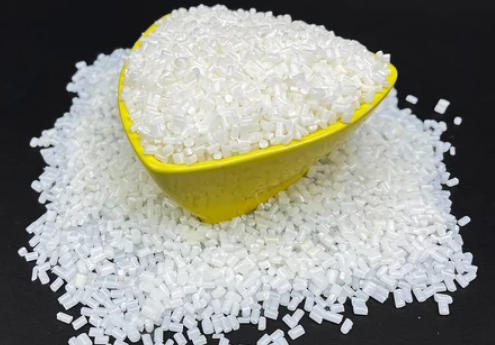
The main purpose of using TPU Masterbatch is to encapsulate pigments and additives in a compatible TPU carrier, making them easier to handle, dose, and disperse in the base TPU. This improves consistency, reduces dust and contamination, and simplifies color or property adjustments on the production line.
Yes, TPU Masterbatch can influence hardness and flexibility when it contains plasticizing, reinforcing, or crosslinking‑related additives, but color‑only Masterbatch is typically designed to have minimal effect on mechanical properties. When significant changes in hardness or flexibility are required, specialized functional TPU Masterbatch grades can be formulated to achieve the desired effect.
TPU Masterbatch can be used in transparent or translucent applications if the carrier and additives are chosen carefully and dispersion is very fine. Transparent tints and lightly colored films or parts are achievable, but high‑load opaque pigments or large effect particles will reduce transparency, so the formulation must match the visual goal.
In most cases, TPU Masterbatch can be processed under the same temperature and pressure settings as the base TPU, with only minor adjustments to screw speed or back pressure to optimize mixing. Because Masterbatch is already fully compounded, it generally does not require significant changes in equipment, which makes it attractive for retrofitting existing lines.
When developing a custom TPU Masterbatch, it is important to share details about the base TPU grade, processing method, target color or functional properties, regulatory requirements, and end‑use conditions such as temperature, humidity, and exposure to chemicals or UV. Clear communication of these parameters helps the supplier design a Masterbatch that fits both technical and production needs.


