


close
Choose Your Site
Global
Social Media


Views: 222 Author: Rebecca Publish Time: 2026-01-04 Origin: Site


Content Menu
● Common Problems in Plastic Production
● How PP Masterbatch Reduces Waste in Production
>> 1. Improved Dispersion and Consistency
>> 2. Simplified Handling and Dosing
>> 4. Reduced Machine Downtime
>> 5. Controlled Additive Performance
● Key Benefits Beyond Waste Reduction
● Industry Applications of PP Masterbatch
● Choosing the Right PP Masterbatch for Your Process
>> 2. Compatibility and Quality
● Sustainability and Environmental Impact
● Challenges and Considerations
● Future Trends in PP Masterbatch Technology
>> 1. What is the main function of PP masterbatch?
>> 2. How does PP masterbatch help in reducing production waste?
>> 3. Can PP masterbatch be used with recycled materials?
>> 4. What types of PP masterbatch are available?
>> 5. How should PP masterbatch be stored and handled?
In an era where environmental sustainability and production efficiency define industrial competitiveness, PP masterbatch has become a cornerstone in the plastics manufacturing sector. This innovative additive not only enhances product quality but also significantly reduces material waste during production. For manufacturers seeking to balance cost control with eco-conscious practices, understanding the role of PP masterbatch in waste reduction is essential.
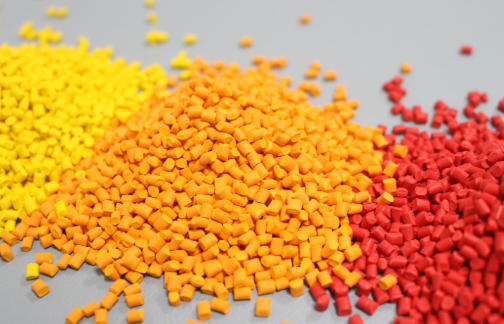
A PP masterbatch is a concentrated mixture of pigments, additives, and polymer carriers—usually polypropylene (PP)—that enables efficient coloring or functional modification of plastic materials. In simple terms, it acts as a “booster pack” for plastic materials during processing.
Manufacturers add masterbatch to base polymers to achieve the desired properties, such as UV resistance, color consistency, flame retardance, or improved mechanical performance. PP masterbatch enhances the overall material uniformity, helping processors reduce the chances of product defects or discard due to inconsistency.
Before understanding how PP masterbatch contributes to waste reduction, it is helpful to explore the common challenges manufacturers face:
- Color inconsistency: When using raw pigments or powders, achieving uniform dispersion is difficult, often leading to uneven coloration and rejected batches.
- Additive inefficiency: Improper mixing of additives results in product performance variations, forcing rework or scrapping.
- Production downtime: Manual pigment dosing increases setup time and waste during color changeovers.
- Material loss: Small-scale trials without controlled additives waste valuable base polymers and colorants.
- Mold deposits or degradation: Poor-quality pigments can cause mold contamination, leading to additional cleaning waste.
The above inefficiencies directly increase production waste—both in material and energy terms.
Modern PP masterbatch formulations address these inefficiencies in multiple ways. Below are key mechanisms through which they help manufacturers cut waste and enhance productivity.
Masterbatch exhibits superior pigment distribution compared to direct pigment blending. Each pellet of masterbatch is a microscopically homogenous mix of pigment and polymer carrier. When blended with virgin resin, the result is a uniform color and property dispersion, minimizing off-tone or defective products.
This high consistency effectively reduces reprocessing time, color mismatches, and material scrapping—common waste sources in plastic production.
Using PP masterbatch simplifies the dosing process. Unlike powdered pigments, masterbatch granules can be precisely metered into extruders or injection machines using automated feeders. This accuracy reduces overuse of additives or excess colorant, translating directly into material savings.
By lowering setup errors and ensuring repeatable dosing, manufacturers minimize both trial waste and operator error.
Masterbatch-based formulations are typically easier to recycle because the additives are pre-dispersed and chemically compatible with the polymer matrix. This allows manufacturers to recover and reuse production scrap internally, aligning with circular economy principles.
For instance, PP masterbatch containing color or UV stabilizers does not hinder recyclability, allowing regrind materials to re-enter the production cycle without quality loss.
Color changes and additive adjustments cause downtime and material wastage during purging processes. PP masterbatch offers faster color changes and more stable operation, meaning cleaning cycles need less resin and time.
By maintaining stable melt characteristics, masterbatch optimizes processing conditions—helping machines run longer between cleaning intervals.
Masterbatch enables controlled dosing of stabilizers, fillers, or anti-static agents, ensuring each product receives just the right additive quantity. Instead of overcompensating (which leads to material waste and unnecessary cost), manufacturers can tune properties precisely with the masterbatch ratio.
This precision makes PP masterbatch an environmentally responsible and cost-effective solution across various polymer applications.
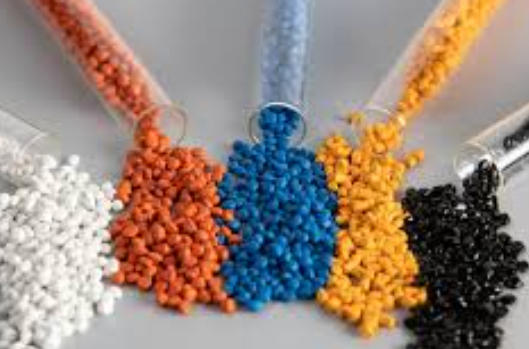
Though waste reduction remains its primary advantage, the PP masterbatch offers broader operational and financial benefits. These include:
- Color accuracy and stability: Consistent color replication across batches improves brand reputation and reduces rejected goods.
- Operational efficiency: Automated dosing reduces manual labor and operator error.
- Material compatibility: PP masterbatch is optimized for polypropylene, improving bonding and mechanical strength.
- Cost-effectiveness: Even small reductions in colorant usage translate into significant savings at scale.
- Environmental compliance: Using recyclable, sustainable masterbatch formulations helps meet global green manufacturing standards.
Each of these benefits contributes to long-term sustainability by reducing waste, energy use, and non-conformity in production.
PP masterbatch plays a central role across multiple industries. Here's how different sectors leverage its advantages:
- Packaging industry: Consistent color and UV protection for food containers, films, and bottles.
- Automotive: Enhanced durability, impact resistance, and scratch protection for car interiors and exteriors.
- Textiles: Better colorfastness and uniform appearance in non-woven fabrics and synthetic yarns.
- Consumer goods: Aesthetic finishes and improved toughness in household plastics.
- Electronics: Flame-retardant masterbatch ensures safety and reduced smoke generation.
This versatility underscores why PP masterbatch is now integral to modern manufacturing where waste reduction and precision are key.
Selecting the right masterbatch depends on several parameters. Each type has specific performance goals and waste reduction capabilities.
- Color masterbatch: Ensures consistent pigmentation and reduces rejected products due to color variations.
- Functional masterbatch: Includes additives such as UV stabilizers, anti-static agents, or flame retardants.
- Filler masterbatch: Replaces a portion of virgin resin with calcium carbonate or talc to reduce cost and material consumption.
- Reprocessable masterbatch: Enhances recyclability, allowing internal reuse of production waste.
Ensure the masterbatch carrier resin matches your base polymer—PP masterbatch should use a PP carrier to maintain mechanical and chemical compatibility. Poor-quality masterbatch can cause dispersion problems or inconsistencies that increase production waste instead of reducing it.
Partnering with a supplier who provides customized masterbatch formulations is crucial. A professional R&D team can tailor pigment concentration, dispersion properties, and additive types to fit specific processing conditions—guaranteeing minimal waste output.
The environmental implications of PP masterbatch extend beyond just production waste reduction. As global regulations push for greener manufacturing, masterbatch offers distinct benefits:
- Lower emissions: Reduced waste and reduced need for reprocessing decrease energy consumption.
- Resource efficiency: Additive optimization minimizes raw material use.
- Recycling integration: PP-based additives allow a closed-loop system for regrind usage.
- Reduced contamination: Unlike liquid colorants or powders, solid masterbatch minimizes spillage and workplace pollution.
Consequently, companies adopting PP masterbatch-based systems actively strengthen their sustainability credentials while achieving cost competitiveness.
Although PP masterbatch offers numerous benefits, manufacturers should be aware of potential challenges:
- Initial cost: High-quality masterbatch can seem costlier upfront compared to direct pigment blending.
- Storage conditions: Masterbatch must be stored properly to prevent moisture absorption or degradation.
- Batch uniformity: Using inconsistent ratios across lines can lead to product variations.
- Machine calibration: Precise feeder control is vital to maintain dosing accuracy.
Addressing these with proper process management ensures maximum efficiency and minimal waste in the long run.
Innovation in masterbatch formulation continues to evolve. Sustainable trends are now shaping the future direction of the industry:
- Bio-based carriers: Development of PP masterbatch using biodegradable or partially bio-derived polymers.
- Nanotechnology integration: Nano-additives for enhanced functionality and lower additive loading.
- Recycling optimization: Formulations designed for closed-loop recycling systems.
- AI-driven color matching: Smart manufacturing solutions for waste-free, precision color matching.
These innovations promise to reshape how industries perceive material usage, waste management, and sustainability.
The PP masterbatch stands as a transformative innovation for modern plastic manufacturing. By enhancing dispersion, controlling additive performance, and improving recyclability, it dramatically reduces production waste. Its role extends to boosting product quality, lowering costs, and promoting sustainability in line with global environmental standards.
Whether for packaging, automotive, or consumer applications, adopting optimized PP masterbatch solutions ensures efficiency, consistency, and long-term environmental responsibility. As technology advances, masterbatch will continue to define the sustainable future of polymer production.
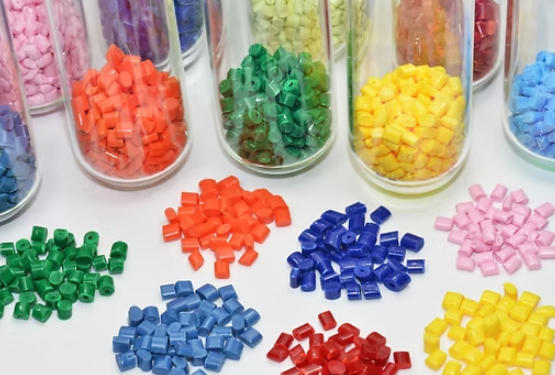
Answer: The main function of PP masterbatch is to uniformly distribute pigments or additives within polypropylene materials, ensuring consistent color, improved mechanical properties, and reduced waste during processing.
Answer: It reduces waste by improving pigment dispersion, enabling precise dosing, minimizing rejections due to defects, and enhancing recyclability of scrap materials within production.
Answer: Yes. PP masterbatch formulations are compatible with recycled polypropylene and can improve the appearance and performance of recycled blends without compromising quality.
Answer: The main types include color masterbatch, functional (e.g., UV, anti-static), filler masterbatch, and reprocessable masterbatch—each serving a unique role in production efficiency and waste minimization.
Answer: It should be stored in a dry, cool environment away from direct sunlight. Moisture or contamination can affect dispersion and lead to inconsistencies during processing.


