


close
Choose Your Site
Global
Social Media


Views: 222 Author: Rebecca Publish Time: 2026-02-09 Origin: Site


Content Menu
● Understanding PE Masterbatch
>> Key Components of PE Masterbatch
● How Masterbatch Helps Reduce Waste in Plastic Manufacturing
>> 1. Enhanced Dispersion and Mixing Uniformity
>> 2. Improved Processing Efficiency
>> 3. Material Reusability and Recycling Enhancement
>> 4. Extended Machine Life and Reduced Maintenance Waste
>> 5. Reduction in Overuse of Raw Materials
● Sustainable Manufacturing Through PE Masterbatch
>> 1. Supporting Biodegradable and Recyclable Materials
>> 3. Optimized Additive Usage
● Types of PE Masterbatch for Waste Reduction
● Economic Value of Waste Reduction via PE Masterbatch
● Industry Applications of PE Masterbatch
● Quality Control and Masterbatch Innovation
● Future Trends in PE Masterbatch Technology
● FAQs
>> 1. What is the main purpose of PE Masterbatch?
>> 2. How does PE Masterbatch reduce production waste?
>> 3. Can PE Masterbatch be used with recycled materials?
>> 4. What are the economic benefits of using PE Masterbatch?
>> 5. Is PE Masterbatch environmentally friendly?
In the modern plastics industry, reducing production waste is no longer just a cost-saving measure—it has become a central aspect of sustainable manufacturing. One key driver of efficiency and waste reduction in plastic production is PE Masterbatch. By integrating advanced Masterbatch formulations into production processes, manufacturers can improve product quality, extend equipment life, and minimize raw material losses.
This article explores how PE Masterbatch contributes to waste reduction from formulation and production to end-use applications, with a focus on innovation, sustainability, and economic value.

A PE Masterbatch (Polyethylene Masterbatch) is a concentrated mixture of pigments, additives, and base PE resin. It serves as a coloring or functional agent that can be easily blended with raw polymer during plastic processing. This approach allows manufacturers to achieve consistent color dispersion and desired properties without having to handle large quantities of pure additives or pigments.
- Carrier Resin (PE resin): The main base polymer ensuring compatibility with polyethylene-based plastics.
- Additives: These include UV stabilizers, anti-oxidants, flame retardants, and processing aids.
- Pigments or Fillers: Used for producing consistent coloration and improving appearance.
By pre-dispersing additives and pigments into a Masterbatch, the material becomes easier to process and provides uniform quality, which in turn helps reduce the likelihood of waste during production runs.
The use of PE Masterbatch can significantly reduce waste across every stage of plastic manufacturing. Let's break down how it achieves this across different dimensions of production.
When pigments or additives are manually added to a base polymer, uneven dispersion can occur. This leads to inconsistent coloring, physical defects, or degraded mechanical properties—issues that often result in product rejection or reprocessing.
A PE Masterbatch contains evenly dispersed pigments and additives, ensuring homogeneity in the final product. This uniform distribution reduces the number of defects and rejected parts, directly cutting down material waste.
PE Masterbatch formulations are optimized for smooth blending and extrusion. Perfect melt flow and compatibility between Masterbatch and polymer help minimize die build-up, equipment clogging, or uneven melt temperature—factors that typically lead to material losses.
As a result, manufacturers using PE Masterbatch enjoy more stable processing conditions, fewer production interruptions, and reduced scrap generation during start-up or transition phases.
Certain Masterbatch types are designed to enhance polymer recycling performance. For example, PE Masterbatches with compatibilizers and stabilizers improve the quality of reprocessed plastics. They allow companies to reincorporate production waste, trim scraps, or rejected products back into the process without compromising final product quality.
This closed-loop approach reduces the overall consumption of virgin PE resin and promotes a circular economy within the factory environment.
Additives in PE Masterbatch—such as lubricants or antistatic agents—improve polymer flow, reduce friction, and prevent sticking on machinery surfaces. Lower mechanical wear translates to less downtime for maintenance and fewer consumable parts being discarded.
By using well-formulated PE Masterbatches, companies can minimize the indirect waste associated with frequent equipment faults and maintenance materials.
Without Masterbatch technology, operators often manually adjust pigment or additive quantities to reach desired results—leading to overuse. PE Masterbatch simplifies dosage control and ensures that only the necessary amount of additive is used.
This precise control improves raw material yield and prevents unnecessary additive waste, making the entire production more resource-efficient.
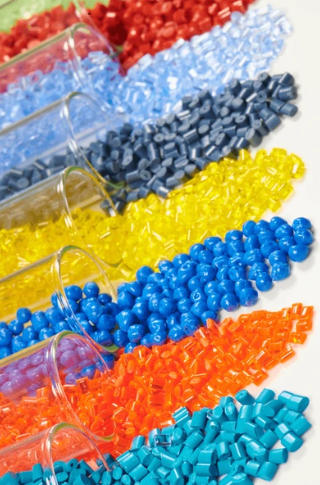
In an industry increasingly guided by sustainability principles, PE Masterbatch plays a vital role in achieving environmental targets. It facilitates eco-friendly practices in various ways.
Innovative Masterbatch formulations are compatible with biodegradable or bio-based PE resins. These eco PE Masterbatches allow producers to manufacture environmentally friendly films, packaging, and consumer goods without sacrificing performance.
By reducing rejections, reprocessing needs, and material waste, PE Masterbatch lowers the energy consumption per production cycle. This results in smaller carbon footprints and enhanced sustainability performance in compliance with global environmental standards.
Using Masterbatch ensures additives are used in their most efficient form. Instead of dispersing multiple additive powders into the process, manufacturers rely on a single, pre-calibrated Masterbatch pellet formulation—minimizing exposure, handling waste, and risk of contamination.
Different categories of PE Masterbatch address distinct waste-related manufacturing challenges:
- Color Masterbatch: Prevents pigment inconsistency and rejects due to poor coloration.
- Additive Masterbatch: Enhances properties such as UV resistance, antistatic properties, flame retardancy, or slip performance.
- Filler Masterbatch: Reduces the use of virgin polymer by adding cost-effective fillers like calcium carbonate while maintaining strength and aesthetics.
- Recycling Masterbatch: Improves the quality of recycled PE materials by restoring their mechanical and color properties.
Each type contributes in its way to reducing process inefficiency and minimizing scrap.
Waste reduction is not only about environmental consciousness—it has direct financial benefits. Using PE Masterbatch helps manufacturers achieve measurable savings in:
- Raw material costs: Better yield through precise additive dosing.
- Energy consumption: Less reprocessing and downtime mean lower power costs.
- Production consistency: Fewer defects and rejects translate into higher throughput.
- Maintenance and labor: Smoother machinery operation requires less frequent intervention.
By turning waste control into a profitability driver, manufacturers can strengthen their competitiveness in global markets.
PE Masterbatch finds applications across a broad spectrum of industries, each benefiting from reduced waste and increased efficiency:
- Packaging: For consistent color films, strong sealing layers, and recyclable film solutions.
- Automotive: For durable and lightweight interior and exterior components.
- Construction: For weather-resistant pipes, sheets, and panels.
- Electronics: For antistatic or flame-retardant casings.
- Agriculture: For UV-protected greenhouse films and drip irrigation pipes.
These industries rely on PE Masterbatch for both aesthetics and functionality, while reducing reject rates that would otherwise lead to material and energy waste.
The effectiveness of PE Masterbatch in waste reduction depends heavily on advanced R&D and strict quality control. Leading manufacturers employ precision compounding, nanotechnology-based dispersion, and advanced testing methods to produce Masterbatches with high purity and performance reliability.
In modern production systems, digital monitoring tools now allow real-time tracking of Masterbatch dosing and material consistency. Such intelligent controls further reduce the chance of human error and material waste during operation.
The PE Masterbatch segment continues to evolve with sustainability and process optimization as primary goals:
1. Bio-based Masterbatch development: Using natural carriers and biodegradable resins.
2. Smart additive Masterbatch: Real-time color or performance control during processing.
3. Recycling-boosting Masterbatches: Improving mechanical performance of recycled PE pellets.
4. Nano-dispersion technologies: Achieving exceptional pigment distribution and minimal waste.
5. Digital dosing solutions: Precision feeding systems to eliminate overuse or material contamination.
These innovations indicate that PE Masterbatch technology will remain a powerful enabler of low-waste and high-efficiency plastic production worldwide.
Reducing production waste is both an environmental responsibility and a business necessity in today's plastics industry. PE Masterbatch provides a practical and cost-effective way to achieve this by ensuring consistency, improving process efficiency, and enabling recyclability.
From precise additive control to enhanced reprocessing of waste materials, Masterbatch technology fundamentally transforms how plastic products are made—delivering better quality, higher productivity, and sustainability.
As the global manufacturing sector moves toward green innovations and smarter operations, PE Masterbatch will continue to serve as a cornerstone of sustainable polymer production.

Answer: The main purpose of PE Masterbatch is to provide a concentrated, easy-to-use mixture of pigments and additives for polyethylene plastics. It ensures consistent quality, simplifies dosing, and minimizes raw material waste during production.
Answer: It improves dispersion, reduces rejects, enhances processing efficiency, and allows incorporation of recycled materials—significantly lowering material losses and downtime.
Answer: Yes. Specialized Recycling Masterbatches are designed to improve the mechanical properties and appearance of recycled polyethylene, allowing greater use of reclaimed materials in production.
Answer: Manufacturers can save on raw material costs, reduce energy consumption, minimize rejection rates, and extend equipment lifespan—all of which contribute to higher profitability.
Answer: When properly formulated, PE Masterbatch supports sustainable manufacturing by enabling recyclability, reducing waste generation, and lowering carbon emissions during production.


