


close
Choose Your Site
Global
Social Media


Views: 222 Author: Rebecca Publish Time: 2026-01-14 Origin: Site


Content Menu
● Why Quality Control Matters in Masterbatch Production
>> Maintaining Color and Performance Consistency
>> Ensuring Raw Material Purity
>> Controlling the Extrusion and Pelletizing Process
>> Preventing Functional Additive Degradation
● Key Stages of Quality Control in PA Masterbatch Production
>> Stage 1: Raw Material Verification
>> Stage 2: Compounding and Dispersion Testing
>> Stage 3: Pellet Inspection and Moisture Analysis
>> Stage 4: Application Performance Testing
>> Stage 5: Final Packaging and Traceability
● Advanced Technologies Enhancing Masterbatch Quality
>> Laboratory Automation and Real-Time Monitoring
>> Spectrophotometric Color Control
>> Rheology-Based Quality Assessment
>> Environmental Testing and Sustainability Audits
● Common Quality Challenges in PA Masterbatch Production
● FAQ: PA Masterbatch and Quality Control
>> (1) What are the main quality parameters tested in PA Masterbatch?
>> (2) How does moisture affect PA Masterbatch quality?
>> (3) Can recycled materials be used in PA Masterbatch production?
>> (4) Why is dispersion testing essential for Masterbatch quality?
>> (5) What certifications prove Masterbatch quality management?
In the fast-evolving plastic industry, quality control has become the backbone of sustainable production and global competitiveness. For manufacturers focused on PA Masterbatch, consistent quality isn't just a technical requirement—it's the key to brand trust, product performance, and customer satisfaction. This article dives into why quality control is crucial throughout PA Masterbatch production, from raw material selection to final packaging, and how it reinforces manufacturing advantage in an increasingly demanding global market.
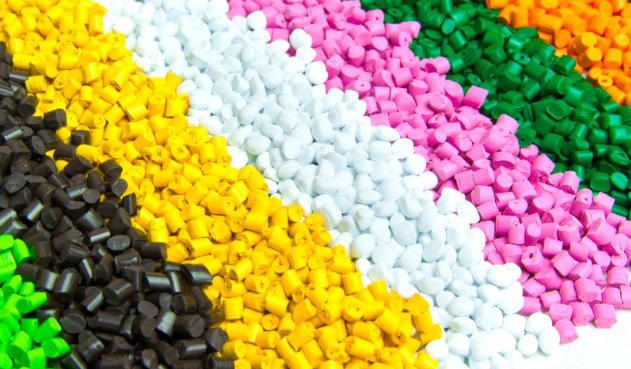
PA Masterbatch (Polyamide Masterbatch) is a concentrated mixture of pigments, additives, or functional materials dispersed in a polyamide resin carrier. It's widely used for customizing the color, performance, and processing behavior of plastic parts. In industries like automotive, electrical, packaging, and textiles, PA Masterbatch plays a key role in enhancing product consistency, UV stability, thermal resistance, and mechanical strength.
Polyamide (PA), often known as Nylon, is especially valued for its toughness, chemical resistance, and thermal stability—qualities that make color matching and additive dispersion particularly complex. Therefore, maintaining stringent quality control during Masterbatch formulation is essential to ensure every batch meets performance specifications and customer expectations.
Color variation is one of the biggest challenges in plastic manufacturing. Even a 1% deviation in pigment concentration or dispersion quality can lead to visible shade differences or surface defects. Quality control ensures color uniformity and prevents batch-to-batch variation, which is critical for global brands that demand precise visual identity.
Through spectrophotometric analysis, rheological testing, and standardized mixing protocols, QC teams verify that each Masterbatch achieves the same optical and mechanical properties. This consistency not only enhances aesthetics but also ensures product reliability.
The performance of any PA Masterbatch begins with the purity of its inputs. Moisture content, contamination, or off-grade resins can negatively affect dispersion and cause unwanted processing defects such as streaking or gel formation. Quality control measures such as resin drying verification, filtration, and contamination scanning ensure raw materials meet the required baseline.
Advanced filtration and material inspection technologies allow producers to detect impurities before they enter the extrusion phase, saving both cost and production time.
The compounding process—where pigments and additives are melt-blended into polyamide—requires exact temperature and shear control. Error in extrusion parameters can lead to uneven pigment dispersion, degradation, or polymer damage. Quality control at this stage involves monitoring melt flow index, torque, and pressure data, ensuring stable conditions during production.
Once extrusion is complete, the strand-cutting and pelletizing steps require constant validation. QC teams assess pellet size, shape, moisture level, and surface smoothness since these factors affect dosing accuracy in end-use applications.
Functional Masterbatch products (for UV resistance, flame retardancy, or anti-static performance) rely on sensitive chemical additives. Temperature spikes, improper compounding cycles, or oxygen exposure can degrade their efficacy. A strong QC system includes both formulation stability testing and environmental simulation tests to verify long-term additive performance in PA matrices.
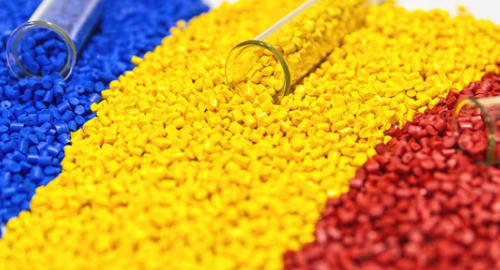
Before production begins, all ingredients undergo analytical testing. This includes:
- Polymer base testing: Checking moisture content, molecular weight, and viscosity.
- Pigment validation: Evaluating dispersion ability, heat stability, and color strength.
- Additive compatibility: Ensuring each component chemically integrates with PA resin.
These tests prevent early-stage production failures and lay the foundation for stable Masterbatch quality.
During compounding, technicians monitor process variables by using sensors and real-time data tracking systems. Quality controllers perform periodic sampling tests such as:
- Melt Flow Index (MFI) Analysis to evaluate the melt behavior and uniformity of the blend.
- Microscopic Dispersion Analysis to confirm that pigment particles are evenly distributed.
- Colorimeter Readings to ensure accurate color tone and opacity.
This stage ensures homogeneity throughout the PA matrix.
Once pellets are formed, physical inspection and mechanical testing determine product readiness. Standard procedures include:
- Visual checks for color consistency and surface texture.
- Moisture analysis using Karl Fischer titration or infrared drying methods.
- Density measurement to ensure proper compaction and uniformity.
Maintaining low moisture levels is particularly critical for polyamide-based Masterbatch, as PA resins are hygroscopic and easily absorb water.
True quality validation occurs when the Masterbatch is tested in actual molding or extrusion conditions. Quality teams collaborate with clients to perform:
- Color matching trials under different light sources (D65, TL84, etc.).
- Mechanical testing for tensile strength, elongation, and impact resistance.
- Thermal aging tests simulating long-term exposure conditions.
Results from this phase guide future formula optimization and help assure customers of system reliability.
The last step of quality control involves ensuring contamination-free packaging. Anti-static liners, moisture-proof seals, and QR-coded bags guarantee cleanliness and full traceability. Each batch is tagged with a unique identification number connected to its production data, enabling quick problem-solving if quality issues arise during customer processing.
Modern PA Masterbatch facilities have begun integrating AI-driven systems that monitor process parameters automatically. Sensors collect continuous data on melt viscosity, pigment flow, and extrusion pressure, allowing early detection of variances. Automated alarms help operators correct deviations before defective material is produced.
Advanced spectrophotometers ensure precise color matching. They measure reflectance across multiple wavelengths, allowing minute color corrections in just seconds. Machine learning algorithms can even predict pigment interaction behaviors under various thermal conditions—reducing trial-and-error cycles in production.
Rheological testing (measuring flow and deformation) helps assess how a Masterbatch integrates with base polymers. By understanding viscoelastic properties, producers can predict how a PA Masterbatch will perform during end-user molding, ensuring process efficiency and surface finish quality.
Because sustainability is essential in modern manufacturing, regular audits ensure environmental compliance. Quality control systems track solvent emissions, recycling rates, and waste management practices. Sustainable Masterbatch production aligns with global environmental standards like RoHS, REACH, and ISO 14001.
1. Color drift across batches: Often caused by uneven pigment dispersion or thermal fluctuations.
2. Pellet size variations: Affect dosing precision and screw feeding consistency.
3. Additive incompatibility: Leads to chemical instability or reduced mechanical performance.
4. Moisture uptake in storage: Causes surface defects and reduced flowability.
5. Contamination and cross-coloration: Results from unclean machinery or recycled material blends.
Implementing preventive QC measures and continual training for staff minimizes these risks.
In PA Masterbatch production, quality control is not simply a technical checkpoint—it is a continuous, multilayered process that shapes product performance, brand credibility, and customer trust. From raw material sourcing to final packaging, every stage requires precise monitoring, scientific testing, and proactive improvement. A manufacturer that invests in robust QC systems will deliver stable quality, reduce waste, improve efficiency, and strengthen its global competitiveness.
Quality control in Masterbatch manufacturing defines the fine line between ordinary and exceptional. As customer expectations rise and polymer technology advances, only those who embed quality assurance into every fiber of their production process can truly lead the market.
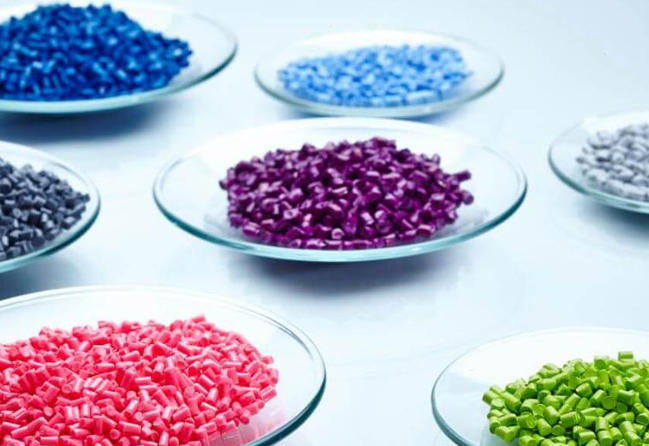
Typical tests include color consistency, melt flow index, moisture content, tensile strength, dispersion uniformity, and thermal stability. These ensure batch uniformity and predict performance under processing conditions.
Polyamide absorbs moisture easily. Excess water leads to hydrolytic degradation, poor dispersion, and visible product defects. Proper drying and airtight packaging control moisture levels effectively.
Yes, but only under strict quality control. Recycled polyamide must be carefully characterized and filtered to avoid contamination and maintain mechanical integrity. Most high-end applications still prefer virgin raw materials.
Uneven pigment or additive distribution affects color uniformity and physical properties. Dispersion testing ensures even microscopic distribution, enhancing aesthetic and functional consistency.
Common certifications include ISO 9001 for quality systems, ISO 14001 for environmental management, and REACH compliance for chemical safety. These demonstrate strong QC governance and international credibility.


