


close
Choose Your Site
Global
Social Media


Views: 222 Author: Rebecca Publish Time: 2025-12-20 Origin: Site


Content Menu
● Understanding ABS Masterbatch and Its Role
>> Key Types of ABS Masterbatch
● Why Quality Control Matters in Masterbatch Production
>> Guaranteeing Product Performance
>> Enhancing Processing Efficiency
● Core Elements of Quality Control in ABS Masterbatch Manufacturing
>> 3. High-Purity Extrusion Process
>> 5. Laboratory Testing and Quality Validation
● Advanced Technologies in Masterbatch Quality Control
>> Colorimetric Software Systems
>> AI-Assisted Quality Prediction
● Impact of Poor Quality Control in ABS Masterbatch
● Building a Strong Quality Control Culture
● Customer-Centric Quality Approach
● Sustainable Quality Control in Masterbatch Production
● FAQs About ABS Masterbatch Quality Control
>> 1. What is an ABS masterbatch used for?
>> 2. How is color consistency maintained in masterbatch production?
>> 3. What tests are essential in masterbatch quality control?
>> 4. Why does raw material quality matter?
>> 5. How is sustainability linked to masterbatch quality?
In today's plastics industry, ABS masterbatch plays an essential role in producing durable, vivid, and high-performance plastic materials. From automotive parts to home appliances and electronics, ABS-based products rely heavily on color consistency, thermal stability, and mechanical strength—all directly influenced by the quality of the masterbatch.
Quality control in ABS masterbatch production ensures that each batch meets customer specifications and maintains stable performance under various processing conditions. Without proper quality control, manufacturers risk product failures, color mismatches, and costly rework.
This article explores the significance of quality control in ABS masterbatch manufacturing, the main methods applied during production, and how strict control measures enhance reliability and customer satisfaction.

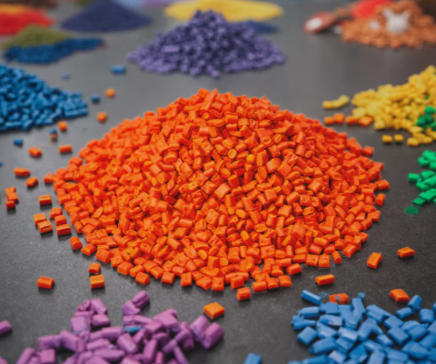
An ABS masterbatch is a concentrated mixture of pigments, additives, and carrier resins used to color and modify Acrylonitrile Butadiene Styrene (ABS) plastics. The masterbatch allows manufacturers to achieve uniform coloration and improve properties like UV resistance, flame retardancy, or impact strength.
By adding a small, calculated percentage of masterbatch into the base ABS resin during molding or extrusion, producers can precisely control the aesthetic and functional characteristics of the final product.
1. Color masterbatch: Used to add specific colors while maintaining product consistency.
2. Additive masterbatch: Enhances properties such as UV protection, anti-static behavior, or heat resistance.
3. Functional masterbatch: Includes reinforcements or fillers to modify mechanical or processing behavior.
Each type requires rigorous testing and monitoring to ensure performance stability across production lines and environmental conditions.
In the competitive plastics market, minor inconsistencies can result in significant losses. Quality control ensures every ABS masterbatch batch meets exact technical specifications, maintaining stable dispersion and predictable function.
Color accuracy is among the most critical quality aspects. Even minimal deviations in masterbatch concentration or pigment dispersion can result in noticeable color variations across products. Consistent color matching involves spectrophotometric analysis, ensuring that the color remains true to brand standards.
Properties like tensile strength, heat deflection, and impact resistance depend on properly formulated masterbatch additives. Without precise ingredient control, defects like brittleness or poor flexibility may occur, compromising end-use applications.
High-quality masterbatch disperses evenly within ABS resin, reducing machine downtime and material waste. Poorly controlled production can lead to pellet clumping, uneven melting, and extrusion instability.
An effective quality control framework addresses every stage—from raw material selection to final product testing.
Every batch starts with polymers, pigments, and additives that must meet strict specifications. Tests measure:
- Melt flow index (MFI) consistency of ABS resin.
- Pigment particle size, purity, and heat stability.
- Additive compatibility with ABS at specific processing temperatures.
Modern masterbatch formulation relies on digital weighing systems to guarantee the exact proportion of each ingredient. Even a 0.1% deviation can alter color or performance, making formulation precision essential for high-quality output.
Extrusion parameters—temperature, pressure, and screw speed—must be monitored continuously. Automatic control systems adjust settings to maintain consistent pellet characteristics.
During extrusion, the molten mixture is homogenized to ensure even dispersion of pigments and additives, resulting in a uniform masterbatch compound.
Proper cooling prevents pellet deformation and ensures consistent size. Uneven pellet structure may cause feeding problems and irregular color distribution during molding. Manufacturers employ water strand or air-cooled pelletizing lines to stabilize the process.
Each lot undergoes laboratory analysis before shipment. Quality teams perform:
- Color matching tests: Using spectrophotometers for ΔE (delta E) evaluation.
- Thermal stability tests: Validating pigment endurance at ABS molding temperatures.
- Dispersion tests: Ensuring even additive distribution through microscopic observation.
- Mechanical performance tests: Reviewing tensile strength and impact measures.
These processes create a consistent, predictable quality standard customers can rely on for high-performance ABS products.
The future of masterbatch manufacturing lies in integrating digital and automated controls into every production phase.
Advanced manufacturing plants use IoT-based sensors and cloud systems to track extrusion temperature, screw torque, and pellet composition in real time. This data helps detect deviations before they affect entire batches.
Color-matching software connected with spectrophotometers provides instant adjustment recommendations, optimizing pigment loading for perfect shade accuracy.
Artificial intelligence models analyze historical production data to predict potential quality issues. For example, they can anticipate pigment dispersion problems or mechanical weakness from raw material patterns, allowing preemptive corrections.
Failing to enforce strict quality control leads to multiple downstream issues, including customer complaints, warranty claims, and reduced trust in the supplier. Common consequences include:
- Color inconsistency: Resulting in mismatched parts in finished products.
- Processing instability: Causing machine clogging or temperature sensitivity.
- Physical property decline: Reducing impact and thermal performance.
- Surface defects: Such as streaks or discoloration after molding.
The cumulative cost of these issues often exceeds the savings from cutting corners during quality inspection.
Instituting robust quality assurance practices requires leadership commitment and continuous staff training. Companies leading in masterbatch technology often follow ISO 9001 quality systems, ensuring traceability and documentation at every stage.
Regular audits, staff performance incentives, and open communication between production and laboratory teams further enhance overall quality consistency.
Modern customers demand not only excellent masterbatch quality but also technical support and customization. To deliver this, manufacturers must:
1. Collaborate with clients to define exact color and performance targets.
2. Provide trial samples and performance data before mass production.
3. Maintain feedback systems for rapid response to field performance issues.
Customer satisfaction depends on the reliability of both the masterbatch itself and the service framework surrounding its application.
Sustainability is an emerging dimension of masterbatch quality control. Manufacturers increasingly adopt eco-friendly processes:
- Using energy-efficient extruders to lower carbon emissions.
- Recycling production waste without compromising product purity.
- Employing non-toxic pigments and additives that meet RoHS and REACH standards.
Quality assurance teams must adapt to include environmental testing, ensuring compliance with sustainability certifications.
Quality control in ABS masterbatch production is not just a technical requirement—it is a critical pillar of brand trust and competitive advantage. Through meticulous control of raw materials, precise formulation, advanced process monitoring, and full-scale laboratory testing, manufacturers ensure that each batch performs as intended.
Customers across industries—from automotive to electronics—depend on consistent masterbatch quality to achieve flawless color, material stability, and process efficiency. Continuous investment in technology, data-driven quality systems, and sustainable manufacturing ensures long-term success for the global plastics industry.

ABS masterbatch is used to color and modify ABS plastics, enhancing visual appearance and improving physical or chemical properties such as UV resistance or flame retardancy.
Manufacturers use precision dosing, advanced spectrophotometers, and computerized pigment blending systems to ensure color uniformity between different production batches.
Key tests include dispersion analysis, heat stability testing, mechanical property evaluation, and color matching verified by ΔE color difference measurement.
High-quality pigments and resins reduce processing issues and guarantee stable performance. Poor-quality raw materials can cause color drift, degradation, and uneven dispersion.
Sustainable production emphasizes non-toxic ingredients, energy-efficient manufacturing, and waste recycling, ensuring environmental compliance while maintaining product performance.


