


close
Choose Your Site
Global
Social Media


Views: 222 Author: Rebecca Publish Time: 2026-01-25 Origin: Site


Content Menu
● Understanding PE Masterbatch
>> Types of PE Masterbatch Used in the Automotive Industry
● The Role of PE Masterbatch in Automotive Component Manufacturing
>> Enhancing Mechanical Strength and Durability
>> Improving Aesthetics and Surface Finish
>> Enhancing Thermal and UV Stability
>> Lightweighting and Fuel Efficiency
● The Manufacturing Process of PE Masterbatch
>> 2. Compounding and Extrusion
>> 4. Quality Testing and Performance Evaluation
● Benefits of Using PE Masterbatch in Automotive Components
>> Environmental Sustainability
>> Improved Processing Performance
● Key Applications of PE Masterbatch in Vehicles
>> Electrical and Wiring Systems
● Market Trends and Future Outlook
● Challenges in Masterbatch Application
● FAQs About PE Masterbatch in Automotive Manufacturing
>> 1. What is the primary function of PE Masterbatch in automotive applications?
>> 2. How does Masterbatch differ from pigment powder?
>> 3. Can PE Masterbatch be used with recycled materials?
>> 4. Is there a difference between PE and PP Masterbatch in automotive use?
>> 5. What factors should automotive manufacturers consider when selecting Masterbatch?
The automotive industry continues to evolve rapidly, driven by technological innovations and the global demand for lightweight, sustainable materials. Among the many components that contribute to this transformation, PE Masterbatch plays a crucial role. It enhances material performance, improves aesthetics, and optimizes manufacturing efficiency across a wide range of plastic components used in modern vehicles.
PE Masterbatch has become an indispensable part of the automotive supply chain, offering not only color and property modification but also cost reduction and processing improvements. This article will explore the fundamentals of PE Masterbatch, its manufacturing processes, applications, advantages, and how it shapes the future of automotive component production.

PE Masterbatch is a concentrated mixture of polymers, additives, and pigments encapsulated in a polyethylene (PE) carrier resin. It is used to modify the properties or enhance the aesthetics of raw polymers before processing. Essentially, it acts as a performance enhancer that can introduce color, improve mechanical properties, add UV resistance, or boost flame retardancy, depending on the formulation.
In automotive manufacturing, the use of Masterbatch ensures uniform dispersion of additives throughout the polymer matrix, improving consistency and quality across large-scale production runs.
The automotive industry utilizes several types of PE Masterbatch depending on the performance requirements:
- Color Masterbatch: Provides a wide range of colors for vehicle interiors, exteriors, and under-the-hood components.
- Additive Masterbatch: Incorporates specific functional additives such as UV stabilizers, anti-oxidants, or anti-static agents.
- Filler Masterbatch: Reduces material costs by adding fillers like calcium carbonate while maintaining strength.
- Custom Formulated Masterbatch: Designed for specialized applications such as flame retardant or high-temperature resistance parts.
The precise choice of Masterbatch type depends on the functional, aesthetic, and regulatory needs of the automotive product being produced.
Plastic automotive components must withstand heat, vibration, mechanical stress, and environmental exposure. PE Masterbatch significantly improves these properties by evenly distributing reinforcing agents or stabilizers.
For instance, when glass fiber, talc, or carbon black is incorporated through Masterbatch technology, the resulting parts benefit from improved rigidity, impact resistance, and dimensional stability. This contributes to the longevity and safety of critical vehicle components such as bumpers, dashboards, and door panels.
The consistent dispersion of color pigments achieved through Color Masterbatch eliminates streaking, shade variation, and surface imperfections. Automotive brands rely on Masterbatch to achieve exact brand colors, glossy finishes, and uniform appearances across their product lines.
Furthermore, metallic and pearlescent Masterbatches allow manufacturers to create visually striking surfaces without compromising mechanical performance or increasing costs significantly.
Vehicles are constantly exposed to sunlight, temperature fluctuations, and environmental contaminants. PE Additive Masterbatch plays a key role in protecting plastic parts from degradation caused by UV radiation and thermal stress.
UV stabilizers and heat-resistant additives enhance the lifespan of exterior components, such as mirror housings and trims, by reducing discoloration, cracking, and brittleness over time.
One of the automotive industry's major goals is lightweighting, a strategy aimed at reducing vehicle weight to improve fuel efficiency and decrease emissions. By incorporating PE Masterbatch, manufacturers can replace metal or heavier plastic parts with lighter polymer alternatives without compromising structural integrity.
The ability to fine-tune mechanical strength and flexibility makes PE Masterbatch-based materials ideal for underbody shields, cable insulation, and air ducts.
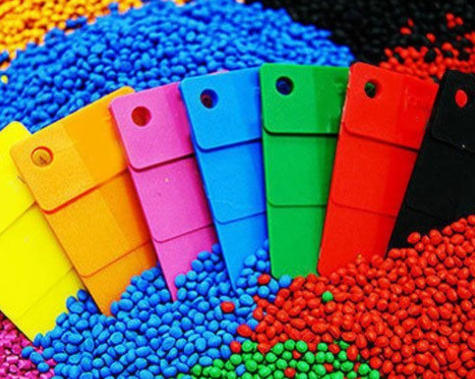
Creating a high-quality PE Masterbatch involves several crucial steps. Each stage influences the consistency, dispersion, and performance of the final product.
Pigments, additives, and carrier resins (usually low-density polyethylene or linear low-density polyethylene) are precisely weighed and mixed to achieve the desired formulation. The quality and dispersion of these ingredients are essential for uniform coloring and functionality.
The mixture is melted and blended in a twin-screw extruder under carefully controlled temperature and pressure conditions. During this process, pigments and additives are fully encapsulated by the PE carrier resin, forming a homogeneous compound.
After extrusion, the molten polymer strands are cooled and cut into small, uniform pellets. These pellets represent the final Masterbatch product, ready to be mixed with base polymers during injection molding or extrusion.
Quality control involves testing for dispersion quality, color consistency, mechanical strength, and melting index. Automotive applications demand strict adherence to specifications to ensure consistent performance in mass production.
Using Masterbatch allows automotive manufacturers to maintain consistent quality across large production volumes. It simplifies the coloring process and eliminates the challenges associated with directly incorporating powders or additives into resins.
Masterbatch provides a cost-effective way to achieve the desired properties in polymers. The high concentration of pigments or additives reduces wasted materials and shortens processing time. In addition, filler Masterbatch can substitute more expensive polymers, achieving significant cost savings.
Modern Masterbatch technology supports sustainability goals by enabling recyclability and reducing waste. Recycled PE resins blended with specialized Masterbatch can meet demanding automotive performance standards, lowering the environmental footprint of production.
PE Masterbatch enhances melt flow, thermal stability, and dispersion performance during injection molding or extrusion. This leads to fewer defects, smoother surfaces, and reduced equipment wear — all factors that contribute to more efficient, reliable production.
Inside the vehicle, PE Masterbatch is widely used in dashboards, seat components, trims, and panels. Color Masterbatch ensures aesthetic consistency and pleasant touch sensations, while anti-scratch or anti-static additives improve longevity and comfort.
For external parts such as bumpers, grilles, and mirror housings, PE Masterbatch offers UV and thermal protection to withstand weather conditions. It also provides vibrant colors and metallic effects that match automotive design trends.
High-temperature-resistant and flame-retardant Masterbatches are employed for engine covers, air filters, and cable conduits, where performance reliability is critical.
PE-based cable insulation can be enhanced with Masterbatch additives that improve fire safety, color identification, and dielectric performance, supporting electronic systems within modern vehicles.
The demand for PE Masterbatch in automotive applications is projected to grow as manufacturers seek sustainable solutions and material innovations. The upcoming trends include:
- Bio-based Masterbatch materials for eco-friendly component production.
- Smart additive Masterbatch capable of improving recyclability and reducing emissions.
- Nanotechnology integration, enhancing strength, conductivity, and self-healing capabilities in polymers.
Moreover, with the accelerating shift to electric vehicles (EVs), Masterbatch formulations will evolve to meet requirements for lightweight insulation, flame retardancy, and electromagnetic shielding.
While PE Masterbatch delivers numerous advantages, certain challenges remain:
- Dispersion consistency: Poor mixing or incompatible pigments may cause surface defects.
- Compatibility issues: Selection of the correct carrier resin is critical for uniform blending with base polymers.
- Environmental regulations: Compliance with stringent automotive and environmental standards increases R&D costs.
- Thermal degradation risks: High processing temperatures can alter pigment or additive performance.
Continuous innovation and customized formulation are essential for overcoming these obstacles in advanced automotive manufacturing.
PE Masterbatch continues to redefine how automotive components are designed and produced. Its ability to improve appearance, performance, and production efficiency makes it a cornerstone of modern vehicle manufacturing. By enabling stronger, lighter, and more durable plastic parts, PE Masterbatch supports the global movement toward efficiency and sustainability in the automotive sector.
As technological demands increase, new Masterbatch formulations incorporating nanomaterials, biodegradable carriers, and intelligent additives will further enhance the performance and sustainability of automotive components.
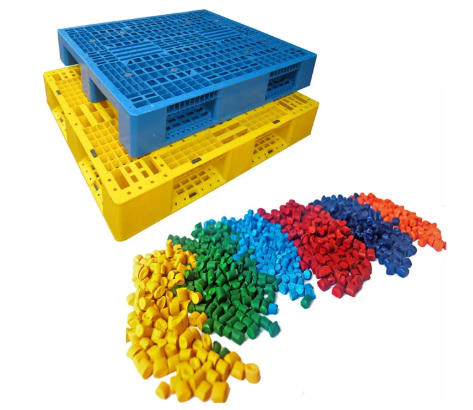
PE Masterbatch enhances polymer performance by adding color, improving mechanical properties, and increasing durability. It ensures uniformity and efficiency in large-scale automotive production.
Unlike powders, PE Masterbatch encapsulates pigments in a carrier resin, ensuring better dispersion, less dust, and easier handling during the molding process.
Yes, many modern formulations are designed for recycled PE resins, helping manufacturers achieve sustainability goals while maintaining high mechanical and aesthetic performance.
Yes. PE Masterbatch is preferred for flexible and impact-resistant parts, while PP Masterbatch suits rigid automotive components. The choice depends on material behavior and intended application.
Key factors include compatibility with the base resin, pigment concentration, required additive performance, processing temperature, and end-use durability needs.


