


close
Choose Your Site
Global
Social Media


Views: 222 Author: Rebecca Publish Time: 2026-01-11 Origin: Site


Content Menu
● Understanding PA Masterbatch and Its Core Value
>> Key Benefits of PA Masterbatch
● Technological Innovations Driving the PA Masterbatch Market
>> 1. Advanced Additive Engineering
>> 2. Sustainable and Bio-Based Masterbatches
>> 3. Color Matching by Digital Automation
>> 4. Smart Functional Additives
● Global Market Insights and Regional Trends
● Market Drivers and Challenges
● Future Outlook: What Lies Ahead for PA Masterbatch
>> Emphasis on Circular Economy Solutions
>> Integration with Industry 4.0
>> Expansion into High-Value Sectors
>> Strategic Collaboration and Customization
● Case Study: Customized PA Masterbatch for Automotive Components
● FAQ
>> 1. What is the main advantage of using PA Masterbatch?
>> 2. Is PA Masterbatch suitable for recycled materials?
>> 3. How does bio-based PA Masterbatch differ from traditional types?
>> 4. Which industries benefit most from PA Masterbatch?
>> 5. What trends will shape the PA Masterbatch market in the next decade?
As the global plastics industry continues its shift toward performance optimization and sustainability, PA Masterbatch (Polyamide Masterbatch) has emerged as one of the most dynamic categories in materials science. With its superior mechanical strength, heat resistance, and adaptability, PA-based masterbatches are redefining expectations in automotive, electronics, packaging, and industrial engineering sectors.
This article explores the latest technological breakthroughs, market developments, and emerging trends shaping the future of PA Masterbatch, providing manufacturers and decision-makers with strategic insights into this fast-evolving domain.

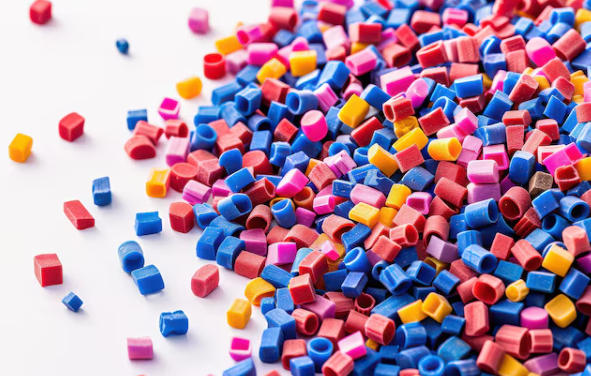
PA Masterbatch is a concentrated mixture of pigments or additives encapsulated during a heating process into a carrier resin — in this case, polyamide (PA). The masterbatch is then cooled, granulated, and used to add color, improve performance, or enhance processing efficiency in plastic manufacturing.
- High compatibility: Works efficiently with various PA-based polymers such as PA6 and PA66.
- Excellent dispersion: Ensures uniform coloring and mechanical consistency in the final product.
- Thermal stability: Resistant to high processing temperatures without degradation.
- Reduced waste: Allows precise control over pigment and additive ratios, minimizing production losses.
- Customization: Can be engineered to meet specific performance, mechanical, or aesthetic requirements.
These benefits enable PA Masterbatch producers and their customers to meet demanding specifications across multiple industries.
Recent R&D focuses on micro-engineered additives for PA Masterbatch, enhancing functions like UV resistance, flame retardancy, and antimicrobial performance. Nanotechnology is a key enabler—introducing nanoparticles such as silica, titanium dioxide, and graphene improves durability and optical clarity.
Example: A new class of nano flame-retardant PA Masterbatches can achieve superior safety ratings in automotive and electrical applications without sacrificing mechanical strength or color quality.
Environmental awareness and circular economy principles are reshaping the industry. Researchers are developing bio-based carrier resins and recyclable masterbatch formulations that maintain the characteristics of traditional PA materials while lowering carbon footprints.
- Recycled PA Masterbatch: Produced from post-industrial or post-consumer PA waste.
- Biodegradable additives: Designed to accelerate degradation in specific environmental conditions.
- Low-VOC (Volatile Organic Compound) formulations: Target cleaner production and safer processing environments.
This shift toward greener alternatives aligns with international sustainability goals and strengthens the appeal of PA Masterbatch in eco-conscious markets.
The color masterbatch industry is being revolutionized by AI-driven color-matching systems. Modern software can analyze thousands of pigment combinations, predicting the outcome instantly. This ensures extreme accuracy, minimizes trial batches, and optimizes production efficiency.
Automation also helps achieve global consistency in brand colors — a crucial advantage for international packaging and automotive clients who demand uniform standards across production sites.
Beyond color and mechanical improvements, smart masterbatch technology brings functional intelligence into polymers. Examples include:
- Anti-static PA Masterbatch for electronic housings.
- Infrared-reflective (IR) additives for automotive interiors.
- Self-healing or thermochromic masterbatches that respond to temperature or stress.
These innovations represent the next generation of high-performance PA Masterbatch for industrial and consumer goods markets.
The diversity of polyamide resins allows PA Masterbatch to penetrate industries that demand a balance of mechanical integrity and visual appeal. Key sectors include:
- Automotive: PA Masterbatch improves under-the-hood components due to its heat and oil resistance.
- Electronics: Used for insulating and protective housings requiring precision molding.
- Textiles: Enhances the aesthetic and mechanical performance of synthetic fibers.
- Packaging: Offers both structural and decorative enhancement for high-end packaging materials.
| Region | Market Highlights |
|---|---|
| Asia-Pacific (APAC) | Dominates global demand with rapid industrialization in China, Japan, and South Korea. |
| Europe | Focuses on sustainable polymer R&D and circular economy adoption. |
| North America | Driven by high-performance applications and strong automotive recovery. |
| Latin America & Middle East | Emerging markets show increasing demand for cost-effective masterbatch customization. |
China, in particular, is becoming a global hub for PA Masterbatch manufacturing, offering scalable production capabilities, technical expertise, and export-ready quality systems. Local companies now collaborate internationally, supplying custom-engineered masterbatches for multinational OEMs.
1. Sustainability mandates boosting demand for recyclable and eco-friendly masterbatches.
2. Automotive and electronics innovation requiring advanced thermal and mechanical materials.
3. Customization capabilities enabling tailored performance and coloration.
4. Rising industrial automation facilitating consistent, large-scale masterbatch production.
- Raw material price volatility: PA resins and pigments are subject to global market fluctuations.
- Environmental regulations: Stringent rules in Europe and North America demand cleaner production.
- Technical complexity: Developing bio-based masterbatches with equivalent durability remains challenging.
Despite these hurdles, innovation continues at a rapid pace, supported by the integration of digital design, predictive modeling, and smart manufacturing.
The future of PA Masterbatch aligns closely with circular material flows — recycling, reusing, and minimizing waste. Smart compounding lines capable of incorporating high percentages of recycled PA without property loss are emerging as a differentiator for forward-looking manufacturers.
Using IoT sensors and real-time data analytics, producers can monitor dispersion uniformity, temperature curves, and moisture content during extrusion. Predictive maintenance ensures steady quality output and reduces downtime, maximizing consistency in masterbatch performance.
New demands from 3D printing, medical devices, and electric mobility are creating additional space for PA Masterbatch solutions with enhanced stability, adhesion, and conductivity. The synergy between additive manufacturing and polyamide compounding could reshape material innovation frameworks in the coming decade.
As product lifecycles shorten, customers increasingly seek *co-developed masterbatch solutions* tailored to their exact resin systems, color standards, and performance benchmarks. Long-term supplier partnerships and integrated R&D collaborations will define success in this evolving ecosystem.
A leading Chinese manufacturer recently developed a custom PA Masterbatch for under-hood automotive applications. The formula combined reinforced PA66 resin with a tailored pigment dispersion that resisted fading under continuous heat exposure of over 180°C.
By integrating an infrared-reflective additive, engineers achieved cooler surface temperatures, enhancing fuel efficiency and material lifespan. This innovation illustrates how engineering-focused masterbatch development can directly translate into functional performance gains for end-users.
The PA Masterbatch market is increasingly competitive, driven by innovation speed and regulatory adaptability. Top global and Chinese producers are differentiating themselves through:
- Proprietary compound formulations with dual additive systems.
- Development of low-emission color masterbatches for cleaner production.
- Advanced testing labs capable of simulating real-world thermal and mechanical loads.
- Continuous investments in R&D and new compounding technologies.
The companies that successfully balance performance quality with environmental responsibility will lead the next phase of global masterbatch evolution.
The future of PA Masterbatch is characterized by *intelligent innovation, digital transformation, and sustainability*. With ongoing advancements in material science, AI-driven formulation, and eco-friendly compounding, PA-based masterbatches are set to become foundational materials for modern industry.
From automotive components to high-end packaging, the ability to combine aesthetic precision with performance durability ensures that PA Masterbatch continues to drive innovation for years to come. Companies embracing sustainability, customization, and collaborative development will be at the forefront of this expanding global market.

Answer: It enhances mechanical strength, thermal resistance, and aesthetic uniformity while allowing cost-effective coloration and additive incorporation into PA-based plastics.
Answer: Yes. Modern PA Masterbatch formulations are designed to integrate with recycled resins without compromising performance, aiding sustainable manufacturing goals.
Answer: Bio-based versions use renewable carrier resins and eco-friendly additives, offering similar performance with a significantly reduced carbon footprint.
Answer: Automotive, electronics, textiles, and packaging industries rely heavily on PA Masterbatch for product durability, heat stability, and superior finishing.
Answer: Key trends include smart additives, AI-driven color management, sustainable compounding, and Industry 4.0 integration for automated production monitoring.


