


close
Choose Your Site
Global
Social Media


Views: 222 Author: Rebecca Publish Time: 2025-12-20 Origin: Site


Content Menu
● Understanding ABS Masterbatch and Its Importance
● Market Overview: ABS Masterbatch Demand and Growth Dynamics
● Technological Innovations Shaping the ABS Masterbatch Industry
>> 1. Bio-Based and Recycled Masterbatch Carriers
>> 2. Smart Additives and Functional Enhancements
>> 3. High-Dispersion Pigments and Precision Blending
>> 4. Automation and Digitalization in Production
>> 5. 3D Printing Applications of ABS Masterbatch
● Key Industries Driving ABS Masterbatch Demand
>> Electronics and Electrical Appliances
>> Consumer Goods and Packaging
>> Construction and Infrastructure
● The Role of R&D and Customization
● Sustainability and Environmental Considerations
● Market Challenges and Competitive Landscape
● Future Outlook: The Next Decade of ABS Masterbatch
>> 1. What is an ABS masterbatch used for?
>> 2. How does masterbatch improve production efficiency?
>> 3. Are eco-friendly ABS masterbatches now available?
>> 4. What industries use the most ABS masterbatch?
>> 5. How is digital technology influencing masterbatch production?
Acrylonitrile Butadiene Styrene (ABS) is a highly versatile thermoplastic known for its remarkable strength, rigidity, and aesthetic appeal. As industries ranging from automotive to electronics demand more responsive and high-quality polymer solutions, ABS masterbatch technology is evolving quickly to meet these varied needs. From sustainability to improved performance and color precision, the future of ABS masterbatch is being defined by technological advancement and changing market dynamics.
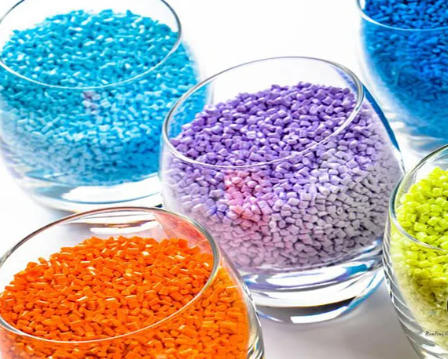
ABS masterbatch is a concentrated mixture of pigments, additives, or other modifiers that are encapsulated during a carrier resin process and then cooled and cut into a granular shape. When added to the base ABS polymer, this compound gives desired color, UV resistance, flame retardation, or improved mechanical properties.
The importance of masterbatch in ABS processing cannot be underestimated. It allows manufacturers to:
- Achieve consistent coloration across large batches.
- Reduce material waste and improve production efficiency.
- Add functional properties such as anti-static behavior, impact resistance, or thermal stability.
- Customize materials efficiently for various industries without reformulating the base polymer.
The global ABS masterbatch market has experienced steady growth over the past decade. With the increasing use of ABS in consumer durables, automotive parts, and electrical components, demand for customized masterbatch formulations has expanded significantly.
According to market research firms, the global masterbatch market, including ABS variants, is projected to grow at a CAGR exceeding 5% through 2030. Major drivers include:
- Rising automotive manufacturing in Asia and Europe.
- Increasing needs for lightweight materials that maintain rigidity and strength.
- Expanding consumer electronics production requiring precise color matching and weathering resistance.
- Global emphasis on sustainability and recyclability in plastics manufacturing.
Countries such as China, South Korea, and India are becoming production hubs for masterbatch-compounded ABS, largely due to lower production costs, strong supply chains, and technical innovation.
The future of ABS masterbatch is driven by innovation — not only in chemistry but also in process engineering and sustainability.
One of the most significant trends revolves around sustainability. Manufacturers are developing bio-based carriers and recycled ABS masterbatch solutions to reduce dependency on petrochemical feedstocks. These new carriers maintain performance while reducing environmental impact.
Recycled ABS masterbatch, for instance, is compatible with post-industrial or post-consumer recycled polymers, helping companies meet circular economy goals and government sustainability requirements.
Modern masterbatch technology no longer focuses solely on color. Today's masterbatches incorporate smart additives that provide self-healing capabilities, flame retardance without halogens, and improved UV stability. Advanced nanocomposites are being used to create ABS materials with enhanced mechanical properties without compromising surface finish or processability.
For example, antimicrobial masterbatch formulations are increasingly relevant for healthcare, packaging, and electronics industries — offering additional protection in high-contact environments.
Color uniformity remains a challenge in mass ABS production. Cutting-edge pigment dispersion technology now ensures consistent and stable colors, even in complex molding processes. The use of twin-screw extruders, combined with digital pigment blending systems, has revolutionized masterbatch production, delivering higher concentration ratios and less processing waste.
Automated production and artificial intelligence (AI)-based quality control systems are modernizing the masterbatch manufacturing process. Machine learning algorithms can predict and adjust dispersion uniformity or pigment loading, enabling producers to shorten development cycles and reduce human error.
Digital twins of masterbatch compounding lines now allow simulation of color concentration and mechanical property performance even before manufacturing begins, lowering R&D costs significantly.
With additive manufacturing (3D printing) gaining ground across industries, customized ABS-based masterbatch formulations are being developed specifically for filament extrusion and high-precision printing. These specialized masterbatches offer improved layer adhesion, color homogeneity, and surface texture, making them ideal for both prototyping and end-use parts.
The automotive industry is one of the largest consumers of ABS masterbatch, utilizing it in interior panels, trims, dashboard components, and lighting systems. The growing demand for lighter yet durable materials is driving the adoption of impact-resistant masterbatch compounds. Moreover, OEMs are increasingly specifying masterbatch polymers that meet sustainable manufacturing standards.
Consumer electronics, from computer housings to smartphone components, rely heavily on color-stable ABS masterbatches. Heat resistance, electrical insulation, and smooth surface finishes are vital properties that masterbatch additives can refine. In this sector, the demand for antistatic and flame-retardant masterbatch has also increased.
ABS products enhanced with UV-resistant masterbatch maintain their appearance and mechanical strength over time — ideal for outdoor or transparent packaging. The packaging industry's shift toward eco-friendly materials also pushes manufacturers to explore biodegradable masterbatch alternatives in ABS-compatible solutions.
ABS pipes, fixtures, and decorative panels gain aesthetic and functional advantages through customized masterbatch formulations. High weatherability and long-term color stability make these materials suited for architectural and engineering projects.

- Asia-Pacific: Dominates global ABS masterbatch production due to its strong manufacturing base, especially in China. The region's investment in automation and green technologies makes it a primary driver of future growth.
- Europe: Market characterized by regulatory compliance (REACH, RoHS) and high demand for eco-certified materials. European manufacturers focus more on sustainable and functional masterbatches.
- North America: The U.S. and Canada are observing rapid adoption in packaging and consumer electronics, supported by innovations in smart additive masterbatch solutions.
Developing markets in the Middle East and Africa are expected to experience gradual growth as industrialization and demand for durable plastic components increase.
Customization is a critical competitive advantage in the ABS masterbatch industry. Customers demand tailor-made formulations that align with product design, manufacturing conditions, and regional compliance laws.
Leading companies are focusing heavily on research and development (R&D) to engineer masterbatches with more efficient pigment dispersion, lower VOC emissions, and improved process adaptability. Custom masterbatch solutions not only optimize raw material usage but also enhance brand aesthetics, particularly in the consumer goods segment.
Environmental responsibility is reshaping every segment of the plastics industry, and ABS masterbatch is no exception. The growing emphasis on sustainable polymer solutions includes several initiatives:
- Using recycled resins in masterbatch carriers.
- Designing biodegradation-promoting additives.
- Enhancing recyclability by maintaining thermal stability after multiple cycles.
- Reducing CO₂ emissions during compounding.
In addition, some manufacturers are working on masterbatch formulations that support closed-loop manufacturing, allowing used ABS parts to be reprocessed into high-quality components with minimal performance loss.
Despite the optimistic outlook, the ABS masterbatch market faces notable challenges:
- Raw material price volatility affects cost predictability.
- Environmental regulations require continual formulation revisions.
- Rising global competition leads to margin pressure.
- The need for higher technical precision requires capital investment in advanced manufacturing lines.
However, these challenges also foster innovation. Companies that invest in automation, quality improvement, and custom service models are likely to maintain leadership in the evolving masterbatch landscape.
Looking forward, automation, sustainability, and performance integration will be the three major pillars shaping the next generation of ABS masterbatches. New formulations will continue to expand functionality — from self-cleaning to thermal-response materials — while digital manufacturing will cut down lead times and enhance color matching accuracy.
Furthermore, the growing transition toward eco-friendly plastics will open opportunities for hybrid ABS masterbatch formulations combining renewable and synthetic components. Ultimately, the synergy between material science innovation and global market demand will determine how effectively the ABS masterbatch industry adapts to the needs of the circular economy.
The future of ABS masterbatch lies at the intersection of innovation, customization, and sustainability. With automation, bio-based carriers, and intelligent additives transforming production, this segment of the plastics industry is becoming more advanced and eco-conscious. As industries like automotive, electronics, and packaging continue to demand smarter, stronger, and greener solutions, the ABS masterbatch market will remain a vital engine of progress in polymer engineering worldwide.

ABS masterbatch is used to add color, UV stability, flame resistance, or other functional properties to ABS polymers. It ensures consistent quality and performance across molded or extruded plastic products.
Masterbatch allows precise control of additive concentration, reducing mixing time and waste. It simplifies the manufacturing process by enabling direct addition to ABS resins without altering base formulations.
Yes. Many producers offer bio-based or recycled ABS masterbatch formulations designed to lower carbon footprints and support sustainable manufacturing practices.
The main sectors include automotive, electronics, household appliances, construction, and packaging — all requiring durable, aesthetic, and functional plastic materials.
Through AI, IoT monitoring, and digital twins, manufacturers can predict material behaviors, improve dispersion accuracy, and shorten development cycles, ensuring consistent quality from lab to factory.


