


close
Choose Your Site
Global
Social Media


Views: 222 Author: Rebecca Publish Time: 2025-12-23 Origin: Site


Content Menu
● Understanding the Core: What Is ABS Masterbatch?
● Early Development: The Foundations of Masterbatch Technology
● Advancements in Polymer Chemistry and Pigment dispersion
● Sustainability and Eco-Efficiency in ABS Masterbatch
● Smart Additives and Functional Masterbatch
● Digitalization and Smart Manufacturing
● Global Market Dynamics of ABS Masterbatch
● The Future of ABS Masterbatch Technology
● Challenges in ABS Masterbatch Development
● FAQ
>> 1. What is an ABS masterbatch used for?
>> 2. How does masterbatch improve manufacturing efficiency?
>> 3. Can masterbatch be used with recycled ABS?
>> 4. What's the difference between color and additive masterbatch?
>> 5. What future trends will shape ABS masterbatch technology?
Acrylonitrile Butadiene Styrene (ABS) is one of the most widely used thermoplastic polymers in modern manufacturing. From automotive interiors to appliance housings and electronics, its versatility makes it an essential material across industries. However, the true performance, color stability, and cost-efficiency of ABS often depend on a critical component — the masterbatch. Over the decades, ABS masterbatch technology has evolved dramatically, driven by innovation in polymer chemistry, process engineering, and sustainability. This article explores how the technology has changed, current trends shaping its development, and the promising future ahead.
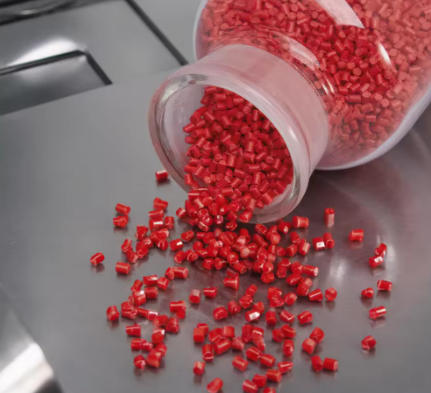
An ABS masterbatch is a concentrated mixture of pigments, additives, or fillers encapsulated into a compatible carrier resin. When blended with base ABS resin during processing, it imparts desired properties such as color, UV resistance, impact strength, flame retardancy, or antistatic behavior.
Essentially, masterbatch serves as the engine behind ABS's performance customization. By adjusting formulations, manufacturers can achieve precise visual and mechanical outcomes without compromising base resin integrity. The use of masterbatch simplifies production, ensures consistency, and minimizes the risk of uneven pigment distribution that could lead to quality defects.
The inception of masterbatch technology dates back to the mid-20th century when manufacturers sought cost-effective methods of dispersing pigments evenly in polymer matrices. Initially, colorants and additives were manually mixed with polymers in powder or liquid form, leading to inconsistent results. The first ABS masterbatch formulations appeared in the 1960s, primarily focusing on coloration and basic UV stabilization.
At that time, extrusion technologies were primitive, and pigment dispersion relied heavily on shear forces within twin-screw extruders. While effective for basic applications, these early generations of masterbatch often struggled with compatibility, poor heat resistance, and pigment migration issues. Despite those challenges, they laid the technological foundation for the precision and performance we see today.
The evolution of ABS masterbatch technology accelerated during the 1990s and early 2000s due to improved polymer science and manufacturing innovation. Advancements included:
- Surface-treated pigments: Enhanced pigment–polymer interaction improved color stability and weather resistance.
- Optimized carrier resins: Using ABS-compatible carriers helped eliminate phase separation and ensured uniform dispersion during injection molding.
- Computer-aided color formulation: Enabled accurate shade matching and reproducible aesthetic outcomes.
- Micro-compounding technology: Enhanced mixing uniformity at microscopic levels to achieve better distribution of additives.
These innovations allowed manufacturers to go beyond visual properties. Masterbatch began playing a pivotal role in engineering performance — enhancing strength, conductivity, and flame resistance while controlling processing behavior.
As sustainability became a global priority, masterbatch manufacturers started integrating eco-friendly additives, recycled ABS resins, and biodegradable carriers. Modern ABS masterbatch development focuses on reducing environmental impact without sacrificing performance.
Key advancements include:
- Recycled-content masterbatch: Designed to work seamlessly with post-consumer or post-industrial ABS recyclates.
- Low-VOC and heavy-metal-free pigments: Improving compliance with environmental regulations.
- Energy-efficient extrusion processes: Reducing carbon footprint during compounding.
- Bio-based additive systems: Incorporating natural fibers and plant-derived modifiers for enhanced sustainability.
As circular economy models gain traction, sustainable masterbatch technologies are becoming standard practice rather than an exception.
The current stage of ABS masterbatch innovation extends far beyond color and UV protection. Functional masterbatch solutions now enhance product performance, manufacturing efficiency, and consumer safety.
Modern functional masterbatch categories include:
- Flame-retardant masterbatch for electronic housings and automotive components.
- Antimicrobial masterbatch for hygiene-sensitive applications.
- Electrostatic discharge (ESD) masterbatch for packaging electronic components.
- Infrared-reflective masterbatch for thermal regulation in automotive interiors.
- Laser-marking masterbatch enabling precise product branding or identification.
By embedding intelligence into polymers, functional masterbatch technology helps manufacturers differentiate products and improve lifetime value.
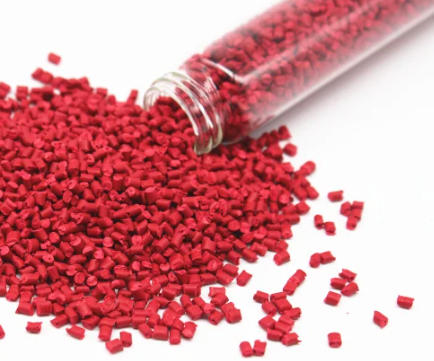
Digital transformation in manufacturing has also reached the masterbatch industry. Data-driven production systems, machine learning algorithms, and advanced color-matching software ensure consistent product quality. Automated systems monitor pigment dispersion, viscosity profiles, and compounding temperatures in real time, helping eliminate human error and maintaining tight quality control.
At the same time, Industry 4.0 principles allow for better traceability and process transparency. By collecting integrated production data, companies can refine formulations, reduce waste, and optimize feed rates more effectively.
The global masterbatch market for ABS is witnessing rapid growth, propelled by industrial expansion in automotive, electronics, and consumer goods sectors. Asia-Pacific, especially China, has emerged as a leading hub for R&D and large-scale compounding facilities due to its robust manufacturing ecosystem and export-driven economy.
Key market trends include:
- Rising demand for customized color masterbatch in consumer electronics.
- Increasing investment in functional masterbatch for smart materials.
- Expansion of biodegradable additive masterbatch solutions.
- Growing focus on cost-performance ratio optimization.
These factors are pushing the industry to innovate continuously and adopt cleaner, smarter, and more cost-efficient technologies.
Looking ahead, the future of ABS masterbatch technology will be shaped by three major drivers: smart materials, sustainability, and digital integration.
1. Smart functionality: Integration of conductive, self-healing, and adaptive properties that respond to environmental triggers.
2. Sustainable formulations: With advances in green chemistry, reusable and low-carbon carriers will dominate next-generation products.
3. AI-driven formulation: Artificial intelligence will revolutionize pigment formulation, predicting optimal ratios for specific applications.
4. Nano-additive systems: Nanotechnology is expected to enhance dispersion, improve surface finish, and reduce material consumption.
5. Blockchain traceability: Allowing producers to ensure transparency across supply chains.
These breakthroughs will redefine the boundaries of what ABS materials can achieve, ultimately transforming industrial design and product engineering.
Although progress is accelerating, several challenges remain:
- Achieving full recyclability without property degradation.
- Maintaining cost control amid rising pigment prices.
- Balancing high-performance demands with environmental regulations.
- Addressing global supply-chain volatility for additives and base resins.
Continuous innovation and cross-industry collaboration will be critical in overcoming these limitations and achieving scalable, sustainable masterbatch solutions.
The evolution of ABS masterbatch technology represents a remarkable journey from basic coloring agents to advanced, multifunctional solutions that shape the materials of the future. Today's masterbatch industry stands at the intersection of polymer innovation, sustainability, and digital transformation. For global manufacturers in automotive, electronics, and consumer goods, adopting cutting-edge masterbatch solutions is not only a competitive advantage but also a strategic necessity to meet sustainability goals and technical specifications.
As research and industry collaboration continue to advance, ABS masterbatch will remain a cornerstone of polymer engineering — evolving from a supporting additive to a key driver of industrial innovation.

An ABS masterbatch is used to incorporate color, UV stability, or functional additives into ABS polymers to enhance performance, improve appearance, and ensure processing consistency.
Masterbatch simplifies dosing and dispersion, reduces contamination risk, and improves product uniformity, allowing higher production efficiency with fewer rejections.
Yes. Modern formulations are designed for compatibility with recycled ABS, ensuring stable color and mechanical properties while supporting sustainability.
Color masterbatch focuses on pigmentation, while additive masterbatch introduces performance enhancers such as antioxidants, flame retardants, or UV stabilizers.
Future developments will focus on AI-based formulation, recyclable materials, bio-based carriers, and multifunctional properties that enhance product intelligence.


