


close
Choose Your Site
Global
Social Media


Views: 222 Author: Rebecca Publish Time: 2025-12-26 Origin: Site


Content Menu
● Classification of PP Masterbatch
>> 4. White and Black Masterbatch
● The Manufacturing Process of PP Masterbatch
● Applications of PP Masterbatch
>> 4. Textile and Fiber Industry
>> 5. Electrical and Household Products
● Key Benefits of PP Masterbatch
>> Enhanced Product Performance
>> Improved Production Efficiency
>> Sustainability and Eco-Friendliness
● Factors to Consider When Choosing PP Masterbatch
● Innovations in PP Masterbatch Technology
>> Smart Color Matching Systems
● Global Market Outlook for PP Masterbatch
● Future Trends in PP Masterbatch Development
>> 1. What is the main advantage of using PP Masterbatch?
>> 2. How is PP Masterbatch different from pigments or additives?
>> 3. Can PP Masterbatch be used with other polymers?
>> 4. Is PP Masterbatch environmentally friendly?
>> 5. How should PP Masterbatch be stored?
Polypropylene (PP) is one of the world's most widely used thermoplastic polymers. It is lightweight, versatile, and cost-effective, making it the preferred choice in packaging, automotive, construction, and consumer goods industries. However, in its raw form, PP has limitations in color, UV stability, and performance customization. This is where PP Masterbatch becomes indispensable.
PP Masterbatch enhances the physical and chemical characteristics of polypropylene, transforming a standard polymer into a performance-driven material tailored to industrial needs. This guide provides a comprehensive overview of PP Masterbatch — its composition, manufacturing process, applications, benefits, and the key factors to consider when selecting the right formula.
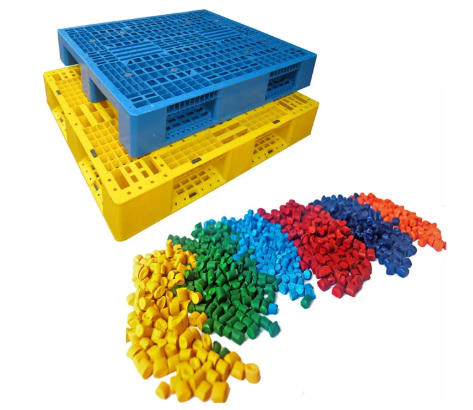
A Masterbatch is a concentrated mixture of pigments, additives, or fillers encapsulated during a heat process into a carrier resin. In the case of PP Masterbatch, the carrier resin is polypropylene. The Masterbatch is later cooled and cut into granular pellets that can be easily mixed with natural PP resin during processing.
Using PP Masterbatch allows manufacturers to adjust color, UV resistance, flame retardancy, and mechanical properties without having to alter the base polymer itself. This approach improves consistency, simplifies production, and enhances the final product's performance in various environmental and mechanical conditions.
PP Masterbatch comes in several categories, depending on the additives and their functions.
Color Masterbatch provides stable, vibrant, and uniform coloration to PP products. It is widely used for packaging films, containers, and molded parts. By blending pigments into PP Masterbatch, color uniformity is ensured even under high-temperature conditions during extrusion or injection molding.
This type introduces functional improvements such as UV resistance, anti-static behavior, anti-oxidation, and slip properties. Additive Masterbatch ensures product durability and improved surface effects, particularly for outdoor applications and electronic housings.
Filler Masterbatch combines inorganic materials—commonly calcium carbonate or talc—into PP resins. It reduces production costs, increases rigidity, and enhances dimensional stability. This type is often applied in injection-molded parts, films, and woven sacks.
White Masterbatch usually uses titanium dioxide (TiO₂) for opacity, whiteness, and UV protection. Black Masterbatch, using high-quality carbon black, adds superior coloration, UV resistance, and conductivity to PP materials.
The production of PP Masterbatch involves several steps to ensure the optimal dispersion of additives and pigments.
1. Mixing of Raw Materials: Pigments, additives, and carrier PP resins are proportionally blended.
2. Compounding: The blend passes through a twin-screw extruder, where heat and mechanical shear disperse the additives evenly.
3. Cooling and Cutting: The compound is cooled, then cut into uniform pellet-sized granules.
4. Quality Testing: Color consistency, melt flow index, and dispersion quality are tested to maintain batch precision.
The uniform dispersion of components determines the final product's quality. Poor dispersion can lead to streaks, uneven coloring, or mechanical defects in molded items.
PP Masterbatch is essential in creating high-quality films, caps, and containers used in food packaging, cosmetics, and household items. It not only imparts vibrant color but also enhances UV stability and clarity. With global sustainability trends on the rise, Masterbatch producers are developing recyclable and eco-friendly PP Masterbatch formulations that meet food-contact safety standards.
Automotive parts such as dashboards, bumpers, and interior panels frequently use PP Masterbatch to achieve durability and aesthetic consistency. Additive Masterbatch variants help improve scratch resistance, reduce material density, and ensure long-term UV protection under outdoor exposure.
PP-based pipes, sheets, and fittings require materials that can withstand environmental stress and UV radiation. Using PP Masterbatch allows these products to maintain structural integrity and color stability for extended periods.
In synthetic fiber manufacturing, PP Masterbatch supports coloration, anti-static properties, and UV protection. It ensures uniform dyeing and color fastness, which are essential for applications like carpets, ropes, and nonwoven fabrics.
Home appliances and electronics enclosures made of PP use flame-retardant and anti-static Masterbatch to meet safety regulations. Additionally, color Masterbatch enhances the product's aesthetic appeal and surface gloss.
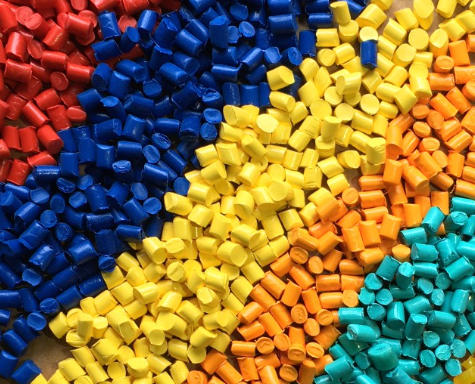
PP Masterbatch significantly boosts mechanical and thermal stability. It reduces brittleness, increases tensile strength, and enhances resistance to environmental degradation.
Instead of adding pigments or additives directly in resin form, Masterbatch simplifies dosing and mixing, minimizing material waste. The controlled concentration ensures color and property consistency across production cycles.
Manufacturers can easily create specialized compounds, combining desired colors, UV-resistant additives, and antistatic agents. PP Masterbatch is available in custom formulations tailored to meet exact performance requirements.
Masterbatch is pre-dispersed and dust-free, ensuring a cleaner, more consistent manufacturing process. It enhances the extrusion and molding efficiency while reducing downtime caused by inconsistent mixing or contamination.
Modern Masterbatch technology increasingly supports the global shift toward greener materials. Many suppliers now offer biodegradable Masterbatch and recyclable carrier systems designed to minimize carbon footprint and support circular manufacturing.
Selecting the right PP Masterbatch formula is essential for optimizing both performance and cost control. Manufacturers should evaluate the following:
- Compatibility: Ensure that the Masterbatch carrier resin matches the polymer matrix's properties. Poor compatibility can affect dispersion and product uniformity.
- Additive Concentration: The correct loading level determines performance. Overdosing may cause processing defects, while underdosing weakens the desired effect.
- Thermal Stability: The Masterbatch must withstand processing temperatures without pigment degradation.
- Dispersion Quality: Uniform distribution prevents streaks and surface unevenness.
- Color Consistency: Critical for maintaining brand identity and visual appeal across product batches.
- Supplier Reliability: Work with certified Masterbatch producers who can ensure consistent quality, technical support, and documentation compliance (e.g., REACH, RoHS, FDA).
The Masterbatch industry continues to evolve with the integration of nanotechnology, sustainable additives, and digital production control.
Nanofillers such as nano-silica or carbon nanotubes are now introduced into PP Masterbatch to improve mechanical strength, electrical conductivity, and barrier properties. These advanced materials pave the way for high-performance packaging and automotive applications.
With sustainability becoming a global priority, manufacturers are exploring bio-based carriers that replace fossil-derived polypropylene. These eco-friendly Masterbatch systems maintain the functional benefits of PP while promoting circular economy practices.
Digital color management and automated blending ensure superior accuracy, reducing waste during batch adjustments. This innovation addresses a critical challenge in high-volume production — maintaining visual consistency without exceeding cost targets.
The global PP Masterbatch market has seen steady growth, driven by rising plastic consumption in developing economies and continuous demand for customized polymer performance. According to market research, the Masterbatch industry is projected to exceed USD 15 billion by 2030, with Asia-Pacific leading due to strong growth in packaging and automotive sectors.
China remains one of the most dynamic regions for PP Masterbatch production and export. With its technological advancements and cost advantages, Chinese Masterbatch manufacturers are increasingly supplying customized solutions to global clients, integrating innovation, quality control, and sustainable practices into their production systems.
As industries move toward greener, more efficient plastics, several trends are shaping the next generation of PP Masterbatch technologies:
1. Biodegradable Masterbatch Formulations – Integration with compostable PP blends for eco-friendly packaging.
2. Antimicrobial Masterbatch – Promotion of hygiene and safety in consumer goods.
3. Recycled Resin-Based Masterbatch – Supporting circular economy initiatives.
4. Advanced Color Effects – Incorporating metallic, pearlescent, and transparent finishes.
5. AI-Assisted Quality Control – Enhancing process consistency and reducing production waste.
These innovations position PP Masterbatch as a key component in future polymer design, bridging performance needs with environmental responsibility.
PP Masterbatch is more than a simple coloring agent—it's a sophisticated solution that defines performance, aesthetics, and sustainability in modern polymer manufacturing. Whether for packaging, automotive, or construction use, it ensures superior processing efficiency, material quality, and cost control.
As the plastics industry accelerates toward sustainability and functional innovation, Masterbatch technology will continue to play a central role in shaping the performance capabilities of polypropylene and beyond.
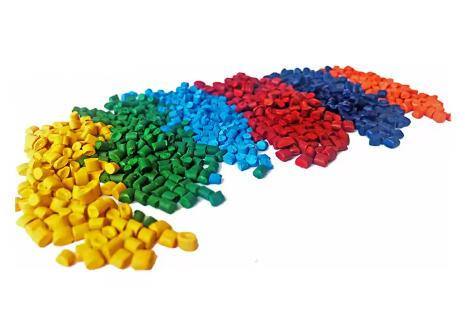
The main advantage lies in its ability to precisely control color and functional properties without the need for post-processing. PP Masterbatch ensures uniformity, reduces waste, and simplifies production.
Masterbatch is a concentrated mixture encapsulated in a polymer carrier, ensuring better dispersion and easier handling compared to raw pigments or powder additives.
Generally, PP Masterbatch performs best with polypropylene-based systems. However, cross-polymer compatibility can be achieved if the carrier resin is modified or matched to the target polymer.
Yes, many modern PP Masterbatch formulas are designed with eco-friendly carriers and recyclable or biodegradable components, supporting sustainable manufacturing.
Masterbatch must be kept in a dry, ventilated area away from direct sunlight and moisture. Proper storage ensures longer shelf life and consistent performance during extrusion or molding.


