


close
Choose Your Site
Global
Social Media


Views: 222 Author: Rebecca Publish Time: 2025-12-23 Origin: Site


Content Menu
● Understanding ABS Masterbatch
● The Growing Demand for ABS Masterbatch
● Common Myths About the Environmental Impact of Masterbatch
>> Myth 1: Masterbatch Is Always Non-Recyclable
>> Myth 2: Masterbatch Adds Toxic Components to Plastics
>> Myth 3: Masterbatch Increases Carbon Footprint
>> Myth 4: Natural or Uncolored Plastics Are More Sustainable
>> Myth 5: Masterbatch Has No Role in Circular Economy
● Environmental Benefits of Modern ABS Masterbatch
>> 1. Reduced Raw Material Waste
>> 2. Energy Efficiency in Processing
>> 3. Lower Emissions and Improved Air Quality
● How Responsible Masterbatch Manufacturers Contribute to Sustainability
>> 2. Adoption of Renewable Carriers
>> 3. Closed-Loop Recycling and Take-Back Programs
>> 4. International Certifications
● Comparing ABS Masterbatch With Other Coloration Methods
● Case Example: Green Manufacturing in China
● The Future of Sustainable Masterbatch Production
● FAQ About ABS Masterbatch and the Environment
>> 1. What makes ABS Masterbatch environmentally friendly?
>> 2. Can ABS Masterbatch be used with recycled plastics?
>> 3. How does Masterbatch reduce carbon emissions?
>> 4. Are there biodegradable options for Masterbatch?
>> 5. What certifications should sustainable Masterbatch meet?
In the modern plastics industry, ABS Masterbatch plays a vital role in improving performance, appearance, and processing efficiency. However, with growing environmental concerns, many industry observers question whether ABS Masterbatch contributes to pollution or supports a more sustainable plastics chain. This article explores the truth behind those perceptions, separating myths from facts, and revealing how innovative masterbatch solutions are reshaping the industry toward greener production.
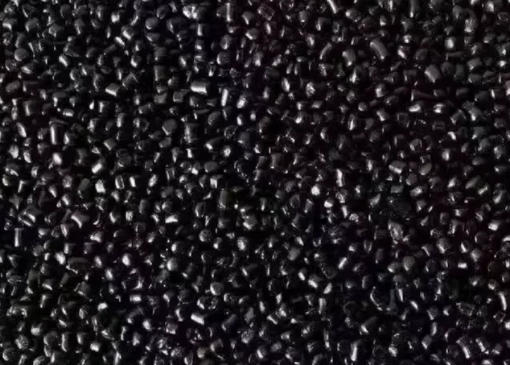
ABS Masterbatch (Acrylonitrile Butadiene Styrene Masterbatch) is a concentrated mixture of pigments and additives encapsulated during a heat process into a carrier resin, which is then cooled and cut into granules. This allows manufacturers to add color, UV protection, or other functional properties directly to plastic materials without the need for additional treatment during production.
ABS serves as an ideal carrier due to its excellent toughness, gloss, and impact resistance, making it suitable for automotive components, consumer electronics, and household goods.
The usage of Masterbatch has increased significantly as manufacturers strive to improve product quality and reduce waste. Instead of relying on traditional pre-colored resins or separate additives, ABS Masterbatch enables:
- Better dispersion of pigments.
- Consistency in color and appearance.
- Reduced material waste during processing.
- Enhanced recyclability and process control.
In global markets—especially in Asia-Pacific regions—ABS Masterbatch has become the backbone of sustainable plastics engineering. Its widespread adoption illustrates a fundamental shift from volume-based to value-driven production that supports environmental efficiency.
A common misconception suggests that ABS Masterbatch makes plastic products harder to recycle. In truth, quality masterbatch formulations are specifically engineered to be compatible with recycling systems. When used correctly, they do *not* compromise polymer integrity. In fact, additive masterbatches can improve mechanical recovery and color retention after multiple recycling cycles.
Modern Masterbatch manufacturers follow strict environmental and safety regulations, including RoHS, REACH, and FDA standards. The pigments and additives used are usually non-toxic and eco-friendly. Many Chinese and global producers have transitioned to heavy-metal-free colorants and low-volatility carriers, drastically reducing emissions during processing.
While older production methods might have been energy-intensive, contemporary ABS Masterbatch production lines now employ highly efficient compounding systems and closed-loop cooling setups. Furthermore, since masterbatch reduces material waste through better dispersion, its use actually *lowers* total carbon emissions across a product's life cycle.
Unpigmented plastics are often advertised as “greener,” yet their shorter lifecycle and limited UV resistance mean more frequent replacements. By using UV-stabilized ABS Masterbatch, products can maintain performance longer, preventing premature disposal. Sustainability involves durability and recyclability, not just visual simplicity.
The circular economy depends on redesigning materials for repeated use. Modern Masterbatch additives can facilitate recycling by improving melt flow, stabilizing pigments, and reducing degradation during reprocessing. As manufacturers increasingly choose biodegradable or recycled carriers for their masterbatch, the entire plastics lifecycle moves closer to true circularity.
Using Masterbatch instead of pre-colored compounds minimizes off-spec production and allows precise color matching with fewer trials. Factories can reuse scrap directly, which significantly decreases plastic waste.
Because of optimized dispersion and better temperature stability, ABS Masterbatch reduces processing energy requirements. Manufacturers save power while maintaining consistent quality, which contributes to sustainability goals.
High-quality masterbatch production relies on enclosed mixing and extrusion systems, preventing pigment dust and volatile compounds from escaping into the air. Companies adopting “green compounding” ensure minimal environmental impact and safer working environments.
Special recycling-friendly Masterbatch formulations are now available. These include enhanced decolorization and purification additives, which enable effective sorting and reprocessing of colored plastics.
The durability imparted by ABS Masterbatch helps reduce product turnover and extends service lifespan. A longer product life equates to less manufacturing frequency, less waste, and overall lower environmental impact.
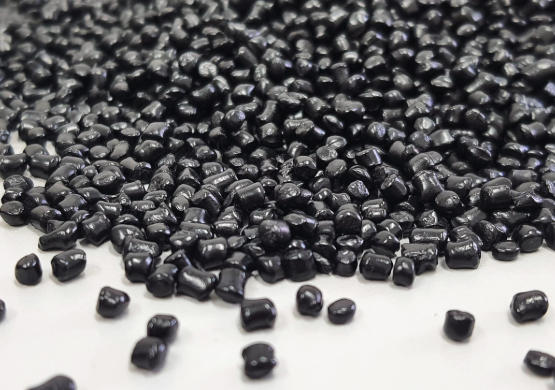
Forward-thinking companies integrate eco-design into product development. They analyze the entire life cycle—raw material selection, energy consumption, emissions, and recyclability—to produce Masterbatch that meets both performance and environmental goals.
Instead of conventional petroleum-based ABS, some producers experiment with bio-based and recycled ABS carriers. These carriers maintain high compatibility and dispersibility while drastically cutting down fossil fuel usage.
An increasing number of manufacturers run take-back programs for waste compounds or defective batches. This enables them to reprocess plastics into new Masterbatch products, reducing the need for virgin materials.
Modern facilities pursue ISO 14001 (Environmental Management) and other sustainability certifications, proving compliance with environmental standards and cementing trust in their masterbatch quality.
| Method | Advantages | Environmental Concerns |
|---|---|---|
| Dry pigments | Cheap and flexible | Causes dust emissions, inconsistent color dispersion |
| Pre-colored resin | Easy to use | Requires extra energy and high waste in color matching |
| ABS Masterbatch | Stable, efficient, recyclable | Minimal drawback if properly formulated |
Since Masterbatch requires only a small percentage of concentrate per batch, its ecological load is lower than fully pre-colored compounds, making it both cost-efficient and eco-smart.
China's plastics industry has rapidly evolved in its sustainability approach. Many innovative companies—especially those focused on ABS Masterbatch—now combine smart sensors, AI-controlled extrusion lines, and waste heat recovery systems. This transition toward green manufacturing not only enhances domestic competitiveness but also aligns with global ESG (Environmental, Social, and Governance) expectations.
Global customers increasingly prefer suppliers who guarantee traceable production and minimal emissions. By integrating sustainable masterbatch technologies, Chinese companies strengthen both environmental responsibility and international reputation.
As environmental regulations tighten, the Masterbatch industry continues to reinvent itself through technological innovation. Future trends include:
- Development of biodegradable masterbatch for compostable plastics.
- Upcycling of post-consumer resins as carriers.
- Optical brighteners and anti-yellowing additives suited for multiple recycling loops.
- AI-based systems for optimal pigment dispersion and energy control.
These advancements point to a future where performance and sustainability merge seamlessly. The notion that masterbatch harms the environment is outdated; modern formulations are a cornerstone of environmentally efficient production.
ABS Masterbatch is not the environmental villain it is sometimes portrayed to be. When engineered and applied responsibly, it supports sustainability by reducing waste, improving recyclability, and lengthening product life cycles. The real challenge lies not in abandoning masterbatch but in optimizing how it's formulated, used, and recovered.
By bridging the gap between performance and ecology, ABS Masterbatch demonstrates how materials science innovation continues to drive the plastics industry toward a cleaner and more sustainable future.
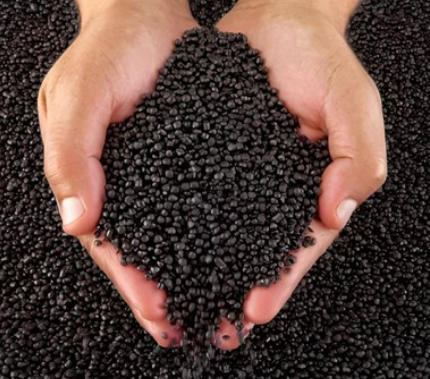
Modern formulations use eco-safe pigments and recyclable carriers. They reduce waste and energy consumption during processing, contributing positively to sustainability efforts.
Yes. Many recycling-compatible Masterbatch systems are designed to enhance the quality and stability of recycled polymers without degrading plastic performance.
It minimizes reprocessing waste and optimizes color yield, reducing overall resource and energy consumption during manufacturing.
Some companies now develop biodegradable masterbatch solutions using bio-based ABS or PLA carriers, improving end-of-life decomposability for specific applications.
Environmentally responsible masterbatch products often comply with ISO 14001, RoHS, REACH, and FDA standards, ensuring global safety and eco-compliance.


