


close
Choose Your Site
Global
Social Media


Views: 222 Author: Rebecca Publish Time: 2026-01-04 Origin: Site


Content Menu
>> Common Additives in PP Masterbatch Include:
● Why Manufacturers Are Turning to PP Masterbatch
>> Key Motivations for Using PP Masterbatch:
● Environmental Advantages of Using PP Masterbatch
>> 1. Reduction of Plastic Waste
>> 2. Compatibility with Recycled Materials
>> 3. Energy Savings During Production
>> 4. Lower Emissions and Cleaner Production
>> 5. Improved Product Durability and Life Cycle
● PP Masterbatch and the Circular Economy
>> How PP Masterbatch Enhances Circular Production:
● Industrial Applications with Environmental Impact
>> 2. Automotive Manufacturing
● How Masterbatch Enhances Manufacturing Efficiency
>> Cleaner and Safer Operations
>> Lower Maintenance and Reduced Downtime
● Challenges and Future Outlook
>> 1. What makes PP Masterbatch environmentally friendly?
>> 2. Can PP Masterbatch be used with recycled polypropylene?
>> 3. Does PP Masterbatch reduce energy consumption?
>> 4. Is PP Masterbatch suitable for food-grade applications?
>> 5. How does PP Masterbatch contribute to the circular economy?
As the global manufacturing industry shifts toward sustainability and eco-efficiency, PP Masterbatch (Polypropylene Masterbatch) is gaining attention for its environmental advantages and versatility. More than just a colorant or performance enhancer, PP Masterbatch plays a key role in optimizing plastic production processes, reducing waste, and facilitating a circular economy.
This article explores how PP Masterbatch contributes to environmental protection, resource efficiency, and sustainable manufacturing practices across different industries.
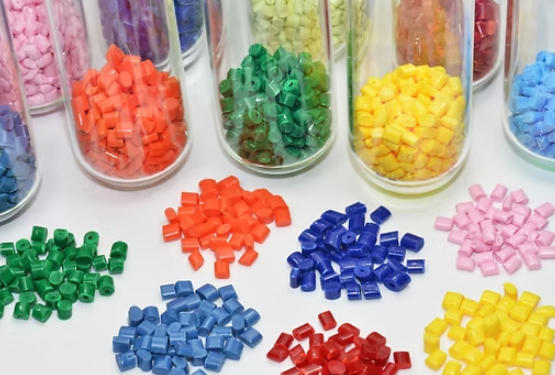
PP Masterbatch is a concentrated mixture of pigments, additives, and resins encapsulated within a polymer carrier—specifically polypropylene (PP). It's designed to improve or modify the characteristics of plastic materials during manufacturing.
Instead of directly adding pigments or additives during production, manufacturers use PP Masterbatch to ensure uniform dispersion and optimal performance. It allows for precise control over color, mechanical properties, and processing behavior, all while minimizing environmental impact through efficient material usage.
- Colorants: Provide consistent and vibrant color to finished products.
- UV stabilizers: Protect plastics from sunlight degradation.
- Antioxidants: Prevent polymer aging during processing.
- Anti-static agents: Reduce dust attraction and surface resistance.
- Flame retardants: Enhance product safety and compliance.
By combining these additive functions within a single Masterbatch, manufacturers can streamline production and significantly reduce waste and emissions.
The increasing environmental awareness in the manufacturing sector pushes companies to adopt eco-conscious materials. PP Masterbatch supports both performance optimization and environmental responsibility, making it a critical innovation in sustainable plastics production.
1. Reduced Additive Waste: Masterbatch concentrates reduce the risk of overuse or spillage of additives.
2. Improved Process Efficiency: Uniform dispersion ensures faster cycle times and less downtime.
3. Material Reusability: Compatible with recycled and virgin materials for circular production.
4. Better Product Longevity: Enhanced stability means longer product lifecycles and less replacement waste.
These factors collectively make PP Masterbatch a cornerstone material for manufacturers aiming to achieve green production goals.
One of the most immediate environmental benefits of PP Masterbatch is its contribution to waste reduction. Traditional coloring or additive processes often result in over-dosing, uneven quality, and wasted raw materials. With Masterbatch technology, dosage precision ensures every particle is fully utilized.
Additionally, consistent color and quality eliminate the need for multiple trial runs—further decreasing material waste during production setup.
PP Masterbatch blends seamlessly with recycled polypropylene resins, enabling manufacturers to maintain color quality and mechanical performance even when using post-consumer plastics. This capability promotes closed-loop recycling systems, reducing reliance on virgin polymers.
Manufacturers can thus produce recyclable and reprocessed products without compromising performance—a crucial step toward reducing plastic pollution.
The uniform dispersion of additives in PP Masterbatch enhances processing efficiency. Because the pigments and stabilizers are pre-dispersed, they melt faster and require less energy during extrusion or molding.
This lower energy consumption reduces carbon footprint, supporting sustainable energy targets in manufacturing facilities.
Poor dispersion of pigments in traditional methods can lead to volatile organic compound (VOC) emissions during processing. However, PP Masterbatch minimizes these emissions due to its pre-compounded structure. Fewer VOCs result in a cleaner production environment and improved worker safety.
Additionally, high-concentration Masterbatch systems allow larger batches to be produced with less transportation and packaging demand—further reducing overall emissions.
PP Masterbatch often includes UV stabilizers and antioxidants, which help extend product life by protecting against sunlight degradation, oxidation, and color fading.
Long-lasting products mean fewer replacements and less plastic waste generation over time, reinforcing sustainability efforts across industries such as packaging, automotive, and consumer goods.
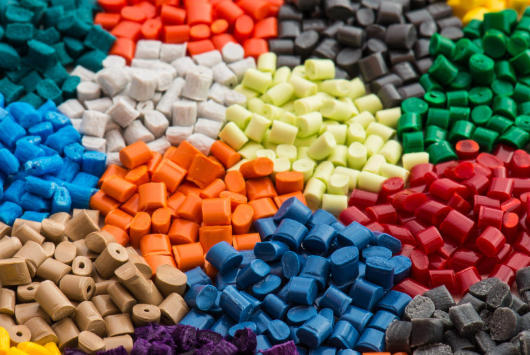
The circular economy model prioritizes keeping materials in use for as long as possible. PP Masterbatch supports this model through its adaptability with recycled plastics and its role in improving recyclability.
- Color stability in recycled plastics enables repeated reprocessing.
- Additive synergy maintains mechanical integrity in post-consumer materials.
- Reduced contamination leads to easier downstream recycling.
- Optimized packaging materials improve efficiency in logistic systems.
Thus, PP Masterbatch is more than a processing material—it is an enabler of sustainable manufacturing and smarter resource utilization.
PP Masterbatch isn't limited to one sector; it's widely used wherever polypropylene products are made.
In film production and containers, PP Masterbatch ensures uniform color with minimal waste and allows for lightweight designs that reduce packaging mass and transportation costs.
Lightweight PP compounds created using Masterbatch reduce vehicle weight and consequent fuel consumption, directly cutting CO₂ emissions.
Reusable items made with UV-stabilized PP Masterbatch last longer, reducing the turnover rate of disposable products.
PP Masterbatch extends the life of plastic films, pipes, and greenhouse components, minimizing agricultural plastic waste.
Each application demonstrates how this material innovation creates balance between economic efficiency and environmental preservation.
Accurate color control through Masterbatch eliminates the guesswork that arises from direct pigment addition. This precision helps maintain production stability and predictable outcomes.
Because pigments are encapsulated in polymer granules, dust and airborne emissions are greatly reduced. This results in a cleaner factory environment and safer working conditions.
Homogeneous material dispersion minimizes machine wear and reduces the chances of die build-up or blockages, ensuring smoother processing and less cleaning requirement—another indirect environmental and cost-saving benefit.
Despite its benefits, the challenge for PP Masterbatch lies in further improving biodegradability and renewable carrier formulations. Research is ongoing to produce bio-based PP Masterbatch, incorporating natural fillers and non-toxic stabilizers.
Future trends point toward:
- Recycled PP carriers for zero-virgin production.
- Smart Masterbatches capable of detecting degradation or contamination.
- Carbon-neutral Masterbatch manufacturing, integrating renewable energy sources.
With these advancements, PP Masterbatch will continue to be a key component of sustainable plastic innovation.
The use of PP Masterbatch in manufacturing offers significant environmental advantages—from reducing waste and energy use to enhancing recyclability and product durability. By integrating this technology, manufacturers not only optimize their production efficiency but also align with global sustainability standards and consumer expectations for greener products.
PP Masterbatch represents the essence of eco-driven innovation—turning every polypropylene product into a step toward a smarter, cleaner, and more sustainable future.
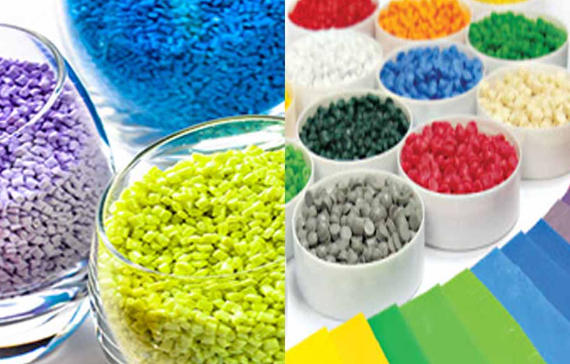
PP Masterbatch minimizes waste through controlled additive dosing, supports energy-efficient processing, and enhances recyclability by maintaining material quality in recycled plastics.
Yes. It blends well with recycled PP resins, ensuring consistent product color and performance, which helps manufacturers maintain sustainability goals without loss of quality.
Definitely. Pre-dispersed pigments and additives melt easily, lowering processing temperatures, cycle times, and total energy demand during production.
Food-grade PP Masterbatch formulations are available, made with certified, non-toxic pigments and additives that comply with international safety standards like FDA and EU regulations.
By improving recyclability, extending product life, and enabling reuse of materials, PP Masterbatch supports closed-loop production systems crucial to circular manufacturing.


