


close
Choose Your Site
Global
Social Media


Views: 222 Author: Rebecca Publish Time: 2025-12-28 Origin: Site


Content Menu
● Advantages of Using PP Masterbatch in Textile Applications
>> 1. Enhanced Color Consistency
>> 2. Improved UV and Thermal Stability
>> 3. Increased Mechanical Strength
>> 4. Cost Efficiency in Manufacturing
>> 5. Enhanced Processing Performance
● Types of PP Masterbatch Used in Textile Applications
● How PP Masterbatch Enhances Textile Quality
● Environmental and Sustainability Considerations
● Applications of PP Masterbatch in the Textile Sector
● Choosing the Right PP Masterbatch
● Future Trends in PP Masterbatch Technology
● FAQ
>> 1. What is the main benefit of PP Masterbatch in textiles?
>> 2. Can PP Masterbatch be used in recycled textile production?
>> 3. How does Masterbatch improve production efficiency?
>> 4. Is PP Masterbatch safe for clothing and household textiles?
>> 5. What factors should be considered when choosing a PP Masterbatch?
In the modern textile industry, innovation and material performance are vital to keeping up with global demand for high-quality, durable, and cost-effective fabrics. One of the most transformative developments in recent years is the application of PP Masterbatch. This material allows textile producers to tailor their polypropylene-based fibers with functional and aesthetic enhancements, ranging from color stabilization to UV resistance and softness optimization.
As a result, PP Masterbatch has become an essential component for manufacturers who aim to improve product performance, enhance process efficiency, and reduce costs. This article explores in depth how PP Masterbatch supports these goals within the textile sector.

PP Masterbatch is a concentrated mixture of pigments, additives, and carrier resin—typically polypropylene—that is added during processing to impart specific properties to textile fibers.
It ensures that the final product not only achieves consistent color and performance but also remains stable under different manufacturing and environmental conditions. Masterbatch-based modification simplifies material design and makes it possible to achieve consistent quality during fiber spinning and fabric production.
Key components of PP Masterbatch include:
- Carrier resin: Generally polypropylene, ensuring excellent compatibility.
- Additives: Such as UV stabilizers, antioxidants, flame retardants, or anti-static agents.
- Pigments or dyes: Used to achieve a wide spectrum of colors or functional appearances.
By using PP Masterbatch instead of adding raw pigments or additives directly, manufacturers can control dosage precisely and achieve a more uniform dispersion throughout the polymer matrix.
Color uniformity is a critical factor in textile manufacturing. Whether producing carpets, non-woven fabrics, or apparel fibers, slight differences in tone can cause significant quality issues.
PP Masterbatch ensures consistent optical properties across all batches. Because pigments are pre-dispersed in a carrier resin, the color remains stable—even during high-speed spinning or extrusion. This results in vibrant, repeatable color effects with minimal adjustment time.
Textiles exposed to sunlight or heat can suffer from fading, degradation, and brittleness. By integrating specially formulated UV-stabilized PP Masterbatch, fibers gain enhanced resistance against photo-oxidation, extending product life and color retention.
In outdoor textile applications—such as synthetic turf, geotextiles, or agricultural fabrics—this attribute is critical. The proper Masterbatch formulation helps maintain tensile strength and flexibility under continuous UV exposure, reducing maintenance and replacement costs.
Masterbatches can incorporate reinforcing additives that improve tensile strength and abrasion resistance of PP fibers. This is particularly valuable for technical textiles, such as filter fabrics and automotive upholstery, where durability is key.
Using PP Masterbatch helps manufacturers tailor material strength without changing polymer grades or introducing expensive secondary treatments.
Traditional methods of coloration or additive dosing often require meticulous handling and cleaning. Direct pigment use leads to inconsistent mixing and potential material waste.
With PP Masterbatch, production becomes more efficient through:
- Shorter preparation times.
- Reduced cleaning cycles between color changes.
- Minimal raw material waste.
- Simplified storage and transportation logistics.
Moreover, small, precise amounts of Masterbatch can achieve desired results, thus lowering overall production costs.
PP Masterbatch improves processability in fiber spinning and extrusion by ensuring stable melt flow and better dispersion. This leads to smoother operation, fewer production interruptions, and reduced defect rates.
For high-speed continuous processes, this stability is invaluable—minimizing downtime, improving overall throughput, and reducing energy costs.
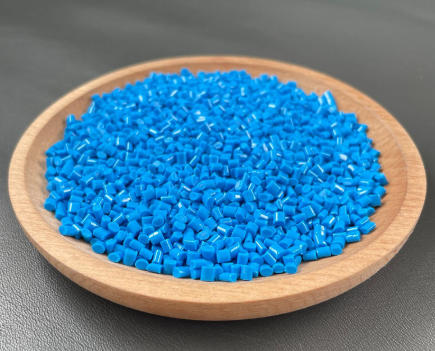
The versatility of PP Masterbatch comes from its customizable design. Below are some of the most common types used across the textile industry.
Used to impart consistent coloring to textile fibers. Color Masterbatches utilize organic or inorganic pigments that deliver bright, long-lasting shades without compromising mechanical performance.
Enhances fiber functionality through the inclusion of additives like:
- UV stabilizers: For outdoor durability.
- Antioxidants: To prevent polymer degradation during processing.
- Anti-static agents: To reduce dust attraction or static buildup in synthetic fabrics.
- Flame retardants: For safety-compliant home and industrial textiles.
Combines calcium carbonate or talc with PP resin to reduce production costs and improve fabric stiffness or opacity. Particularly popular in non-woven and packaging textiles where weight reduction is desired.
Tailored to provide special properties—such as anti-bacterial, moisture-absorbing, or infrared-reflective effects—meeting the increasingly sophisticated requirements of performance textiles.
The incorporation of PP Masterbatch has changed how manufacturers approach quality assurance. Its contribution to textile quality covers color precision, fiber uniformity, and product endurance.
1. Superior Aesthetic Quality: Achieves vibrant and uniform colors that resist fading.
2. Improved Fiber Stability: Reduces the impact of thermal and mechanical stress during production.
3. Performance Customization: Allows precise functional tailoring for different end-use environments.
4. Environmental Benefits: Reduces chemical waste from dye baths and lowers energy use in post-processing.
Together, these advantages enable producers to maintain consistent quality standards while staying competitive in global markets.
Sustainability is increasingly becoming a central theme in the textile industry. PP Masterbatch supports eco-friendly manufacturing in several ways:
- Reduced water usage: Unlike dyeing, Masterbatch coloration occurs before fiber extrusion—eliminating the need for water-based dyeing processes.
- Lower energy consumption: No additional heating or washing steps are required.
- Minimal chemical discharge: Since the pigments are bound within the polymer matrix, there's no chemical runoff.
- Recyclability: PP materials containing Masterbatch remain fully recyclable, contributing to the circular economy.
For global manufacturers focused on green production, this process aligns perfectly with sustainability targets and environmental compliance standards.
The range of PP Masterbatch applications in textiles is extensive:
- Non-woven fabrics: Widely used in medical, hygiene, and filtration materials.
- Apparel fibers: Adds color consistency and softness to synthetic clothing.
- Carpets and rugs: Ensures UV stability and mechanical durability.
- Industrial and agricultural fabrics: Provides long-term weather resistance.
- Home textiles: Delivers color fastness and comfort-enhancing additives.
By carefully selecting the proper Masterbatch formulation, manufacturers can create products with both aesthetic and technical advantages suitable for diverse end-use environments.
Selecting the ideal PP Masterbatch depends on multiple considerations such as application type, processing method, color requirements, and performance goals.
Key factors include:
- Compatibility with polymer grade.
- Additive concentration and dispersion quality.
- Thermal stability during extrusion or spinning.
- Desired end-use properties.
Collaborating with a professional Masterbatch supplier ensures that formulations are optimized for machine parameters and environmental conditions, guaranteeing stable performance and visual uniformity.
Innovation continues to drive the Masterbatch market. In the textile segment, upcoming trends include:
- Bio-based carrier resins: Reducing dependence on petroleum-based polymers.
- Nano-additives: Providing enhanced UV protection and antibacterial properties.
- Smart colorants: Responsive to heat or light exposure for functional fabrics.
- Recyclable and biodegradable Masterbatch formulations: Supporting closed-loop production cycles.
As these innovations mature, the role of PP Masterbatch in textiles will only grow, serving as a strategic tool in achieving next-generation material properties.
The use of PP Masterbatch in textile applications offers unparalleled advantages in color consistency, performance durability, process stability, and environmental sustainability. By integrating advanced Masterbatch technologies, manufacturers can enhance fiber quality, reduce production costs, and meet diverse market demands with greater efficiency.
Whether developing technical fabrics, non-wovens, or consumer textiles, PP Masterbatch stands as a key partner in material innovation—ensuring that textile products not only look better but perform better throughout their lifecycle.
Answer: It ensures consistent color dispersion and improved fiber performance, offering enhanced durability, UV resistance, and cost efficiency.
Answer: Yes. Many formulations are designed to be compatible with recycled PP, promoting a sustainable circular manufacturing process.
Answer: It simplifies mixing operations, reduces waste, and minimizes machine downtime caused by pigment inconsistencies or additive imbalance.
Answer: Absolutely. Reputable suppliers use certified and non-toxic additives suitable for consumer applications, ensuring product safety.
Answer: Manufacturers should evaluate polymer compatibility, color requirements, additive concentration, and the specific processing environment.


