


close
Choose Your Site
Global
Social Media


Views: 222 Author: Rebecca Publish Time: 2025-12-14 Origin: Site


Content Menu
>> Core Components of ABS Masterbatch
● Why ABS Masterbatch Is Ideal for the Automotive Industry
>> 1. Excellent Impact Resistance
>> 2. High Dimensional Stability
>> 3. Superior Surface Finish and Color Consistency
>> 4. Enhanced UV and Heat Resistance
>> 5. Cost Efficiency and Process Optimization
● Key Advantages of ABS Masterbatch Formulations
>> Improved Mechanical Properties
>> Chemical and Environmental Resistance
>> Enhanced Appearance and Surface Effects
● Typical Automotive Applications of ABS Masterbatch
● Color Masterbatch in Automotive Design
>> Advantages of Color Masterbatch:
● Functional Additive Masterbatch Solutions
>> Flame Retardant Masterbatch
● Environmental Impact and Sustainability
● Challenges and Solutions in Using ABS Masterbatch
>> Solutions:
● Future Trends of ABS Masterbatch in Automotive Manufacturing
>> 1. What is the primary function of ABS Masterbatch?
>> 2. How does ABS Masterbatch improve automotive part performance?
>> 3. Can ABS Masterbatch be mixed with other polymers?
>> 4. Is ABS Masterbatch environmentally friendly?
>> 5. What are the storage requirements for ABS Masterbatch?
In today's automotive industry, efficiency, aesthetics, and durability drive material selection. Manufacturers constantly seek solutions that reduce production costs while maintaining performance and appearance standards. One of the most promising technologies improving polymer usage in automotive manufacturing is ABS Masterbatch.
ABS (Acrylonitrile Butadiene Styrene) is a widely used thermoplastic known for its toughness, chemical resistance, and excellent surface quality. When combined with a Masterbatch formulation, it becomes more customizable, making it ideal for interior and exterior auto components. This article explores the advantages of ABS Masterbatch in automotive applications, its working principles, and how it supports modern automakers in achieving both technical and design excellence.

ABS Masterbatch refers to a concentrated mixture of pigments and additives that are encapsulated during a heat process into a carrier resin, which is compatible with ABS polymer. It allows uniform dispersion when mixed with natural ABS during manufacturing. This solution simplifies the coloring and performance enhancement of plastic components without requiring additional complex compounding processes.
- Carrier Resin: Typically ABS itself, ensuring compatibility with the base polymer.
- Pigments and Dyes: Provide color stability and aesthetic consistency.
- Functional Additives: Include UV stabilizers, flame retardants, heat stabilizers, and antistatic agents.
The result is a perfectly balanced polymer mixture that brings improved mechanical, optical, or chemical performance to molded parts.
The automotive sector demands materials that can withstand heat, mechanical stress, and long-term exposure to harsh environments. ABS Masterbatch meets these requirements while offering flexibility in design and processing.
ABS is renowned for combining strength and toughness. When enhanced through Masterbatch formulations, it delivers superior impact resistance, particularly in applications like car interior trim panels, dashboards, and bumpers. This improved durability contributes to vehicle safety and extends the product life cycle.
Automotive parts must maintain consistent dimensions under varying temperature and mechanical loads. Additive-enriched ABS Masterbatch ensures minimal shrinkage and warping during injection molding. This stability is critical for components like ventilation grills, instrument panels, and mirror housings.
Using color Masterbatch enables manufacturers to produce components with uniform coloration and gloss. Unlike liquid colorants or pre-colored resins, ABS color Masterbatch provides precise shade control, high pigment dispersion, and excellent repeatability across batches, which is essential for large-scale vehicle production.
Exposure to sunlight and elevated temperatures can lead to polymer degradation, discoloration, or surface cracking. UV-stabilized ABS Masterbatch formulations protect the polymer matrix, maintaining structural integrity and appearance over long-term exposure to outdoor conditions.
Adding Masterbatch instead of pre-compounded materials allows for easier inventory management and customization. Manufacturers can adjust pigment or additive concentrations according to production requirements, reducing material waste and inventory costs. This strategy also improves process versatility across multiple product lines.
ABS Masterbatch can be engineered with reinforcing additives to enhance tensile and flexural strength. Such properties are necessary for high-load automotive parts like brackets, clips, and housing components.
Safety standards in the automotive sector demand materials that resist ignition. Flame-retardant ABS Masterbatch provides compliance with international fire resistance regulations, ensuring that interior plastic components meet safety requirements without compromising processability.
Automotive plastics often come into contact with cleaning agents, lubricants, and fuels. Additives contained in ABS Masterbatch improve chemical stability and environmental resistance, preventing cracking or discoloration over time.
Replacing metal and glass with lightweight plastic components contributes significantly to energy efficiency and fuel savings. ABS Masterbatch compounds allow further reduction in part weight without sacrificing mechanical integrity, aligning with sustainability and emission-reduction goals.
Custom ABS color Masterbatch can reproduce matte, metallic, or pearl finishes, giving designers greater freedom to enhance aesthetic appeal. This plays an essential role in luxury vehicle interiors and branded visual consistency.
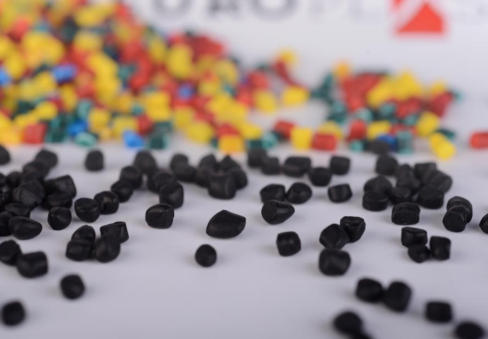
ABS Masterbatch is used across a wide range of automotive parts due to its balance between strength, finish, and cost-effectiveness.
- Dashboard panels
- Door trims
- Center consoles
- Instrument clusters
- Mirror housings
- Grilles
- Pillar covers
- Fog lamp bezels
- Air vents
- Mounting brackets
- Electrical enclosures
Each of these components benefits from the easy coloring, improved toughness, and consistent processing qualities that ABS Masterbatch provides.
Color has become a vital feature in modern automotive design, influencing brand recognition and interior comfort. ABS color Masterbatch ensures automotive manufacturers can reproduce consistent tones and effects with high precision.
- Eliminates inconsistencies in pigment dispersion.
- Enables quick color changeovers during production.
- Ensures long-term color stability under light and heat.
- Reduces production downtime caused by cleaning or mixing issues.
Manufacturers can also use transparent or translucent ABS Masterbatch for special lighting effects, especially in ambient light features or electronic displays integrated into vehicle interiors.
To support varying environmental and mechanical challenges, several functional ABS Masterbatch types are available:
Protects parts exposed to sunlight, especially in exterior trims. It prevents fading and brittleness that occur due to photodegradation.
Ensures compliance with safety regulations. Commonly used in dashboards, consoles, and under-the-hood components where heat exposure is frequent.
Reduces dust and static buildup, improving the cleanliness and premium feel of plastic surfaces.
Loaded with mineral fillers or fibers, enhancing rigidity and dimensional strength without compromising moldability.
Each functional formulation enhances specific aspects of ABS performance, enabling automakers to tailor materials for different car models or market preferences.
The automotive industry is under pressure to reduce its carbon footprint, and ABS Masterbatch plays a strategic role here. Because it enables precise color and additive dosing, it minimizes waste during processing and enhances recyclability.
- Reduced energy consumption: Compatible ABS Masterbatch improves melt flow and shortens injection cycles.
- Less pigment waste: Concentrated Masterbatch reduces excess colorant disposal.
- Improved recyclability: Uniform dispersion allows cleaner, easier reprocessing of plastic scraps.
- Lower emissions: Weight reduction achieved through Masterbatch-optimized plastics contributes to lower fuel consumption.
For manufacturers aiming for eco-friendly strategies, using biodegradable or bio-based additive Masterbatch options is an emerging area of innovation.
While ABS Masterbatch offers numerous advantages, its application requires attention to formulation precision and processing parameters.
- Color shade deviation: Can occur if not mixed evenly during compounding.
- Thermal degradation: Excessive processing temperature may affect pigment stability.
- Compatibility issues: Non-ABS carriers may cause surface defects or poor bonding.
- Choose Masterbatch formulations with ABS carriers for guaranteed compatibility.
- Use automated dosing systems to maintain consistent mix ratios.
- Regularly test mechanical and aesthetic properties to ensure long-term stability.
As technology evolves, advanced compounding and digital color-matching systems have largely overcome these issues, making Masterbatch integration easier and more reliable for global auto manufacturers.
The future of ABS Masterbatch is linked with trends in smart materials, sustainability, and automation.
- Nano-enhanced Masterbatch: Incorporating nanomaterials for self-healing or improved conductivity.
- Recyclable Masterbatch systems: Designed to ensure compatibility with post-consumer recycled ABS.
- 3D printing Masterbatch: Providing customized color and function in additive manufacturing processes.
As electric vehicles (EVs) and lightweight design gain prominence, the demand for functional polymer materials like ABS Masterbatch will continue to rise.
ABS Masterbatch has become indispensable in today's automotive manufacturing landscape. Its ability to improve performance, durability, and aesthetics while reducing costs makes it one of the most efficient solutions for modern vehicle design. Whether applied to interior trims, exterior covers, or technical under-the-hood parts, it delivers unmatched process flexibility and product quality.
By choosing the right formulation and maintaining proper processing parameters, automakers and suppliers can harness the full potential of ABS Masterbatch to meet the future demands of design innovation, safety, and sustainability.
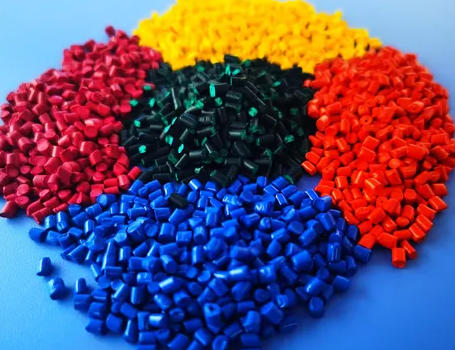
ABS Masterbatch delivers uniform color and performance enhancement to ABS plastics through concentrated pigments and additives. It simplifies the manufacturing process and ensures consistent quality.
By incorporating stabilizers, reinforcements, and flame retardants, ABS Masterbatch improves impact strength, UV resistance, and dimensional stability, extending the lifespan of automotive components.
Generally, it is recommended to use ABS-based Masterbatch with ABS resin for optimum compatibility. Using it with non-compatible polymers may cause defects or uneven surfaces.
Yes. It reduces pigment waste and supports recycling by improving material consistency. Sustainable Masterbatch options with bio-based carriers are also available.
It should be stored in a cool, dry environment away from direct sunlight. Proper sealing helps preserve pigment quality and additive effectiveness before processing.


