


close
Choose Your Site
Global
Social Media


Views: 222 Author: Rebecca Publish Time: 2025-12-26 Origin: Site


Content Menu
● Understanding PP Masterbatch
● Why PP Masterbatch Matters in Sustainable Manufacturing
>> 3. Enabling recycling and reuse
>> 4. Lightweighting of materials
>> 5. Compliance with environmental regulations
● Key Ingredients and Their Functional Roles
● Common Applications of PP Masterbatch
>> Consumer goods and electronics
>> Fiber and textile production
● Advances in PP Masterbatch Technology
>> Antimicrobial and odor-control Masterbatch
● The Environmental Perspective
● How to Choose the Right PP Masterbatch
● Market Trends and Global Outlook
● FAQ
>> 1. What is PP Masterbatch used for?
>> 2. How does Masterbatch contribute to sustainability?
>> 3. Can recycled PP be blended with PP Masterbatch?
>> 4. What types of PP Masterbatch are most common?
>> 5. How do you select a reliable PP Masterbatch supplier?
In recent years, global industries have faced mounting pressure to adopt sustainable practices and eco-friendly materials. Among these innovations, PP Masterbatch has emerged as a crucial player in promoting both environmental protection and production efficiency. This composite additive, primarily designed for polypropylene (PP) applications, enhances the performance, color, and functionality of plastics while supporting the shift toward sustainability.

The term Masterbatch refers to a concentrated mixture of pigments, additives, and resins that are blended with base polymers to improve product characteristics. When applied to polypropylene (PP), it becomes a PP Masterbatch, specifically formulated to suit the molecular structure and processing behavior of PP.
PP is one of the most widely used thermoplastics thanks to its versatility, chemical resistance, and recyclability. However, unmodified PP often lacks desirable qualities such as UV resistance, antistatic performance, or vibrant coloration. This is where PP Masterbatch plays a transformative role—allowing manufacturers to tailor properties without compromising on cost or processing efficiency.
Different types of Masterbatch are used across industries, including color masterbatch, additive masterbatch, and filler masterbatch. Each type serves a particular purpose:
- Color Masterbatch: Provides consistent color dispersion and improves appearance.
- Additive Masterbatch: Enhances functional performance, like UV protection, flame retardancy, or anti-slip features.
- Filler Masterbatch: Reduces raw material cost by partially replacing virgin resin with inorganic fillers.
The combination of these three categories can result in custom-engineered materials that align with specific mechanical, optical, and environmental requirements.
The global movement toward sustainability has redefined how producers manage materials and manufacturing processes. PP Masterbatch contributes to sustainable manufacturing in several ways:
Masterbatch technology allows producers to achieve high-quality output using minimal additives. Because Masterbatch provides better dispersion and stability compared to direct pigment or additive mixing, less waste is generated during manufacturing. This efficient use of colorants and modifiers reduces overall raw material consumption.
PP Masterbatch improves processability. Enhanced polymer flow characteristics often mean shorter cycle times, higher throughput, and reduced energy usage during extrusion or injection molding. These energy savings contribute to a lower carbon footprint per kilogram of finished product.
Modern formulations of PP Masterbatch are compatible with recycling streams. This compatibility ensures that plastic products containing Masterbatch can be reprocessed without significant loss in quality, supporting circular economy goals.
By improving stiffness, gloss, and strength-to-weight ratios, PP Masterbatch enables manufacturers to use less polymer material to achieve the same or even better performance. This “lightweighting” approach directly reduces material consumption across packaging, automotive, and consumer goods.
As governments tighten controls on hazardous substances, PP Masterbatch provides a pathway to meet evolving standards. Phthalate-free, heavy metal–free, and biodegradable additive Masterbatches are already available, helping brands future-proof their products against stricter environmental laws.
A PP Masterbatch is typically composed of:
- Base resin (carrier): Polypropylene itself or a compatible polyolefin, which ensures easy mixing with the host polymer.
- Pigments or additives: Concentrated substances responsible for providing color or additional properties.
- Dispersing agents: Materials that facilitate even distribution of pigments or fillers within the polymer matrix.
- Processing aids: Components such as lubricants that improve extrusion or molding performance.
Proper selection of carrier and additive chemistry ensures that the Masterbatch integrates smoothly with the base material, resulting in high-quality final products.
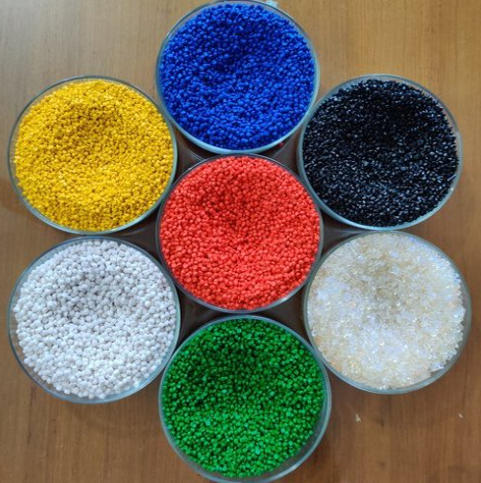
Since polypropylene dominates numerous sectors, the use of PP Masterbatch spans across varied industries:
From food containers to flexible films, color and additive Masterbatches enhance visual appeal and extend product shelf life. For example, UV-stabilized Masterbatch prevents discoloration or degradation caused by sunlight.
In automotive interiors and exteriors, PP Masterbatch provides durability, antistatic control, and temperature resistance. It allows for aesthetic versatility while maintaining lightweight benefits critical for fuel efficiency.
Products like pipes, insulation panels, and fittings use PP Masterbatch to achieve flame retardancy, impact resistance, and longevity under harsh outdoor conditions.
Masterbatch ensures vibrant colors, high gloss, and tactile precision for everyday items such as household appliances, toys, and electronic casings.
In nonwoven fabrics and synthetic fibers, PP Masterbatch allows precise color consistency and controls over fiber texture and strength.
The evolution of PP Masterbatch reflects rapid innovation in polymer science. Contemporary developments focus on high-performance additives, eco-friendly formulations, and custom dispersion technologies.
Ecological pressure has driven demand for biodegradable additives that allow partial decomposition under specific conditions. These Masterbatches integrate with PP to reduce persistence in landfills while maintaining mechanical integrity during product use.
By incorporating nano-sized fillers such as silica or nanoclay, engineers can drastically improve PP's barrier properties and mechanical strength. This facilitates advanced packaging and automotive solutions.
Especially after the global pandemic era, hygiene-centric materials have gained attention. Antimicrobial PP Masterbatch embeds silver ions or organic antimicrobial agents, offering pathogens resistance without toxic leaching.
Emerging Masterbatches include thermochromic or photochromic systems—plastic components that change color in response to temperature or light. These smart materials find use in safety indicators and interactive consumer goods.
Sustainability isn't just an add-on—it's now central to manufacturing philosophy. PP Masterbatch enables sustainability on several levels:
- Material substitution: By using fillers such as calcium carbonate or talc, manufacturers reduce dependency on virgin PP resin.
- Recyclate compatibility: Improved dispersion technology allows recycled PP materials to blend seamlessly with Masterbatch additives.
- Lower transportation emissions: Concentrated Masterbatches mean less volume and weight to ship compared to liquid colorants.
- Extended product life: Enhanced UV and weather resistance mean fewer replacement cycles, lowering lifetime environmental impact.
In essence, Masterbatch technology aligns functionality and sustainability, offering practical ways to achieve green manufacturing without sacrificing profit or performance.
Choosing a suitable PP Masterbatch is critical to achieving desired product outcomes. Key selection criteria include:
1. End-use application: Packaging requires food-contact-grade stability, whereas electronics demand flame retardancy and antistatic behavior.
2. Dispersibility: A high-quality Masterbatch should disperse evenly without producing streaks or color spots.
3. Compatibility with base resin: Mismatched carriers may cause phase separation or mechanical weakness.
4. Additive loading level: The balance between performance and cost must align with the product's technical requirements.
5. Regulatory compliance: Ensure that the chosen Masterbatch meets local and international safety standards, including REACH and RoHS.
Collaborating with experienced Masterbatch manufacturers is often invaluable. Through co-development, tailor-made solutions can be achieved for specific mechanical, optical, and sustainability targets.
The PP Masterbatch market is expanding rapidly, driven by the convergence of high-volume PP applications and an emphasis on sustainability. Asia-Pacific, led by China and India, remains a dominant manufacturing hub for Masterbatch production due to cost-effectiveness and increasing export capacity.
Key trends influencing the market include:
- Sustainable and recycled product demand from packaging and automotive sectors.
- Technological integration with online quality monitoring and predictive analytics in extrusion lines.
- Shift toward bio-based polymers and green Masterbatch formulations.
- Customization—companies now prefer tailored Masterbatches for specific equipment and performance needs.
As global sustainability standards tighten, the importance of innovation in PP Masterbatch will only grow, positioning it as a cornerstone of eco-industrial manufacturing.
PP Masterbatch stands at the intersection of performance, efficiency, and sustainability. It enables industries to create high-quality plastic products while reducing waste, energy consumption, and environmental footprints. With continuous research pushing boundaries—from biodegradable systems to nanocomposites—the future of production lies in leveraging Masterbatch innovations for a greener industrial ecosystem.
By integrating sustainable material engineering with global manufacturing needs, PP Masterbatch proves not only to be a technical enhancer but also a driver of environmental responsibility.
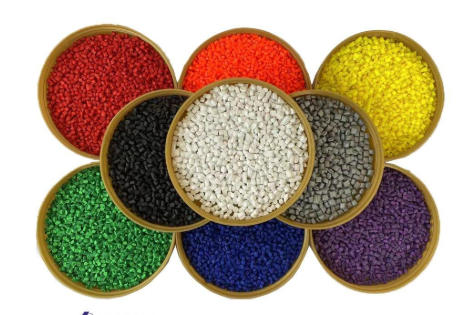
PP Masterbatch is used to enhance the physical, mechanical, and aesthetic properties of polypropylene products. It provides color, UV stability, flame resistance, and improved processing performance for packaging, automotive, and consumer goods industries.
Masterbatch reduces pigment waste, improves recyclability, and extends product life. It also supports lightweighting and efficient processing, which together lower resource consumption and carbon emissions.
Yes, many modern PP Masterbatches are engineered for excellent compatibility with recycled polypropylene. They restore color uniformity, gloss, and mechanical strength in recyclate-based products.
The most common types include color Masterbatch, additive Masterbatch (UV, flame-retardant, antistatic), and filler Masterbatch. Each serves a unique function for customizing the material's performance and cost efficiency.
Look for suppliers with proven R&D capabilities, consistent quality systems (ISO-certified), technical support for customization, and transparent compliance with environmental standards.


