


close
Choose Your Site
Global
Social Media


Views: 222 Author: Rebecca Publish Time: 2025-12-17 Origin: Site


Content Menu
● Understanding the ABS Masterbatch Market
● Global Market Outlook for 2025
● Trend 1: Sustainability and Green Masterbatch Solutions
>> Recyclable and Circular Material Use
>> Energy-Efficient Manufacturing
● Trend 2: Customization and Advanced Color Matching
>> Special-Effect Masterbatches
● Trend 3: Functional Additive Innovations
>> Conductive and Flame-Retardant Masterbatches
● Trend 4: Digital Transformation and Smart Manufacturing
>> AI and Machine Learning in Production
>> Automation and Process Data Analytics
>> Digital Supply Chain Integration
● Trend 5: Emerging Applications and Industry Expansion
>> Electric Vehicle Components
>> Smart Appliances and Consumer Goods
>> Asia-Pacific
>> Europe
● Challenges and Future Outlook
● FAQs
>> 1. What is an ABS masterbatch?
>> 2. Which industries primarily use ABS masterbatch?
>> 3. What are the main benefits of using masterbatch instead of direct additives?
>> 4. How is sustainability influencing masterbatch production?
>> 5. What future technologies will impact the ABS masterbatch market?
The ABS masterbatch market has entered a phase of rapid innovation and evolving consumer demand as global industries shift toward customization, sustainability, and performance-driven materials. Acrylonitrile Butadiene Styrene (ABS), known for its strength, durability, and aesthetic versatility, remains a key thermoplastic polymer in modern manufacturing. The masterbatch—a concentrated mixture of pigments, additives, and carrier resins—plays a central role in enhancing ABS properties for countless industrial applications.
In 2025, the ABS masterbatch market is shaped by several transformative trends including green manufacturing, digital production, color customization, and high-performance formulations. This article explores the primary market forces, technological innovations, and strategic directions defining this rapidly expanding global industry.

The ABS masterbatch industry serves a wide spectrum of end-users including automotive, electronics, consumer goods, appliances, and industrial equipment manufacturers. The product's ability to provide precise color matching, improved mechanical strength, UV protection, flame resistance, and gloss enhancement makes it indispensable for OEMs seeking consistent, high-quality outputs.
Masterbatch technology essentially allows producers to optimize polymer performance while maintaining cost efficiency. Instead of mixing additives directly with ABS resin in every batch, processors use masterbatch pellets for controlled dosage, reducing variability and ensuring production stability.
According to leading market research projections, the global ABS masterbatch market is expected to reach new growth peaks by the end of 2025. The compound annual growth rate (CAGR) is projected between 6% and 8%, driven by factors such as industrial automation, rising consumer electronics production, and increased automotive lightweighting initiatives.
Asia-Pacific continues to dominate global output, with China, India, and South Korea acting as the major production hubs. North America and Europe, meanwhile, lead in R&D and innovation, focusing on advanced masterbatch formulations that combine eco-efficiency and superior mechanical performance.
Key growth determinants include:
- Expanding automotive manufacturing base across Asia.
- Demand surge in electronics and 3C (computer, communication, and consumer) products.
- Global preference for recyclable and eco-friendly polymer compounds.
- Rapid technology transfer and customization in masterbatch design.
The leading trend shaping the ABS masterbatch market in 2025 is sustainability. Environmental compliance now drives purchasing decisions across industries, and masterbatch manufacturers are investing heavily in bio-based, recycled, and low-VOC (Volatile Organic Compound) formulations.
Producers are adopting biodegradable carrier resins and non-toxic pigments to align with carbon-neutral production goals. The integration of plant-based carriers and mineral fillers has gained traction among European and Japanese suppliers.
Circular economy principles are reshaping masterbatch production. Recycled ABS resins are being blended with masterbatch concentrates to create closed-loop systems that reduce plastic waste and CO₂ emissions.
New compounding techniques and energy-optimized extrusion processes are enhancing efficiency. Electric twin-screw extruders and AI-monitored production lines are now common features in modern plastic masterbatch facilities.
Customization has become a decisive factor in product differentiation and brand identity. In 2025, custom color masterbatch formulations for ABS are widely used across consumer electronics, automotive panels, and household appliances.
Digitalization enables real-time pigment blending and automated color calibration, ensuring flawless aesthetic consistency across global production sites. Masterbatch manufacturers now use spectrophotometric scanning and AI algorithms for precision matching.
Beyond solid colors, companies are developing pearl, metallic, and transparent masterbatches to meet style-driven consumer demand. These effects boost the visual value of finished products while emphasizing brand luxury and durability.
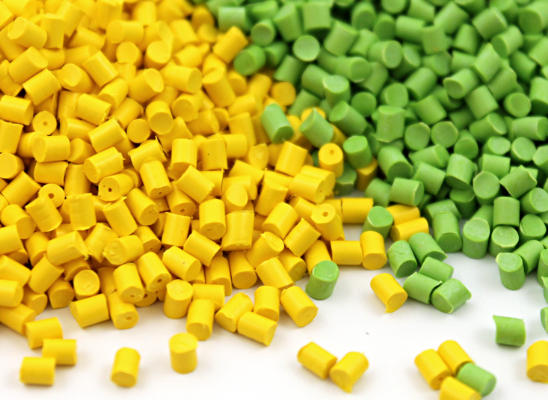
While color remains important, additive-centric masterbatch innovation is accelerating even faster. These functional masterbatches improve product performance by adding capabilities such as UV resistance, anti-static behavior, antimicrobial defense, and flame retardancy.
Exposure to sunlight often degrades ABS products. UV-stabilized masterbatch formulations extend product lifetime—a key requirement for outdoor automotive parts and consumer devices.
Post-pandemic hygiene concerns have spurred interest in antimicrobial masterbatches, especially in public-use electronics, medical tools, and household appliances.
The demand for electrically conductive masterbatches is rising within electronic housings and charging equipment, while halogen-free flame-retardant masterbatches address stringent international safety regulations.
The fourth key trend—digital transformation—redefines how masterbatch producers operate. Industry 4.0 technologies are streamlining quality control, predictive maintenance, and production planning.
AI-driven systems analyze process parameters and raw material consistency to predict defects and optimize mixing ratios. This capability ensures stable ABS masterbatch output even under varying environmental conditions.
Automated dosing systems precisely feed pigments and additives, minimizing wastage and human error. Manufacturing dashboards track live KPI metrics, enabling remote supervision across global subsidiaries.
By adopting smart ERP (Enterprise Resource Planning) and IoT (Internet of Things) tools, masterbatch suppliers can coordinate with customers on demand forecasting, stock management, and delivery timelines.
In 2025, ABS masterbatch finds new growth channels in unexpected sectors—from electric vehicle infrastructure to 3D printing materials and smart home appliances.
Lightweight plastics are replacing metal structures in automotive parts. ABS masterbatches enhance the visual appeal and impact resistance of EV interior trims, dashboards, and battery casings.
ABS remains a cornerstone polymer in 3D printing due to its balance between flexibility and strength. Customized color and property masterbatches simplify the creation of consistent, high-definition 3D filaments.
The smart home segment demands elegant, durable, and heat-tolerant casings for devices. Functional masterbatches deliver superior coloration, scratch resistance, and long-term thermal stability.
Asia-Pacific dominates global manufacturing, with China as the epicenter for ABS masterbatch production and R&D integration. Local producers invest heavily in automation and eco-friendly pellets targeting export markets in Europe and North America.
European companies lead in developing sustainable and recyclable masterbatch systems under EU Green Deal guidelines. High R&D budgets and advanced lab infrastructure position Europe as a design hub for next-gen masterbatches.
The U.S. and Canada focus on advanced application development for aerospace, electronics, and industrial safety components. Premium-grade, additive-rich masterbatches are gaining traction due to strict quality certifications and safety codes.
Despite positive growth, the ABS masterbatch market faces several challenges:
- Volatility in raw material prices (ABS resin, pigments, and specialty additives).
- Environmental and regulatory compliance pressures.
- Competition from alternative polymers such as polypropylene or polycarbonate.
- Need for continuous innovation to meet performance and sustainability targets.
However, long-term prospects remain promising. Continuous technological integration, partnerships with recycling enterprises, and the integration of digitalized manufacturing ecosystems ensure steady development. The future of ABS masterbatch lies in balancing cost efficiency with performance integrity and environmental stewardship.
The ABS masterbatch market in 2025 stands at the intersection of innovation, sustainability, and digital transformation. As demand grows across automotive, electronics, and consumer goods industries, companies that blend material science expertise with data-driven manufacturing will lead the next wave of market expansion. Green production methods, customized color solutions, and advanced additives all contribute to shaping a more adaptable and responsible masterbatch industry.
Sustainability is no longer an option—it is the standard by which competitive, future-oriented masterbatch producers are measured.

An ABS masterbatch is a concentrated mixture of pigments, additives, and resin used to modify the color and properties of ABS plastic during processing, improving consistency, performance, and appearance.
Key industries include automotive, electronics, consumer appliances, industrial components, and 3D printing—each requiring different color, strength, and performance characteristics.
Using masterbatch provides better dispersion of additives, reduces dust and waste, ensures uniformity, and simplifies storage and handling during ABS compounding.
Manufacturers now focus on eco-friendly raw materials, recycled carriers, and energy-efficient production methods to comply with global environmental standards and reduce emissions.
Artificial intelligence, automated dosing systems, circular economy initiatives, and advanced pigment chemistry will drive innovation in masterbatch manufacturing through 2025 and beyond.


