


close
Choose Your Site
Global
Social Media


Views: 222 Author: Rebecca Publish Time: 2025-12-24 Origin: Site


Content Menu
● Understanding What Plastic Really Is
● The Chemical Nature of Silicone
● Silicone vs. Plastic: Key Comparative Properties
● The Role of Masterbatch in Plastic Engineering
>> How Masterbatch Enhances Plastic Versatility
● Environmental Sustainability: Silicone vs. Plastic Debate
>> Carbon Footprint Considerations
● Applications Across Industries
>> Plastic (with Masterbatch) Applications
● Future Outlook: Silicone-Plastic Hybrids and Masterbatch Advances
● FAQ About Silicone, Plastic, and Masterbatch
>> 1. What is the main chemical difference between silicone and plastic?
>> 2. Can Masterbatch be used in silicone materials?
>> 3. How does Masterbatch improve plastic performance?
>> 4. Is silicone more sustainable than plastic?
>> 5. Which is more cost-effective for manufacturing: silicone or Masterbatch-modified plastic?
In today's industrial landscape, understanding the difference between silicone and plastic is crucial for material selection, product performance, and sustainability. These two families of materials—though sometimes used interchangeably in everyday speech—differ significantly in structure, processing behavior, and applications. As a company specializing in innovative plastic materials and Masterbatch production, we know that choosing between silicone and plastic impacts cost, efficiency, and end-use performance.
This article provides a detailed explanation of whether silicone qualifies as a plastic, compares their properties, and explores where both materials—especially those enhanced with Masterbatch technologies—are best used.

The term plastic refers broadly to synthetic or semi-synthetic materials made from polymers—long chains of molecules that can be shaped and molded under heat and pressure. These materials are defined by their thermoplastic or thermosetting behaviors:
- Thermoplastics (e.g., polyethylene, polypropylene, PVC) soften when heated and harden when cooled, allowing for repeated reshaping.
- Thermosetting plastics (e.g., epoxy, phenolic resin) harden permanently after being cured.
Masterbatch plays a central role here—it's a concentrated mixture of pigments, additives, or fillers encapsulated in a carrier resin that's compatible with the main plastic. By using Masterbatch, manufacturers can tailor color, UV resistance, anti-static properties, or flame retardance without altering the base polymer's composition.
Plastics' versatility comes from their adjustability through molecular design and additive systems—making them indispensable for packaging, automotive parts, construction materials, and consumer goods.
While silicone also contains polymers, it's structurally distinct from traditional plastics. Most plastics are carbon-based, while silicones are silicon-based materials composed of repeating units of siloxane (Si–O–Si) bonded to hydrocarbon side groups.
This inorganic-organic hybrid composition gives silicone its exceptional characteristics:
- High-temperature resistance
- Flexibility over a broad temperature range
- Chemical inertness and biological compatibility
- Resistance to UV, ozone, and environmental aging
In industrial applications, silicone often appears as rubber, sealant, lubricant, or coating, rather than a rigid thermoplastic. While it can be molded and cured into specific shapes, its cross-linked molecular structure aligns more closely with elastomers than with plastics.
So, while silicone shares some functional similarities with plastics—it is technically not a plastic in the strict chemical sense.
To clarify the differences between silicone and plastic, let's compare them across several key categories:
| Property | Silicone | Plastic |
|---|---|---|
| Base Composition | Silicon-oxygen (Si–O–Si) backbone | Carbon-hydrogen (C–H) backbone |
| Form | Elastomer (rubber-like) | Thermoplastic or thermoset solid |
| Thermal Resistance | Up to 250°C+ | Typically below 120°C |
| Flexibility | Excellent across wide temperatures | Can become brittle in cold or soften in heat |
| Chemical Stability | Highly resistant to oxidation and UV | Varies by type; many degrade under UV exposure |
| Biocompatibility | Excellent for medical use | Limited; some require FDA-approved additives |
| Recyclability | Difficult due to crosslinked structure | Easier for thermoplastics; possible with Masterbatch additives |
| Typical Applications | Medical tubing, seals, cookware, electronics | Packaging, automotive parts, containers, films |
Beyond these intrinsic differences, the ability to modify plastics with Masterbatch makes plastics incredibly diverse. With modern additive technologies, plastics can mimic silicone-like flexibility, weather resistance, or transparency—narrowing the gap between the two in certain applications.
Masterbatch is a highly concentrated material that combines a polymer carrier with pigments or functional additives. During manufacturing, it's blended into the base polymer to modify color or performance characteristics without needing to alter the plastic's molecular design.
Types of Masterbatch include:
- Color Masterbatch: Adds consistent pigment and enhances visual appearance.
- Additive Masterbatch: Improves UV resistance, flame retardancy, anti-slip, or anti-static properties.
- Filler Masterbatch: Reduces cost or enhances physical strength using calcium carbonate, talc, or silica fillers.
- Functional Masterbatch: Grants special properties like anti-fog, antibacterial, or infrared-barrier features.
By using Masterbatch effectively, manufacturers can fine-tune plastic performance to match silicone-like properties—such as elasticity, heat tolerance, or chemical resistance.
In industries where silicone's high cost limits its use, Masterbatch-modified plastics offer a practical alternative. For example:
- Automotive seals and gaskets: Polyethylene or TPE plastics with heat-resistant Masterbatch can replace silicone rubber in moderate-temperature zones.
- Food packaging: Additive Masterbatch with FDA-approved ingredients ensures plastics remain safe for direct food contact.
- Medical devices: Antimicrobial and biocompatible Masterbatch formulations allow polypropylene or PE to serve as silicone substitutes.
- Electrical parts: Flame-retardant Masterbatch enables plastic insulators to achieve safety standards previously met by silicone components.
Through Masterbatch innovation, plastics' property spectrum expands—providing enhanced performance while reducing raw material costs.
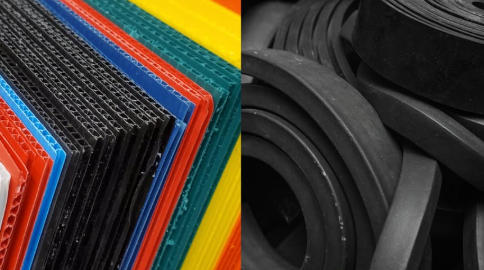
Silicone is durable and chemically stable, but its crosslinked structure makes recycling extremely difficult. Most silicone wastes are repurposed through mechanical grinding or energy recovery, not traditional plastic recycling streams.
Plastics, especially thermoplastics, can be recycled multiple times with the right separation and processing techniques. Masterbatch formulations can even include degradation-control or recycling-assistant additives, helping maintain polymer integrity over multiple cycles.
Both materials originate from non-renewable sources—silicone from silica (quartz) and plastics from petrochemicals—but Masterbatch-enhanced plastics can improve sustainability by:
- Extending product life cycle through added UV and oxidation resistance.
- Reducing colorant waste by using concentrated, evenly dispersed pigments.
- Lowering production energy demand by optimizing material properties in fewer compounding steps.
Increasingly, manufacturers are developing bio-based Masterbatch and recycled polymer carriers, aligning with the circular economy and global carbon reduction initiatives.
Due to its resilience and bio-compatibility, silicone is used in:
- Medical implants and prosthetics
- Cookware and bakeware
- Electrical insulation and sealing compounds
- High-temperature gaskets and tubing
- Personal care and cosmetic packaging
Modern plastics, empowered by Masterbatch, dominate many other fields:
- Packaging films, bottles, and containers
- Automotive dashboards and trims
- Household and consumer products
- Building materials and insulation
- Agricultural films and sheets
As Masterbatch technology develops, plastics can now achieve performance levels comparable to silicone in durability, coloration, and aesthetic appeal—at a substantially lower cost.
The future of materials lies not in choosing between silicone or plastic but in combining their advantages. Hybrid materials such as silicone-modified polymers and thermoplastic elastomers (TPE) merge silicone's elasticity with plastic processability.
Meanwhile, intelligent Masterbatch systems are driving advances in:
- Self-healing plastics that repair micro-damage.
- Smart Masterbatch that changes color with temperature or light.
- Bio-based Masterbatch integrating recycled or renewable resin carriers.
These innovations build a sustainable bridge between flexibility, recyclability, and performance—key factors for the next generation of engineered materials.
So, is silicone a plastic material?
Not exactly—silicone belongs to a separate family of materials called elastomers, with unique silicon-oxygen chemistry that sets it apart from carbon-based plastics. However, their functional similarities in flexibility, moldability, and broad industrial uses mean they often compete for the same applications.
Thanks to Masterbatch technology, plastics can be engineered to emulate many of silicone's desirable traits while retaining processing and recycling advantages. This makes plastic (especially when enhanced with Masterbatch) an adaptable and eco-efficient alternative in many areas—from packaging and automotive to medical and consumer goods.
For manufacturers and engineers, understanding these distinctions allows better decisions for design, cost efficiency, and sustainability.
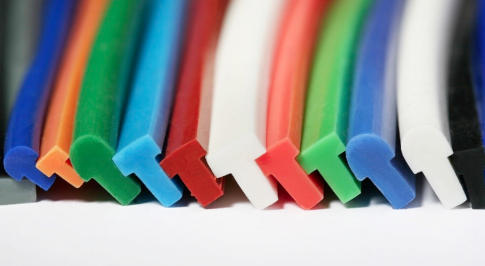
Silicone has a silicon-oxygen (Si–O–Si) backbone, while plastic has a carbon-hydrogen (C–H) backbone. This gives silicone greater temperature and chemical resistance, while plastics benefit from easier processing and recyclability.
Traditionally, Masterbatch is designed for thermoplastics. However, specialized silicone-compatible additive systems are now emerging, allowing color or performance enhancements in silicone rubbers through similar dispersion principles.
Masterbatch enhances plastic properties by providing concentrated additives or pigments, improving UV stability, heat resistance, flame retardancy, or coloration uniformity without compromising processing efficiency.
Silicone lasts longer and is stable, but it's harder to recycle. Plastics—especially with recycling-friendly Masterbatch—can enter circular production loops, reducing overall environmental impact over time.
Masterbatch-modified plastics are generally more cost-efficient due to lower raw material and processing costs. Silicone excels in niche applications demanding extreme durability or biocompatibility but at a higher price point.


