


close
Choose Your Site
Global
Social Media


Views: 222 Author: Rebecca Publish Time: 2025-12-09 Origin: Site


Content Menu
● Is Rubber Considered A Plastic?
● Natural Rubber, Synthetic Rubber And Plastic
● Elasticity vs Plasticity: The Core Difference
● How Rubber And Plastic Are Both Polymers
● Where Rubber Is Used: Typical Applications
● Where Plastics Are Used: Typical Applications
● Masterbatch: The Link Between Rubber And Plastic Compounding
● Color Masterbatch For Plastic And Rubber Products
● Additive Masterbatch For Performance Tuning
● Processing Rubber vs Plastic With Masterbatch
● Designing Masterbatch For Elastomer And Rubber Systems
● Using Masterbatch To Bridge Rubber-Plastic Hybrids
● Business Opportunities For Masterbatch In Rubber And Plastic
● How To Explain Rubber vs Plastic To Customers
● FAQ
>> 1: Is rubber a type of plastic? (1)
>> 2: Why does rubber stretch more than plastic? (2)
>> 3: Can Masterbatch be used in both rubber and plastic? (3)
>> 4: What is the main purpose of Masterbatch in plastics? (4)
>> 5: How should a buyer choose between rubber and plastic for an application? (5)
Plastics are synthetic materials made from long-chain polymers that can be shaped under heat and pressure, then retain their form once cooled. Masterbatch Rubbers are a special class of polymers called elastomers that can stretch repeatedly and return to their original shape, thanks to their elastic behavior.[5][6][7][8][9]
Rubber-like solids with elastic properties are defined as elastomers, which have low modulus, high extensibility, and viscoelastic behavior. In contrast, many plastics are designed for rigidity, dimensional stability, and long-term shape retention rather than large reversible deformation.[7][4][10][5]

From a strict materials classification perspective, rubber is not considered a plastic, even though both are polymers. Rubber is usually categorized as an elastomer, while plastic refers to thermoplastics and thermosets that show plasticity instead of strong elasticity.[2][4][10][1]
The key difference is that plastic tends to deform permanently when stressed beyond its yield point, whereas rubber can undergo large reversible deformation and then “spring back.” This fundamental mechanical distinction drives very different product designs and Masterbatch strategies for rubber and plastic applications.[6][11][4][12][2]
Natural rubber is derived from latex sap, most commonly from the Hevea brasiliensis tree, and is then processed and vulcanized to create elastic products. Synthetic rubber is produced from petrochemical feedstocks and engineered to deliver specific resistance to oils, temperature, or wear.[13][6]
Many plastics are also made from petrochemicals, but their molecular architecture and degree of cross-linking differ from rubbers, leading to lower elasticity and higher stiffness. Elastomers—including many rubbers—rely on flexible chains and controlled cross-linking to obtain high elongation and snap-back behavior, which is not typical for most structural plastics.[9][10][5][6][7]
Elasticity describes a material’s ability to deform under stress and return to its original shape when the load is removed, which is the signature property of rubber and elastomers. Plasticity refers to a material’s tendency to maintain the deformed shape after stress, which is characteristic of many plastic materials when they are permanently formed.[4][10][2][7]
In practical terms, rubber can be stretched to several times its original length and still recover, while most plastics will crack, craze, or retain a permanent deformation under similar strain. This difference explains why rubber dominates in tires, seals, and gaskets, while plastics dominate in rigid packaging, housings, and structural components where dimensional stability is required.[11][12][6][7][4]
Both plastics and rubber are built from polymer chains—repeating units of monomers chemically bound into long chains. The way these chains are arranged, cross-linked, and modified with additives determines whether the final material behaves like a rigid plastic or an elastic rubber.[3][10][1][7][9]
In plastics, polymer chains are often more tightly packed or semi-crystalline, which increases stiffness and dimensional stability. In rubbers, chains are more flexible and lightly cross-linked, so they can uncoil and recoil under stress, creating the high elasticity that defines elastomer behavior.[10][5][6][7][13]
Rubber is widely used in tires, automotive seals, vibration isolators, shock mounts, hoses, belts, and industrial gaskets because of its elastic and damping properties. Its viscoelastic behavior helps absorb energy, reduce noise, and maintain sealing performance even under repeated cycling.[6][7][13]
In consumer and medical products, rubber and elastomers are often used for soft-touch grips, seals, O-rings, diaphragms, and flexible connectors. These applications require materials that can flex repeatedly without cracking, making rubber and elastomer compounds the preferred choice over rigid plastics.[14][7][9][10]
Plastics are used in packaging films, bottles, containers, automotive interiors, appliances, electronics housings, pipes, and construction elements due to their processability and structural stability. Thermoplastics such as PE, PP, PVC, PET, and PC can be injection molded, extruded, blow molded, or thermoformed into complex shapes with high productivity.[15][5][11][6]
In engineering applications, plastics offer a balance of strength, chemical resistance, and weight reduction, often competing with metals and glass. When fine-tuned by functional Masterbatch, plastics can also provide UV resistance, antistatic behavior, flame retardancy, and many other performance enhancements.[16][11][15][6]
Masterbatch is a concentrated mixture of pigments and/or additives dispersed in a carrier matrix such as resin, wax, or another compatible polymer. In plastics, Masterbatch is typically supplied as pellets that are dosed into base polymers like PE, PP, or TPU to impart color or functional properties.[17][16][11][15]
Masterbatch can also be used with rubber and elastomer systems, where pigments and additives are pre-dispersed in a compatible carrier to achieve more consistent properties in the final compound. By using Masterbatch instead of raw powders, manufacturers improve dispersion, reduce dust, simplify dosing, and gain better batch-to-batch consistency.[12][17][16][11][15]
Color Masterbatch is designed primarily to give plastic products stable, reproducible color while keeping the base resin formulation simple. A typical color Masterbatch contains high concentrations of pigments or dyes, plus a suitable carrier resin compatible with the target plastic (for example, PE-based Masterbatch for PE film).[16][11][12][15]
For rubber and elastomeric materials, colorants can also be delivered through specialized Masterbatch systems or pre-dispersed pigment concentrates that ensure uniform coloring without weakening mechanical performance. This approach helps rubber processors maintain elasticity, fatigue resistance, and tear strength while achieving precise brand colors.[17][11][12][6]
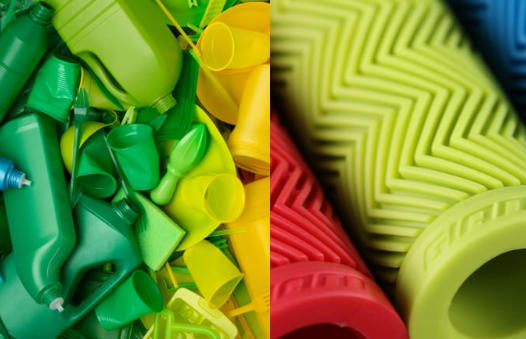
Additive Masterbatch is used to introduce functional properties such as UV stability, slip, antiblock, antistatic, flame retardancy, or antimicrobial activity into plastic products. These Masterbatch solutions are engineered so that the additive system is optimally dispersed and can be let down into the base polymer at a controlled ratio during processing.[11][12][15][16]
In elastomer and rubber-based systems, similar additive concepts can be applied—such as anti-aging agents, processing aids, or special fillers—often introduced via Masterbatch or pre-mix concentrates to improve processability and service life. For a Chinese company focused on innovative plastic materials, designing cross-platform Masterbatch families that serve both plastic and rubber users can create strong differentiation.[12][13][15][17][11]
Plastics using Masterbatch are commonly processed by extrusion, injection molding, blow molding, film blowing, and fiber spinning, where the Masterbatch is melt-blended with the base polymer. Correct dosing and mixing conditions ensure that color and additives from the Masterbatch are fully dispersed without degrading the polymer.[15][16][11][12]
Rubber processing typically involves mixing elastomer, fillers, curatives, and other additives on internal mixers or open mills, followed by molding and curing. When Masterbatch or pre-dispersed concentrates are used in rubber compounding, they simplify ingredient handling and improve consistency, though the curing and cross-linking steps remain different from plastic processing.[7][13][6]
When creating Masterbatch for elastomers, the carrier must be compatible with the rubber matrix so it doesn’t create defects or reduce mechanical performance. The rheology of the Masterbatch must match the elastomer processing window, ensuring that pigments and additives distribute evenly during mixing and cure.[17][16][11][15]
For high-performance rubber products, Masterbatch can be used to incorporate reinforcing fillers, specialty pigments, or functional additives that improve fatigue resistance, abrasion resistance, and heat aging. This integration allows rubber processors to maintain strict quality control while benefiting from the same Masterbatch philosophy widely used in plastics.[13][6][11][17]
In many modern products, rubber and plastic are combined—for example, TPE overmolded onto PP, or TPU parts bonded to rigid substrates—creating hybrid structures. Masterbatch plays a role in aligning color and functional properties across both soft and rigid components, ensuring visual harmony and consistent performance.[14][9][16][11]
By formulating Masterbatch families for both plastic and elastomer grades, a materials supplier can help customers develop complete multi-material solutions, from soft-touch grips to rigid housings. This strategy also simplifies color management and quality control across global production sites.[11][12][15]
The growing need for customized materials in automotive, consumer electronics, medical, and sustainable packaging creates strong demand for advanced Masterbatch solutions. Buyers increasingly expect color Masterbatch and additive Masterbatch suppliers to support both plastic and elastomer applications with consistent quality and technical services.[12][15][11]
A Chinese enterprise focused on innovative plastic materials can leverage expertise in Masterbatch formulation, polymer compatibility, and performance testing to serve global customers. By positioning Masterbatch as a platform for both plastics and rubber, the company can offer integrated solutions that shorten development time and improve product differentiation.[15][11][12]
When communicating with non-technical customers, it is helpful to emphasize that rubber is an elastic polymer (elastomer), while plastic is typically a rigid or semi-rigid polymer designed for shape stability. Both materials are polymers, but they deliver different mechanical behavior and processing methods.[1][2][10][7]
Linking this explanation to Masterbatch helps customers understand why color and additive systems must be optimized separately for rubber and plastic products. This reinforces the value of choosing a partner that understands both platforms and can engineer tailor-made Masterbatch for their specific application.[16][11][12][15]
Rubber is not a plastic material, even though both belong to the polymer family; rubber is classified as an elastomer with high elasticity, while plastic is designed for plasticity and shape retention. This difference in mechanical behavior leads to distinct applications and processing methods: rubber for seals, tires, and flexible components, plastics for rigid parts and structural packaging.[2][10][1][5][6][13]
Masterbatch acts as a powerful bridge across both material classes, allowing manufacturers to introduce color and functional additives efficiently into plastic and, in some cases, rubber and elastomer compounds. For an innovative Chinese materials company, focusing on advanced Masterbatch solutions for both plastics and elastomers can unlock high-value global opportunities while helping customers understand the proper role of rubber and plastic in modern product design.[17][16][11][12][15]
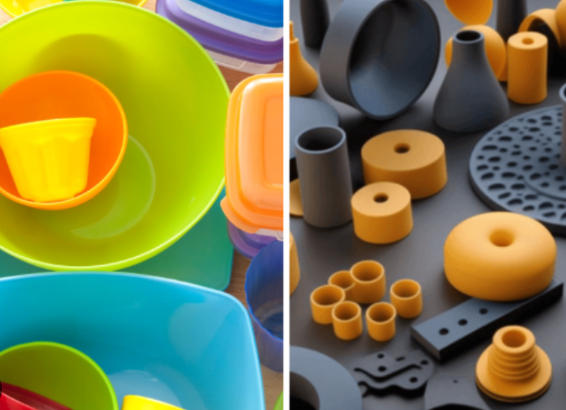
Rubber is not classified as a plastic, although both rubber and plastic are polymers. Rubber is considered an elastomer because of its high elasticity, while plastic is valued for its ability to be shaped and retain its form.[10][1][2]
Rubber contains flexible polymer chains with light cross-linking, allowing large reversible deformation under stress. Many plastics have more rigid or semi-crystalline structures, so they deform less elastically and may not fully return to their original shape after stretching.[4][9][5][7][10]
Yes, Masterbatch is widely used in plastics and can also be adapted for rubber and elastomer systems when the carrier is compatible with the base polymer. In both cases, Masterbatch improves dispersion of pigments and additives, simplifies dosing, and enhances consistency.[16][11][12][15][17]
The main purpose of Masterbatch in plastics is to add color or functional additives in a concentrated, easy-to-handle form. It allows processors to modify properties such as color, UV resistance, antistatic performance, or slip behavior without reformulating the base resin from scratch.[11][12][15][16]
Buyers should choose rubber when high elasticity, dynamic fatigue resistance, and sealing performance are critical, such as in tires, gaskets, and vibration isolators. Plastics are preferable when rigidity, light weight, design flexibility, and stable shape are needed, such as in housings, containers, and structural parts, which can then be tailored using suitable Masterbatch solutions.[5][6][13][11]
[1](https://www.productipedia.com/kb/productipedia/compliance-resources/what-are-plastics-and-rubbers)
[2](https://www.walker-rubber.co.uk/knowledge-hub/what-is-rubber-361)
[3](https://rubberplastics.com)
[4](https://www.uakron.edu/polymer/agpa-k12outreach/lesson-plans/plastics-and-rubber-whats-the-difference)
[5](https://eupegypt.com/blog/plastics-and-rubber-differences/)
[6](https://europlas.com.vn/en-US/blog-1/what-is-the-difference-between-plastic-and-rubber)
[7](https://gallaghercorp.com/elastomer-definition/)
[8](https://www.globaleee.com/global-news/-history/elastomers-rubbers-difference)
[9](https://www.elastomer.kuraray.com/us/blog/what-are-elastomers/)
[10](https://en.wikipedia.org/wiki/Elastomer)
[11](https://deltatecnic.com/complete-guide-to-masterbatch/)
[12](https://europlas.com.vn/en-US/blog-1/masterbatch-definition-applications-market-trends-and-more)
[13](https://www.manuf-rubber.com/news/elastomer-101-basics-industrial-rubber-products/)
[14](https://kuraray.us.com/glossary/elastomer/)
[15](https://www.tosaf.com/article/plastic-masterbatch-article/)
[16](https://en.wikipedia.org/wiki/Masterbatch)
[17](https://www.ampacet.com/faqs/masterbatch/)
[18](https://airbossrubbersolutions.com/whats-the-difference-between-rubber-and-plastic/)
[19](https://www.reddit.com/r/CasualConversation/comments/4a45yu/anyone_want_to_know_anything_about_rubber/)
[20](https://www.microban.com/blog/top-5-benefits-of-using-polymer-masterbatches)


