


close
Choose Your Site
Global
Social Media


Content Menu
● Why PVC Is Definitely a Plastic Material
● PVC as a Thermoplastic Resin
● Chemical Structure and Its Impact
● Rigid and Flexible PVC Grades
● The Role of Compounding in PVC Plastics
● Masterbatch Fundamentals for PVC
● Color Masterbatch for PVC Products
● Functional Masterbatch in PVC
● PVC in Building and Construction
● PVC in Electrical and Cable Applications
● PVC in Medical and Healthcare Uses
● PVC in Packaging and Consumer Goods
● Comparing PVC with Other Plastics
● Environmental and Recycling Aspects
● Why Masterbatch Is Strategic for PVC Users
● FAQ
>> 1. Is PVC considered a plastic or a rubber?
>> 2. What is PVC Masterbatch and why is it important?
>> 3. Where is PVC plastic most commonly used?
>> 4. Is PVC plastic safe for medical and food‑contact uses?
>> 5. Can PVC plastic be recycled?
PVC, or polyvinyl chloride, is a synthetic polymer produced by polymerizing the vinyl chloride monomer into long chains of repeating units. In material science, PVC is categorized as a thermoplastic plastic, meaning it softens when heated and hardens when cooled in a reversible process, allowing repeated shaping and processing by melting and solidification.[3][1]
Unlike some hydrocarbon‑only plastics, PVC contains a significant proportion of chlorine, which provides distinctive characteristics such as flame retardancy, good chemical resistance and excellent durability in harsh environments. In its unmodified state, PVC is a rigid, white plastic resin that can be transformed into a wide variety of products through compounding and Masterbatch based modification.[4][5]

From both technical and regulatory perspectives, PVC is recognized as one of the major commodity plastics, alongside polyethylene (PE), polypropylene (PP), polystyrene (PS) and polyethylene terephthalate (PET). Industry statistics show that PVC ranks among the top three most produced synthetic plastic polymers worldwide by volume, confirming its role as a mainstream plastic material.[5][1]
PVC's classification as a plastic is further supported by its processing behavior: it is processed using standard plastic technologies such as extrusion, injection molding, blow molding and calendaring. In all these processes, PVC relies heavily on Masterbatch and compound systems typical of the plastics industry to deliver consistent color, stability and performance.[2][6]
Thermoplastics are defined by their ability to be melted and reshaped multiple times without significant chemical change under normal processing conditions. PVC fits this definition perfectly: when heated to its processing window, it softens and flows, then solidifies into a stable plastic form upon cooling, making it ideal for modern, high‑throughput manufacturing lines.[6][3]
This thermoplastic behavior allows PVC to be extruded into pipes, profiles and sheets, molded into fittings and components, and calendared into films and membranes with high efficiency. PVC‑based Masterbatch products are designed to withstand these thermal cycles, maintaining pigment dispersion and additive performance throughout extrusion or molding operations.[2][5]
The chemical backbone of PVC consists of carbon‑carbon chains with chlorine atoms attached to many of the carbon atoms along the chain. This chlorine content increases the density and stiffness of the material compared with many all‑hydrocarbon plastics and contributes to PVC's inherent flame‑retardant behavior and chemical resistance.[1][4]
However, the same structure also makes PVC sensitive to heat and shear, requiring appropriate stabilizers to prevent degradation during processing and use. These stabilizers are often supplied as part of a PVC Masterbatch system, ensuring that colorants and functional additives can be introduced without jeopardizing the polymer's integrity.[3][2]
One of the reasons PVC is so widely used as a plastic material is the broad range of hardness and flexibility it can achieve through formulation. Rigid PVC, often called unplasticized PVC (uPVC), is used where stiffness, dimensional stability and impact resistance are essential, such as in pipes, window profiles, fittings and building profiles.[7][5]
By contrast, flexible PVC is produced by adding plasticizers that increase the mobility of the polymer chains, giving a softer, rubber‑like feel while still retaining the basic plastic structure. This flexibility makes plasticized PVC ideal for cables, hoses, flooring, medical tubing and many soft goods, and these products nearly always use customized Masterbatch formulations to manage color, flexibility and long‑term aging properties.[6][2]
Raw PVC resin on its own is rarely used directly in finished products; it must be compounded with a carefully balanced mix of additives to meet application requirements. Typical formulations include stabilizers, lubricants, impact modifiers, plasticizers (for flexible grades), fillers and pigments, which collectively define the mechanical, thermal and aesthetic performance of the final PVC plastic.[7][3]
In modern manufacturing, a substantial portion of these components is introduced through Masterbatch concentrates, which combine pigments and functional additives into easy‑to‑handle granules based on PVC or compatible carriers. This approach improves dosing accuracy, reduces dust and contamination risks, and ensures that critical additives are evenly dispersed within the PVC matrix, resulting in stable, repeatable product quality.[2]
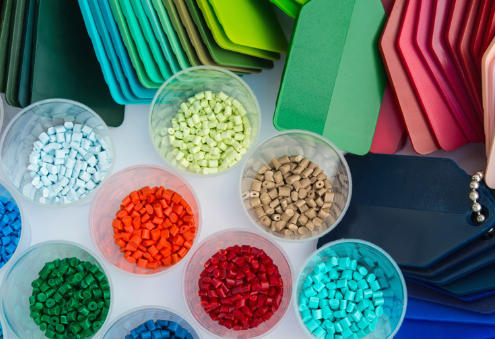
Masterbatch is a concentrated mixture of pigments, fillers and/or performance additives that is added in small proportions to a base polymer to achieve the desired final properties. For PVC, Masterbatch systems are engineered with attention to thermal stability, compatibility with plasticizers, and interactions with other ingredients in the compound, such as stabilizers and lubricants.[2]
The use of Masterbatch in PVC processing enables manufacturers to switch colors quickly, fine‑tune properties and respond faster to custom specifications without reformulating the entire compound from scratch. Color Masterbatch, filler Masterbatch, UV‑stabilizer Masterbatch and flame‑retardant Masterbatch are prime examples used regularly in PVC applications to upgrade performance with minimal changes on the production line.[2]
Color is a powerful differentiator in PVC products, especially for visible applications such as window frames, profiles, flooring and consumer items. Color Masterbatch for PVC provides high‑concentration pigments in a compatible carrier, ensuring strong color strength and uniform dispersion even in rigid formulations with high filler content.[5][2]
Because PVC is often used in outdoor or long‑life applications, color Masterbatch must also deliver excellent resistance to light, heat and weather to prevent fading and chalking. This is achieved by combining pigments with stabilizers and UV‑resistant components in a Masterbatch system tuned to the specific PVC compound and processing conditions.[7][2]
Beyond color, PVC formulations frequently rely on functional Masterbatch to add or optimize key properties. Examples include Masterbatch systems that:[2]
- Improve impact resistance for window profiles, doors and outdoor cladding
- Increase flame retardancy for cables, building products and public‑area components
- Enhance UV and weather resistance for roofing membranes, siding and outdoor profiles
- Introduce anti‑static or slip characteristics for packaging films and conveyor components
By using functional Masterbatch rather than multiple individual additives, manufacturers simplify inventory, reduce dosing complexity and achieve more consistent and predictable PVC plastic performance.[2]
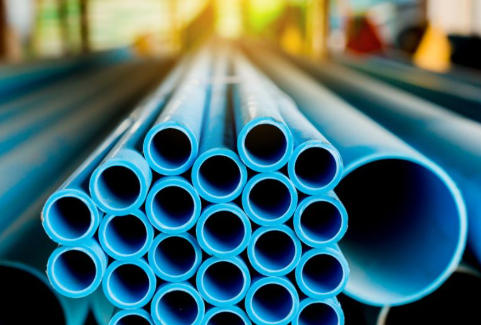
Building and construction constitute one of the largest markets for PVC plastics. Rigid PVC is widely used for pressure and non‑pressure pipes, fittings, window and door profiles, siding, gutters, wall panels and roofing membranes because of its strength, durability, resistance to moisture and chemicals, and relatively low cost.[5][7]
PVC Masterbatch allows these building components to meet strict aesthetic and performance requirements, such as stable color across large projects, enhanced UV resistance for long outdoor service life and improved impact resistance in colder climates. High‑quality Masterbatch systems also help reduce surface defects, gloss variations and brittleness that might otherwise appear in large, complex profiles and sheets.[2]
Flexible PVC is a standard choice for electrical cable insulation and jacketing due to its combination of flexibility, electrical insulating properties and inherent flame retardancy. In cable applications, compounding and Masterbatch design must balance mechanical strength, flexibility over a wide temperature range, resistance to oils and chemicals, and compliance with flame and smoke regulations.[8][9]
Specialized cable Masterbatch solutions for PVC include color identification systems, low‑smoke and low‑halogen options where required, and additives that support easy stripping, improved abrasion resistance and long‑term stability. Such tailored Masterbatch products make PVC cables more reliable and easier to install while meeting the safety and performance standards of international markets.[2]
Medical‑grade PVC compounds are widely used in flexible tubing, blood and IV bags and various disposable medical devices, thanks to their clarity, flexibility, weldability and sterilization compatibility. For these sensitive uses, all components of the PVC material—including Masterbatch systems—must meet strict regulatory requirements relating to biocompatibility, extractables, leachables and production cleanliness.[10][11]
In this segment, Masterbatch must not only deliver color or opacity but also maintain transparency where needed and ensure that any additives do not adversely affect patient safety or drug compatibility. Many suppliers have developed dedicated medical‑grade PVC Masterbatch lines with carefully selected pigments and additives suitable for regulated healthcare environments.[11][10]
PVC is also present in various packaging formats such as blister packs, shrink films, rigid containers and transparent display packs, where its clarity, formability and barrier properties are valued. Color and functional Masterbatch are used to create attractive appearances, improve sealing behavior and support label or printing requirements in these packaging applications.[1][2]
In consumer products, PVC appears in items like cards, toys, flooring, synthetic leather, signage and decorative trims, where designers need a wide color palette and long‑term resistance to wear and soiling. Masterbatch technologies allow rapid response to fashion trends and brand identity requirements, enabling frequent color changes and special effects such as metallic, pearlescent or matte finishes in PVC plastics.[8][2]
When engineers and buyers consider PVC against other plastics such as PE and PP, several property differences stand out. PVC generally offers higher stiffness and better flame retardancy than many commodity polyolefins, making it well‑suited to structural, building and cable applications where fire behavior matters.[4][5]
On the other hand, PVC may require more careful formulation and stabilization, especially at higher processing temperatures, and it often incorporates a broader range of additives. Masterbatch solutions help to manage this complexity by consolidating additives into optimized packages, ensuring that the final PVC plastic competes effectively with alternative polymers in cost, performance and reliability.[3][2]
The environmental profile of PVC is often discussed in terms of raw material sourcing, additive selection and end‑of‑life management. Modern PVC production plants operate under stringent regulations to control emissions and manage vinyl chloride monomer safely, while new generations of stabilizers and plasticizers aim to minimize potential health and environmental impacts.[12][4]
Recycling PVC is technically possible and practiced in both post‑industrial and post‑consumer streams, though the presence of diverse additives and legacy formulations can complicate processing compared with simpler polymers. Carefully designed Masterbatch and compound strategies that avoid problematic substances and support thermal stability can enhance the quality and usability of recycled PVC, making it easier to reintroduce into new products.[12]
For OEMs and converters, Masterbatch is more than a simple colorant; it is a strategic tool to tailor PVC plastic precisely to application demands. By using PVC‑specific Masterbatch, manufacturers can standardize base resin and adjust color, mechanical behavior, weathering performance and special functionalities at the final production stage, increasing flexibility and reducing overall formulation risk.[2]
This modular approach to PVC design enables faster product development, easier quality control and smoother scale‑up when production volumes grow. In global supply chains, consistent Masterbatch recipes allow the same PVC product to be manufactured at different plants with nearly identical appearance and performance, which is critical for international brands and technical applications.[2]
PVC is unequivocally a plastic material—a major thermoplastic polymer that underpins modern infrastructure, healthcare, electrical systems, packaging and consumer products. Its unique combination of tunable rigidity, inherent flame retardancy, chemical resistance and cost‑effectiveness has made it a core material in many industries worldwide.[1][5]
Through sophisticated Masterbatch technology, PVC's base properties can be enhanced and customized for precise performance targets, from color stability and weather resistance to impact strength and processing efficiency. For manufacturers, designers and brand owners, PVC combined with the right Masterbatch solutions provides a powerful, flexible platform for developing durable, reliable and visually appealing plastic products that meet modern technical and regulatory requirements.[2]
PVC is considered a thermoplastic plastic, not a rubber, even though flexible PVC grades can feel rubber‑like due to plasticizers that soften the material. Its molecular structure, processing methods and classification in standards all place PVC clearly within the plastics family, similar to PE and PP.[6][1]
PVC Masterbatch is a concentrated blend of pigments and/or functional additives dispersed in a compatible PVC carrier resin for easy incorporation into PVC compounds. It is important because it ensures consistent color, optimized processing behavior and targeted performance properties while simplifying dosing and reducing formulation complexity in PVC plastic production.[2]
PVC plastic is most commonly used in building and construction for pipes, window and door profiles, siding, wall panels and roofing membranes due to its durability and weather resistance. It is also widespread in electrical cables, medical tubing and bags, packaging solutions and consumer goods where flexibility, flame performance and design freedom are important.[5][7]
Medical‑grade PVC compounds are specifically engineered to meet strict biocompatibility and safety regulations for use in tubing, blood bags and other clinical devices. For food‑contact applications, PVC formulations and associated Masterbatch must comply with regional regulations governing additives and migration limits, and reputable suppliers provide documentation to support compliance.[10][4]
PVC plastic can be recycled, particularly from well‑sorted industrial scrap and certain post‑consumer streams such as building products and cables. Success in PVC recycling depends on controlling additive content and processing conditions, and compatible Masterbatch and stabilizer systems can significantly improve the quality and performance of recycled PVC materials.[12]
[1](https://en.wikipedia.org/wiki/Polyvinyl_chloride)
[2](https://deltatecnic.com/complete-guide-to-masterbatch/)
[3](https://www.sciencedirect.com/topics/materials-science/polyvinyl-chloride)
[4](https://www.britannica.com/science/polyvinyl-chloride)
[5](https://www.specialchem.com/plastics/guide/polyvinyl-chloride-pvc-plastic)
[6](https://www.essentracomponents.com/en-us/news/manufacturing/injection-molding/what-is-pvc)
[7](https://plasticseurope.org/plastics-explained/a-large-family/polyvinyl-chloride-pvc-2/)
[8](https://petroextrusion.com/understanding-pvc-extrusion-profiles-and-their-applications/)
[9](https://www.pexco.com/products/polymer-tubing-and-profiles/pvc-tubing-and-profiles/)
[10](https://www.zanpvc.com/medical-grade-pvc-compound.html)
[11](https://www.inlineplasticsinc.com/industries/medical/)
[12](https://pmc.ncbi.nlm.nih.gov/articles/PMC9332854/)


