


close
Choose Your Site
Global
Social Media


Views: 222 Author: Rebecca Publish Time: 2025-12-02 Origin: Site


Content Menu
● Understanding Polyester as a Plastic
● Key Properties of Polyester Plastics
● How Polyester Fits in the Plastic Family
● Chemistry and Structure of Polyester
● Production Process of Polyester Plastics
● Masterbatch: Core to Polyester Customization
● Polyester in Fiber and Textile Applications
● Engineering Components and Automotive Uses
● Polyester in Packaging and Food Contact
● Advantages of Polyester as a Plastic Material
● Challenges and Environmental Considerations
● Recycling and Circular Use of Polyester
● Future Trends in Polyester and Masterbatch
● How Custom Masterbatch Solutions Add Value
● FAQ
>> 1. Is Polyester Always Considered a Plastic?
>> 2. What Role Does Masterbatch Play in Polyester Processing?
>> 3. Is Polyester Safe for Food and Beverage Packaging?
>> 4. Can Polyester Be Recycled Multiple Times?
>> 5. How Does Polyester Compare to Other Plastics in Performance?
Polyester is indeed a plastic material—more precisely, a family of synthetic polymers widely used in fibers, films, and engineering components. It belongs to the broader category of thermoplastic or thermoset resins (depending on the type), and its performance can be finely tuned using functional masterbatch formulations throughout the production process. As a result, polyester has become a core material in modern manufacturing, from apparel and packaging to automotive, electronics, and construction.
For a company focused on innovative plastic materials, polyester offers a highly flexible platform. By combining polyester resins with customized masterbatch systems, it is possible to develop tailored solutions with enhanced color, mechanical strength, durability, weatherability, and sustainability. This article explains why polyester is considered a plastic, how it is produced and modified, and how masterbatch technologies unlock its full potential across industries.

Polyester is the generic name for polymers containing ester functional groups in the main chain. The most common commercial type is polyethylene terephthalate (PET), produced from terephthalic acid (or its derivatives) and ethylene glycol. This synthetic origin and polymeric structure place polyester firmly in the plastic family.
Depending on the chemical structure and curing process, polyester can behave as a thermoplastic (such as PET and PBT) or as a thermosetting resin (such as unsaturated polyester used in composites). In both cases, it is classified and traded as a plastic material. When combined with the right masterbatch solution, polyester's flow behavior, color, UV resistance, and processing stability can be significantly improved, enabling high-efficiency production and consistent quality.
Polyester plastics are valued for a combination of mechanical, thermal, and chemical properties that rival or surpass many other commodity polymers. PET and related grades typically show high tensile strength, good dimensional stability, and excellent abrasion resistance, making them suitable for both flexible and rigid applications. PBT and other engineering polyesters add higher heat resistance and creep resistance for more demanding environments.
Chemical resistance is another strength of polyester. It resists many oils, greases, and common solvents, and shows good weathering performance when stabilized correctly. Electrical insulating properties make polyester films and molded parts attractive for electrical and electronic applications. Through tailored masterbatch, properties such as UV stability, flame retardancy, antistatic behavior, or slip performance can be further optimized without redesigning the base resin.
Plastics are typically divided into thermoplastics and thermosets. Thermoplastic polyesters like PET, PETG, PBT, and PTT soften upon heating and can be remelted and reshaped, which is ideal for processes such as injection molding, extrusion, film blowing, and fiber spinning. Thermosetting polyesters, in contrast, crosslink irreversibly when cured with suitable hardeners, forming rigid, heat-resistant composites.
From a regulatory, trade, and processing standpoint, both groups are handled as plastics. They are coded within plastic resin identification systems, governed by plastic-related standards, and processed on standard plastic equipment. This is one of the main reasons polyester is discussed alongside polyethylene, polypropylene, PVC, and other major plastics in industrial practice.
The defining feature of polyester is the ester linkage in the polymer backbone. In PET, for example, repeating units are formed from terephthalic acid and ethylene glycol. The aromatic rings in the structure provide rigidity and high glass transition and melting temperatures, while the ester groups govern chemical reactivity and crystallization behavior.
By adjusting the monomers and reaction conditions, manufacturers can design polyesters with different crystallinity, melting point, flexibility, and processability. Copolyesters introduce co-monomers to achieve improved impact strength, transparency, or low-temperature properties. Masterbatch systems must be carefully matched to this chemistry, using compatible carrier resins and additives that do not interfere with crystallization or cause degradation during high-temperature processing.
The production of thermoplastic polyesters such as PET generally involves three main stages: monomer synthesis, polymerization, and downstream processing. Monomer units are first produced and purified, then polymerized under controlled temperature and vacuum conditions to achieve the desired molecular weight. The resulting polymer melt is cut into pellets, which serve as the raw material for converters.
In extrusion, injection molding, and fiber spinning, these pellets are remelted and shaped into final products. At this stage, masterbatch is introduced as a solid or liquid concentrate to ensure accurate dosing of pigments and functional additives. Because masterbatch is pre-dispersed in a compatible carrier, it allows uniform color and property distribution in polyester, simplifies handling of additives, and reduces dust and contamination in the plant.
Masterbatch is essentially a highly concentrated mixture of pigments or additives dispersed within a carrier resin. For polyester applications, the carrier is often PET or another compatible polyester grade, ensuring high compatibility and easy dilution. Instead of adding fine powders directly into the polyester melt—which can cause uneven dispersion and processing issues—producers add a small percentage of masterbatch to achieve the same or better effect.
Typical masterbatch solutions used with polyester include:
- Color masterbatch for precise, repeatable coloration in fibers, films, sheets, and injection-molded parts.
- White and black masterbatch for opacity, light shielding, and UV protection.
- Additive masterbatch for UV stabilization, flame retardancy, slip, antiblock, antistatic, anti-fog, or processing aids.
- Functional masterbatch for barrier improvement, nucleation, impact modification, or laser marking.
For a specialized materials company, designing custom masterbatch for polyester is an effective way to deliver differentiated performance tailored to each customer's process and end-use requirements.
There is no single “polyester plastic”; instead, manufacturers work with a range of polyester types, each optimized for a set of applications:
- PET (Polyethylene Terephthalate): The most widely recognized polyester, used in beverage bottles, food packaging, fibers, and films.
- PETG (Glycol-Modified PET): A more easily thermoformed, clear polyester used in display materials, medical packaging, and sheets.
- PBT (Polybutylene Terephthalate): An engineering polyester used in connectors, housings, and automotive components requiring good heat and dimensional stability.
- PTT (Polytrimethylene Terephthalate): Used in textiles and carpets where resilience and softness are desired.
- Unsaturated Polyester Resins (UPR): Thermosetting polyesters used in fiberglass-reinforced composites for construction, transportation, and marine sectors.
Each type of polyester can be combined with specialized masterbatch systems to achieve color consistency, enhance durability, or meet strict regulatory demands in sensitive applications.
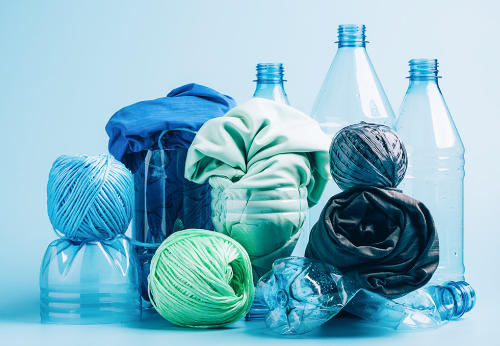
Polyester fibers have become the backbone of the global textile industry. They offer high strength, wrinkle resistance, low shrinkage, and fast drying, making them popular for garments, home textiles, and technical fabrics. Compared with natural fibers, polyester shows better resistance to moisture and many environmental factors, while remaining cost competitive.
In fiber spinning, masterbatch plays a key role in color development and performance. Spin-dyeing with color masterbatch allows fibers to be produced in precise shades with superior colorfastness and reduced water usage compared with conventional dyeing. Functional masterbatch can further introduce UV protection, flame retardancy, antibacterial action, or antistatic properties directly into the fiber structure, creating high-value textiles for outdoor wear, safety clothing, filtration, and industrial reinforcements.
Polyester films and sheets, especially PET film, are widely used where clarity, strength, and dimensional stability are critical. Applications include flexible packaging, lidding films, labels, electrical insulation, release liners, graphic films, and protective laminates for construction and electronics. Polyester films maintain mechanical integrity across a wide temperature range, show excellent dielectric properties, and offer good barrier performance against gases and aromas.
Masterbatch for film-grade polyester must provide excellent dispersion to avoid defects, gels, or haze. Slip and antiblock masterbatch improve film handling, while UV and antioxidant masterbatch help preserve performance in outdoor or high-heat environments. For printed and metallized films, surface-modifying masterbatch can enhance adhesion of inks, coatings, and aluminum layers, supporting high-end packaging and industrial uses.
Engineering-grade polyesters such as PBT and reinforced PET are used in precision components for automotive, electrical, and industrial applications. They provide high stiffness, dimensional stability, low creep, and good resistance to oils and fuels. Glass fiber–reinforced grades can replace metals in many structural parts, contributing to weight reduction and improved fuel efficiency.
In these applications, masterbatch is often more than just a colorant. Flame-retardant masterbatch enables compliance with safety standards, while lubricating and processing-aid masterbatch supports smooth molding of complex components. Impact-modifying masterbatch can be introduced to improve toughness without sacrificing stiffness, and laser-marking masterbatch allows permanent, readable identification directly on polyester components.
PET has become a leading packaging plastic for beverages, edible oils, sauces, and various food products. Its clarity, strength, and low weight, combined with good gas and aroma barrier properties, make it ideal for bottles, jars, and trays. When properly produced and tested, PET is approved by health authorities in many countries for direct food contact.
Masterbatch for food-contact polyester must be carefully selected to meet migration limits and regulatory guidelines. Food-grade color masterbatch is formulated with approved pigments and carriers, while additive masterbatch can improve oxygen barrier, UV resistance, or reheat behavior for bottle production. For brand owners, customized color masterbatch also supports distinctive packaging design and consistent visual identity.
The popularity of polyester comes from a combination of performance, cost, and versatility:
- High mechanical strength and dimensional stability allow thinner, lighter parts without compromising performance.
- Good heat and chemical resistance make polyester suitable for demanding environments and long service life.
- Excellent electrical insulating properties support applications in electronics and power systems.
- Compatibility with advanced masterbatch technologies enables efficient, flexible customization at the converter level.
In many applications, polyester offers a cost-effective alternative to higher-priced engineering polymers, while still delivering the necessary technical properties. This balance is especially attractive for global manufacturers seeking both performance and competitive pricing.
Despite its advantages, polyester, like other plastics, faces environmental challenges. Conventional PET and PBT are not readily biodegradable, and mismanaged waste can contribute to microplastic pollution in marine and terrestrial ecosystems. This has led to growing regulatory and consumer pressure for improved recyclability and more sustainable formulations.
Producers and converters are responding with several strategies. One is to maximize the use of recycled polyester (rPET) in bottles, fibers, and films, supported by masterbatch designed to restore color and mechanical performance. Another is to develop bio-based polyester derived partly from renewable feedstocks. At the same time, process-optimized masterbatch can reduce energy consumption and scrap rates during processing, contributing indirectly to lower environmental impact.
Polyester is particularly well suited to recycling, especially in its thermoplastic forms. Mechanical recycling involves collecting, sorting, washing, and reprocessing waste PET into flakes or pellets. These recycled materials can be blended with virgin resin and combined with tailor-made masterbatch to achieve stable performance and appearance.
Chemical recycling technologies are also advancing, enabling polyester chains to be broken back down into monomers or oligomers, which can then be re-polymerized into high-purity resin. This approach opens the door for near-infinite recycling loops. For both mechanical and chemical recycling, masterbatch plays a critical role in adjusting color, stabilizing the polymer, and maintaining consistent quality across multiple life cycles.
Innovations in polyester chemistry and masterbatch technology are expanding the material's capabilities. Research into modified polyesters with enhanced recyclability, higher heat resistance, or improved barrier properties is ongoing. At the same time, functional masterbatch systems are becoming more sophisticated, combining multiple additives in a single solution to simplify dosing and minimize cost.
Emerging trends include bio-based and partially bio-based polyesters, polyester compounds designed specifically for additive manufacturing, and smart textiles with integrated sensors and conductive elements. In all of these areas, expertise in masterbatch formulation and dispersion will remain central to achieving reliable, scalable industrial production.
For a manufacturer specializing in plastic material innovation, custom masterbatch is one of the most powerful tools to differentiate polyester-based products. By closely analyzing the customer's equipment, process conditions, and application requirements, it is possible to design masterbatch that:
- Matches exact color targets with tight tolerances.
- Enhances processing stability, reducing downtime and scrap.
- Extends product lifetime with UV, antioxidant, or flame-retardant systems.
- Improves functionality, such as barrier performance, gloss control, or tactile feel.
Such customized masterbatch solutions transform standard polyester into a high-performance, application-specific material that meets the expectations of global brands, OEMs, and end users.
Polyester is unquestionably a plastic material, belonging to a broad and versatile family of synthetic polymers used in everything from everyday textiles and bottles to high-performance engineering components. Its combination of mechanical strength, chemical resistance, electrical insulation, and processing flexibility explains why it has become one of the most important plastics in the world. When combined with advanced masterbatch technologies, polyester can be precisely tailored in terms of color, durability, regulatory compliance, and functional performance.
For global customers seeking customized plastic material solutions, polyester offers a robust and future-ready platform. By integrating dedicated masterbatch systems at each processing stage, manufacturers can unlock new levels of efficiency, design freedom, and sustainability. As research continues into recyclable, bio-based, and functionally enhanced polyesters, this plastic material will remain at the center of innovation in the plastics industry.
Yes. Polyester is a synthetic polymer containing ester groups in its backbone, and it is processed, classified, and regulated as a plastic material in both thermoplastic and thermoset forms. Whether used as fibers, films, or molded parts, polyester belongs to the broader family of plastic resins.
Masterbatch acts as a concentrated carrier for pigments and additives, allowing processors to introduce color and functionality into polyester resins accurately and efficiently. It improves dispersion, simplifies handling of powders, and enables rapid changeover between different formulations while maintaining consistent product quality.
Properly manufactured PET, the most common polyester used in packaging, is widely approved for direct food and beverage contact by many regulatory authorities. When food-grade pigments and additives are used in masterbatch, PET bottles, trays, and films can meet strict hygiene and migration requirements for global markets.
Thermoplastic polyesters such as PET can be recycled mechanically or chemically multiple times, although some properties may decline without proper stabilization. By adding dedicated masterbatch formulations during reprocessing, recyclers can improve color, strength, and processing stability, enabling higher recycled content in end products.
Compared with many commodity plastics, polyester typically offers higher tensile strength, better dimensional stability, and improved resistance to heat and chemicals. While it may not match the extreme performance of some specialty engineering plastics, its balance of properties, cost, and compatibility with masterbatch customization makes it one of the most versatile plastics in modern manufacturing.
[1](https://www.xometry.com/resources/materials/polyester/)
[2](https://www.piedmontplastics.com/blog/polyester-plastic-applications)
[3](https://www.actenviro.com/polyester-material/)
[4](https://www.thecooldown.com/green-tech/polyester-polymers-recycling-fluorination/)
[5](https://www.pennpac.com/blog/comprehensive-polyester-film-applications/)
[6](https://en.wikipedia.org/wiki/Polyester)
[7](https://www.essentialchemicalindustry.org/polymers/polyesters.html)
[8](https://www.stabilitamerica.com/blog/polyester-material/)
[9](https://www.xometry.com/resources/materials/uses-of-polyester/)


