


close
Choose Your Site
Global
Social Media


Views: 222 Author: Rebecca Publish Time: 2026-01-30 Origin: Site


Content Menu
● Understanding Plastic Materials
>> Common Types of Plastic Materials
● Clarifying the Confusion: Adobe vs Plastic Materials
● What Is Masterbatch and Why It Matters
● How Masterbatch Transforms Plastic Applications
>> 1. Enhanced Aesthetic Control
>> 2. Environmental and Cost Efficiency
● Masterbatch in Advanced Plastic Engineering
>> The Science Behind Masterbatch
● Comparing Masterbatch with Compounding
● Innovation in Masterbatch for the Global Market
● The Relationship Between Adobe (Material) and Plastic
● FAQ
>> (1) What is a masterbatch used for in plastics?
>> (2) Is Adobe related to plastic materials?
>> (3) What are the advantages of using masterbatch instead of direct pigments?
>> (4) Can masterbatch be used with recycled plastics?
>> (5) What trends are shaping the masterbatch industry?
In modern industrial fields, materials science has become the backbone of manufacturing innovation. Many people often confuse “Adobe” — a popular design software brand — with actual material names, which leads to an interesting question: *Is Adobe a plastic material?*
The short answer is no — Adobe is not a plastic material. However, this question provides a useful opportunity to explore what plastic materials are, how masterbatch technology enhances them, and why the distinction between software brand and raw materials reveals the importance of understanding polymer science in today's manufacturing world.
This article will explain what plastic materials truly are, their types, how masterbatch compounds work, and why innovations in this field drive sustainability and performance for global industries.

Plastics are synthetic or semi-synthetic materials made from polymers — large molecules composed of repeating subunits known as monomers. These polymers can be shaped, molded, and modified using additives, stabilizers, or masterbatch formulations to achieve various mechanical, thermal, and aesthetic properties.
Unlike metal or wood, plastics are lightweight, corrosion-resistant, and highly versatile, which makes them indispensable in sectors such as construction, automotive, packaging, electronics, and infrastructure.
There are two broad categories of plastics:
1. Thermoplastics: These can be melted and re-molded multiple times. Examples include:
- Polyethylene (PE)
- Polypropylene (PP)
- Polystyrene (PS)
- Polyvinyl Chloride (PVC)
- Acrylonitrile Butadiene Styrene (ABS)
2. Thermosetting Plastics: Once set, they cannot be remelted. Examples include:
- Epoxy resin
- Melamine-formaldehyde resin
- Phenolic resin
Most packaging, consumer goods, and engineering applications rely on thermoplastics enhanced by masterbatch technology for improved performance and aesthetics.
The confusion around *“Adobe”* often stems from multiple meanings of the word. While Adobe is best known as the creative software company (Photoshop, Illustrator, etc.), *“adobe”* can also refer to natural building material made from earth and organic materials such as clay, sand, and straw.
In chemistry or industrial contexts, however, Adobe has no relation to plastic materials. It's not a polymer, not synthetic, and doesn't exhibit plasticity under heat. The key distinction is that plastics are engineered from chemical reactions involving polymerization — processes totally unrelated to adobe or mud-based materials.
That said, this question opens an insightful discussion about *plastic innovation* — particularly masterbatch manufacturing, which has revolutionized how plastic materials are colored, stabilized, and functionally improved.
Masterbatch is a concentrated mixture of pigments, additives, and polymers used to impart specific colors or performance characteristics to plastic raw materials. It is supplied in pellet form and mixed with base resin during production, ensuring uniform dispersion and control over final material properties.
1. Color Masterbatch: Adds color and opacity to plastics.
2. Additive Masterbatch: Introduces functional properties such as UV resistance, flame retardancy, anti-static behavior, or anti-fog effects.
3. Filler Masterbatch: Reduces cost and modifies mechanical strength using fillers like calcium carbonate (CaCO₃) or talc.
4. Black and White Masterbatch: Provides base tones and shading control in plastics formulation.
Without masterbatch, base polymers would often lack color consistency, UV stability, or high-temperature performance. In modern extrusion, injection molding, or blow molding processes, masterbatch ensures easy handling, stable coloration, and process repeatability. This is why masterbatch production has become a cornerstone in advanced polymer industries, replacing liquid additives or dry pigments, which are less efficient and harder to control.
Through masterbatch technology, manufacturers can customize precise color tones, translucency, or surface finishes. This is particularly critical for consumer goods, packaging films, and automotive interiors where brand identity depends on visual uniformity.
By introducing mineral fillers or recycled resins in the masterbatch, companies can lower raw material costs while maintaining or enhancing performance. For example, calcium carbonate masterbatch is popular for film extrusion because it improves stiffness and reduces material usage per unit area.
Modern additive masterbatch formulations enable plastics to:
- Resist UV degradation.
- Prevent static accumulation.
- Control microbial growth.
- Offer flame-retardant protection.
These improvements extend product life and safety standards across industries.
Sustainability is increasingly central to material development. By using recycled polymer bases combined with eco-friendly masterbatch, companies can create materials that meet sustainability standards without sacrificing quality. This is particularly relevant in Europe and North America, where environmental regulations are stringent.
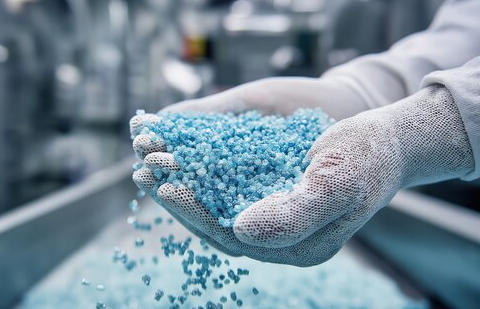
A masterbatch usually comprises three essential components:
1. Carrier Resin: The base polymer compatible with the target plastic, such as PE, PP, or PET.
2. Concentrated Additives or Pigments: The functional or coloring component.
3. Dispersing Agents: Chemicals ensuring even distribution and consistent properties during polymer processing.
High-shear mixing and twin-screw extrusion are commonly used to produce uniform, high-quality masterbatch pellets. Each pellet acts as a mini “capsule” containing exactly the right balance of compound elements.
Masterbatch-optimized plastics are used in:
- Packaging Films: For PE or PP films with anti-static and slip masterbatches.
- Automotive Parts: For durable, UV-stable interior trims.
- Electrical Components: Using flame-retardant or anti-tracking additives.
- Construction Materials: With masterbatch providing weather resistance and surface aesthetics.
- Consumer Goods: From toys to containers, for consistent color and durability.
While both processes enhance plastic materials, they differ in flexibility and use case.
| Feature | Masterbatch | Compounding |
|----------|--------------|-------------|
| Additive Concentration | High (20–70%) | Low (Uniform) |
| Application | Added during molding or extrusion | Prepared as ready-to-use compound |
| Cost | Lower for small batches | Higher for full recipes |
| Flexibility | High for color and function changes | Low; fixed formulation |
Thus, masterbatch offers greater flexibility for companies needing customized properties across multiple polymer applications.
Chinese manufacturers have become global leaders in innovative masterbatch technology through integrated R&D, emphasizing:
- High dispersion performance.
- Compatibility with biodegradable polymers.
- Customization for niche industrial uses.
Global customers — from packaging producers to automotive suppliers — increasingly rely on Chinese masterbatch suppliers for quality, consistency, and innovation.
Your company, as a Chinese innovator in plastic materials, positions itself at the forefront of this industry by offering tailored masterbatch solutions that combine color science, polymer chemistry, and global sustainability standards.
In traditional architecture, adobe was valued for insulation and natural availability, while modern plastics emphasize durability, processability, and customization through masterbatch.
Though both materials serve “building” functions in their respective contexts (adobe in housing, plastics in modern infrastructure), their composition, performance, and lifecycle impact are entirely different.
In conclusion, Adobe — the earth-based material — represents natural composites, while plastics enhanced with masterbatch embody synthetic innovation driving the modern industrial world.
While the name “Adobe” might cause confusion, it is not a plastic material. Plastics are engineered polymers that rely on innovations such as masterbatch technology to achieve specific functions, aesthetics, and sustainability goals.
In contrast, adobe refers to natural earthen material or a digital design software brand — neither related to the polymer family.
Today's world of modern polymer science, powered by custom masterbatch solutions, continues to redefine industries, bridging environmental responsibility and performance excellence.
As global demand for high-performance, sustainable plastics grows, masterbatch-based materials will remain central to production innovation — offering customized, energy-efficient, and eco-friendly solutions across the manufacturing spectrum.
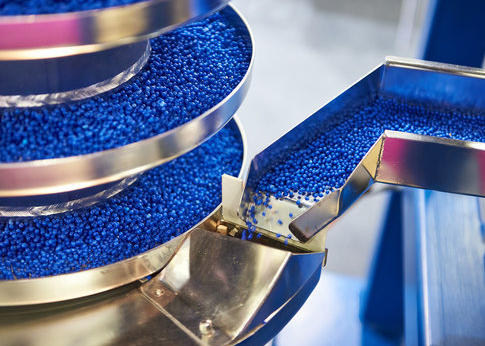
Masterbatch is used to introduce color, UV resistance, flame retardancy, or other performance attributes into plastics efficiently and cost-effectively. It ensures uniform distribution of additives and pigments.
No. Adobe is either a natural construction material made of mud and straw or the name of a software company. It has no relation to plastics or polymeric substances.
Masterbatch offers better dispersion, easier handling, reduced dusting, improved processing stability, and higher color consistency compared to raw pigments.
Yes. Masterbatch is commonly used to upgrade the appearance, durability, and functionality of recycled polymer blends, improving their commercial value.
Key trends include biodegradable carrier resins, nano-additives for advanced properties, digital color matching systems, and the use of masterbatch in sustainable packaging materials.


