


close
Choose Your Site
Global
Social Media


Views: 222 Author: Rebecca Publish Time: 2025-12-26 Origin: Site


Content Menu
● Understanding PP Masterbatch and Its Importance
● Global Market Outlook for PP Masterbatch in 2025
● Cutting-Edge Innovations Transforming PP Masterbatch Technology
>> 1. Bio-Based and Recycled Polymer Carriers
>> 2. Smart Additive Masterbatch Systems
>> 3. Nano-Engineered Masterbatch
>> 4. Color and Aesthetic Innovation
>> 5. Circular Economy Integration
● Processing and Manufacturing Advancements
>> Intelligent Compounding Control
>> Twin-Screw Extrusion Advancements
>> Infrastructure and Construction
● Sustainability and Environmental Focus
● Key Trends Reshaping the PP Masterbatch Market
● Future Outlook: The Path Ahead
● FAQs About PP Masterbatch (2025 Trends)
>> 1. What is the main advantage of using PP masterbatch instead of direct pigment addition?
>> 2. How is sustainable PP masterbatch different from traditional versions?
>> 3. What are the top applications for advanced PP masterbatch in 2025?
>> 4. How are AI and automation changing the masterbatch industry?
>> 5. What future trends will dominate the PP masterbatch market?
As the plastics industry evolves rapidly toward sustainability, customization, and advanced performance, Polypropylene (PP) Masterbatch technologies are at the forefront of transformation. In 2025, manufacturers are not just looking for color or filler—PP masterbatch is becoming a key element in achieving energy efficiency, environmental responsibility, and product differentiation. This article explores the latest innovations, trends, and technical advances that define the PP masterbatch industry in 2025.
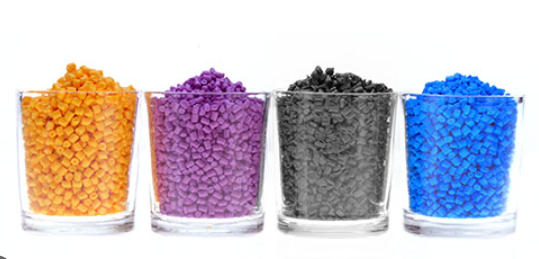
PP masterbatch is a concentrated mixture of pigments, additives, or fillers encapsulated by a PP carrier resin. It allows processors to modify the physical and aesthetic properties of polypropylene products efficiently. Instead of directly adding raw additives to resin, the use of masterbatch ensures consistency, cleaner processing, and lower waste.
Key advantages of PP masterbatch include:
- Enhanced processability during injection or extrusion.
- Improved dispersion of colors or functional additives.
- Customized property development, such as UV resistance or flame retardancy.
- Reduced inventory complexity by simplifying additive management.
As PP products dominate automotive, packaging, and construction industries, innovative masterbatch solutions are driving material performance to the next level.
The global PP masterbatch market continues to expand, driven by rapid industrialization and the demand for sustainable plastic materials. In 2025, the market value is projected to exceed USD 5.8 billion, with a CAGR of about 6.3% from 2023 to 2030.
- Sustainability goals: Companies aim to reduce carbon footprints through eco-friendly masterbatch formulations.
- Advanced manufacturing technologies: AI-driven process controls, 3D compounding analytics, and digital twins optimize masterbatch quality.
- Rising demand in packaging: Especially in flexible and rigid PP packaging that requires superior coloration and UV protection.
- Customization trends: The era of “one-size-fits-all” PP masterbatch is fading. Tailored solutions for high-end applications are the new standard.
- Asia-Pacific: China, India, and Southeast Asia dominate production, fueling global export supplies.
- Europe: Strong focus on sustainability and compostable materials drives innovation in bio-based PP masterbatch.
- North America: Technological automation and R&D investment strengthen high-performance compound development.
The move toward sustainable polymer compounding is accelerating. By incorporating bio-based PP and recycled polypropylene resins, masterbatch producers achieve a lower carbon footprint and enable circular economy models.
Recent breakthroughs in compatibilizer chemistry allow recycled PP-based masterbatch to retain comparable mechanical strength and color dispersion performance as virgin PP systems.
Masterbatch suppliers are integrating multifunctional additives to deliver “smart” properties—such as antistatic, antimicrobial, self-cleaning, or IR-reflective features—within a single pelletized formula. These systems simplify compounding processes and reduce cross-contamination risks.
For instance, antimicrobial masterbatches infused with silver nanoparticles or organic zinc additives are gaining traction in healthcare and food packaging applications.
The use of nanofillers—like graphene, carbon nanotubes (CNTs), or nano-clays—enables exceptional reinforcement and conductivity properties. PP nano-masterbatch formulations are now delivering 30–50% performance gains in thermal stability, stiffness, and barrier performance for automotive and electronic applications.
Manufacturers deploy high-shear twin-screw extrusion systems to achieve uniform nanoscale dispersion, which is critical to the final performance consistency.
The color masterbatch segment is undergoing a digital revolution. Advanced liquid color masterbatch and AI-controlled pigment blending allow for exact color matching and batch uniformity in PP products.
Moreover, functional colorants—materials that shift color under stress, UV light, or temperature—open new opportunities in smart packaging and consumer goods.
In response to global sustainability targets, the masterbatch industry is aligning operations with the circular economy. Key innovations include:
- Reprocessable masterbatch designed for closed-loop recycling.
- Degradable additives enabling easier breakdown of plastic waste.
- Carbon capture integration in pigment manufacturing.
Some producers now use CO₂-derived fillers or biocarbon-based pigments to partially replace traditional fossil-based additives.
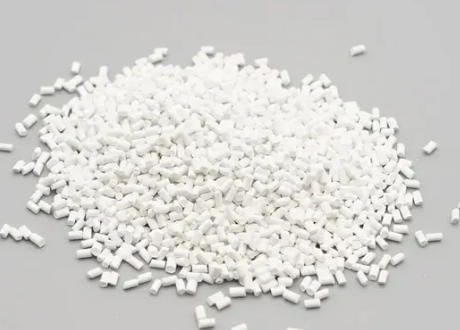
Machine learning and IoT technologies are entering masterbatch production lines. Real-time process optimization ensures better quality, consistency, and production efficiency. Automated color correction and predictive equipment maintenance reduce error margins and downtime.
High-torque, co-rotating twin-screw extruders allow precise control over the dispersion of pigments and fillers. With temperature profile monitoring and advanced barrel design, PP masterbatch quality and throughput are significantly improved.
Innovative underwater pelletizing systems ensure uniform shape, density, and moisture control. Smart packaging technology, such as automatic liner sealing or anti-moisture bagging, extends shelf life and transport stability of PP masterbatch.
PP masterbatch contributes massively to reducing vehicle weight while maintaining structural integrity. Flame-retardant, UV-stabilized, and high-gloss black PP masterbatches dominate automotive interiors and exterior trim parts.
Packaging sectors are adopting clarifying, whitening, and anti-fog masterbatches to meet aesthetic appeal and preservation performance needs. Custom formulations for food safety compliance are also expanding.
Anti-scratch, antistatic, and thermally conductive masterbatches are used in PP housings and wearable device parts. These help manage heat distribution while keeping the surface durable and sleek.
Color-stable and weather-resistant masterbatches are critical in pipes, sheets, outdoor furniture, and fittings. Additives for UV and thermal endurance greatly extend product lifespan in harsh climates.
Sustainability is no longer optional—it's a global manufacturer's mandate. PP masterbatch suppliers are prioritizing:
- Low VOC emission systems compliant with REACH and RoHS standards.
- Waterless color compounding, reducing effluent waste.
- Energy-efficient extrusion technologies powered by renewable energy sources.
Furthermore, biodegradable additive masterbatches are being researched to enable partial degradation of PP blends under specific composting conditions.
1. Digitalization of Masterbatch Production
Cloud-based design tools and AI-driven recipe optimization accelerate product development cycles.
2. Custom Micro-Additive Systems
Tailored masterbatch combining multiple additive effects (UV, slip, anti-block) for premium PP applications.
3. Hybrid Color Technology
Combination of organic and inorganic pigment systems for better opacity and visual brilliance.
4. Enhanced Compatibilization Techniques
New coupling agents improve blending between PP and other polymers or fillers, expanding hybrid PP material potential.
5. AI-Assisted Quality Control
Smart vision systems detect dispersion uniformity and pigment streaking during compounding in real time.
The next decade will see even greater integration between digital manufacturing and polymer science. Companies focusing on sustainable chemistry, AI-assisted product engineering, and customer-centered customization will gain dominant positions.
Moreover, the shift towards PP masterbatch designed for recyclability—rather than just containing recycled content—will define the next wave of competitive differentiation.
PP masterbatch technology in 2025 stands as a symbol of convergence—merging digital innovation, sustainability, and material science. As demand for high-performance, eco-friendly, and multifunctional plastics rises, the masterbatch segment will continue to be the strategic backbone of innovation in polymer manufacturing. Companies mastering the balance between performance, cost, and environmental compliance will lead the market transformation in the years ahead.
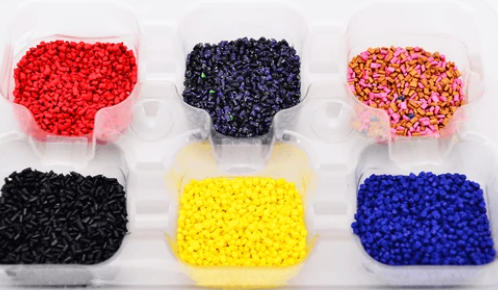
PP masterbatch ensures uniform dispersion and consistent coloration, reducing issues like streaking and uneven tone that often occur with direct pigment addition. It also simplifies dosing, improves productivity, and minimizes waste.
Sustainable PP masterbatch uses bio-based or recycled carriers, eco-friendly pigments, and processing techniques with lower emissions. These help reduce plastic waste and support circular manufacturing systems.
Major sectors include automotive parts, food-grade packaging, medical devices, electronics housings, and construction materials. Each application demands specific performance features tailored through masterbatch formulations.
AI enables process automation, predictive quality control, and data-driven formulation optimization. Manufacturers use AI algorithms to ensure color consistency, minimize downtime, and analyze compounding efficiency in real time.
Future trends include nanotechnology integration, circular material systems, smart functional additives, digitalized color management, and high-efficiency compounding for sustainable mass production.


