


close
Choose Your Site
Global
Social Media


Views: 222 Author: Rebecca Publish Time: 2026-01-22 Origin: Site


Content Menu
● Understanding the Role of PE Masterbatch
● The Evolution of PE Masterbatch Technology
>> 1. Shift Toward Sustainable Additives
>> 2. Nano-Technology in PE Masterbatch
>> 3. Smart and Functional Masterbatch Development
● Manufacturing Innovations in PE Masterbatch Production
>> 1. High-Torque Twin-Screw Extruders
>> 2. AI and Digital Process Control
>> 3. Continuous Production Systems
● Market Applications and Global Demand
>> 2. Construction and Infrastructure
● Sustainability and Environmental Commitments
>> Recycled and Circular Masterbatches
>> Regulatory and Certification Trends
● Future Trends and Outlook for 2025 and Beyond
● FAQ
>> 1. What is a PE Masterbatch?
>> 2. How does Masterbatch improve plastic product quality?
>> 3. What are the sustainable trends in PE Masterbatch development?
>> 4. Which industries rely most on PE Masterbatch?
>> 5. How will digital technology change Masterbatch production in 2025?
The plastics industry continues to evolve at a fast pace as sustainability, performance, and cost-efficiency emerge as the top priorities in material innovation. Among the many developments shaping the industry, Polyethylene (PE) Masterbatch technology stands out as a key driver of change. As we move into 2025, new advancements in Masterbatch formulation, processing methods, and environmental performance are setting the tone for a more efficient and eco-conscious plastics manufacturing future.
This article provides a deep dive into the latest PE Masterbatch innovations, exploring technological achievements, market trends, and the future landscape of polymer compounding.
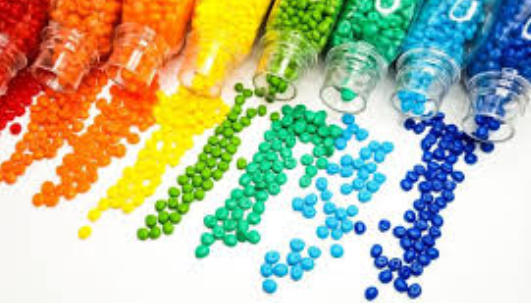
A Masterbatch is a concentrated mixture of pigments and additives encapsulated during a heating process into a carrier resin, which is then cooled and cut into granular form. The PE Masterbatch acts as a colorant or functional additive for polyethylene-based plastics, allowing manufacturers to achieve precise coloration, UV protection, anti-static properties, flame retardation, and other specific material performances.
The use of Masterbatch offers key advantages:
- Improved dispersion of additives or colorants within the base polymer.
- Reduced waste and improved production consistency during extrusion or molding.
- Enhanced processability by simplifying the mixing and coloring stages.
- Long-term cost savings by reducing the need for on-site mixing or manual pigment dosing.
PE Masterbatch serves critical roles across industries — from packaging films and containers to automotive parts and construction products. In 2025, demand for advanced Masterbatch solutions continues to rise as sustainability standards tighten and product customization becomes more complex.
The evolution of Masterbatch technology mirrors the wider transformation of the global plastics industry. Trends such as the circular economy, bio-based materials, and smart manufacturing are redefining both product design and production methodologies.
In 2025, the push for sustainability drives the adoption of eco-friendly Masterbatch formulations, particularly those using biodegradable, bio-based, or recycled carriers. Many Masterbatch manufacturers in China and abroad are investing heavily in R&D to ensure compatibility between PE base resins and alternative carrier systems derived from renewable resources.
These solutions help reduce carbon footprints, support global commitments to net-zero emissions, and improve corporate environmental profiles. For example, recycled polyethylene compounds combined with performance-enhancing Masterbatch additives are increasingly used for film and packaging applications.
Nanotechnology is revolutionizing polyethylene compounding. By incorporating nano-sized fillers such as nanosilica, graphene, or nanoclay, producers are enhancing the physical and barrier properties of PE films and sheets. The nano-enhanced Masterbatch provides improved mechanical strength, gas barrier control, thermal resistance, and antimicrobial performance.
This trend is especially important in food packaging and medical applications, where longer shelf life and hygiene assurance are critical. PE Masterbatch blends with nanocomposite additives offer a high-performance solution without sacrificing recyclability or processability.
Beyond color and protection, smart Masterbatches are being engineered to provide responsive or sensory properties. These include:
- Antimicrobial Masterbatches for medical and food packaging uses.
- Anti-fog and anti-block Masterbatches that improve film clarity and surface performance.
- Infrared-reflective Masterbatches for reducing heat absorption in agricultural films.
- Tracer Masterbatches integrated with digital watermarks or chemical markers for better recycling identification.
Such smart functionalities enable manufacturers to produce more intelligent and traceable plastic products, paving the way for circular economy models where every product can be sorted, recycled, or upcycled efficiently.
The quality and consistency of Masterbatch depend not only on formulation chemistry but also on manufacturing precision. Advances in production technologies are shaping the next generation of PE Masterbatch plants worldwide.
The latest twin-screw extrusion systems deliver superior mixing uniformity, enabling improved dispersion of pigments and additives. These machines support high filler loading, fine dispersion, and reduced production waste. The result is highly efficient PE Masterbatch production with excellent color and performance repeatability.
Digitalization and AI-driven process monitoring allow manufacturers to optimize compounding parameters in real-time. Smart sensors, data analytics, and digital twins help maintain consistent temperature, torque, and pressure, directly improving batch uniformity. Predictive maintenance minimizes downtime, cutting production costs and maximizing yield.
Many Masterbatch producers are shifting from traditional batch production to continuous compounding systems. This shift enables greater throughput and reduced energy consumption while ensuring consistent product quality — a necessity for premium-grade PE applications like multilayer films and precision packaging components.
The demand for PE Masterbatch solutions continues to grow across various end-use sectors. With global polyethylene consumption expected to exceed 120 million tons by 2026, Masterbatch usage will proportionally expand.
The packaging industry remains the largest consumer of PE Masterbatch products. Film packaging, extrusion coatings, and blow-molded containers all rely on customized Masterbatch formulations for color, opacity, UV resistance, anti-fog, and mechanical strength. In particular, white Masterbatch and additive Masterbatch dominate application segments due to their broad use in consumer and industrial packaging.
PE pipes, sheets, and membranes require Masterbatch additives that enhance UV stability, chemical resistance, and mechanical durability. In 2025, reflective and thermal insulation additives are in high demand for sustainable construction practices. The Chinese Masterbatch market is responding by developing long-lasting outdoor-grade PE Masterbatch optimized for climate resilience.
The automotive industry uses Masterbatch-enhanced polyethylene in interior trims, tanks, and under-the-hood components where precision coloring and durable performance are essential. The new generation of antistatic and flame-retardant Masterbatches contributes to safety while meeting aesthetic standards.
Agricultural films benefit from UV-stabilized and infrared-control Masterbatches that extend film life, regulate soil temperature, and improve crop yields. These films help minimize energy use in controlled environments like greenhouses and reduce replacement costs for farmers.
Sustainability is no longer optional in 2025 — it is a fundamental design criterion for polymer products and Masterbatch formulations. Manufacturers worldwide are incorporating Life Cycle Assessment (LCA) and Carbon Footprint Analysis (CFA) into their product development processes.
A major advancement in the field is the creation of recyclate-compatible Masterbatches that ensure color consistency and functional performance in recycled PE streams. These allow recycling plants to process post-consumer polyethylene without significant performance loss.
Companies are also adopting degradable and compostable Masterbatch technologies, which use organic fillers and catalysts to accelerate polymer breakdown under specific composting conditions.
To reduce dependence on petroleum-based resins, some companies have begun using bio-based carriers, including starch blends, PLA (polylactic acid), or bio-polyethylene. These carriers maintain performance characteristics while offering a lower carbon footprint and improved end-of-life options.
New environmental regulations and standards, such as REACH in Europe and China's plastic restriction policies, are encouraging manufacturers to reformulate Masterbatch products to meet eco-label and non-toxic performance benchmarks.
The future of PE Masterbatch technology is moving toward smart manufacturing ecosystems, green chemistry, and product customization. By 2025, R&D will focus on balancing performance, sustainability, and economics across product lines.
Key trends to watch include:
- AI-driven compound design: Predictive modeling for rapid formulation optimization.
- Modular compounding plants: Flexible production layouts for small-lot customization.
- Recycling traceability Masterbatches: Enabling digital material passports.
- Enhanced dispersion additives: For improving energy efficiency in blending.
- Hybrid Masterbatch platforms: Combining functional, visual, and environmental properties in one compound.
The integration of these technologies will redefine what is possible in polymer processing, making PE Masterbatch innovation a cornerstone of sustainable plastics manufacturing.
The PE Masterbatch industry is undergoing a transformative period driven by technological advancement, environmental responsibility, and digital manufacturing. As 2025 progresses, major trends — from nanotechnology to sustainable bio-based carriers — will continue to influence material design and production efficiency.
For global manufacturers, partnering with Masterbatch suppliers that emphasize innovation, process control, and environmental stewardship is crucial to achieving long-term competitiveness. The evolution of PE Masterbatch solutions symbolizes the industry's wider shift toward smarter, cleaner, and more adaptive material systems.
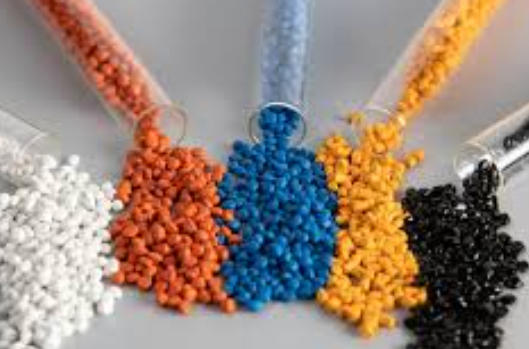
A PE Masterbatch is a concentrated blend of pigments or additives dispersed in a polyethylene carrier resin. It is used to color or modify the performance characteristics of plastic products without affecting base polymer integrity.
Masterbatch enhances dispersion, consistency, and process control. It provides uniform coloring, improved UV or thermal stability, and better physical strength while making production cleaner and more efficient.
Sustainable trends include bio-based carriers, recycled polymer compatibility, and degradable additives. These help reduce environmental impact and support circular economy principles.
Major industries include packaging, construction, automotive, and agriculture. Each sector demands specific functional Masterbatch types—such as UV-resistant, flame-retardant, or anti-fog additives—to improve product durability and usability.
Digitalization, AI systems, and continuous compounding are reshaping production by enabling real-time quality control, predictive maintenance, and automated formulation adjustments. This ensures consistent, sustainable, and high-volume manufacturing.


