


close
Choose Your Site
Global
Social Media


Views: 222 Author: Rebecca Publish Time: 2025-12-08 Origin: Site


Content Menu
● Understanding TPU And Shock Absorption
● Mechanism Of Shock Absorption In TPU Systems
● Why Use Masterbatch Instead Of Pre‑Compounded TPU?
● TPU Masterbatch In Footwear Shock Absorption
● TPU Masterbatch In Insoles And Orthotics
● Protective Gear: Helmets, Pads, Guards
● Inflatable And Film‑Based Sports Equipment
● TPU Masterbatch For 3D‑Printed Shock‑Absorbing Structures
● Key Masterbatch Types That Influence Shock Absorption
● Design Considerations When Using TPU Masterbatch
● Performance Testing And Quality Control
● Sustainability And Durability Benefits
● How A Custom TPU Masterbatch Partner Adds Value
● FAQ About TPU Masterbatch And Shock Absorption
>> 1. How does TPU Masterbatch improve shock absorption compared with pure TPU?
>> 2. Which sports products benefit most from TPU Masterbatch for impact protection?
>> 3. Can TPU Masterbatch maintain shock absorption in low‑temperature conditions?
>> 4. Is TPU Masterbatch suitable for 3D‑printed cushioning structures?
>> 5. How should brands select the right TPU Masterbatch for their sports equipment?
Thermoplastic polyurethane (TPU) Masterbatch is becoming one of the most effective ways to design sports equipment with superior cushioning, impact protection, and durability while keeping production highly efficient and cost‑controlled. By combining TPU's natural energy‑absorption behavior with customized Masterbatch formulations, brands can tune shock absorption performance precisely for running shoes, helmets, pads, balls, and many other products.
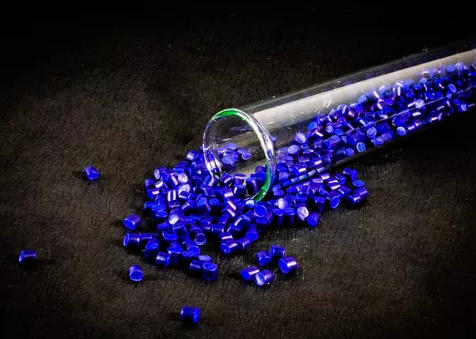
TPU is a flexible thermoplastic elastomer known for its high elasticity, high elongation at break, and strong recovery after deformation, which makes it ideal for absorbing impact energy. Because TPU can be repeatedly compressed and released with limited permanent deformation, it acts like a spring‑damper system that cushions shocks instead of transferring them directly to the body.
At the molecular level, TPU contains soft and hard segments that create a phase‑separated structure, enabling a balance of flexibility and strength. Under impact, the soft segments deform and dissipate energy, while the hard segments maintain structural integrity, allowing TPU parts to protect athletes from repetitive loads and sudden impacts.
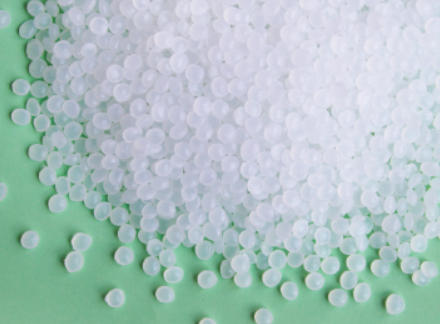
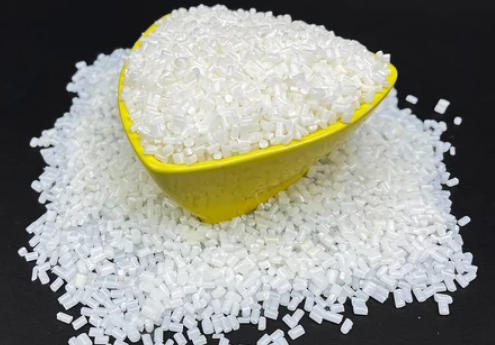
TPU Masterbatch is a highly concentrated mixture of pigments and/or functional additives dispersed in a TPU carrier resin, supplied as pellets that are dosed into base TPU during processing. Because the carrier is also TPU, the Masterbatch blends very uniformly with the base polymer, preserving key mechanical properties such as elasticity, tensile strength, and fatigue resistance.
Using TPU Masterbatch allows manufacturers to introduce color, impact‑modifying agents, processing aids, anti‑abrasion additives, and other functionalities into sports equipment without investing in full compounding lines for every formulation. By adjusting the let‑down ratio of Masterbatch in the base TPU, the shock absorption performance of the final part can be finely tuned while maintaining stable processing conditions.
Shock absorption in TPU mainly comes from its viscoelastic behavior: under impact, part of the mechanical energy is stored elastically and part is dissipated as heat through internal friction and hysteresis. Dynamic mechanical analysis shows TPU has significant damping, which helps reduce transmitted impact forces during vibration and impact.
When TPU is foamed or structured into cellular and lattice geometries, the material's energy‑absorption capacity increases further because cell collapse, bending, and recovery add extra damping mechanisms. TPU Masterbatch can be designed to optimize this viscoelastic response by adjusting hardness, crystallinity, and cell morphology, resulting in specific cushioning curves for different sports applications.
For sports equipment producers, TPU Masterbatch offers greater flexibility than fully pre‑compounded TPU because the same base TPU can be used with different Masterbatch grades to achieve multiple hardness levels, colors, and cushioning behaviors. This reduces inventory complexity, simplifies material qualifications, and allows quick development of new product lines or limited editions.
In addition, Masterbatch‑based systems help maintain consistent dispersion of pigments and additives, which is crucial for uniform mechanical performance across soles, pads, or shells that must behave predictably under impact. Centralizing pigment and additive handling into a Masterbatch also improves cleanliness and repeatability on the production line, minimizing quality variation between batches.
In performance footwear, TPU is widely used in midsoles, outsoles, heel counters, air‑cushion units, and support plates because it offers excellent abrasion resistance, grip, and cushioning. TPU‑based foams and membranes are already adopted by major sports brands to deliver strong energy return and impact attenuation in running and basketball shoes.
TPU Masterbatch in footwear can be tailored to control:
- Midsole hardness and rebound for different running styles, such as long‑distance cushioning versus explosive sprints.
- Heel impact absorption by combining TPU foams with Masterbatch that optimizes cell structure and viscoelastic response.
- Outsole abrasion resistance and traction by including wear‑resistant and slip‑resistant additives in a TPU Masterbatch carrier for high‑pressure zones.
Color Masterbatch also allows precise branding color schemes without sacrificing the cushioning properties of TPU foams and inserts. This is valuable for premium sports footwear that must combine performance with strong visual identity.
Beyond the main midsole, TPU Masterbatch is widely used in removable insoles, orthotic inserts, and customized cushioning layers for both sports and medical‑sport crossover applications. In these products, targeted comfort and pressure distribution are critical.
By using different Masterbatch formulations in the heel, arch, and forefoot zones of an insole, designers can create multi‑zone cushioning that matches the pressure map of the foot. Softer Masterbatch grades can be placed under the heel and metatarsal heads to reduce peak impact loads, while slightly harder grades can be used in the arch to provide support and stability. When combined with perforations or micro‑lattice designs, TPU Masterbatch helps insoles deliver both dynamic cushioning and breathability.
TPU is increasingly used in shin guards, protective cases, pads, and helmet liners because it can absorb shocks while remaining relatively light and flexible. In these products, TPU Masterbatch is used not only for color but also to tune impact resistance, elasticity, and temperature stability.
For example, TPU layers in shin guards or elbow pads can be formulated with Masterbatch to create zones of different hardness, enabling multi‑density structures that spread impact loads more effectively. In helmet liners or inserts, TPU Masterbatch can help design lattice or ribbed structures manufactured by molding or 3D printing, achieving high energy absorption with optimized weight and ventilation. This approach allows helmet manufacturers to meet increasingly strict impact standards while offering comfortable fit and stylish colors.
TPU films and membranes are widely adopted in inflatable sporting goods such as kites, bladders, air mattresses, protective air cells, and snow sports equipment. These films must balance airtightness, puncture resistance, and shock absorption so that the inflatable structure can withstand dynamic loads during use.
TPU Masterbatch for films can include:
- UV‑stabilizing additives to maintain film toughness and impact resistance outdoors.
- Abrasion‑resistant and anti‑scratch agents that prevent micro‑damage which could reduce long‑term cushioning performance.
- Color and translucent effects that help designers show internal air‑cushion structures while keeping mechanical properties high.
By adjusting the formulation and thickness, TPU film systems with Masterbatch can provide responsive cushioning in skis, snowboards, inflatable protective vests, and other equipment that must absorb vibrations and impacts in demanding environments.
3D‑printed TPU components are gaining popularity for custom insoles, lattice midsoles, bicycle grips, handle wraps, and pads that require complex geometries to control impact response. Using TPU filaments or powders enhanced with Masterbatch makes it possible to tune stiffness, damping, and wear resistance for specific sports applications.
Complex lattice and auxetic structures produced from TPU can deform in a controlled manner under load, offering high energy absorption with low weight. When these structures use TPU Masterbatch with optimized viscoelastic and processing characteristics, they offer highly customized cushioning solutions that can be tailored to individual athletes. For example, a 3D‑printed midsole using TPU Masterbatch can be locally stiff in zones needing support and softer in zones that need more cushioning, all within a single integrated part.
Several Masterbatch categories directly affect shock absorption in sports equipment:
- Elasticity‑tuning Masterbatch: Adjusts hardness (for example, Shore A or Shore D) and resilience, allowing fine control of cushioning curves in midsoles, pads, and grips.
- Foaming Masterbatch: Controls cell size, density, and closed‑/open‑cell structure in TPU foams, directly influencing energy absorption and rebound behavior.
- Impact‑modifier Masterbatch: Contains elastomeric or toughening agents that enhance crack resistance and reduce brittle failure under high‑energy impacts.
- Wear‑resistant Masterbatch: Introduces anti‑abrasion additives to maintain cushioning performance over long service life, especially in soles and contact surfaces.
- Anti‑slip and grip‑enhancing Masterbatch: Tailors surface friction for handles, grips, and protective pads, improving control and reducing accidental slips during play.
These Masterbatch types can be combined with color Masterbatch in a TPU carrier to create multifunctional solutions for specific sports products without multiple compounding steps.
When designing shock‑absorbing sports equipment with TPU Masterbatch, engineers should consider:
- Target impact conditions: Impact force levels, duration, and frequency determine the required damping behavior and hardness range. Equipment for high‑impact sports like basketball or downhill mountain biking needs different TPU Masterbatch strategies than yoga mats or low‑impact fitness gear.
- Temperature range: TPU's viscoelastic response changes with temperature, so Masterbatch must maintain performance from cold outdoor conditions to warm indoor environments. Formulations for winter sports often require specific additives to keep materials flexible at low temperatures.
- Geometry and thickness: The shape and thickness of soles, pads, or inserts work together with Masterbatch‑driven material properties to define final cushioning performance. Thinner parts may need softer Masterbatch to achieve the same shock absorption as thicker components.
- Processing method: Injection molding, extrusion, blow molding, or 3D printing each impose different shear and cooling profiles, which should match the rheology and dispersion behavior of the TPU Masterbatch. Correct screw design, temperature profile, and mixing conditions help Masterbatch disperse fully and avoid weak points.
Collaborating closely with a specialized TPU Masterbatch supplier helps convert these design inputs into practical, stable formulations for mass production and consistent quality.
To confirm that a TPU Masterbatch solution truly improves shock absorption in sports equipment, systematic testing and quality control are essential.
Common tests include:
- Impact and drop tests: Measure peak acceleration, energy return, and residual deformation of soles, pads, or helmets after repeated drops from specified heights.
- Dynamic mechanical analysis: Evaluates storage modulus, loss modulus, and damping factor over a range of temperatures and frequencies, helping engineers fine‑tune viscoelastic response.
- Fatigue and compression set tests: Determine how cushioning properties change after many compression cycles, simulating real use over the life of the product.
- Abrasion and wear tests: Check how quickly soles or protective surfaces wear down, which influences long‑term protection and comfort.
By comparing test data for different Masterbatch formulations, brands can select TPU Masterbatch systems that balance cushioning, energy return, durability, and weight according to their product positioning.
TPU often outperforms many conventional materials such as EVA in terms of abrasion resistance and long‑term mechanical stability, which means less frequent replacement of sports equipment. Durable TPU Masterbatch solutions reduce waste and support longer product lifetimes, an important aspect of sustainability for sports brands.
Because TPU is a thermoplastic, it can be recycled and reprocessed, and Masterbatch strategies can be developed to incorporate recycled TPU while maintaining acceptable cushioning performance. By optimizing formulations and using mono‑material TPU systems, brands can design sports equipment that combines high shock absorption with better recyclability. In addition, halogen‑free flame‑retardant and low‑VOC Masterbatch options help manufacturers comply with environmental regulations and eco‑label requirements.
A specialized TPU Masterbatch partner with strong R&D and application experience can support global sports brands and OEM factories throughout the entire product lifecycle.
Key services include:
- Joint definition of cushioning targets, hardness ranges, and rebound profiles for different sports categories.
- Rapid prototyping of Masterbatch variants for midsoles, pads, films, and 3D‑printed parts, allowing quick A/B testing of impact performance.
- Guidance on processing windows, screw designs, and mixing ratios that keep Masterbatch dispersion stable at industrial scale.
- Support in regulatory documentation, such as REACH, RoHS, and sports‑specific standards for safety and performance.
For a Chinese enterprise focused on innovative plastic materials, TPU Masterbatch is not only a product but a platform to deliver customized, shock‑absorbing solutions to global sports equipment brands.
TPU Masterbatch provides a powerful toolkit for engineering shock‑absorbing sports equipment that is safer, more comfortable, and more durable than products made from many traditional materials. By tuning hardness, viscoelasticity, foam structure, grip, and wear resistance through Masterbatch formulations, brands can design highly customized cushioning systems for footwear, protective gear, inflatable equipment, insoles, and 3D‑printed components. For a global sports market demanding both high performance and sustainable solutions, TPU Masterbatch has become a strategic choice to deliver precise impact protection, long service life, and efficient, flexible manufacturing.
TPU already has strong impact resistance and damping, but TPU Masterbatch allows designers to fine‑tune hardness, rebound, and foam morphology, giving more targeted cushioning curves for specific sports. By optimizing the balance of soft and hard segments and adding functional modifiers via Masterbatch, the material can absorb more energy at the critical impact range while maintaining structural integrity.
Running shoes, basketball shoes, and other performance footwear benefit significantly through TPU Masterbatch‑optimized midsoles, heel cushions, and outsole inserts. Protective gear such as shin guards, helmet liners, pads, grips, yoga blocks, fitness mats, and inflatable sports equipment also use TPU Masterbatch to improve comfort and impact attenuation without adding excessive weight.
High‑quality TPU maintains flexibility and energy absorption even at relatively low temperatures, especially when formulated with suitable Masterbatch additives that stabilize viscoelastic performance. This makes TPU Masterbatch systems well suited for winter sports equipment such as ski boots, snowboard components, ice hockey pads, and cold‑weather running shoes.
Yes, TPU Masterbatch can be incorporated into filaments or powders used for 3D printing, enabling customized lattice and auxetic structures with excellent energy absorption and toughness. When rheology and dispersion are optimized, 3D‑printed TPU parts can deliver stable cushioning, high durability, and complex geometries that are difficult to achieve with traditional foam molding.
Brands should start by defining target impact levels, usage environment, lifetime expectations, and regulatory or sustainability requirements, then match these with appropriate Masterbatch hardness, functional additives, and processing behavior. Working closely with a specialized TPU Masterbatch supplier enables laboratory testing and pilot runs that validate cushioning performance, wear resistance, and consistency before scaling to full production.


