


close
Choose Your Site
Global
Social Media


Views: 222 Author: Rebecca Publish Time: 2026-01-25 Origin: Site


Content Menu
● Why PE Masterbatch Matters in Plastic Manufacturing
>> Environmental and Processing Benefits
● Key Factors to Consider When Choosing PE Masterbatch
>> 1. Compatibility with Base Resin
>> 2. Pigment Selection and Quality
>> 4. Dispersion and Distribution
>> 5. UV and Weathering Resistance
>> 7. Certification and Safety Compliance
● The Role of Carrier Resin in Masterbatch Performance
>> Importance of Melt Flow Index (MFI)
● Testing and Evaluation Before Bulk Production
● How to Work with a Reliable Masterbatch Supplier
● Industry Applications of PE Masterbatch
● Common Challenges and Troubleshooting Tips
>> Color Fading
● Sustainable Masterbatch Solutions
>> Recycled Polymer Compatibility
>> Biodegradable and Non-Toxic Options
>> Energy-Efficient Processing
● Steps to Select the Right PE Masterbatch
>> 1. What is the difference between PE and PP Masterbatch?
>> 2. How much Masterbatch should be added to the base polymer?
>> 3. Can PE Masterbatch be used with recycled materials?
>> 4. Does storage condition affect Masterbatch quality?
>> 5. What are the most common applications of PE Masterbatch?
Selecting the right PE Masterbatch is critical for achieving optimal product performance, color consistency, and cost efficiency in plastic manufacturing. With the global demand for high-quality plastic materials rising, manufacturers increasingly rely on Masterbatch solutions that enhance polymer properties while maintaining production flexibility.
This guide explores how to choose the right PE Masterbatch, key factors to evaluate supplier quality, and technical parameters that influence processing and product outcomes.

PE Masterbatch (Polyethylene Masterbatch) is a concentrated mixture of pigments, additives, or fillers encapsulated during a heat process into a carrier resin, which is later cooled and cut into granular form. When mixed with natural PE resin, it adds specific properties to final plastic products such as color, UV resistance, flame retardancy, or anti-static behavior.
There are several categories of PE Masterbatch, including:
- Color Masterbatch – for coloring plastic products with uniform dispersion.
- Additive Masterbatch – to add functional benefits like UV stabilization, anti-blocking, or slip.
- Filler Masterbatch – used to reduce production costs and modify mechanical properties.
- White and Black Masterbatch – commonly used for opacity control, brightness, and protection.
Each category serves a distinct purpose, and your choice depends on your plastic processing technique and application.
Using the right Masterbatch provides multiple benefits that go beyond simple coloration. It plays a decisive role in performance enhancement and process optimization.
Instead of adding raw pigments directly—which can cause uneven coloring and waste—Masterbatch offers precision and reduces the amount of additive needed. This leads to better mixing efficiency and controlled coloring results with fewer rejects.
High-quality PE Masterbatch ensures consistent dispersion in polymer matrices, which results in stable physical properties, improved surface finish, and reproducible performance across batches.
Since Masterbatch is pre-dispersed, it minimizes dust generation and improves workplace safety. Some types also enhance recyclability by ensuring color stability during multiple extrusion cycles.
Selecting the right PE Masterbatch involves technical evaluation and understanding your end-use application. The following factors will help you make an informed decision.
Ensure that the Masterbatch carrier resin matches or closely aligns with your base resin. For PE-based products, both LDPE (Low-Density Polyethylene) and HDPE (High-Density Polyethylene) Masterbatches** can be used, but mixing incompatible materials can cause poor blending or reduced mechanical performance.
Color fastness and stability largely depend on the pigment's thermal resistance and migration behavior. High-quality pigments maintain their stability during high-temperature processes like film blowing or injection molding.
Different applications require different Masterbatch loading levels. Typically, the dosage ranges from 1% to 5%, depending on color intensity or additive concentration. Conduct small-scale tests to achieve the best ratio without excessive material cost.
Uniform pigment or additive dispersion ensures smooth surface finishing and consistent product properties. High-shear mixing and twin-screw extrusion during Masterbatch production are crucial indicators of quality.
For outdoor applications such as agricultural films or outdoor furniture, UV stabilizing Masterbatches are essential. They enhance durability and prevent color fading, cracking, or brittleness caused by sunlight exposure.
Different processing methods—blow molding, extrusion, or injection molding—require Masterbatches optimized for specific thermal and rheological characteristics. Always match Masterbatch grade with processing temperature and equipment type.
For products meant for food packaging or medical applications, compliance with international standards (such as FDA, RoHS, or REACH) is critical. Always request certification and technical datasheets from your supplier before mass production.
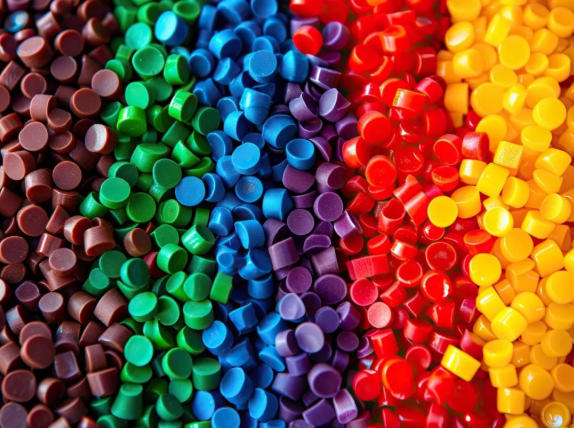
The carrier resin acts as the base material that disperses pigments or additives throughout the polymer. The correct carrier ensures smooth blending and compatibility with the final plastic.
LDPE-based Masterbatches generally provide better flexibility and processability in films or soft packaging. HDPE carriers, on the other hand, are more suitable for rigid containers or molded parts because of their higher strength and stiffness.
A Masterbatch with a melt flow index close to the base resin allows uniform blending and stable extrusion. Significant differences in MFI can lead to melt fracture or inconsistent coloring.
Before scaling up, always conduct trial runs using sample Masterbatch batches. Testing parameters such as color strength, dispersion uniformity, and mechanical impact will help verify product compatibility.
Laboratory or pilot-scale tests should include:
- Color measurement (ΔE value) – ensures minimal color deviation.
- Tensile strength and elongation tests – to verify no negative effects on polymer integrity.
- Thermal stability – to prevent decomposition during processing.
- Weather resistance tests – for outdoor or UV-sensitive applications.
Collecting performance data early avoids costly quality issues later in production.
A high-quality PE Masterbatch starts with a capable and experienced supplier. Consider the following aspects when selecting your supplier.
Choose suppliers with in-house R&D teams capable of formulating custom solutions for your application. They should offer technical guidance, formulation adjustment, and on-site support.
Advanced manufacturing lines equipped with twin-screw extruders, precise dosing systems, and efficient filtration processes produce superior Masterbatches with higher dispersion quality.
Consistent quality requires rigorous process control. Check if the supplier follows ISO 9001:2015 or equivalent quality management standards. Random testing, batch traceability, and detailed COAs (Certificates of Analysis) are important indicators.
Every customer's plastic product has unique requirements. A reputable Masterbatch manufacturer should be able to tailor pigment concentration, additive type, and carrier resin to meet specific demands.
For international buyers, reliable export capability, proper packaging (moisture-proof bags), and prompt delivery are crucial for maintaining supply chain continuity.
PE Masterbatch has broad applications across various plastic sectors.
- Packaging Films – Enhances clarity, color uniformity, and strength.
- Pipes and Fittings – Adds UV resistance and toughness.
- Blow-Molded Containers – Improves gloss and stability.
- Agricultural Films – Provides anti-fog and thermal control features.
- Electrical Cables – Ensures color coding and insulation protection.
In each case, the right Masterbatch ensures high performance and cost effectiveness.
Even with the best formulations, some challenges may arise during production.
Usually caused by poor dispersion or incompatible base resin. Solution: Verify the MFI and carrier compatibility, and ensure adequate mixing time.
Defects such as black spots or gel particles can result from degraded pigments or contamination. Solution: Filter Masterbatch during processing or reduce thermal stress.
Exposure to UV radiation or improper pigment selection can reduce color stability. Solution: switch to high-performance pigments or UV-stabilized Masterbatch grades.
As sustainability grows in importance, manufacturers are developing eco-friendly Masterbatch formulations.
Modern Masterbatch technologies can match recycled PE resin streams while maintaining consistent color and mechanical properties.
For environmental compliance, some producers now offer bio-based Masterbatches with non-toxic carrier resins and natural pigments.
By optimizing dispersion at lower processing temperatures, new Masterbatch designs reduce energy usage and extend equipment lifespan.
Follow these practical steps to identify the most suitable PE Masterbatch for your production:
1. Define Your Product Goals: Identify whether you need aesthetic enhancement, functional improvement, or cost reduction.
2. Analyze Processing Conditions: Consider equipment type, processing temperature, and extrusion speed.
3. Consult Technical Data: Read datasheets and conduct trial experiments.
4. Evaluate Supplier Reliability: Choose certified manufacturers with technical expertise.
5. Optimize Formula Ratio: Start with a small dosing trial to find the best loading percentage.
These steps ensure your final plastic products meet both performance and economic targets.
The right PE Masterbatch acts as the backbone of high-performance plastic manufacturing. From selecting the right carrier resin and pigments to partnering with an experienced supplier, each decision influences product quality, durability, and cost efficiency. As markets move toward sustainability and customization, mastering the science of PE Masterbatch selection becomes vital for maintaining competitive advantage in global plastics production.

PE Masterbatch is specifically designed for polyethylene products, while PP Masterbatch matches polypropylene resins. Differences in melt flow and compatibility can affect final results, so matching carrier resin is essential.
The typical dosage ranges between 1% and 5%, depending on the desired color intensity or additive function. Always perform small trials to confirm the optimal proportion.
Yes. Many PE Masterbatches are formulated to blend with recycled resins while maintaining color stability and mechanical strength. Always verify compatibility before large-scale production.
Absolutely. Masterbatch should be stored in a dry, ventilated environment, away from sunlight and moisture. Improper storage can cause pigment degradation or agglomeration.
Common applications include plastic films, packaging, bottles, pipes, agricultural covers, and household containers. Its versatility and processing ease make it popular across industries.


