


close
Choose Your Site
Global
Social Media


Views: 222 Author: Rebecca Publish Time: 2025-12-02 Origin: Site


Content Menu
● Understanding Plastic Material Families
● Defining Application Requirements
● Balancing Performance, Cost, and Processability
● Mechanical and Thermal Properties
● Chemical, Environmental, and Weathering Resistance
● Aesthetic, Optical, and Surface Requirements
● Processing Method and Masterbatch Compatibility
● Regulatory, Safety, and Sustainability Factors
● Masterbatch Types and Functions
● Working With a Technical Partner
● Step‑By‑Step Plastic Material Selection Framework
● FAQ
>> 1. Why is Masterbatch important in plastic material selection?
>> 2. How do I choose between different plastic resins?
>> 3. Can Masterbatch improve recyclability and sustainability?
>> 4. What tests should be done before finalizing material and Masterbatch?
>> 5. How does Masterbatch dosage affect product properties?
Selecting the right plastic material is a strategic decision that directly affects product performance, processing efficiency, cost, and brand image. For modern manufacturers, Masterbatch solutions make plastic materials more flexible, more functional, and easier to tailor to demanding applications. This comprehensive guide explains how to select plastic material step by step, with a strong focus on how Masterbatch can help you engineer better products.

Plastic materials can be grouped into several major families, and each group behaves differently in real applications. Understanding these basic families is the first step before going deeper into Masterbatch and detailed performance tuning.
Amorphous plastics, such as ABS, PC, and PS, typically offer good dimensional stability and clarity, making them suitable for housings, transparent covers, and consumer products. Semi‑crystalline plastics, such as PP, PE, PA, PBT, PEEK, and others, usually provide higher chemical resistance, better fatigue performance, and improved wear behavior, which is valuable for engineering and industrial parts. High‑performance and imidized materials, like PAI and polyimide, are reserved for extreme environments that require very high temperature resistance and outstanding mechanical properties.
When choosing a material family, always think about how a Masterbatch can complement the base resin. For example, a PP or PE base can be combined with UV stabilizer Masterbatch for outdoor parts, or a PA base can be paired with flame‑retardant Masterbatch to meet safety regulations.
The most important rule in plastic material selection is to design from the application backwards. Before looking at data sheets or Masterbatch options, clarify what the part must do and in what environment it will work.
Start with mechanical requirements. Determine whether the part needs high stiffness, high impact resistance, fatigue resistance, or flexibility. A hinge, for instance, demands flexibility and fatigue resistance, while a structural bracket may need high stiffness and creep resistance.
Next, analyze the environment. Consider maximum and minimum operating temperatures, continuous temperature exposure, short‑term peaks, humidity, contact with oils, solvents, detergents, and other chemicals. Also think about outdoor exposure, UV radiation, and weathering. Many base resins can withstand the mechanical load, but only when the right Masterbatch additives (such as UV stabilizers, antioxidants, or processing stabilizers) are combined do they deliver reliable long‑term performance.
Finally, define aesthetic and regulatory requirements. Decide whether the part must be transparent, glossy, matte, opaque, or highly colored. Determine if it needs food‑contact approval, biocompatibility, low odor, or compliance with specific industry regulations. Here, color Masterbatch and functional Masterbatch become crucial tools to satisfy both design and compliance.
In real projects, no plastic material wins in every category. High‑performance resins usually cost more and may be harder to process, while cheaper resins may not meet high‑end mechanical or thermal requirements. A smart material selection process finds a balanced solution and then uses Masterbatch to close the performance gaps.
Cost should be evaluated over the entire life cycle, not only as raw material price. A slightly higher‑priced resin combined with a well‑designed Masterbatch might reduce scrap, improve cycle times, and lower warranty claims, which can be more valuable than the initial cost difference. Additionally, optimized Masterbatch dosing often allows lower pigment or additive usage compared with direct powder dosing, further improving cost efficiency.
Processability is equally critical. Some plastics have narrow processing windows or higher sensitivity to moisture and shear. Choosing a resin with stable processing behavior can cut machine downtime and setup complexity. In many cases, processing‑aid Masterbatch, slip agents, nucleating agents, or anti‑block Masterbatch can improve flow, demolding, and cooling, allowing faster cycles and smoother surfaces.
Once basic families and constraints are clear, examine mechanical and thermal properties in more detail. Typical properties include tensile strength, flexural modulus, impact strength, hardness, elongation at break, and creep resistance. Thermal properties include heat deflection temperature, glass transition temperature, melting temperature, and coefficient of thermal expansion.
When a design requires a specific combination, such as stiffness at high temperatures, semi‑crystalline engineering plastics like PBT, PA, or PEEK often provide a good starting point. If impact resistance at low temperature is the key, materials like impact‑modified PP or PC/ABS blends might be better. In all cases, Masterbatch can refine the behavior: for example, toughening Masterbatch can improve impact strength, while heat stabilizer Masterbatch can preserve mechanical properties at elevated temperatures.
Thermal stability over time is often underestimated. Even if a plastic survives a short oven test, long‑term exposure to heat, oxygen, and mechanical stress may cause degradation. Antioxidant Masterbatch and heat stabilizer Masterbatch can significantly extend service life and maintain color and mechanical properties in harsh conditions.
Chemical resistance is crucial for parts exposed to oils, fuels, detergents, acids, alkalis, and solvents. Polyolefins like PE and PP offer good resistance to many chemicals, while engineering plastics such as PBT, PEEK, PVDF, and PTFE can handle more aggressive environments. For laboratory, medical, or food industries, compatibility with cleaning agents and sterilization methods must be evaluated carefully.
Environmental resistance includes moisture absorption, hydrolysis resistance, and resistance to stress cracking. Amorphous plastics like PC and PMMA may be more sensitive to stress cracking in the presence of certain chemicals, whereas semi‑crystalline materials may resist them better. When outdoor exposure is involved, UV radiation and weathering become primary concerns. Without proper UV stabilizer Masterbatch or light‑stabilizing Masterbatch, many plastics will discolor, embrittle, or lose gloss over time.
When making final decisions, consider the synergy between base resin and Masterbatch. A UV‑stabilized Masterbatch for PE pipes, for example, not only protects the material but also maintains mechanical integrity and color uniformity for many years in the field. Similarly, anti‑oxidant Masterbatch can slow down thermal‑oxidative degradation during both processing and service life.
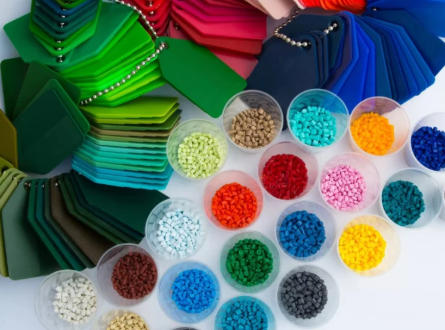
Many products are judged first by their appearance. Color accuracy, gloss level, surface texture, and transparency all influence customer perception and brand value. Here, Masterbatch is an indispensable tool, because it allows consistent color and appearance across different batches, machines, and factories.
For fully opaque parts, color Masterbatch can deliver exact brand colors, improve coverage even at low dosages, and help hide flow marks or minor surface defects. For translucent or transparent parts, transparent Masterbatch and special effect Masterbatch (such as pearlescent, metallic, or fluorescent effects) can create unique visual identities without sacrificing clarity or mechanical performance.
Surface behavior is also important. Masterbatch with slip, anti‑block, or anti‑scratch additives can improve handling and reduce surface damage. Anti‑fog Masterbatch can ensure clear visibility in packaging or automotive lighting. In high‑touch consumer products, Masterbatch can modify gloss or create soft‑touch surfaces, aligning the tactile experience with the brand design.

Each processing method—such as injection molding, extrusion, blow molding, thermoforming, rotational molding, or film blowing—imposes its own limitations and design rules. A resin that works beautifully in extrusion might not be optimal for injection molding of thick, complex parts.
For injection molding, flow behavior and shrinkage are especially critical. Materials with suitable melt flow index or viscosity will fill the mold cavities correctly without excessive pressure or temperature. Masterbatch must be fully compatible with the base resin to ensure homogenous mixing, stable viscosity, and predictable shrinkage.
In extrusion and film blowing, drawability, melt strength, and cooling behavior are key. Masterbatch dosage and carrier selection must be optimized so that color and additives distribute evenly without causing die build‑up or instability. For fiber spinning and nonwoven applications, filtration, dispersion quality, and thermal stability of the Masterbatch are particularly important.
Before scaling up production, always perform processing trials with the selected plastic and Masterbatch combination. Verify that dispersion is uniform, no plate‑out or gels appear, and mechanical and aesthetic targets are met. Fine‑tune Masterbatch concentration and processing parameters based on these trials.
Regulatory compliance is non‑negotiable in sectors such as food packaging, medical devices, toys, and electrical components. For these applications, both the base resin and the Masterbatch must meet relevant standards and regulations. This may include approvals for food contact, biocompatibility, low migration, and compliance with specific directives or standards in the destination market.
Fire behavior is another critical safety factor in construction, transportation, and electronics. Flame‑retardant Masterbatch can help meet flammability ratings without redesigning the entire material system. However, flame‑retardant systems may influence mechanical properties and processing, so testing is essential.
Sustainability is becoming a central driver in plastic material selection. More brands want recyclable, recycled, or bio‑based solutions without sacrificing performance. Masterbatch technology plays a key role here: it allows the use of recycled base polymers while still achieving high‑level color, stability, and performance. It can also incorporate additives that improve processing of recycled materials, control odor, and stabilize properties. When designing for sustainability, consider mono‑material structures, recyclable Masterbatch carriers, and additive packages that support circular economy goals.
To use Masterbatch effectively during material selection, it helps to understand the main types and their functions:
- Color Masterbatch: Delivers uniform color, brand matching, opacity control, and special visual effects.
- White and Black Masterbatch: Provides coverage, UV protection (especially in black), and base for contrast or printing.
- Additive Masterbatch: Includes UV stabilizers, antioxidants, slip agents, anti‑block agents, nucleating agents, anti‑statics, anti‑fog agents, processing aids, flame retardants, and more.
- Functional Masterbatch: Tailored for special properties such as antimicrobial activity, infrared absorption, laser marking, foaming, or conductivity.
When selecting plastic material, think of the base polymer as the structural backbone and the Masterbatch as the “toolbox” that shapes color, processability, and long‑term performance. A well‑designed Masterbatch system often allows standard polymers like PP or PE to reach performance levels suitable for demanding applications, reducing the need for very exotic resins.
Because there are hundreds of commercially available polymers and thousands of possible Masterbatch formulations, selecting the optimum combination requires strong technical support. Working with a partner that specializes in innovative plastics and Masterbatch allows you to shorten development time and reduce risk.
A good partner will analyze your drawings, product requirements, and target markets, then propose several resin and Masterbatch solutions with clear trade‑offs. They can provide laboratory testing, accelerated aging tests, and color matching services. In addition, they can support process optimization on your production lines, helping to fine‑tune Masterbatch let‑down ratios and reduce scrap.
For global OEMs and brands, consistent Masterbatch quality and formulation control are essential. A technically strong supplier will maintain tight quality systems, batch traceability, and stable color and additive performance, ensuring that your products look and perform the same across all regions.
To convert all of these principles into a practical workflow, manufacturers can adopt a simple yet powerful step‑by‑step framework:
1. Define product function and performance targets (mechanical, thermal, chemical, and visual).
2. List environmental and regulatory constraints (temperature range, chemicals, UV exposure, certifications).
3. Select candidate resin families that can satisfy key functional needs.
4. For each candidate, design a Masterbatch package (color, UV, processing aids, flame retardant, or other additives).
5. Evaluate cost, availability, and processing behavior, including cycle time and scrap rate.
6. Produce prototypes with the selected plastic and Masterbatch combination and test them under realistic conditions.
7. Refine the formulation, Masterbatch concentration, and processing parameters based on test results.
8. Validate final material and Masterbatch at production scale and lock specifications.
Using this framework, Masterbatch is not an afterthought but an integral part of the material selection strategy. It allows you to start from a practical base resin and progressively tune properties until all technical, economic, and branding targets are met.
Selecting plastic material is not a simple choice between a few resin names; it is a structured engineering process that balances mechanical, thermal, chemical, aesthetic, regulatory, and sustainability requirements. By integrating Masterbatch into this process from the very beginning, manufacturers can customize color, durability, processing behavior, and environmental resistance without constantly changing base polymers. A well‑chosen combination of plastic material and Masterbatch reduces risk, shortens development time, and delivers stable quality in mass production. For companies that focus on innovative plastic materials, offering tailored Masterbatch solutions is the most effective way to provide global customers with reliable, high‑value plastic material systems.
Masterbatch is important because it concentrates pigments and additives in a carrier resin, allowing them to be dosed precisely into the base polymer. This ensures consistent color, stable processing, and reliable performance without complicated powder handling or high additive consumption.
Start by defining your mechanical, thermal, chemical, and regulatory requirements, then shortlist resin families that meet these needs. After that, use Masterbatch to fine‑tune UV resistance, color, processing stability, and other performance aspects before making the final choice.
Yes, Masterbatch can support sustainability by stabilizing recycled resins, controlling color variations, and adding additives that improve processing and long‑term behavior. Carefully selected Masterbatch systems also help maintain recyclability by using compatible carriers and avoiding unnecessary multi‑material combinations.
Typical tests include mechanical testing (tensile, impact, flexural), thermal aging, chemical resistance tests, weathering tests for outdoor products, and appearance checks for color and surface quality. Pilot runs on actual production equipment are also essential to validate processability and Masterbatch dispersion.
Masterbatch dosage directly affects color intensity, additive level, and sometimes processing behavior. Too low dosage may lead to poor color coverage or weak functional effects, while too high dosage can influence viscosity, shrinkage, and cost. Optimizing the let‑down ratio is therefore a key part of material and Masterbatch selection.
[1](https://www.curbellplastics.com/wp-content/uploads/2023/02/Plastic-Material-Selection-Guide.pdf)
[2](https://www.protolabs.com/resources/guides-and-trend-reports/thermoplastic-material-selection-for-injection-molding/)
[3](https://www.ensingerplastics.com/en-us/plastic-material-selection)
[4](https://eckplastics.com/resources/material-selection-guide/)
[5](https://www.fluorotec.com/news/blog/engineering-plastic-selection-guide/)
[6](https://qualityplasticsllc.com/learning-center-post/plastic-material-selection-guide/)
[7](https://www.thermofisher.com/us/en/home/life-science/lab-plasticware-supplies/plastic-material-selection.html)
[8](https://www.4spe.org/i4a/pages/index.cfm?pageID=6226)


