


close
Choose Your Site
Global
Social Media


Views: 222 Author: Rebecca Publish Time: 2026-01-26 Origin: Site


Content Menu
● Understanding Plastic Materials
>> The Scope of Plastic Materials
>> The Role of Masterbatch in Plastic Selection
● Key Considerations When Selecting Plastic Materials
>> 5. Environmental and Regulatory Compliance
● Evaluating Plastic Material Performance
>> Long-Term Durability Assessment
● Understanding Masterbatch Customization
>> Types of Custom Masterbatches
● Industry Applications of Masterbatch and Plastic Selection
>> Construction and Infrastructure
● Cost and Productivity Optimization
● Practical Steps for Selecting the Right Plastic Material
● FAQ
>> (1) What is Masterbatch, and why is it important?
>> (2) How do I choose between additive and filler Masterbatch?
>> (3) Can recycled materials be used with Masterbatch?
>> (4) Does Masterbatch affect plastic recyclability?
>> (5) How do Masterbatch suppliers support product development?
Selecting the right plastic material is one of the most crucial decisions in product development. The type of plastic you choose directly impacts the performance, cost, durability, and sustainability of the final product. From packaging and automotive components to electronics and construction materials, plastics play an essential role in modern manufacturing.
Choosing among hundreds of plastic grades, fillers, and Masterbatch formulations can seem overwhelming. However, when you apply a systematic evaluation process—considering mechanical, thermal, environmental, and aesthetic requirements—it becomes much easier to make informed decisions that optimize performance and production efficiency.

Plastics are synthetic or semi-synthetic organic compounds that can be molded into solid objects. They are generally classified into two main categories:
- Thermoplastics: Can be melted and reshaped multiple times (e.g., polyethylene, polypropylene, PVC, PET).
- Thermosetting plastics: Permanently hard after being cured, such as epoxy and phenolic resins.
Among thermoplastics, additives like Masterbatch are widely used to achieve specific properties and colors, enhancing the adaptability of base resins.
Masterbatch is a concentrated mixture of pigments and additives encapsulated during a heat process into a carrier resin. It is a critical ingredient in plastic manufacturing because it defines color consistency, UV resistance, flame retardancy, and mechanical reinforcement.
There are several types of Masterbatch formulations:
- Color Masterbatch
- Additive Masterbatch (e.g., anti-UV, anti-static, flame-retardant)
- Filler Masterbatch (e.g., calcium carbonate, talc, or glass fibers)
- Combination Masterbatch (integrating color and additive functions)
Using the right Masterbatch not only improves the product's performance but also reduces raw material costs and simplifies production processes.
Selecting the correct plastic involves a step-by-step process driven by technical and market factors. Below are the main aspects to evaluate.
Every product is subject to mechanical stress—impact, tension, compression, or flexural force. The plastic material should provide enough strength, stiffness, and resilience under real application conditions.
For example:
- Polycarbonate (PC) is known for high impact resistance.
- Polypropylene (PP) offers excellent fatigue resistance.
- Nylon (PA) provides outstanding toughness and wear resistance.
When these base materials are combined with suitable Masterbatch, properties can be drastically enhanced—for instance, using glass-fiber-filled Masterbatch to improve strength.
Temperature is another vital determinant. Each polymer has a specific glass transition temperature (Tg) and melting point.
Applications exposed to heat (like engine parts or electronic housings) require plastics that retain mechanical properties under thermal load. Engineering plastics such as PEEK, PPS, and polyimide outperform commodity plastics in such conditions.
Heat-resistant Masterbatch can also increase thermal stability, extend life span, and minimize degradation.
In environments exposed to solvents, acids, or oils, plastics must remain chemically inert. Polyethylene (PE) and polypropylene (PP) generally resist chemicals well, while ABS and polycarbonate are more sensitive.
Incorporating antioxidant Masterbatch or chemical stabilizers helps prevent material deterioration over time.
Sometimes, color consistency and visual appeal are equally vital as functionality—especially in consumer goods packaging or electronic casings.
Color Masterbatch allows manufacturers to achieve precise shades, high opacity, and glossy finishes. It can also improve UV resistance to prevent fading during prolonged sunlight exposure.
Sustainability has become a defining factor in material selection. Many global customers now demand environmentally friendly plastics that meet RoHS, REACH, and FDA regulations.
Recycled resins, biodegradable plastics (like PLA or PBAT), and green Masterbatch formulations made from natural pigments support companies in achieving sustainability goals.
A structured evaluation phase helps narrow down the selection.
Create small-scale prototypes using candidate materials. Test them for dimensional accuracy, shrinkage rate, mechanical stress, and visual performance.
The inclusion of Masterbatch during testing gives a more realistic picture of how blends perform under operational conditions.
Use CAE tools to simulate stress, deformation, and thermal flow. Digital modeling minimizes material waste and optimizes performance before real production begins.
Evaluate how the plastic and Masterbatch combination perform under long-term factors such as:
- UV exposure
- Chemical degradation
- High humidity or sub-zero conditions
- Repeated mechanical stress
This helps confirm that the plastic solution aligns with the product's lifecycle expectations.
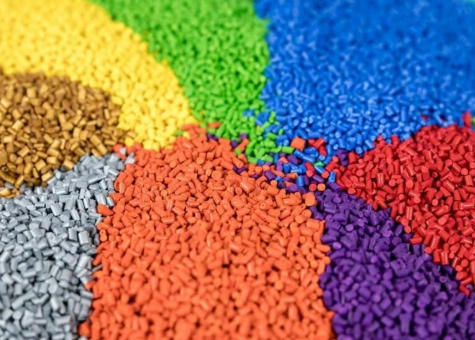
Customization is one of the greatest advantages of using Masterbatch in industrial applications. Instead of reinventing formulations for each project, manufacturers can tailor Masterbatch blends to meet precise conditions.
1. Color Customization: Designers can specify exact Pantone or RAL codes to maintain global brand consistency.
2. Functional Additives: Combine UV stabilizers, antistatics, or flame-retardant compounds.
3. Process Optimization: Reduce melt flow rate variations and enhance moldability.
4. Recycled Material Compounds: Enable blending of virgin and recycled materials while maintaining performance balance.
By developing customized Masterbatch, companies achieve stronger branding, energy savings, and lower production waste.
Different industries have unique performance requirements that guide their material and Masterbatch choices.
Packaging requires flexibility, clarity, and food safety.
- PE and PP films combined with antifog Masterbatch prevent condensation.
- Color Masterbatch ensures visually appealing packaging with good printability.
Automotive components need to withstand temperature fluctuations and mechanical stress.
- Glass fiber-filled Masterbatch enhances structural integrity.
- Flame-retardant Masterbatch improves safety in engine compartments.
Insulation, anti-static properties, and flame retardancy are critical.
- Antistatic Masterbatch prevents dust accumulation.
- UV and heat stabilizers ensure component longevity.
Durability under outdoor conditions defines performance.
- Calcium carbonate filler Masterbatch lowers cost and increases rigidity.
- UV stabilizer Masterbatch protects pipes and roofing sheets against sunlight degradation.
Visual quality, touch, and color are key.
- Glossy or matte finish Masterbatch provides aesthetic diversity.
- Environmental-friendly additive systems support brand sustainability commitments.
Material choice also significantly affects production economics.
Strategically chosen Masterbatch can reduce cycle time, improve dispersion, and minimize scrap. For example:
- Lubricant Masterbatch enhances extrusion efficiency.
- Nucleating agents reduce cooling time in injection molding.
Although high-performance plastics and Masterbatch may seem costly per kilogram, they often reduce total system costs by extending service life, lowering maintenance, and avoiding product failures.
Working with reliable Masterbatch suppliers ensures stable quality and just-in-time delivery—crucial for maintaining production efficiency in global operations.
1. Ignoring Application Environment – A plastic suitable for indoor use may fail outdoors due to UV exposure.
2. Overlooking Compatibility – Not all Masterbatch types are compatible with base resins; improper pairing causes poor dispersion or surface defects.
3. Underestimating Additives – Skipping the right Masterbatch can lead to color fading, cracking, or warping.
4. Choosing Based on Price Alone – Low-cost materials may lead to higher long-term expenses in warranties and replacements.
1. Define Functional Requirements – Outline key mechanical, chemical, and thermal needs.
2. Identify Regulatory Constraints – Ensure compliance with regional and industry standards.
3. Shortlist Candidate Plastics – Choose 2–3 polymers for initial evaluation.
4. Select Appropriate Masterbatch – Match additive or color Masterbatch according to desired property tuning.
5. Conduct Prototyping and Testing – Validate material behavior in simulated environments.
6. Finalize Formulation and Supplier – Work closely with Masterbatch experts for optimized blending.
This structured approach balances performance, cost, and sustainability.
Selecting a plastic material is both a science and an art. By analyzing mechanical, chemical, and environmental requirements—and understanding how Masterbatch customization influences these factors—manufacturers can craft solutions that meet technical demands and business goals simultaneously.
The integration of Masterbatch allows businesses to leverage flexibility, color control, and enhanced functionality while keeping production efficient and cost-effective. In the era of global competition and eco-conscious design, choosing the right plastic combined with the right Masterbatch formulation remains a key driver of success for modern manufacturers.

Masterbatch is a concentrated mixture of pigments or additives used to modify plastic properties. It ensures uniform color, stability, and improved performance during processing.
Choose additive Masterbatch when you need functional enhancements (like UV protection or flame resistance). Use filler Masterbatch when aiming to reduce cost or enhance rigidity.
Yes. Many Masterbatch formulations are designed to be compatible with recycled plastics, helping maintain appearance and performance.
High-quality Masterbatch usually does not hinder recyclability, as most modern carriers are compatible with base resins used in recycling processes.
Suppliers provide technical consultation, color matching, and additive selection, helping customers achieve optimal plastic formulations for target markets.


