


close
Choose Your Site
Global
Social Media


Views: 222 Author: Rebecca Publish Time: 2025-12-02 Origin: Site


Content Menu
● Raw Materials: The Foundation of Plastics
● Polymerization: Creating the Polymer Backbone
● Pelletizing: Forming the Plastic Raw Material
● The Importance of Masterbatch
● Masterbatch Production: Step by Step
>> Pelletizing
>> Cooling and Quality Control
● Plastic Compounding: Creating Custom Materials
● Primary Plastic Processing Methods
>> Extrusion
>> Blow Molding
>> Compression and Rotational Molding
● Customizing Performance: Applied Masterbatch Solutions
● Quality Assurance in Plastic Manufacturing
● Innovation: Advancements in Masterbatch and Sustainable Plastics
● Secondary Operations and Post-Processing
● Applications: Where You'll Find Masterbatch Plastics
● FAQ
>> 1. What is a masterbatch and why is it important?
>> 2. How is a masterbatch produced?
>> 3. Can recycled plastics use masterbatch?
>> 4. What are the main benefits of using masterbatch in plastic production?
>> 5. How do I choose the right masterbatch for my application?
Plastic materials have become an integral part of modern industry and daily life due to their versatility, durability, and adaptable properties. This article offers a comprehensive look at the step-by-step process of plastic material production, emphasizing the vital role of masterbatch technology throughout the process for customization and performance enhancement.[3][11][12]
The production of plastic materials begins with sourcing natural raw materials such as crude oil and natural gas. These resources are chemically processed into essential monomers, including ethylene, propylene, and styrene. Through processes like cracking and refining, hydrocarbon molecules are transformed into the building blocks required for polymerization.[11][13]
- Crude oil and natural gas extraction.
- Refining into primary chemical feedstocks.
- Conversion into monomers via cracking.
Masterbatch technology often starts at this stage, with masterbatch developers considering carrier compatibility for various base resins.
Next comes polymerization—a chemical reaction that fuses monomers into long-chain polymers, creating the resins necessary for plastic production.[14][11]
- Addition Polymerization: Joins identical monomer units, widely used for polyethylene, polypropylene, and polystyrene.
- Condensation Polymerization: Forms polymers like nylon and PET by joining monomers with by-product release (e.g., water).
The resulting resins are often produced in the form of granules or pellets, which serve as the substrate for masterbatch integration.
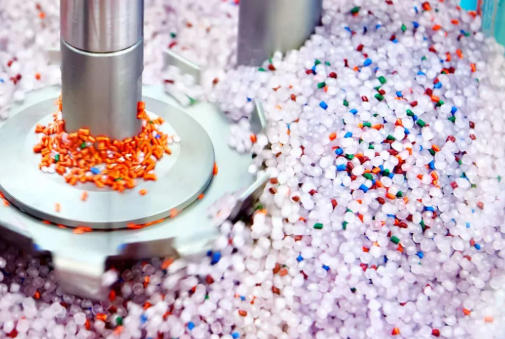
After synthesis, solid polymer chains are cooled and cut into small pellets or granules for handling and processing. These pellets, commonly known as nurdles, are the primary form in which plastics are shipped and further processed.[13]
Pellets can be clear or have basic polymer coloration, but their true functional and visual properties are typically achieved only after masterbatch is added.
Masterbatch is a concentrated mixture of pigments, additives, or fillers embedded within a carrier resin that is compatible with the main plastic. Masterbatch is fundamental to plastic customization, providing color, UV resistance, flame retardancy, processing aids, and improved performance characteristics.[12][15][16]
- Ensures homogenous color and property distribution.
- Allows precise dosing and straightforward changeover in manufacturing.
- Enables rapid adaptation to customer requirements and application needs.
The manufacture of masterbatch involves several tightly controlled steps, each critical for consistent quality and performance:[12]
Resin carriers are combined with exact proportions of high-quality pigments and performance additives. The blend must be uniform to guarantee the final product's quality.
The blend is fed into an extruder—a machine that melts and intensely mixes the materials using rotating screws. The masterbatch is thoroughly fused to achieve complete dispersion.
The molten compound is pushed through a die and cut into small, evenly sized pellets. These these pellets can be precisely dosed into standard resins.
Pellets are cooled, dried, and subjected to quality checks, including color consistency, mechanical property analysis, and optimal additive dispersion.[15][17][12]
In plastic compounding, the base polymer pellets are blended with masterbatch according to the final product specifications. Multiple masterbatches may be combined to achieve:
- Specific shades or effects (color masterbatch).
- Functional adjustments, like anti-static, UV stabilization, or flame retardancy.
- Cost efficiency, for example, through filler masterbatch with minerals to reduce price per unit weight.[15]
This flexible approach allows for high customization and efficient scaling in manufacturing.
Several foundational processing methods transform compounded plastic granules into finished products:[1][2][6][7]
- Pellets (base resin plus masterbatch) are melted and injected under pressure into precision molds.
- Used for everything from bottle caps to automotive parts.
- Allows fast, high-volume, consistent production.
- Melted plastic is forced through a shaped die to create continuous products (e.g., pipes, profiles, sheets).
- Used for wire coatings, tubing, and paneling.
- Masterbatch ensures both color and additive uniformity along the extrusion length.
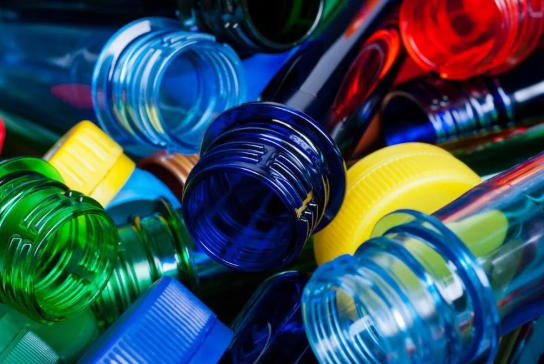
- A preform or molten tube is expanded by air inside a mold, creating hollow products such as bottles and containers.[2][1]
- Masterbatch use ensures even color and performance across complex shapes.
- Heated sheets are formed over a mold using vacuum or pressure, then trimmed as needed.
- Ideal for packaging, trays, and medical devices.
- Additive masterbatches impart crucial properties like food contact safety or anti-fog capabilities.[5][2]
- Compression: Preheated plastic is pressed in a mold to create sturdy items such as electrical housings.
- Rotational: The mold rotates while heating, producing uniform-walled products like tanks and playground equipment.
- Vacuum casting for prototype or low-volume parts.
- CNC machining for custom, high-precision plastic components.
Modern plastic production heavily relies on highly specialized masterbatch solutions:
- Color Masterbatch: Delivers exact shades, customizable effects.
- Additive Masterbatch: Includes UV stabilizers, flame retardants, anti-block, or anti-static agents.
- Filler Masterbatch: Lowers costs, modifies density, adjusts tactile properties using minerals like calcium carbonate or talc.
- Functional Masterbatch: Adds features such as anti-microbial effects or improved processability.
Masterbatch enables plastics to serve highly demanding applications in automotive, electronics, consumer goods, packaging, healthcare, and more.
Quality control is critical throughout production to ensure reliable, safe, and consistent output:
- Incoming Material Testing: Verifies polymer purity and masterbatch compatibility.
- Process Monitoring: Maintains melt temperatures, pressures, and flow rates for optimal plasticization.
- Product Testing: Involves impact, tensile, and environmental performance evaluation.
- Color and Additive Consistency: Ensures uniformity, often with spectrophotometers and thermal analyzers.
Plastic industry innovation increasingly revolves around masterbatch enhancements and environmental responsibility:
- Biodegradable and Bio-based Masterbatch: Supports compostable and sustainable plastic initiatives.
- Nano-masterbatch: Employs nano-scale additives for superior barrier, strength, or conductivity properties.
- High-performance and Smart Masterbatches: Includes anti-microbial, anti-fouling, or self-healing capacities.
- Masterbatch for Recycled Plastics: Compensate for property loss in recycled polymers, promoting circular economy adoption.[16][18]
OEMs and manufacturers can now differentiate products using tailored masterbatch solutions.
After basic shaping, many plastic parts undergo secondary operations:
- Machining: Cutting, drilling, or trimming to final specification.
- Surface finishing: Polishing, painting, or metallization for appearance and durability.
- Assembly: Integration with other components.
- Printing and Labeling: For branding, instructions, or regulatory compliance.[4]
Masterbatch formulations can influence ease of these finishing processes, such as promoting better print adhesion or weldability.
Masterbatch-enhanced plastic materials are present in nearly every commercial and industrial sector:
- Packaging: Colorful, durable packaging for food, pharma, and retail.
- Automotive and Transportation: Structural, lightweight, and resilient components.
- Electronics: Housings with flame-retardant or anti-static properties.
- Construction: Pipes, profiles, weather-resistant exterior elements.
- Healthcare: Medical devices, trays, and packaging with strict regulatory compliance.
- Consumer Goods and Appliances: Toys, tools, containers, and more, each using masterbatch for looks and functionality.
The production of plastic material is a sophisticated, multi-phase process that starts with the transformation of natural resources into polymers and culminates in customized, high-performance products. Masterbatch technology is at the core of this journey, offering unrivaled flexibility and efficiency for tailored aesthetics and advanced functionalities. Leading plastic material manufacturers leverage state-of-the-art masterbatch solutions to meet the demands of global industries, adapting to trends in sustainability, performance, and regulatory compliance.[16][12][15]
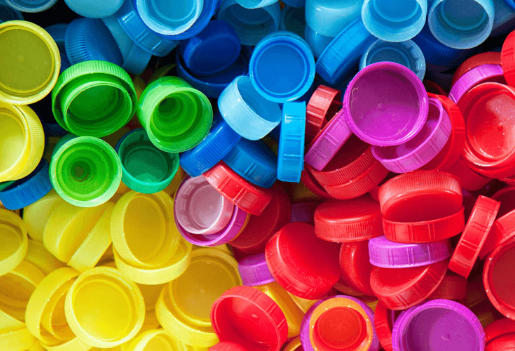
Masterbatch is a concentrated blend of pigment, additive, or filler encapsulated in a carrier resin. It enables efficient and consistent coloration, functional improvement, and processing aids in plastic manufacturing, optimizing production and product quality.[12]
Masterbatch manufacturing involves blending the carrier resin with additives or pigments, compounding this blend at high temperatures, extruding it, and pelletizing the result for easy integration with basic plastic pellets.[15][12]
Yes, masterbatch is vital in recycling by restoring the desired color, appearance, and functional properties to recycled plastics, bringing them close to virgin material performance.[18][16]
Benefits include precise control over color and properties, cost efficiency, improved processability, and streamlined handling compared to directly dosing raw additives or pigments.[17]
Consider the desired end use, color, functional requirements, processing method, and environmental conditions. Collaborate with experienced masterbatch suppliers and conduct laboratory testing to ensure optimal compatibility and performance.[19][17]
[1](https://formlabs.com/blog/guide-to-manufacturing-processes-for-plastics/)
[2](https://www.protolabs.com/resources/guides-and-trend-reports/plastic-manufacturing/)
[3](https://jamestownplastics.com/about-us/resources/ultimate-guide-to-plastic-manufacturing/)
[4](https://www.westecplastics.com/blogs-news/a-step-by-step-guide-to-the-plastic-manufacturing-process/)
[5](https://jamestownplasticsmedical.com/understanding-the-plastic-manufacturing-process/)
[6](https://www.umerengineering.com/2023/10/26/a-comprehensive-guide-to-plastic-manufacturing-and-equipment/)
[7](https://www.piedmontplastics.com/blog/plastic-fabrication)
[8](https://www.crescentind.com/blog/the-manufacturing-process-a-guide-for-plastic-product-engineers)
[9](https://hitech-machinery.com/plastic-process-equipment-a-comprehensive-guide/)
[10](https://rapidaxis.com/blog/a-comprehensive-guide-to-precision-plastics-machining-techniques-tips-and-tools-rapid-axis/)
[11](https://plasticseurope.org/plastics-explained/how-plastics-are-made/)
[12](https://jieyatwinscrew.com/blog/masterbatch-production-line/)
[13](https://www.flextrades.com/blog/this-is-how-plastic-is-made/)
[14](https://www.youtube.com/watch?v=Y7e2yHxZl3A)
[15](https://www.facebook.com/megaplast.nhg/videos/ever-wondered-how-filler-masterbatch-is-made/1035476024773250/)
[16](https://www.youtube.com/watch?v=gs_aqpPR2hk)
[17](https://coperion.com/en/news-media/media-library/infographics/color-masterbatch-production)
[18](https://www.youtube.com/watch?v=mz2__TLo42Q)
[19](https://www.youtube.com/watch?v=a4iDWdSNr6Q)


